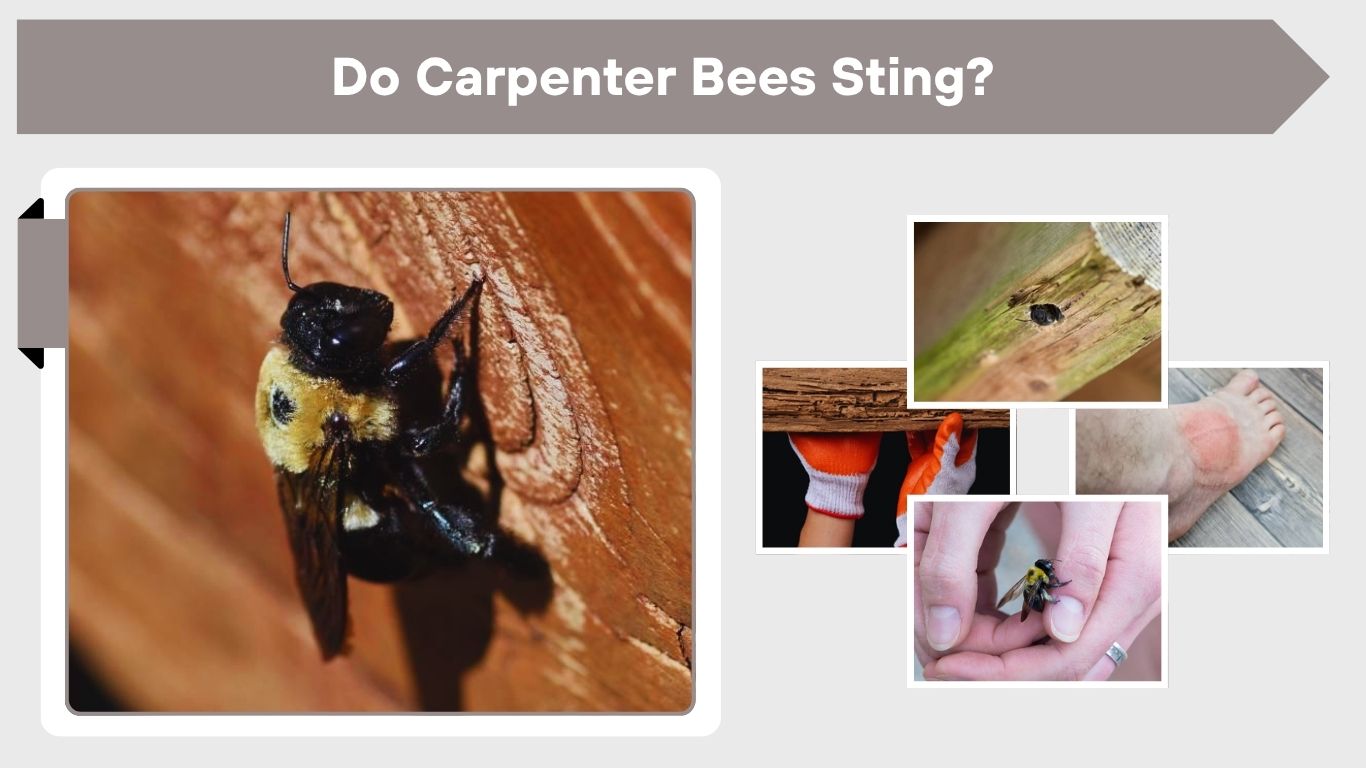
Carpenter bees can look intimidating. They’re large, loud, and often hover right in front of your face, which makes many people wonder: do carpenter bees sting? The short answer is yes—but only under certain conditions.
In reality, carpenter bees are far less dangerous than they appear. Most encounters with them are harmless, and understanding their behavior can help you feel more at ease around them. In this guide, we’ll break down everything you need to know about carpenter bee stings, their behavior, and whether you should actually be concerned.
What Are Carpenter Bees?
Carpenter bees are large, solitary bees known for their ability to drill holes into wood to create nests. Unlike honeybees, they don’t live in colonies, and unlike wasps, they are not naturally aggressive.
You’ll commonly find them around wooden structures like decks, fences, roofs, and even outdoor furniture. Their buzzing sound and size often make them seem threatening, but their behavior tells a different story.
Carpenter Bees vs Bumblebees
Many people confuse carpenter bees with bumblebees because of their similar size.
- Carpenter bees have a smooth, shiny, black abdomen
- Bumblebees have a fuzzy, hairy abdomen with yellow markings
- Carpenter bees are solitary, while bumblebees live in colonies
This distinction matters because carpenter bees behave very differently—and are generally less aggressive.
Do Carpenter Bees Sting?
Yes, carpenter bees can sting—but not all of them.
- Female carpenter bees can sting
- Male carpenter bees cannot sting
Even though females have stingers, they rarely use them. Carpenter bees are not aggressive insects and prefer to avoid confrontation whenever possible.
Why Most People Never Get Stung
In most cases, you can be around carpenter bees without any risk of being stung. That’s because:
- They do not defend hives like honeybees
- They are not territorial in a dangerous way
- They only sting when directly threatened
So unless you try to grab or harm a carpenter bee, the chances of getting stung are extremely low.
Male vs Female Carpenter Bees

Understanding the difference between male and female carpenter bees is key to reducing fear and confusion.
Male Carpenter Bees
Male carpenter bees are the ones most people notice. They often hover aggressively around people, especially near wooden structures.
- They cannot sting at all
- They may fly close to your face
- They act territorial but are harmless
This hovering behavior is often mistaken for aggression, but it’s actually just a defensive display to scare away intruders.
Female Carpenter Bees
Female carpenter bees are less noticeable but more important in terms of stinging.
- They can sting, but rarely do
- They spend most of their time building nests
- They avoid humans unless provoked
A female carpenter bee will usually only sting if you try to handle or trap it.
Are Carpenter Bees Dangerous?

For most people, carpenter bees are not dangerous. They pose very little threat compared to insects like wasps or hornets.
Risk to Humans
- Stings are rare
- Pain is usually mild to moderate
- Symptoms may include redness and slight swelling
The only serious concern is for people who are allergic to bee stings, which can lead to stronger reactions.
Risk to Property
While they’re not dangerous to people, carpenter bees can cause damage to wooden structures.
- They drill small round holes into wood
- They create tunnels for nesting
- Repeated activity can weaken wood over time
However, this damage happens gradually and is usually manageable if addressed early.
What Does a Carpenter Bee Sting Feel Like?

If you do happen to get stung by a female carpenter bee, the experience is generally not severe.
- A quick, sharp pain at the sting site
- Mild swelling and redness
- Temporary discomfort that fades within a few hours
For most people, the sting is similar to or slightly less painful than a honeybee sting.
When to Seek Medical Help
Although rare, you should seek medical attention if you experience:
- Difficulty breathing
- Severe swelling beyond the sting area
- Dizziness or nausea
These could be signs of an allergic reaction and should not be ignored.
Why Do Carpenter Bees Hover Around People?
One of the main reasons people fear carpenter bees is their habit of hovering close to humans. This behavior can feel aggressive, but it’s actually harmless.
Male carpenter bees hover because they are:
- Protecting their territory
- Investigating movement
- Trying to scare away perceived threats
Since males cannot sting, this behavior is more about intimidation than actual danger.
When Do Carpenter Bees Sting?
Carpenter bees are not naturally aggressive, so stings are uncommon. However, there are a few situations where a female carpenter bee may sting.
- When she is handled or grabbed
- When her nest is disturbed
- When she feels trapped or threatened
Unlike wasps, carpenter bees do not attack unprovoked. Simply being near them or walking past their nesting area is usually not enough to trigger a sting.
Understanding this helps reduce unnecessary fear—most stings happen due to direct interaction, not random encounters.
How to Avoid Carpenter Bee Stings

The best way to deal with carpenter bees is prevention and calm behavior. Since they are not aggressive, simple precautions can keep you safe.
- Stay calm if they hover – sudden movements can make them more curious
- Avoid swatting at them – this may provoke a defensive response
- Do not block nest entrances – females may feel threatened
- Wear gloves when handling wood – especially if nests are present
In most cases, leaving carpenter bees alone is enough to avoid any problems.
How to Get Rid of Carpenter Bees Safely
While carpenter bees are important pollinators, you may want to control them if they’re damaging your property. The goal should be safe removal or prevention, not unnecessary harm.
- Seal existing holes with wood filler or caulk after bees leave
- Use natural repellents like citrus sprays or almond oil
- Install carpenter bee traps near affected areas
- Reduce untreated wood surfaces around your home
If the infestation becomes large or persistent, contacting a pest control professional may be the safest option.
Prevention Tips
Preventing carpenter bees is easier than dealing with them later.
- Paint or varnish exposed wood
- Regularly inspect decks, fences, and eaves
- Repair damaged wood early
- Keep outdoor structures well-maintained
These steps make your home less attractive for nesting.
FAQs
Do carpenter bees sting humans?
Female carpenter bees can sting humans, but it is very rare. They usually only sting when they feel threatened or are handled. Male carpenter bees cannot sting at all, even though they may appear aggressive when hovering nearby.
Are carpenter bees aggressive?
Carpenter bees are not aggressive insects. Males may hover and act territorial, but they are harmless. Females are generally calm and focused on building nests, and they only sting in self-defense when directly provoked.
Can carpenter bees harm pets?
Carpenter bees rarely harm pets. Even if a pet is stung, the reaction is usually mild, causing slight swelling or discomfort. However, pets with allergies may require veterinary care if symptoms become severe.
Should I kill carpenter bees?
Killing carpenter bees is usually unnecessary and not recommended. They are beneficial pollinators that help plants grow. Instead, focus on prevention methods like sealing wood and using deterrents to keep them away from your home.
Conclusion
Carpenter bees may look intimidating, but they are far less dangerous than many people think. While female carpenter bees can sting, they rarely do so unless directly threatened. Male carpenter bees—the ones most commonly seen hovering—cannot sting at all.
By understanding their behavior, you can avoid unnecessary fear and safely coexist with them. If they become a problem around your home, simple prevention and control methods can protect your property without harming these important pollinators.