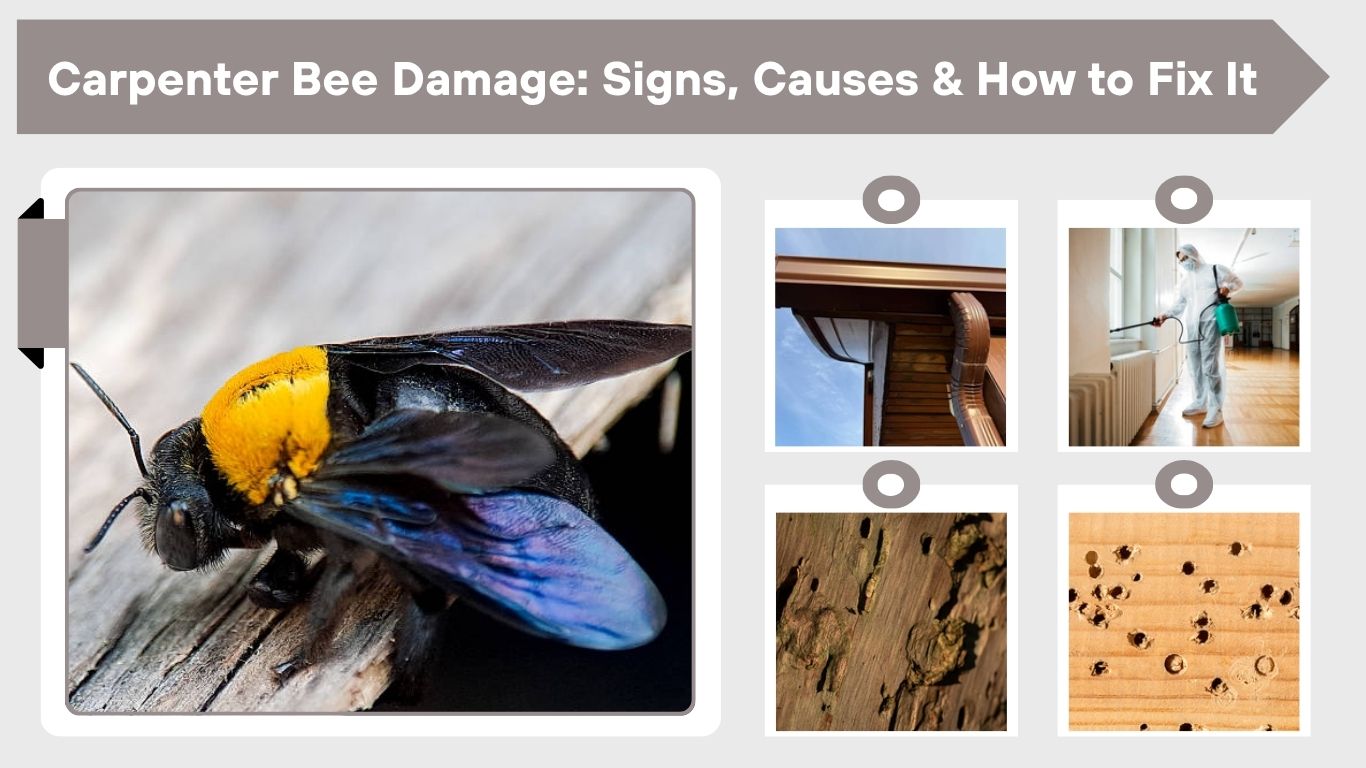
Carpenter bees are large, solitary insects known for drilling into wood to create nesting tunnels. While they play an important role in pollination, their behavior can lead to noticeable and sometimes serious structural issues. Carpenter bee damage occurs when these bees bore into wooden surfaces, creating holes and internal tunnels that weaken the material over time.
For homeowners, this damage can affect decks, fences, siding, and other wooden structures. Although the initial signs may seem minor, repeated nesting can lead to more extensive problems. Understanding how carpenter bee damage happens and how to identify it early is key to preventing costly repairs.
What Is Carpenter Bee Damage?
Carpenter bee damage refers to the physical harm caused to wood when carpenter bees drill holes and create tunnels for nesting. Unlike termites, carpenter bees do not eat wood; instead, they excavate it to form galleries where they lay eggs and raise their young.
The damage typically begins with a small, round entrance hole, but inside the wood, tunnels can extend several inches or more. Over time, these tunnels may branch out and become more complex, especially if reused by future generations.
Why Carpenter Bee Damage Happens
Carpenter bee damage occurs mainly because of their nesting behavior. Female bees prefer soft, untreated, or weathered wood, which is easier to drill into. Common materials like pine, cedar, and redwood are particularly vulnerable.
Another major factor is the reuse of existing nests. Carpenter bees often return to the same location year after year, expanding old tunnels instead of creating new ones. This repeated activity significantly increases the level of damage over time.
Signs of Carpenter Bee Damage

Recognizing the early signs of carpenter bee damage can help you take action before the problem worsens. One of the most noticeable indicators is the presence of perfectly round holes in wooden surfaces. These holes are typically smooth and about the size of a fingertip.
You may also find sawdust-like material, known as frass, beneath these holes. This is produced as the bees excavate wood. In some cases, yellow or brown stains may appear near the openings due to bee droppings.
Early vs Advanced Damage
In the early stages, carpenter bee damage is usually limited to a few small holes and minimal tunneling. At this point, the structural impact is low, and the issue can be managed relatively easily.
However, advanced damage occurs when multiple nests are present, and tunnels become extensive. The wood may start to weaken, crack, or show signs of deterioration. In severe cases, long-term infestations can compromise the integrity of the structure.
Types of Damage Caused by Carpenter Bees
Carpenter bees can cause several types of damage, ranging from minor cosmetic issues to more serious structural concerns. The most visible form is surface damage, which includes round holes and slight discoloration on wood.
Beyond the surface, the real problem lies inside the wood. Carpenter bees create internal tunnels that are not immediately visible. These galleries can grow larger and more complex over time, especially if the nest is reused.
Structural Impact Over Time
As tunnels expand, they weaken the wood from within. This can reduce the strength of beams, railings, and other structural components. Over time, the affected wood may become more vulnerable to moisture, leading to rot and decay.
Additionally, abandoned tunnels can attract other pests, such as beetles or fungi, which can worsen the damage. What starts as a small hole can eventually turn into a much larger problem if left untreated.
Where Carpenter Bee Damage Commonly Occurs

Carpenter bee damage is most often found in exposed wooden structures. Areas like decks, fences, roof eaves, and wooden siding are common targets. Outdoor furniture and railings are also vulnerable, especially if made from softwood.
These bees are particularly attracted to untreated or weathered wood, as it is easier to drill into. Homes with unpainted or poorly maintained wooden surfaces are at a higher risk of infestation. Regular inspection of these areas can help identify damage early and prevent it from spreading.
How Serious Is Carpenter Bee Damage?
Carpenter bee damage is often underestimated because the initial signs appear small and harmless. A single hole may not seem like a major issue, but the real concern lies in what happens beneath the surface. Over time, repeated nesting and tunnel expansion can weaken wooden structures significantly.
In the short term, damage is mostly cosmetic. However, long-term infestations can lead to structural problems, especially in load-bearing areas like beams or railings. The cost of repairs can increase if the issue is ignored for multiple seasons.
Can Carpenter Bees Destroy a House?
Carpenter bees rarely cause immediate, catastrophic damage like termites. However, they can contribute to serious deterioration over time. If nests are reused and expanded year after year, the cumulative effect can weaken important wooden components.
While they won’t destroy a house overnight, neglecting the problem for several years can result in costly repairs and compromised structural integrity.
Carpenter Bee Damage vs Termite Damage

Carpenter bee damage is often confused with termite damage, but there are key differences. Carpenter bees create clean, round holes and smooth tunnels, while termites leave rough, irregular galleries inside wood.
Another major difference is behavior. Termites consume wood as food, whereas carpenter bees only excavate it for nesting. Termite infestations usually include mud tubes and hidden activity, while carpenter bee damage is more visible on the surface.
Understanding these differences is important because the treatment methods for each pest are not the same. Misidentifying the problem can lead to ineffective solutions.
How to Repair Carpenter Bee Damage
Repairing carpenter bee damage involves both eliminating the bees and restoring the affected wood. The process should begin only after you are sure the nest is inactive, as sealing active tunnels can trap bees inside and worsen the issue.
Step-by-Step Repair Process
- Step 1: Eliminate the bees – Use appropriate treatment methods to ensure the nest is inactive.
- Step 2: Clean the tunnels – Remove debris and any remaining material from the holes.
- Step 3: Fill the holes – Use wood filler, caulk, or wooden dowels to seal the openings.
- Step 4: Sand and finish – Smooth the surface and apply paint or sealant to protect the wood.
Proper repair not only restores the appearance of the wood but also helps prevent future infestations.
How to Prevent Carpenter Bee Damage
Preventing carpenter bee damage is much easier than repairing it. Since these bees prefer untreated wood, sealing and protecting wooden surfaces is one of the most effective strategies.
Painting or staining wood creates a barrier that discourages bees from drilling. Choosing hardwood materials instead of softwood can also reduce the risk, as harder woods are more difficult for bees to penetrate.
Long-Term Prevention Tips
Regular maintenance is essential for keeping carpenter bees away. Inspect wooden structures annually and repair any damage promptly. Filling old holes prevents bees from reusing existing tunnels.
You can also install deterrents such as traps or apply natural repellents to discourage nesting. Keeping wood in good condition is the best long-term defense.
When to Call a Professional

If carpenter bee damage becomes extensive or difficult to manage, calling a professional is a smart decision. Pest control experts can handle large infestations and apply treatments more effectively.
They can also assess structural damage and recommend necessary repairs. Professional help is especially important when nests are located in hard-to-reach areas or when safety is a concern.
Environmental Considerations
Carpenter bees are valuable pollinators and play an important role in the ecosystem. While their nesting behavior can be destructive, it’s important to approach control methods responsibly.
Instead of eliminating them entirely, focus on managing their activity and protecting your home. Using targeted treatments and preventive measures allows you to reduce damage while preserving their ecological benefits.
FAQs
How quickly can carpenter bees cause damage?
Carpenter bees can start causing visible damage within a short time by drilling holes into wood. However, serious structural damage usually develops over months or years as nests are reused and expanded.
Does carpenter bee damage spread over time?
Yes, carpenter bee damage can spread as bees continue to reuse and enlarge existing tunnels. Over time, this can lead to more extensive internal damage and weakened wood structures.
Is carpenter bee damage covered by insurance?
In most cases, homeowner’s insurance does not cover carpenter bee damage because it is considered preventable maintenance. Regular inspections and timely repairs are essential to avoid costly out-of-pocket expenses.
What type of wood is most vulnerable to damage?
Softwoods like pine, cedar, and redwood are most vulnerable to carpenter bee damage. These materials are easier for bees to drill into, especially if they are untreated or weathered.
Can carpenter bee damage be prevented completely?
While it may not be possible to prevent carpenter bees entirely, proper wood treatment, sealing, and regular maintenance can significantly reduce the risk of damage and infestation.
Conclusion
Carpenter bee damage may begin as a small issue, but it can grow into a serious problem if left untreated. By understanding the signs, causes, and types of damage, homeowners can take early action to protect their property.
Repairing affected areas and implementing preventive measures are key steps in managing carpenter bees effectively. With the right approach, it’s possible to minimize damage while still respecting the important role these bees play in the environment.