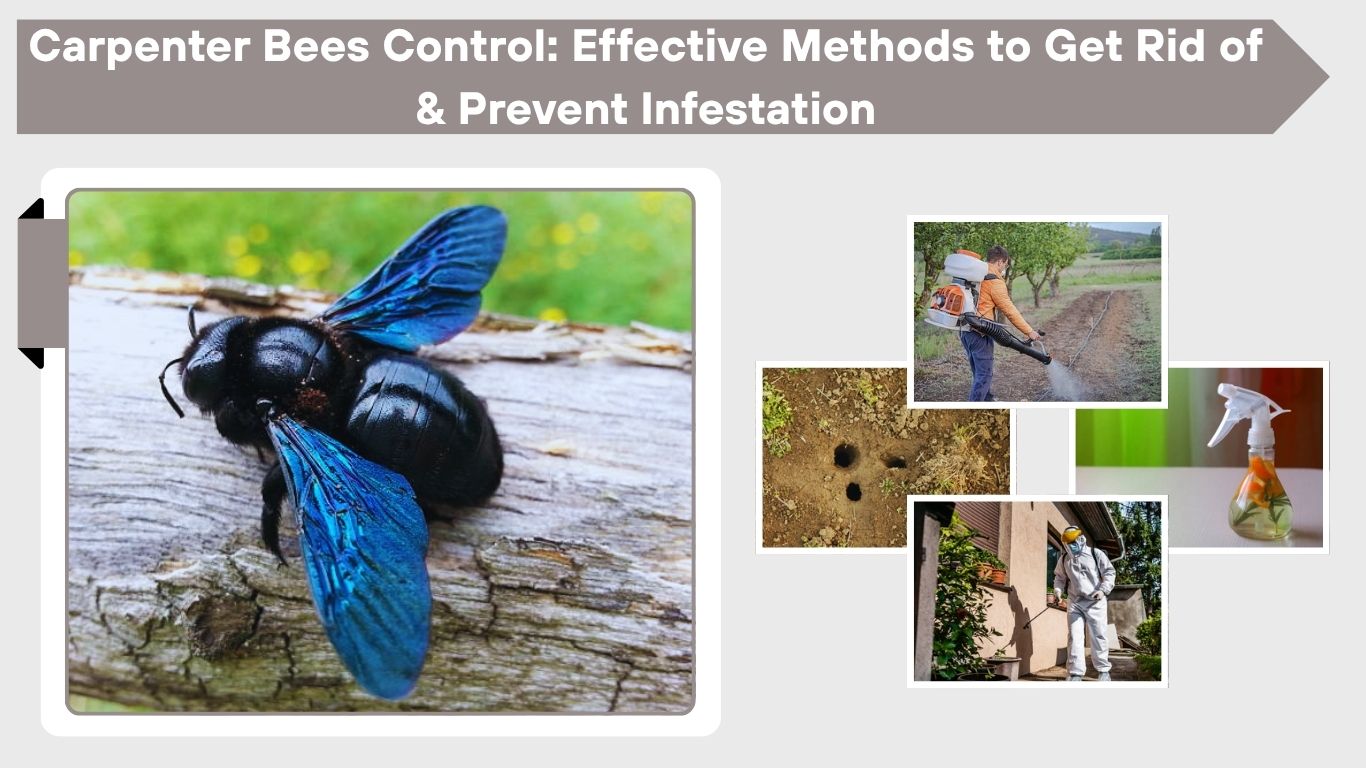
Carpenter bees are common insects that can become a serious nuisance when they begin drilling into wooden structures around your home. While they are beneficial pollinators, their nesting habits can lead to visible damage and long-term structural issues if left unchecked.
Homeowners often struggle to find the right balance between protecting their property and preserving these important insects. The key is understanding how to control carpenter bees effectively without unnecessary harm. In this guide, you’ll learn what attracts carpenter bees, how to identify an infestation, and the best methods to control and prevent them.
What Attracts Carpenter Bees?
Preferred Wood Types
Carpenter bees are particularly attracted to softwoods such as pine, cedar, and redwood. These materials are easier for them to drill into compared to hardwoods. Unpainted or untreated wood is especially vulnerable, making outdoor structures like decks, fences, and eaves prime targets.
Environmental Factors
Warm weather plays a significant role in carpenter bee activity. These insects are most active during spring and early summer when temperatures rise. Sunny areas of your home are more likely to attract them, especially if the wood is exposed and dry.
Existing Holes and Nests
One of the biggest reasons carpenter bees return year after year is the presence of old nesting holes. They often reuse and expand existing tunnels, which makes untreated infestations worse over time. If previous damage is not repaired, it becomes a continuous invitation for new bees.
Signs You Need Carpenter Bee Control
Visible Damage
The most obvious sign of carpenter bee activity is perfectly round holes in wood surfaces. These holes are usually about the size of a fingertip and are often found in clusters if the infestation has been ongoing.
Sawdust (Frass)
Below these holes, you may notice small piles of sawdust-like material called frass. This is produced when the bees drill into the wood and is a clear indicator of active nesting.
Bee Activity
You might see bees hovering around wooden structures, especially near entry holes. This behavior is typically associated with males guarding territory, but it signals that nesting activity is happening nearby.
Carpenter Bees Control Methods

Controlling carpenter bees requires a combination of strategies. Depending on the severity of the infestation, you can choose from natural remedies, DIY solutions, or chemical treatments.
Natural Control Methods
Natural methods are a good starting point, especially for mild infestations. Citrus sprays are commonly used because carpenter bees dislike the smell. You can boil citrus peels in water and spray the solution on affected areas.
Essential oils like almond oil or peppermint oil can also act as deterrents. Applying these oils to wooden surfaces may help discourage bees from nesting.
Another simple method is using noise or vibration. Carpenter bees prefer quiet environments, so placing speakers or wind chimes near affected areas can sometimes reduce activity.
DIY Control Solutions
For more direct control, do-it-yourself methods can be very effective. One common approach is plugging existing holes. After ensuring the nest is inactive, you can fill the holes with wood filler or steel wool to prevent reuse.
Carpenter bee traps are also widely used. These traps are designed to lure bees into a chamber where they cannot escape. Placing traps near nesting areas can significantly reduce the bee population over time.
In some cases, a vacuum can be used to remove bees from active holes, though this method requires caution.
Chemical Control Options
When infestations are severe, chemical treatments may be necessary. Insecticide dust is one of the most effective options and can be applied directly into the tunnels. This method targets bees inside the nest and helps eliminate larvae as well.
Residual sprays can also be applied to wooden surfaces to prevent new nesting. The best time to apply chemical treatments is at night when bees are less active and more likely to be inside their tunnels.
Best Way to Get Rid of Carpenter Bees (Step-by-Step)

- Identify Active Holes
Look for fresh sawdust and bee activity to locate active nests. - Apply Treatment
Use insecticide dust, natural spray, or traps depending on your chosen method. - Wait for Effectiveness
Allow time for the treatment to work and ensure all bees are eliminated. - Seal the Holes
Once inactive, fill the holes with wood filler or caulk to prevent reuse. - Apply Protective Coating
Paint or seal the wood to make it less attractive for future nesting.
Carpenter Bee Prevention Tips
Preventing carpenter bees is often easier and more effective than dealing with an active infestation. By taking a few proactive steps, you can make your home less attractive to these wood-boring insects.
Wood Protection
One of the best ways to prevent carpenter bees is by treating exposed wood surfaces. Painting or varnishing wood creates a protective barrier that discourages bees from drilling. Carpenter bees prefer untreated or weathered wood, so keeping surfaces sealed can significantly reduce the risk.
Using hardwood instead of softwood can also help. Hardwoods are more difficult for bees to drill into, making them less appealing for nesting.
Maintenance Practices
Regular inspection is key to early prevention. Check wooden structures like decks, fences, and eaves for small holes or signs of damage. Addressing these issues quickly can stop an infestation before it grows.
Filling old holes is especially important. Carpenter bees often return to the same nesting sites, so sealing these entry points can prevent reuse.
Preventive Tools
Installing carpenter bee traps around your home can help reduce bee activity. These traps work by attracting bees and capturing them before they can create nests.
You can also apply deterrent sprays or natural repellents to areas that are commonly targeted. Regular application during peak seasons can provide ongoing protection.
Natural vs Chemical Control (Comparison)

When choosing a control method, it’s important to understand the differences between natural and chemical solutions.
Natural Methods:
- Eco-friendly and safe for the environment
- Suitable for mild infestations
- May require frequent application
- Less immediate effectiveness
Chemical Methods:
- Highly effective for severe infestations
- Works quickly to eliminate bees
- Longer-lasting results
- Requires careful handling and safety precautions
For best results, many homeowners use a combination of both approaches—starting with natural methods and switching to chemical treatments if needed.
Common Mistakes to Avoid
Controlling carpenter bees can be challenging if common mistakes are made. Avoiding these errors will improve your chances of success.
- Sealing holes too early: Closing holes before eliminating bees can trap them inside or force them to create new tunnels.
- Ignoring early signs: Small holes and light activity can quickly turn into a larger infestation if left untreated.
- Using ineffective repellents: Not all natural remedies work equally well, so it’s important to choose proven solutions.
- Treating at the wrong time: Applying treatments during the day may be less effective since bees are often outside their nests.
When to Call Professional Pest Control

In some situations, professional help may be the best option. If you notice extensive damage, repeated infestations, or large numbers of bees, it may be time to contact a pest control expert.
Professionals have access to specialized tools and treatments that can effectively eliminate carpenter bees and prevent future problems. They can also assess structural damage and recommend necessary repairs.
FAQs
How quickly can you control carpenter bees?
Control can take anywhere from a few days to a couple of weeks, depending on the severity of the infestation and the method used.
What is the most effective carpenter bee control method?
Insecticide dust applied directly into tunnels is considered one of the most effective methods for eliminating carpenter bees.
Are natural methods enough to control carpenter bees?
Natural methods can work for minor infestations, but severe cases may require stronger treatments.
Do carpenter bees come back after treatment?
Yes, they can return if old holes are not sealed and preventive measures are not taken.
Can carpenter bees cause serious damage?
While damage is usually gradual, repeated nesting over time can weaken wooden structures and lead to costly repairs.
Conclusion
Carpenter bees can be both beneficial and destructive, making proper control essential for homeowners. By understanding what attracts them, recognizing early signs of infestation, and applying the right control methods, you can effectively manage their presence.
Prevention plays a crucial role in long-term protection. Regular maintenance, sealing wood, and using deterrents can significantly reduce the chances of future infestations. Whether you choose natural remedies, DIY solutions, or professional treatment, taking timely action will help protect your home while maintaining balance with nature.