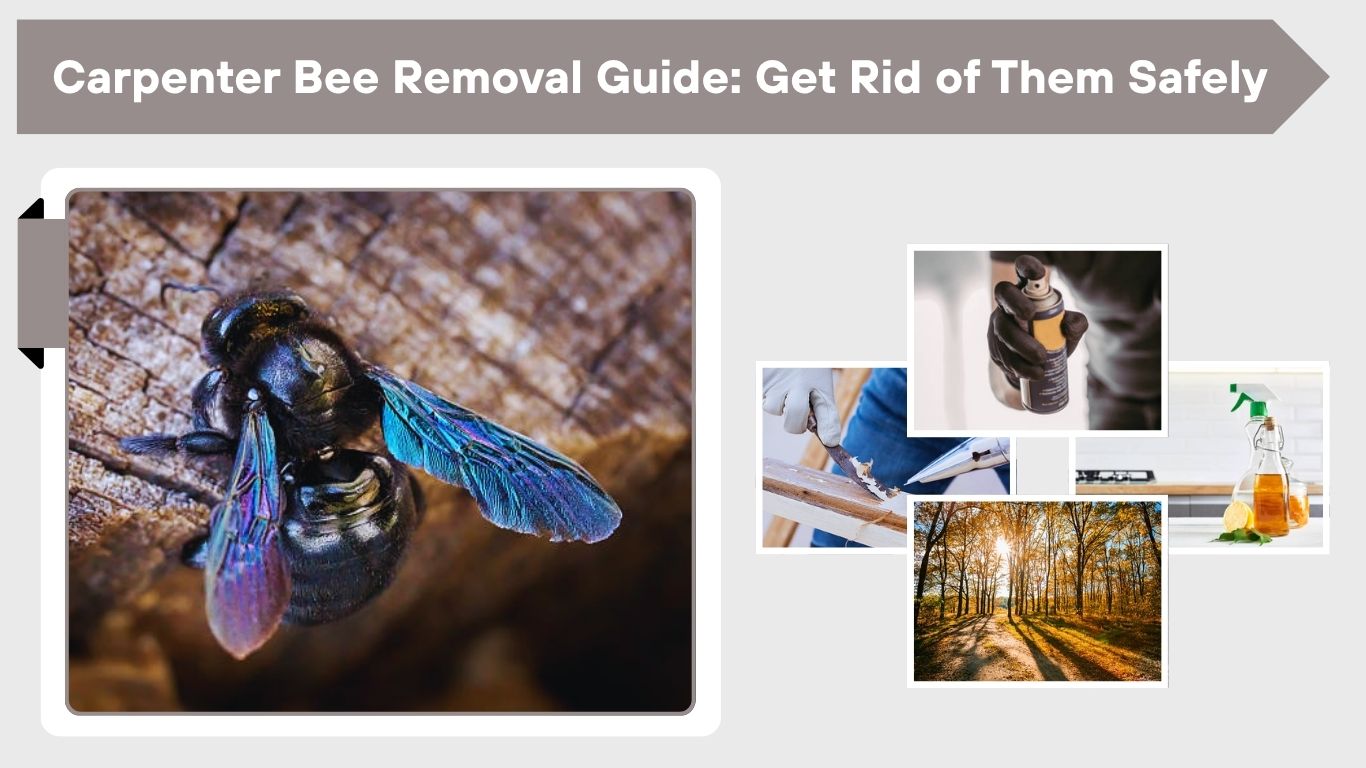
Carpenter bees are common wood-boring insects that can become a serious nuisance for homeowners. While they are important pollinators, their habit of drilling holes into wooden structures can lead to damage over time. Understanding how to identify, remove, and prevent carpenter bees is essential for protecting your home. With the right approach, you can manage these bees effectively while minimizing harm to the environment.
What Are Carpenter Bees?
Carpenter bees are large, solitary bees that belong to the genus Xylocopa. They are often mistaken for bumblebees, but they have distinct differences in appearance and behavior.
Unlike social bees, carpenter bees do not live in colonies. Instead, they create individual nests by drilling into wood. These nests serve as a place to lay eggs and raise their young.
One of the key differences between carpenter bees and bumblebees is their abdomen. Carpenter bees have a smooth, shiny abdomen, while bumblebees have a fuzzy one. This feature makes them easier to identify upon close observation.
Another important characteristic is their behavior. Male carpenter bees are often seen hovering around nesting areas and may appear aggressive, but they cannot sting. Female carpenter bees can sting, but they rarely do unless directly threatened.
Signs of Carpenter Bee Infestation
Recognizing the signs of carpenter bee activity early can help prevent serious damage. These bees leave behind clear physical and behavioral clues.
Visible Signs
- Perfectly round holes in wood (about ½ inch wide)
- Sawdust-like material (called frass) below the holes
- Yellowish stains caused by bee droppings
- Wooden surfaces that appear worn or damaged
Behavioral Signs
- Bees hovering near wooden structures such as decks or eaves
- Increased activity during spring and early summer
- Buzzing sounds coming from inside wood
These signs are usually most noticeable during the nesting season when bees are actively creating tunnels.
Why Carpenter Bees Are a Problem

Although carpenter bees are beneficial pollinators, they can cause issues when they nest in homes and wooden structures.
One of the main concerns is structural damage. Female carpenter bees drill tunnels into wood to create nesting chambers. Over time, repeated nesting can weaken wood and lead to costly repairs.
Another issue is the attraction of other pests. Woodpeckers, for example, may be drawn to the larvae inside the tunnels, causing even more damage as they peck at the wood.
In addition, carpenter bees can affect the appearance of your home. The holes they create and the stains they leave behind can make wooden surfaces look worn and neglected.
Carpenter Bee Removal Methods

Removing carpenter bees requires a combination of safe and effective techniques. The right method depends on the severity of the infestation and your preference for natural or chemical solutions.
Natural and Non-Toxic Methods
- Citrus sprays made from boiled citrus peels
- Essential oils like tea tree or almond oil
- Vinegar-based sprays to repel bees
- Loud vibrations or noise to discourage nesting
These methods are safer for the environment and can be effective for mild infestations.
Physical Removal Methods
- Using carpenter bee traps to capture bees
- Filling and sealing holes after bees leave
- Sanding and repainting affected wood
- Replacing severely damaged wood
Physical methods are useful for long-term control and prevention.
Chemical Treatments
- Insecticidal dust applied directly into tunnels
- Sprays specifically designed for carpenter bees
- Residual insecticides for long-term protection
Chemical solutions are generally more effective for larger infestations but should be used carefully to avoid harming beneficial insects.
Best Time to Remove Carpenter Bees

Timing plays a crucial role in successfully removing carpenter bees. Acting at the right time can make the process easier and more effective.
The best time to deal with carpenter bees is early spring, when they begin to emerge and search for nesting sites. Addressing the problem at this stage can prevent them from establishing tunnels.
Another good time is late summer, after the active season has slowed down. At this point, most bees have completed their life cycle, making it easier to seal holes without trapping active bees inside.
Avoid sealing holes too early in the season, as this can trap bees inside and lead to further damage as they try to escape.