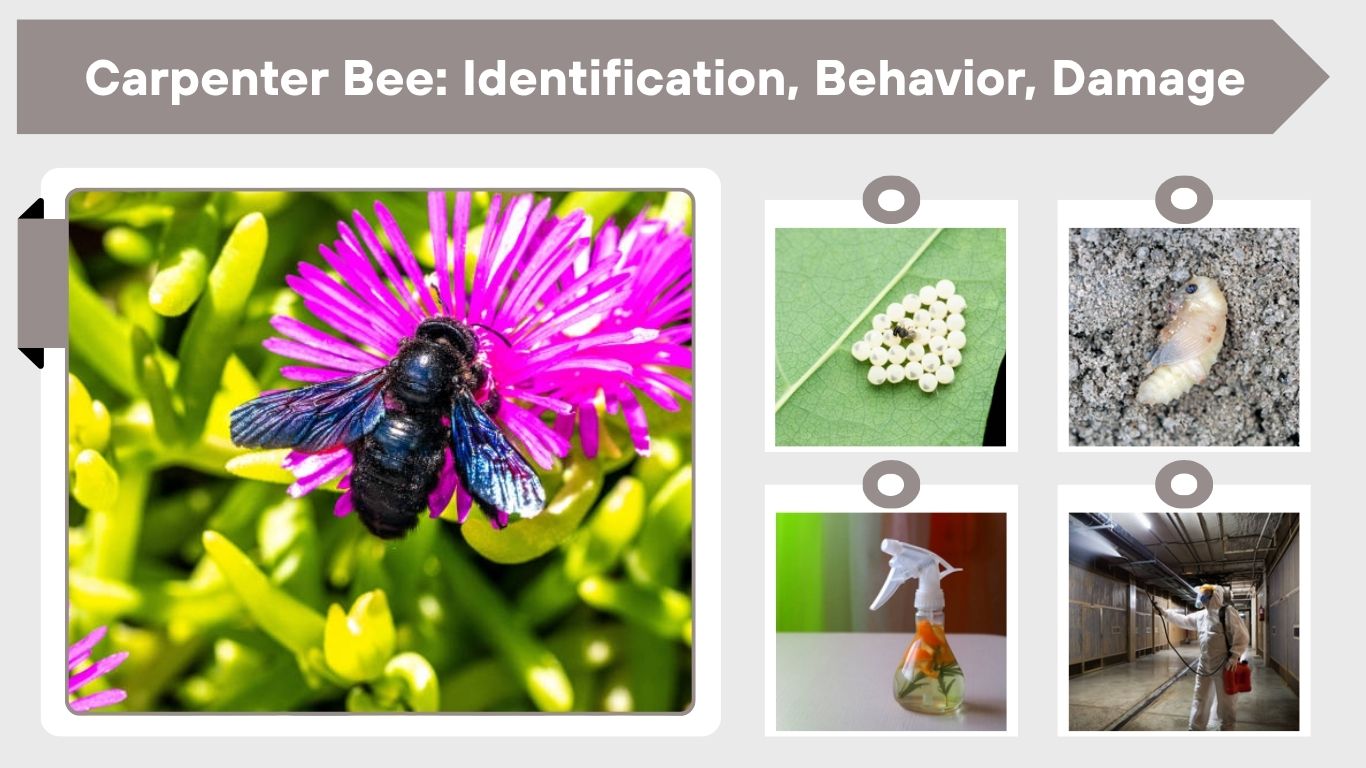
Carpenter bees are large, buzzing insects often seen hovering around wooden structures like decks, fences, and roof eaves. Their presence can be alarming, especially when they appear to drill holes into wood. While they may look intimidating, carpenter bees play an important role in pollination, making them both beneficial and sometimes problematic for homeowners.
Understanding carpenter bees is essential if you want to protect your home without harming the environment unnecessarily. In this guide, you’ll learn how to identify carpenter bees, understand their behavior, and recognize the damage they can cause.
What is a Carpenter Bee?
Scientific Classification
Carpenter bees belong to the genus Xylocopa, a group of bees found in many parts of the world. The name “carpenter bee” comes from their unique ability to bore into wood to create nests. Unlike termites, they do not eat wood; instead, they excavate it to build tunnels where they lay their eggs.
General Characteristics
Carpenter bees are often mistaken for bumblebees due to their similar size and coloration. However, they have some distinct differences. Carpenter bees are typically solitary insects, meaning they do not live in large colonies like honeybees. Each female builds her own nest, although multiple bees may nest in the same general area.
They are strong fliers and are commonly seen hovering near wooden surfaces. This hovering behavior is usually associated with male bees guarding their territory.
Carpenter Bee Identification

Carpenter bees can be easily recognized once you know what to look for. They are often mistaken for bumblebees, but a few key features make identification simple. Observing their body shape, behavior, and the signs they leave behind will help you quickly confirm their presence.
Key Identification Features:
- Shiny Abdomen: Unlike bumblebees, carpenter bees have a smooth, black, and glossy abdomen (not hairy).
- Large Size: Typically range from ½ to 1 inch in length.
- Hairy Thorax: The upper body (thorax) is covered with yellow or golden fuzz.
- Hovering Behavior: Often seen hovering in one spot near wood surfaces.
- Round Entry Holes: Perfectly circular holes in wood (about the size of a fingertip).
- Sawdust (Frass): Fine wood particles found below entry holes.
- Male vs Female:
- Males: lighter face, cannot sting, more aggressive hovering
- Females: darker face, can sting but rarely do
These simple visual clues make it easier to distinguish carpenter bees from other similar insects and identify potential infestations early.
Carpenter Bee Behavior
Nesting Habits
Carpenter bees are known for their wood-boring behavior. They prefer softwoods such as pine, cedar, and redwood, although they may also target other types of wood if conditions are suitable.
The female bee chews a round entry hole into the wood and then creates a tunnel that can extend several inches deep. Inside this tunnel, she builds separate chambers where she lays her eggs. Each chamber is stocked with a mixture of pollen and nectar to feed the developing larvae.
Over time, these tunnels can expand as bees reuse and extend old nests, which can lead to increased damage.
Social Structure
Unlike honeybees or wasps, carpenter bees are mostly solitary. Each female is responsible for building her own nest and raising her offspring. However, it’s not uncommon to see multiple carpenter bees nesting in the same area, especially if the location is ideal.
This can give the impression of a colony, but in reality, each bee operates independently.
Seasonal Activity
Carpenter bees are most active during the warmer months, particularly in spring and early summer. During this time, they emerge from their overwintering sites, mate, and begin building new nests.
You’re most likely to notice increased activity during sunny days when bees are actively flying, hovering, and searching for nesting sites.
Carpenter Bee Life Cycle

Egg Stage
The life cycle of a carpenter bee begins when the female lays eggs inside the wooden tunnels she has created. Each egg is placed in a separate chamber within the tunnel. Before sealing the chamber, the female deposits a mixture of pollen and nectar, which serves as food for the developing larva.
Larva and Pupa
Once the eggs hatch, the larvae feed on the stored food. During this stage, they remain safely inside the wooden tunnels. As they grow, the larvae eventually enter the pupal stage, where they transform into adult bees.
This entire development process takes several weeks, depending on environmental conditions such as temperature and humidity.
Adult Stage
Adult carpenter bees usually emerge in late summer. After emerging, they may feed on nectar before preparing for overwintering. Many carpenter bees spend the winter inside old tunnels, re-emerging the following spring to mate and begin the cycle again.
Do Carpenter Bees Sting?
Male Behavior
Male carpenter bees are often the ones seen hovering aggressively near people. This behavior is usually a territorial display, as they attempt to protect nesting sites. Despite their bold actions, male carpenter bees are completely harmless because they do not have stingers.
Female Behavior
Female carpenter bees do have the ability to sting, but they are generally non-aggressive. They typically only sting if they are directly handled or feel threatened. In most cases, they prefer to avoid confrontation altogether.
Carpenter Bee Damage
Types of Damage
Carpenter bees are known for drilling perfectly round holes into wood. These holes serve as entry points to tunnels where they build their nests. While a single hole may not seem significant, repeated activity can lead to extensive tunneling inside wooden structures.
Long-Term Impact
Over time, repeated nesting can weaken wooden surfaces, especially if the same areas are reused year after year. Structural components such as beams, decks, and railings can become compromised.
Additionally, carpenter bee activity may attract woodpeckers, which peck at the wood to feed on bee larvae. This can cause even more noticeable and severe damage.
Common Areas Affected
Carpenter bees typically target exposed, untreated, or weathered wood. Common areas include:
- Wooden decks and patios
- Roof eaves and fascia boards
- Fences and railings
- Outdoor furniture
Benefits of Carpenter Bees

Despite the damage they can cause, carpenter bees are valuable pollinators. They play an important role in fertilizing flowers and crops by transferring pollen between plants.
In fact, carpenter bees are known for “buzz pollination,” a technique that helps release pollen from certain types of flowers more effectively than many other pollinators. This makes them especially beneficial in gardens and agricultural settings.
Because of their ecological importance, it’s often best to manage carpenter bees rather than eliminate them entirely.
How to Get Rid of Carpenter Bees

Natural Methods
If you prefer eco-friendly solutions, several natural repellents can help deter carpenter bees. Citrus-based sprays are particularly effective, as bees tend to dislike the scent. Almond oil is another option that can be applied to wooden surfaces as a deterrent.
DIY Solutions
Simple do-it-yourself methods can also be effective. Plugging existing holes with wood filler or steel wool can prevent bees from reusing old nests. Installing carpenter bee traps around your property can help reduce their population without using chemicals.
Chemical Treatments
In cases of heavy infestation, chemical treatments may be necessary. Insecticide dust or sprays can be applied directly into active tunnels. The best time to apply these treatments is at night when bees are less active.
After treatment, it’s important to seal the holes to prevent reinfestation.
How to Prevent Carpenter Bees
Wood Protection
One of the most effective ways to prevent carpenter bees is by treating exposed wood. Painting or varnishing wooden surfaces makes them less attractive to bees, as they prefer untreated or weathered wood.
Using hardwood instead of softwood can also reduce the likelihood of infestation.
Maintenance Tips
Regular maintenance plays a key role in prevention. Inspect wooden structures periodically for signs of damage or new holes. Filling old holes promptly can discourage bees from returning.
Preventive Tools
Carpenter bee traps can be placed around your home to capture bees before they establish nests. Sealants and protective coatings can further enhance resistance against drilling.
Carpenter Bee Holes Explained
Carpenter bees create nearly perfect round holes because of their strong mandibles, which allow them to bore into wood with precision. These entry holes typically lead to a network of tunnels running along the grain of the wood.
Inside, the tunnels are divided into chambers for eggs. Over time, these tunnels may be reused and expanded by future generations, increasing the extent of internal damage.
FAQs
Are carpenter bees harmful to humans?
Carpenter bees are generally harmless. Males may appear aggressive but cannot sting, while females rarely sting unless provoked.
How can I tell if I have carpenter bees?
Look for perfectly round holes in wood, sawdust below the holes, and bees hovering around wooden structures.
What time of year are carpenter bees most active?
They are most active during spring and early summer, when they are building nests and mating.
Do carpenter bees reuse old holes?
Yes, carpenter bees often return to the same holes and expand existing tunnels year after year.
What type of wood attracts carpenter bees?
They prefer soft, untreated, or weathered wood such as pine, cedar, and redwood.
Conclusion
Carpenter bees are fascinating insects that play an important role in pollination but can also become a nuisance when they target wooden structures. By learning how to identify them, understanding their behavior, and taking preventive measures, you can strike a balance between protecting your home and preserving these beneficial pollinators.
With proper maintenance and timely action, it’s possible to minimize damage while allowing carpenter bees to continue contributing to the ecosystem.