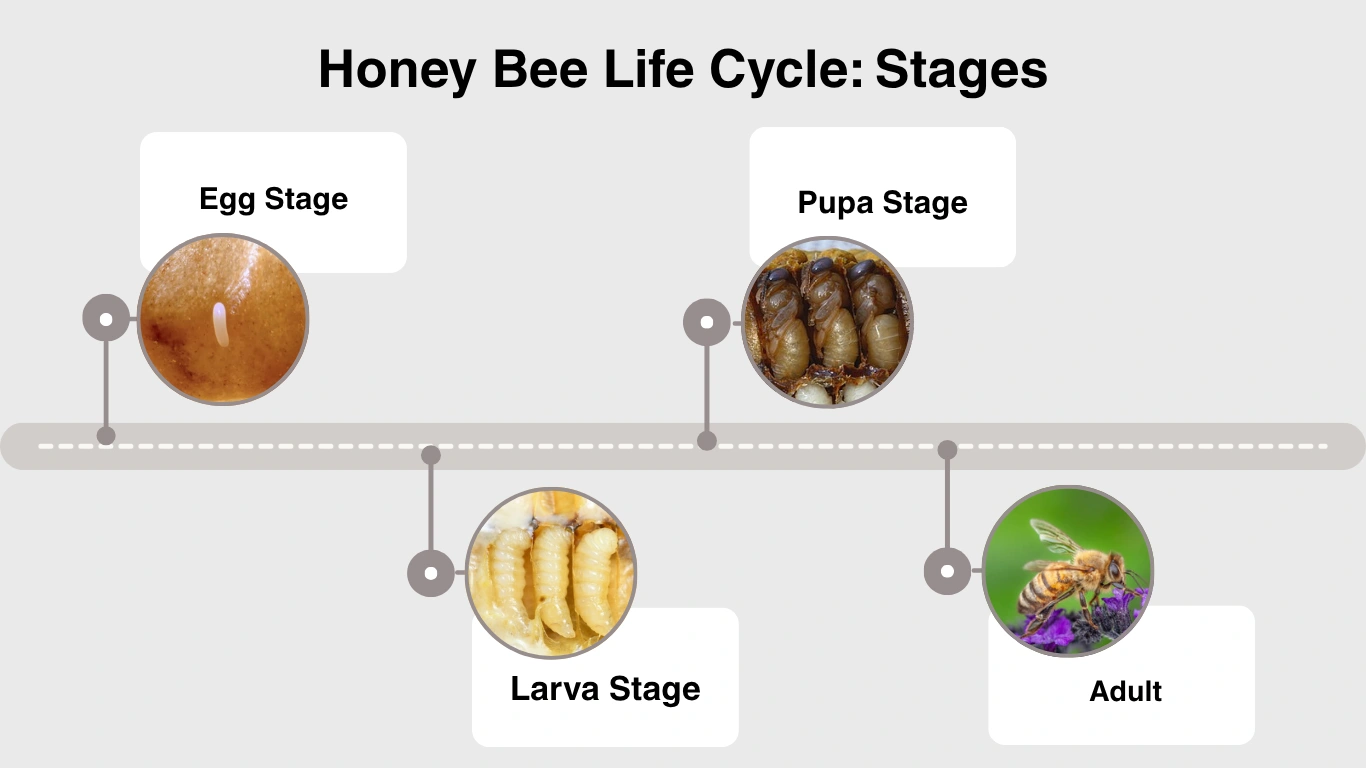
The honey bee life cycle is a fascinating process that shows how these tiny insects grow and develop within a well-organized colony. Honey bees go through a complete transformation, known as metamorphosis, which includes four main stages: egg, larva, pupa, and adult. Each stage plays a crucial role in the survival of the colony. Understanding this life cycle helps us appreciate how bees contribute to nature and maintain ecological balance.
Overview of the Honey Bee Life Cycle
Honey bees undergo complete metamorphosis, meaning their bodies change entirely as they grow. The life cycle begins when the queen bee lays eggs inside the hexagonal cells of a honeycomb. These eggs hatch into larvae, which are then transformed into pupae before finally becoming adult bees.
Each stage of development is carefully managed by worker bees, who feed and protect the young. The entire process takes different amounts of time depending on whether the bee becomes a queen, worker, or drone. This structured development ensures the smooth functioning of the colony.
Stage 1 – Egg Stage

How Eggs Are Laid
The life cycle starts with the queen bee, the only fertile female in the colony. She lays thousands of tiny, white eggs inside individual wax cells in the hive. Each egg is placed carefully to ensure proper development.
The queen can control whether an egg becomes a worker or a drone. Fertilized eggs develop into female bees (workers or queens), while unfertilized eggs become male drones.
Duration of Egg Stage
The egg stage is very short and usually lasts about three days. During this time, the egg remains attached to the cell and begins developing internally. Soon, it hatches into a larva, marking the beginning of the next stage.
Stage 2 – Larva Stage

Feeding and Growth
Once the egg hatches, it becomes a larva—a small, worm-like creature with no legs or wings. During this stage, the larva’s main purpose is to eat and grow. Worker bees feed the larvae with a nutritious substance called royal jelly for the first few days.
Larvae that are selected to become queens continue to receive royal jelly, while others are fed a mixture of pollen and nectar called “bee bread.” This difference in diet determines the role of the bee in the colony.
Molting Process
As the larva grows rapidly, it sheds its outer skin several times in a process called molting. This allows it to increase in size quickly within a short period.
Duration of Larva Stage
The larva stage lasts about 5 to 6 days. By the end of this phase, the larva has grown significantly and is ready to enter the next stage. Worker bees then seal the cell with wax, preparing it for transformation.
Stage 3 – Pupa Stage

Transformation Process
Inside the sealed cell, the larva transforms into a pupa. This is one of the most important stages of the honey bee life cycle. During this phase, the bee develops its adult features, including wings, legs, eyes, and body segments.
Although the pupa does not move or feed, significant changes are happening internally. This stage turns the larva into a fully formed bee.
Inside the Sealed Cell
The pupa remains protected inside the wax-sealed cell. This safe environment allows the bee to complete its development without disturbance. Worker bees maintain the temperature and cleanliness of the hive to support this process.
Duration of Pupa Stage
The length of the pupa stage varies depending on the type of bee. On average, it lasts between 7 to 12 days. By the end of this stage, the bee is fully developed and ready to emerge as an adult.
Stage 4 – Adult Bee

Emergence from Cell
After completing its development, the adult bee chews its way out of the sealed cell. This marks the final stage of the honey bee life cycle. The newly emerged bee is soft and lighter in color but quickly becomes stronger and more active.
Roles of Adult Bees
Once the bee becomes an adult, its role depends on its type. Worker bees perform various tasks such as cleaning, feeding larvae, and collecting nectar. Drone bees focus on reproduction, while the queen’s main role is to lay eggs and maintain the colony.
Differences in Life Cycle of Queen, Worker, and Drone Bees
Queen Bee Lifecycle
The queen bee develops the fastest among all types. She completes her development in about 16 days. This rapid growth is due to her exclusive diet of royal jelly, which accelerates her development and prepares her for reproduction.
Worker Bee Lifecycle
Worker bees take around 21 days to develop from egg to adult. After emerging, they perform different tasks depending on their age, contributing to the smooth operation of the hive.
Drone Bee Lifecycle
Drone bees take the longest time to develop, usually around 24 days from egg to adult. Unlike worker bees, drones do not perform tasks such as foraging or cleaning. Their main role is to mate with a queen bee from another colony. After mating, drones typically die, while those that do not mate may be expelled from the hive during colder months.
Honey Bee Life Cycle Duration (Timeline)

The time it takes for a honey bee to develop depends on its type. Here is a simple breakdown:
- Queen bee: about 16 days
- Worker bee: about 21 days
- Drone bee: about 24 days
This variation in development time is important for maintaining balance within the colony. Faster queen development ensures leadership, while worker bees support daily activities, and drones handle reproduction.
Lifespan of Honey Bees
The lifespan of a honey bee varies greatly depending on its role in the colony.
The queen bee lives the longest, often surviving for 2 to 5 years. Her main job is to lay eggs and keep the colony growing. Worker bees have much shorter lives, usually living only 5 to 6 weeks during busy seasons. However, those born in colder months may live longer.
Drone bees typically live for a few weeks to a few months. If they successfully mate, they die shortly afterward. If not, they may be removed from the hive when resources become limited.
Importance of the Honey Bee Life Cycle
The honey bee life cycle is essential for the survival and growth of the colony. Each stage ensures that new bees are continuously produced to replace older ones. Without this cycle, the colony would not be able to sustain itself.
The life cycle also supports pollination, which is crucial for plant reproduction. As new worker bees emerge, they help pollinate flowers, contributing to food production and ecosystem health. This makes the honey bee life cycle important not just for bees, but for the entire environment.
Factors Affecting Honey Bee Development
Several factors can influence how quickly and successfully honey bees develop.
Temperature plays a key role, as the hive must be kept warm for proper growth. Worker bees regulate the temperature to ensure ideal conditions. Nutrition is another important factor. A lack of proper food, such as nectar and pollen, can slow development or weaken bees.
Environmental conditions, including weather and habitat quality, also affect the life cycle. In addition, diseases and parasites, like mites, can harm developing bees and reduce colony health. These factors can disrupt the normal life cycle and lead to population decline.
Interesting Facts About Honey Bee Life Cycle
The honey bee life cycle includes many fascinating details. For example, the queen bee develops faster than any other bee due to her special diet of royal jelly. This shows how nutrition directly affects development.
Another interesting fact is that all bees start from the same type of egg, but their future roles are determined by how they are fed. This unique system allows the colony to control its population and structure.
Honey bees also undergo complete metamorphosis, meaning their bodies change entirely from larva to adult. This transformation is similar to that of butterflies and highlights the complexity of their development.
Conclusion
The honey bee life cycle is a remarkable process that demonstrates the efficiency and organization of these small but powerful insects. From egg to adult, each stage plays a vital role in maintaining the colony and ensuring its survival.
Understanding this life cycle helps us appreciate the importance of honey bees in pollination, food production, and ecological balance. By protecting bees and their habitats, we can support this natural process and help sustain life on Earth for future generations.
FAQs
What are the stages of a honey bee life cycle?
The honey bee life cycle has four stages: egg, larva, pupa, and adult.
How long does a honey bee live?
The lifespan varies by type. Queens can live several years, workers live a few weeks, and drones live a few months.
Which bee develops the fastest?
The queen bee develops the fastest, usually in about 16 days.
What does a larva eat?
Larvae are fed royal jelly initially. Some continue receiving it to become queens, while others are fed pollen and nectar.