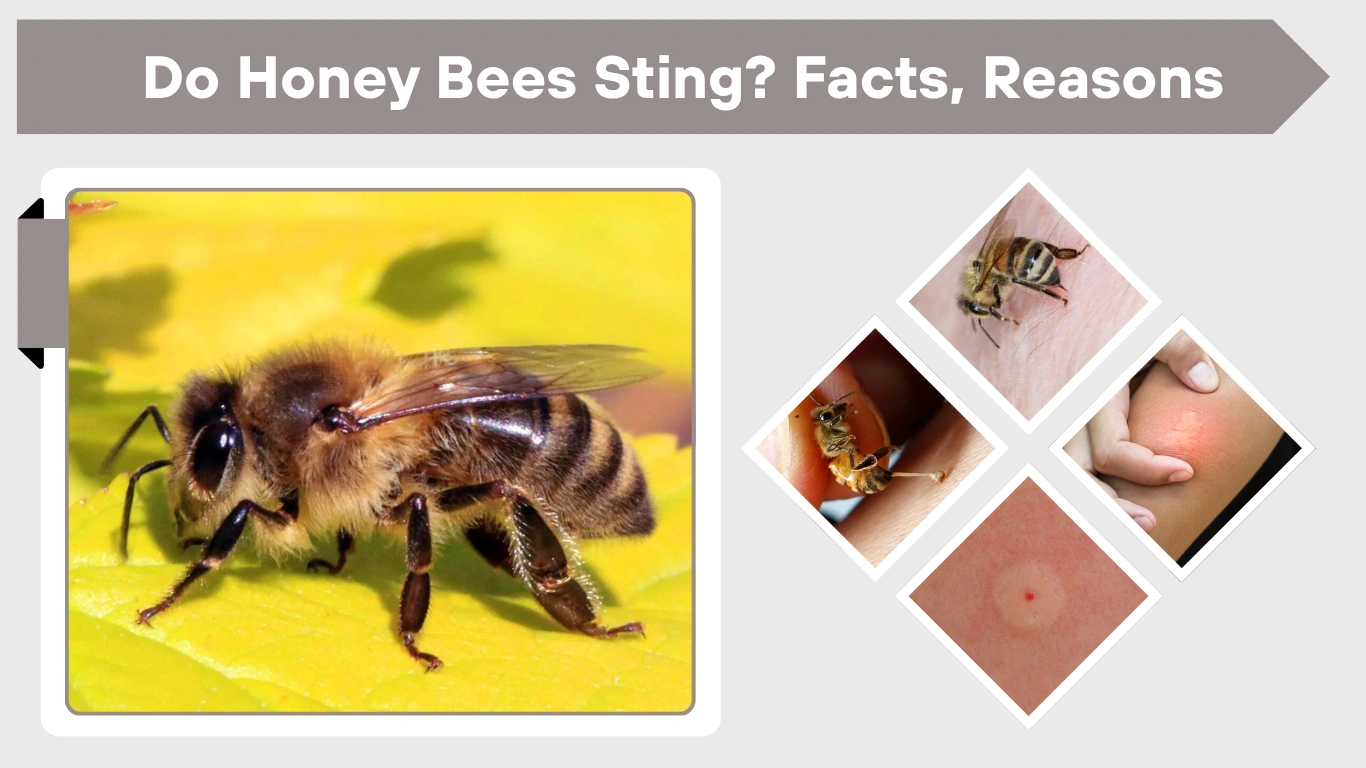
Honey bees are often seen buzzing around flowers, collecting nectar and pollinating plants. While they are generally calm and beneficial insects, many people wonder: do honey bees sting? The simple answer is yes, honey bees can sting, but they usually do so only when they feel threatened. Understanding why and when they sting can help reduce fear and prevent unnecessary harm to both humans and bees.
Do Honey Bees Sting Humans?
Yes, honey bees can sting humans, but it is not their natural intention. Unlike aggressive insects, honey bees are not likely to attack without reason. They typically sting only when they perceive danger, especially when their hive is disturbed or when they feel directly threatened.
For example, sudden movements, swatting at bees, or getting too close to their hive can trigger a defensive response. In most cases, if you remain calm and avoid disturbing them, honey bees will not sting. This makes them far less dangerous than many people believe.
Why Do Honey Bees Sting?

Defense Mechanism
The primary reason honey bees sting is to protect themselves and their colony. A hive contains thousands of bees, along with stored honey and developing larvae. Worker bees are responsible for guarding this valuable resource, and stinging is their last line of defense.
When Bees Feel Threatened
Honey bees may sting when they sense danger. This can include loud noises, quick hand movements, or vibrations near their hive. Even wearing dark colors or strong scents like perfumes can sometimes make bees feel uneasy.
Are Honey Bees Aggressive?
Honey bees are generally not aggressive insects. They are much calmer compared to wasps or hornets. Most of the time, they are focused on collecting nectar and pollen rather than interacting with humans. Their peaceful nature means that stings are relatively rare unless provoked.
Which Honey Bees Sting?
Worker Bees
Worker bees are female bees and the only members of the colony that can sting. They use their stinger to defend the hive and themselves. Since they are responsible for most tasks in the colony, including protection, they are the ones most likely to sting when necessary.
Queen Bee
The queen bee also has a stinger, but she rarely uses it on humans. Her stinger is mainly used to fight other rival queens within the hive. Therefore, it is extremely uncommon for a queen bee to sting a person.
Drone Bees
Drone bees are male bees, and they do not have stingers at all. Their primary role is reproduction, so they are completely harmless to humans.
What Happens When a Honey Bee Stings?

When a honey bee stings, its stinger penetrates the skin and releases venom. This venom causes immediate pain, followed by redness and swelling around the affected area. The sensation is often described as sharp and burning but usually lasts only a short time.
The stinger of a honey bee is barbed, which means it gets stuck in the skin. As the bee tries to fly away, the stinger is left behind, continuing to release venom for a short period. This is why removing the stinger quickly is important to reduce the effects of the sting.
Do Honey Bees Die After Stinging?
One of the most unique facts about honey bees is that they often die after stinging humans or other mammals. This happens because their barbed stinger becomes lodged in the skin. When the bee pulls away, part of its abdomen tears off, leading to its death.
However, this does not always happen when they sting other insects. In those cases, the stinger may not get stuck, allowing the bee to survive. This shows that stinging is a serious sacrifice for honey bees, used only in extreme situations.
Symptoms of a Honey Bee Sting
A honey bee sting usually causes mild and temporary symptoms. The most common reaction is a sharp pain at the moment of the sting. This is followed by redness, swelling, and itching around the area.
For most people, these symptoms disappear within a few hours or days. However, some individuals may experience stronger reactions, including larger swelling or increased discomfort. In rare cases, a severe allergic reaction can occur, which requires immediate medical attention.
How Painful is a Honey Bee Sting?

The pain from a honey bee sting is usually mild to moderate and short-lived. Many people describe it as a sharp, burning sensation that fades within a few minutes. Compared to other insects like wasps or hornets, a honey bee sting is generally less painful.
The level of pain can vary depending on where the sting occurs and a person’s sensitivity. Areas with thinner skin or more nerve endings, such as the face or hands, may feel more painful. However, for most people, the discomfort is manageable and temporary.
What to Do If a Honey Bee Stings You
Remove the Stinger
The first and most important step is to remove the stinger as quickly as possible. The longer it stays in the skin, the more venom it releases. You can gently scrape it out using a fingernail or a flat object like a card.
Clean the Area
Wash the affected area with soap and water to prevent infection. Keeping the area clean helps reduce irritation and promotes faster healing.
Reduce Pain and Swelling
Applying a cold compress or ice pack can help reduce swelling and numb the pain. Over-the-counter remedies like antihistamines or pain relievers may also help. Natural remedies such as aloe vera or baking soda paste can soothe the skin.
When to Seek Medical Help
Seek immediate medical attention if you notice signs of a severe allergic reaction. These include difficulty breathing, swelling of the face or throat, dizziness, or a rapid heartbeat. Although rare, such reactions can be life-threatening.
How to Avoid Honey Bee Stings
Avoiding honey bee stings is usually simple if you understand their behavior. Stay calm when bees are nearby and avoid sudden movements, as this can make them feel threatened.
Do not disturb beehives or areas where bees are active. Wearing light-colored clothing and avoiding strong perfumes can also help reduce the chances of attracting bees. If a bee approaches you, remain still or move away slowly instead of swatting at it.
Honey Bee Sting vs Wasp Sting

Honey bee stings and wasp stings are often confused, but they are quite different. A honey bee can sting only once because its barbed stinger gets stuck in the skin. In contrast, wasps have smooth stingers and can sting multiple times.
Wasps are generally more aggressive than honey bees and are more likely to sting without provocation. Their stings are also often more painful and can cause stronger reactions. Understanding these differences can help you respond appropriately in each situation.
Interesting Facts About Honey Bee Stings
Honey bees sting only as a last resort, making them less dangerous than many people think. Not all bees can sting—only female worker bees have this ability.
Another interesting fact is that a honey bee releases a chemical signal when it stings, which can alert other bees to potential danger. This is why it is important to move away calmly after being stung to avoid attracting more bees.
Conclusion
Honey bees can sting, but they are not naturally aggressive and usually do so only in self-defense. Their sting is a protective mechanism, often used as a last resort to defend their colony. While a sting can be painful, it is typically harmless for most people and easy to treat.
Understanding honey bee behavior and knowing how to respond to a sting can help reduce fear and prevent unnecessary harm. By respecting these important pollinators and taking simple precautions, we can safely coexist with them while benefiting from their essential role in nature.
FAQs
Do honey bees sting for no reason?
No, honey bees usually sting only when they feel threatened or when their hive is disturbed.
Can a honey bee sting kill you?
In most cases, a honey bee sting is harmless. However, it can be dangerous for people who are allergic to bee venom.
How long does a bee sting last?
Pain from a bee sting typically lasts a few minutes, while swelling and itching may last a few hours or days.
Are honey bees more dangerous than wasps?
No, honey bees are generally less aggressive and less dangerous than wasps, which can sting multiple times.