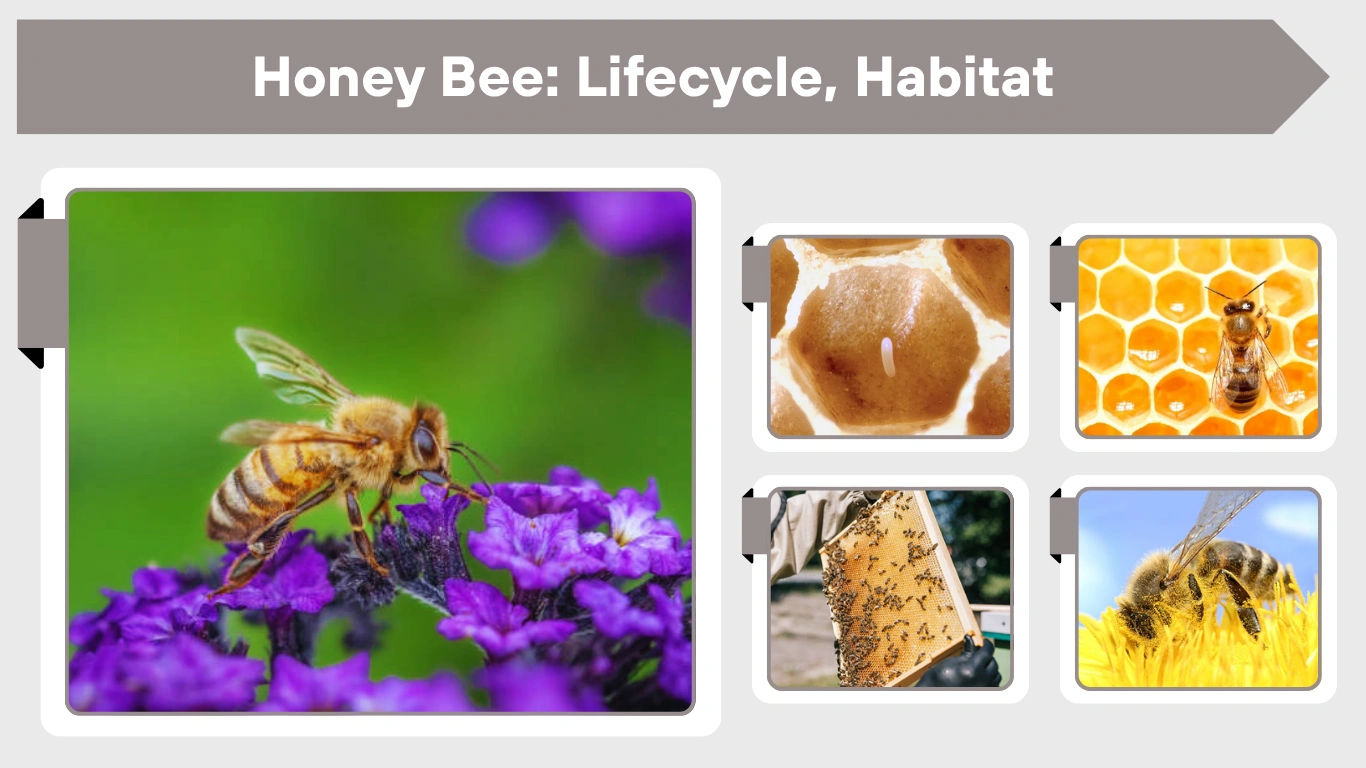
Honey bees are small yet incredibly important insects known for producing honey and pollinating plants. They play a vital role in maintaining ecological balance and supporting global food production. Without honey bees, many fruits, vegetables, and crops would struggle to grow. These social insects live in organized colonies and work together efficiently, making them one of the most fascinating creatures in nature.
What is a Honey Bee?
A honey bee is a type of flying insect belonging to the genus Apis. These bees are best known for their ability to produce and store honey, as well as build wax structures called honeycombs. Unlike many other bee species, honey bees live in highly structured colonies that function like a well-organized society.
Honey bees are different from other bees, such as bumblebees or solitary bees, mainly because of their social behavior and large colony sizes. They communicate with each other, divide tasks, and work collectively to survive and thrive.
Types of Honey Bees

Western Honey Bee (Apis mellifera)
The Western honey bee is the most common and widely studied species. It is used extensively in beekeeping and agriculture due to its high honey production and excellent pollination abilities.
Eastern Honey Bee (Apis cerana)
The Eastern honey bee is native to Asia and is well adapted to local climates. It is smaller than the Western honey bee and has developed natural defenses against certain pests and diseases.
Giant and Dwarf Honey Bees
Giant honey bees are larger and build single, exposed combs, usually on tall trees or cliffs. In contrast, dwarf honey bees are much smaller and create smaller hives. Both types have unique survival strategies suited to their environments.
Physical Structure of Honey Bees
Body Parts
A honey bee’s body is divided into three main parts: the head, thorax, and abdomen. The head contains important sensory organs like the eyes and antennae. The thorax is responsible for movement and holds the wings and legs. The abdomen contains vital organs and the stinger.
Wings and Eyes
Honey bees have two pairs of wings that allow them to fly efficiently while carrying nectar and pollen. Their compound eyes help them detect light, movement, and even ultraviolet patterns on flowers, which guide them to food sources.
Stinger and Defense
The stinger is a defense tool used mainly by worker bees. When a bee stings, it injects venom into the threat. However, in many cases, the bee loses its stinger and dies afterward, making stinging a last resort for protection.
Honey Bee Lifecycle

Egg Stage
The lifecycle of a honey bee begins when the queen lays eggs inside hexagonal wax cells. Each egg is tiny and white, and it usually hatches within a few days.
Larva Stage
After hatching, the larva emerges and is fed by worker bees. During this stage, the larva grows rapidly and sheds its skin several times.
Pupa Stage
In the pupa stage, the bee undergoes transformation inside a sealed cell. During this phase, it develops wings, legs, and other adult features.
Adult Bee
Once fully developed, the adult bee emerges. Its role in the colony depends on its type—queen, worker, or drone. Each has specific duties that help maintain the colony.
Structure of a Honey Bee Colony
Queen Bee
The queen bee is the most important member of the colony. Her primary role is to lay eggs, sometimes thousands per day. She also produces chemical signals that help regulate the behavior of other bees.
Worker Bees
Worker bees are female bees that perform most of the tasks in the hive. They collect nectar, produce honey, clean the hive, care for larvae, and defend the colony. Their responsibilities change as they age.
Drone Bees
Drone bees are male bees whose main purpose is to mate with the queen. They do not collect food or defend the hive. After mating, drones usually die.
Honey Bee Behavior and Communication

Waggle Dance
One of the most fascinating behaviors of honey bees is the waggle dance. Worker bees perform this movement to communicate the direction and distance of food sources to other bees in the hive.
Foraging Behavior
Honey bees leave the hive to collect nectar and pollen from flowers. They can travel long distances and visit hundreds of flowers in a single trip, making them highly efficient pollinators.
Behavior and Communication (Continued)
Swarming
Swarming is a natural process by which a honey bee colony reproduces. When the colony becomes too large, the old queen leaves the hive with a group of worker bees to form a new colony. Meanwhile, a new queen takes over the original hive. This process helps ensure the survival and expansion of the species.
How Honey Bees Make Honey

Honey production is a complex and fascinating process. Worker bees collect nectar from flowers using their long tongues and store it in a special stomach called the “honey stomach.” Once they return to the hive, they pass the nectar to other worker bees.
These bees add enzymes that break down the sugars in the nectar. The processed nectar is then stored in honeycomb cells. Bees fan their wings to evaporate excess water, gradually turning the nectar into thick honey. Finally, the honey is sealed with wax and stored for future use, especially during times when food is scarce.
Habitat and Distribution
Honey bees are found all over the world, except in extremely cold regions like Antarctica. They thrive in environments where flowers are abundant, such as forests, gardens, grasslands, and agricultural fields.
They prefer areas with a mild climate and access to water sources. Honey bees build their hives in tree cavities, rock crevices, or man-made structures like beehives provided by beekeepers. Their adaptability has allowed them to survive in a wide range of environments.
Importance of Honey Bees

Pollination
Honey bees are among the most important pollinators in the world. As they move from flower to flower collecting nectar, they transfer pollen, which helps plants reproduce. This process is essential for the production of many crops, including fruits, vegetables, and nuts.
Food Supply
A large portion of the food humans consume depends on pollination. Without honey bees, the availability of many nutritious foods would decrease significantly, affecting global food security.
Ecosystem Balance
Honey bees support biodiversity by helping plants grow and reproduce. These plants provide food and shelter for many other animals, making bees a key part of the ecosystem.
Economic Value
Honey bees contribute greatly to the economy through honey production, beeswax, and crop pollination. Farmers and beekeepers rely on them to improve crop yields and maintain agricultural productivity.
Threats Facing Honey Bees
Despite their importance, honey bees face several serious threats. One of the biggest dangers is the use of pesticides, which can harm or kill bees. Climate change also affects their habitats and food availability.
Habitat loss due to urbanization and deforestation reduces the number of flowering plants bees rely on. Additionally, diseases and parasites, such as the Varroa mite, weaken colonies and can lead to their collapse. These challenges have caused a decline in bee populations worldwide.
How to Protect Honey Bees
Protecting honey bees is essential for maintaining a healthy environment. One simple way to help is by planting a variety of flowers that provide nectar and pollen throughout the year.
Avoiding or reducing the use of harmful pesticides can also make a big difference. Supporting local beekeepers by buying natural honey and bee products helps sustain bee populations. Creating small habitats, such as bee-friendly gardens, can provide safe spaces for bees to thrive.
Interesting Facts About Honey Bees
Honey bees are full of surprising abilities. Honey, for example, never spoils and can last for thousands of years if stored properly. A single worker bee may visit thousands of flowers in one day to collect nectar.
A typical hive can contain between 20,000 and 60,000 bees working together. Honey bees can also recognize patterns and even human faces, showing a level of intelligence that many people do not expect from insects.
Conclusion
Honey bees are essential creatures that play a major role in sustaining life on Earth. From pollinating crops to maintaining ecological balance, their contributions are invaluable. However, they face increasing threats that put their survival at risk. By understanding their importance and taking simple steps to protect them, we can help ensure that honey bees continue to thrive. Protecting bees ultimately means protecting our environment and food supply for future generations.
FAQs
Do honey bees sting?
Yes, honey bees can sting, but they usually do so only when threatened. Worker bees lose their stinger after stinging and often die as a result.
How long do honey bees live?
The lifespan of a honey bee depends on its role. Worker bees live a few weeks, drones live a few months, and queens can live several years.
Why are honey bees important?
Honey bees are important because they pollinate plants, support food production, and maintain ecological balance.
What do honey bees eat?
Honey bees feed on nectar and pollen collected from flowers. Nectar provides energy, while pollen supplies protein for growth.