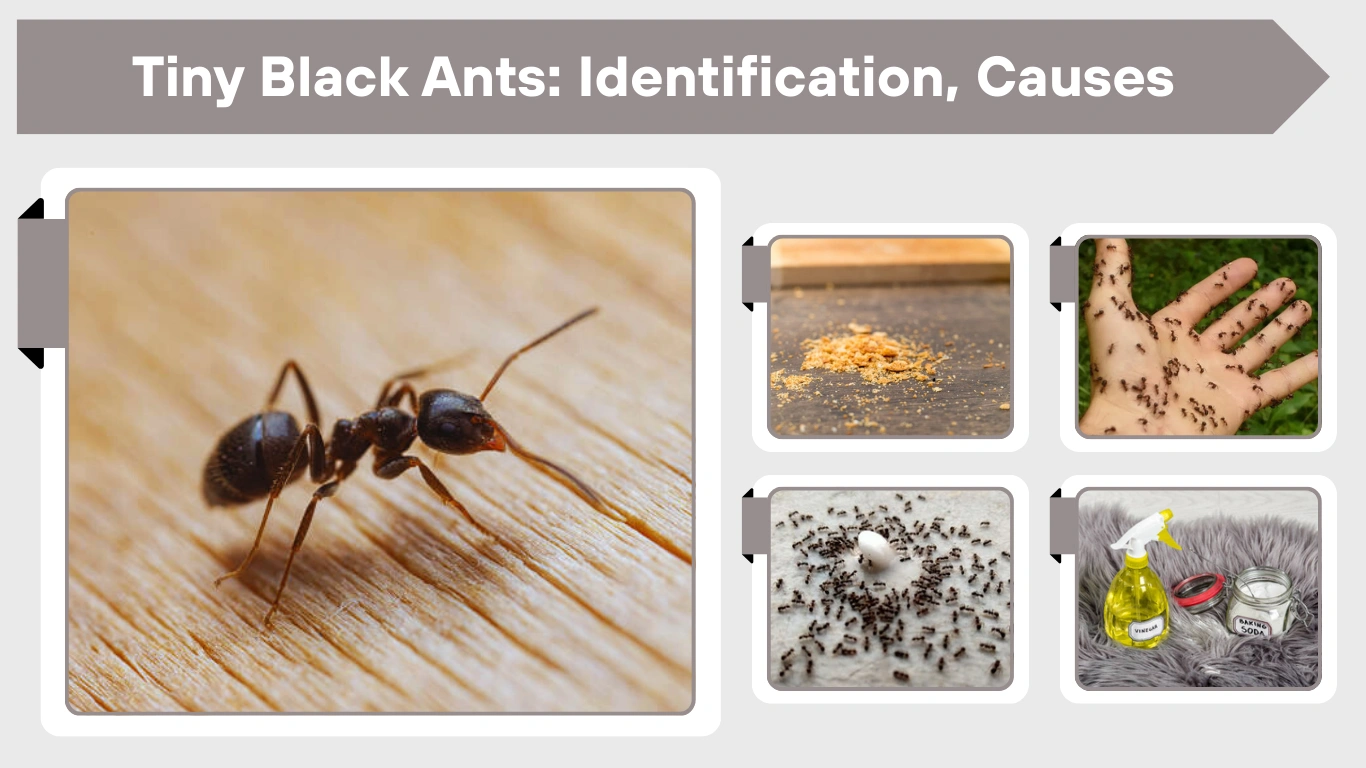
Tiny black ants are one of the most common household pests, often appearing unexpectedly in kitchens, bathrooms, and along windowsills. Despite their small size, these ants can quickly form long trails and invade food storage areas in large numbers. Many homeowners mistake them for other ant species, which can make treatment less effective. Proper identification and understanding of their behavior are essential for controlling them successfully. In this guide, you’ll learn how to identify tiny black ants, why they enter homes, and the early signs of an infestation.
What Are Tiny Black Ants?

Tiny black ants is a general term used to describe several small, dark-colored ant species that commonly invade homes. While they may look similar at first glance, different species have slightly different behaviors and nesting habits.
Physical Characteristics
Most tiny black ants measure between 1–3 millimeters in length. They are dark brown to jet black in color and have segmented bodies divided into three parts: head, thorax, and abdomen. Like all ants, they have six legs and elbowed antennae.
Worker ants are the ones most commonly seen indoors. They are small and wingless. Queens are larger and may develop wings during mating season. Because of their size, tiny black ants can squeeze through extremely small cracks and gaps, making homes easy to access.
Common Species of Tiny Black Ants
Several species fall under the category of tiny black ants:
Little Black Ants (Monomorium minimum)
These ants are shiny black and commonly nest outdoors in soil, wood piles, and under debris. They often enter homes in search of sweets and greasy foods.
Odorous House Ants (Tapinoma sessile)
These ants are dark brown or black and give off a rotten coconut-like smell when crushed. They are highly attracted to sugary substances and often nest near moisture sources.
Pavement Ants (Tetramorium species)
Typically found nesting in cracks in driveways and sidewalks, pavement ants sometimes move indoors. They are slightly larger than little black ants but still considered small.
Identifying the exact species can help determine the most effective control method, as some prefer moisture while others focus more on food availability.
Where They Are Commonly Found
Tiny black ants are frequently found in areas where food and water are easily accessible. Indoors, they are most common in:
- Kitchens (countertops, cabinets, pantries)
- Bathrooms (near sinks, tubs, and drains)
- Laundry rooms
- Around pet food bowls
Outdoors, they typically nest in soil, under rocks, beneath mulch, inside rotting wood, and in cracks in pavement. Colonies may be located close to foundations, which makes indoor invasions more likely.
Why Do Tiny Black Ants Enter Homes?

Understanding why tiny black ants invade your home is key to preventing them. These ants are constantly searching for resources that support their growing colonies.
Searching for Food
Food is the primary reason tiny black ants enter homes. They are particularly attracted to:
- Sugary foods (syrup, honey, candy, juice)
- Greasy or fatty foods
- Crumbs left on counters or floors
- Pet food left out overnight
- Open trash containers
Once a worker ant finds a food source, it leaves behind a pheromone trail. This chemical trail guides other ants directly to the food, which is why you often see long lines of ants marching in a single direction.
Water and Moisture Sources
Moisture is another major attractant. Tiny black ants need water to survive, and homes provide many reliable sources. Common moisture hotspots include:
- Leaking pipes under sinks
- Damp wood or wall voids
- Condensation around windows
- Bathroom fixtures
- Water heaters
Odorous house ants, in particular, prefer moist environments and may establish nests inside walls near plumbing.
Seasonal and Environmental Factors
Tiny black ants are more active during warmer months, especially in spring and summer. Rising temperatures increase their foraging activity. Heavy rain can also flood outdoor nests, forcing ants to relocate indoors. On the other hand, during drought conditions, ants may enter homes searching for water.
Seasonal mating swarms may also increase visible activity, especially if reproductive ants are present.
Entry Points
Because of their extremely small size, tiny black ants can enter through almost invisible openings. Common entry points include:
- Cracks in walls and foundations
- Gaps around windows and doors
- Utility line openings
- Damaged weather stripping
- Small holes in screens
Even the smallest structural gaps can provide access. Once inside, ants establish consistent trails between their nest and food sources.
Signs of a Tiny Black Ant Infestation

Early detection can prevent a minor issue from turning into a full infestation. Recognizing the warning signs is essential.
Visible Ant Trails
One of the most obvious signs is seeing a line of ants moving along walls, baseboards, or countertops. These trails often lead directly to food or water. Ants rely on pheromone communication, so even after cleaning visible ants, the invisible scent trail may remain unless properly treated.
Nesting Areas
Although tiny black ants often nest outdoors, some species build nests indoors. Possible nesting sites include:
- Inside wall voids
- Under flooring
- Behind baseboards
- Beneath appliances
You may notice small piles of dirt or debris near cracks, which can indicate nearby nesting activity.
Increased Indoor Activity
Another strong indicator of an infestation is a sudden increase in the number of ants appearing indoors. While spotting one or two ants may not seem concerning, frequent sightings—especially in the same area—usually signal that a colony is established nearby.
You may notice ants returning daily to the same countertop, cabinet, or sink. This repeated activity means a pheromone trail has been set and reinforced. If the problem persists for more than a few days despite cleaning, the colony is likely close to your home or possibly inside it.
Are Tiny Black Ants Dangerous?

Tiny black ants are not typically aggressive, but that doesn’t mean they’re harmless. Their presence can still create health and sanitation concerns.
Health Concerns
Tiny black ants can contaminate food as they travel across unsanitary surfaces before reaching kitchens and pantries. They may crawl through trash, drains, or outdoor soil and then move directly onto food preparation areas.
Although they do not usually transmit serious diseases, they can spread bacteria and pathogens mechanically. Food that has been exposed to ants should be discarded to avoid potential health risks.
Structural Damage
Unlike carpenter ants, tiny black ants do not cause significant structural damage by chewing through wood. However, they may nest inside wall voids, insulation, or beneath flooring. Over time, large colonies can become difficult to manage if they remain hidden within structural spaces.
The main concern is not destruction but persistence. Once established, colonies can expand and create multiple satellite nests.
When to Take Immediate Action
You should act quickly if:
- Ant activity continues despite cleaning efforts
- You notice ants in multiple rooms
- Swarms of winged ants appear indoors
- The infestation grows rapidly
Early intervention prevents the colony from spreading and becoming harder to eliminate.
How to Get Rid of Tiny Black Ants

Effective control requires a combination of identification, elimination, and prevention. Simply spraying visible ants rarely solves the root problem.
Step 1 – Identify the Source
Start by observing where ants are most active. Follow visible trails to locate entry points or possible nesting areas. Pay attention to moisture sources and food spills that may be attracting them.
Avoid immediately destroying trails without identifying where they lead. Knowing the source helps you target the colony rather than just the workers.
Step 2 – Use Natural Remedies
For mild infestations, natural solutions can help reduce activity:
- Vinegar and water spray: Disrupts pheromone trails and deters ants temporarily.
- Lemon juice: Acts similarly to vinegar in masking scent trails.
- Diatomaceous earth: A natural powder that damages ants’ exoskeletons, causing dehydration.
- Essential oils (peppermint, tea tree): Repel ants when mixed with water and sprayed along entry points.
While these remedies may help, they typically work best as supportive measures rather than complete solutions.
Step 3 – Apply Commercial Treatments
Baiting is one of the most effective methods for eliminating tiny black ants. Unlike sprays, bait allows worker ants to carry poison back to the colony, eventually killing the queen.
- Ant bait stations: Convenient and low-maintenance.
- Gel baits: Ideal for cracks and crevices.
- Residual insecticide sprays: Useful for perimeter treatment but should not be applied directly over bait.
Patience is important. It may take several days to see significant results, as the bait must spread throughout the colony.
Step 4 – Consider Professional Pest Control
If DIY treatments fail or the infestation keeps returning, professional pest control may be necessary. Experts can:
- Identify the exact species
- Locate hidden nests
- Apply targeted treatments
- Provide long-term prevention strategies
Professional services are especially helpful for large or recurring infestations.
Preventing Future Infestations
Long-term prevention is just as important as elimination. Tiny black ants are persistent, but simple maintenance habits can significantly reduce the risk of re-infestation.
Maintain Cleanliness
Keeping your home clean removes the primary attraction for ants.
- Wipe down counters daily
- Sweep and mop floors regularly
- Store food in airtight containers
- Clean up spills immediately
- Take out trash frequently
Even small crumbs can attract large numbers of ants.
Seal Entry Points
Inspect your home’s exterior and interior for small cracks or gaps.
- Apply caulk to wall and foundation cracks
- Replace damaged weather stripping
- Repair torn window screens
- Seal openings around utility lines
Blocking entry points makes it much harder for ants to access your home.
Control Outdoor Colonies
Since many tiny black ants nest outdoors, managing your yard can reduce indoor invasions.
- Remove wood piles and debris near the foundation
- Trim vegetation away from exterior walls
- Keep mulch levels low and away from siding
- Use outdoor bait stations when necessary
Creating a barrier around your home helps prevent ants from establishing nearby colonies.
Tiny Black Ants in the Yard
Outdoor colonies are often the starting point of indoor problems. Tiny black ants commonly build nests:
- In soil and lawn areas
- Under stones and pavers
- Beneath sidewalks and driveways
- Along building foundations
You may notice small soil mounds or ants emerging from cracks in pavement. Treating outdoor nests early can prevent them from expanding indoors.
Boiling water can sometimes eliminate small visible mounds, while perimeter baiting provides longer-term control. However, widespread infestations may require more comprehensive treatment.
Conclusion
Tiny black ants may be small, but they can quickly become a frustrating household problem. Understanding their behavior, identifying the species, and addressing the root cause of the infestation are essential steps toward effective control. By combining proper sanitation, targeted treatments, and preventive measures, you can eliminate existing colonies and reduce the chances of future invasions. Early action and consistent maintenance are the keys to keeping your home ant-free.