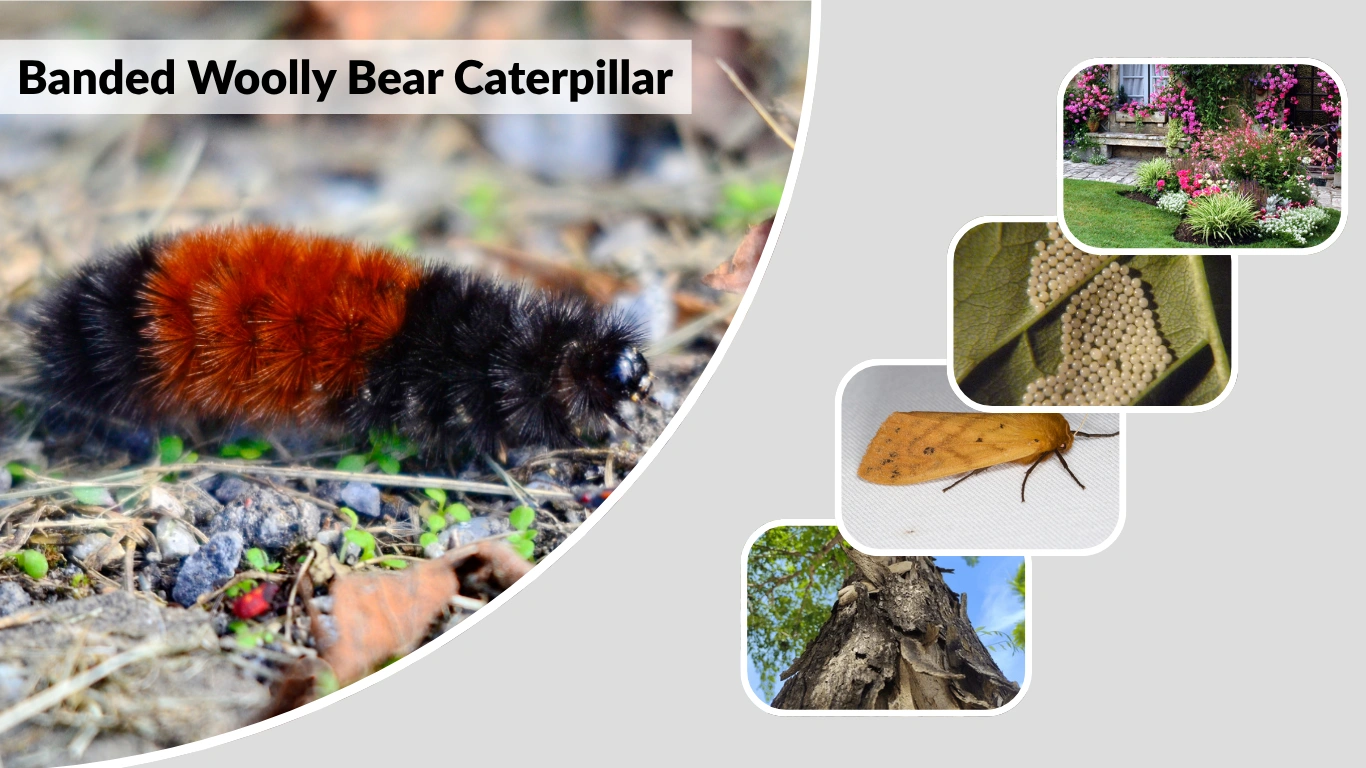
The banded woolly bear caterpillar, known for its fuzzy black and rusty-brown bands, is one of North America’s most beloved insects. Scientifically called Pyrrharctia isabella, this small caterpillar eventually transforms into the Isabella tiger moth. Beyond its cute, fuzzy appearance, the banded woolly bear is famous for an age-old myth that links its color bands to winter weather predictions. Let’s explore its fascinating life, habits, and symbolism.
Identification

Appearance
The banded woolly bear caterpillar has a distinctive look that makes it easy to recognize. It features two black bands—one at each end—and a reddish-brown or rust-colored band in the middle. Covered in dense, bristle-like hairs called setae, it grows to about 1.5 inches in length. When threatened, it instinctively curls into a tight ball, protecting its softer underside from predators.
Color and Band Meaning
According to folklore, the banded woolly bear’s color bands reveal the nature of the upcoming winter. A wide brown band supposedly means a mild winter, while a narrow brown band predicts a harsh one. In truth, scientists have found that color differences result from the caterpillar’s age, molting process, diet, and humidity levels, not the weather. Older caterpillars often have larger brown sections due to repeated shedding and sunlight exposure.
Scientific Name
The banded woolly bear’s scientific name is Pyrrharctia isabella. It belongs to the family Erebidae, and its adult form is the Isabella tiger moth. This moth has light orange-tan wings with small black spots and a modest wingspan of about 2 inches. Despite its delicate appearance, it plays an important role in the ecosystem as both a pollinator and a food source for birds and bats.
Species Overview
Relationship to Other Woolly Bears
The banded woolly bear is the larval stage of the Isabella tiger moth, but it shares many traits with other species in the tiger moth family. It’s often mistaken for the yellow woolly bear caterpillar, which turns into the Virginian tiger moth (Spilosoma virginica), or the arctic woolly bear caterpillar, which can survive freezing for years. While all woolly bears are fuzzy, their coloration and behavior vary by species.
The Moth Stage
After overwintering, the banded woolly bear transforms into the Isabella tiger moth. The adult moth is pale orange-brown with a light furry texture on its body. It lives only a short time—just long enough to reproduce and lay eggs for the next generation. While its beauty is understated, it represents the completion of one of nature’s most resilient transformations.
Habitat and Distribution

Natural Habitat
Banded woolly bear caterpillars are widespread throughout North America, from southern Canada to northern Mexico. They thrive in open spaces like meadows, gardens, forest edges, and roadsides, where they can easily find leaves to eat. In autumn, they’re often seen crossing roads, a behavior that has led to many folklore stories and local festivals celebrating their seasonal appearance.
Seasonal Activity
These caterpillars are most active during late summer and early autumn. As cold weather approaches, they search for sheltered spots under leaves, bark, or rocks where they can spend the winter. Their hibernation behavior is extraordinary—they can survive being completely frozen for months and awaken in spring to continue their life cycle.
Diet and Feeding

What They Eat
The banded woolly bear caterpillar is not picky about its food. It consumes a wide range of plants, including:
- Clover
- Dandelions
- Nettles
- Grasses
- Plantains
- Spinach or lettuce (in captivity)
This adaptable diet allows the caterpillar to thrive in various environments, from rural fields to suburban gardens. Its feeding helps regulate plant growth and contributes to the food chain as prey for birds and insects.
Feeding Habits
Banded woolly bears are primarily nocturnal feeders, meaning they eat during the evening or early morning to avoid predators. They prefer soft, tender leaves, which are easier to chew with their small mandibles. Their flexible diet ensures they can survive even when their preferred food sources are scarce.
Caring and Feeding in Captivity
If you plan to care for a woolly bear caterpillar, it’s easy and educational. Provide a small container with air holes, a layer of moist soil, and fresh leaves from its natural habitat. Keep it in a cool environment and replace food daily. During winter, it may enter hibernation—don’t worry; this is a natural part of its life cycle.
Life Cycle of the Banded Woolly Bear Caterpillar

Egg Stage
The life of a banded woolly bear begins when a female Isabella tiger moth lays clusters of tiny yellowish eggs on the underside of leaves in late spring or early summer. These eggs hatch within about 7 to 10 days, releasing miniature versions of the fuzzy caterpillars.
Caterpillar Stage
Once hatched, the caterpillars immediately begin feeding and growing. They molt several times as they develop, each time shedding their old skin to make room for a larger body. During this stage, they build up fat reserves to sustain them through winter hibernation. The band pattern becomes more pronounced with each molt.
Cocoon and Moth Stage
When temperatures rise again in spring, the woolly bear awakens from its frozen state and spins a silky cocoon. Inside, it undergoes metamorphosis, transforming into the Isabella tiger moth within two to three weeks. The adult moth then continues the cycle by laying eggs, ensuring the species’ survival through the next season.
Behavior and Adaptation

Hibernation
The banded woolly bear caterpillar is remarkably equipped to endure harsh winters. As temperatures drop, it finds shelter under fallen leaves, rocks, or tree bark and curls into a tight ball. Its body produces a natural antifreeze called glycerol, which prevents ice from forming in its tissues. The caterpillar can freeze solid through the winter months and thaw out unharmed in spring — a fascinating survival mechanism that has earned it a reputation for toughness.
Defense Mechanisms
When disturbed, the caterpillar’s instinct is to roll into a ball, shielding its soft underside with its bristly outer hairs. These stiff, spiky hairs aren’t poisonous or venomous but can cause mild irritation for people with sensitive skin. The bristles discourage predators like birds and small mammals from eating it, making them an effective defense tool.
Movement
During autumn, woolly bears can often be seen traveling across roads or sidewalks. This wandering behavior isn’t random — they’re searching for suitable places to hibernate. Despite their small size, these caterpillars can travel long distances, sometimes over 30 feet, in their quest for winter shelter.
Myths and Winter Predictions
The Famous Winter Folklore
For centuries, the banded woolly bear caterpillar has been the subject of rural folklore predicting winter’s severity. The width of the brown band is said to hold the secret: a wide brown band means a mild winter, while a narrow one signals a bitter season ahead. This legend became particularly popular in the 1940s when an entomologist named C. H. Curran playfully studied the correlation and helped popularize the myth nationwide.
Scientific Explanation
While charming, the myth doesn’t hold scientific weight. Studies show that a caterpillar’s coloration depends on age, molting cycles, humidity, and temperature during growth, not upcoming weather. Older caterpillars that have molted more times tend to display wider brown bands, giving the illusion of a “forecast.” Nevertheless, this old tale continues to be celebrated at annual woolly bear festivals across the United States, keeping the legend alive for fun and folklore.
Interaction with Humans
Are They Poisonous or Dangerous?
Despite their prickly look, banded woolly bear caterpillars are completely harmless. They do not sting, bite, or produce toxins. However, their hairs can cause a light rash if pressed against sensitive skin. Pets, including cats and dogs, are also safe around them. These harmless creatures are often used in classrooms to teach children about insect life cycles and metamorphosis.
Caring for One at Home
Caring for a banded woolly bear caterpillar is simple and rewarding. Here are a few guidelines:
- Keep them in a ventilated container with soil or paper towel bedding.
- Provide fresh leaves daily (clover, dandelion, and plantain are ideal).
- Mist lightly with water to maintain humidity.
- Allow natural hibernation in a cool, shaded place.
- In spring, they’ll spin a cocoon and emerge as a moth.
With proper care, you can safely observe their transformation into the beautiful Isabella tiger moth, completing one of nature’s most enchanting life cycles.
Comparison Table

| Feature | Banded Woolly Bear | Yellow Woolly Bear | Arctic Woolly Bear |
| Color Bands | Black-brown-black | Creamy yellow | Dark brown |
| Moth Form | Isabella tiger moth | Virginian tiger moth | Arctic tiger moth |
| Habitat | North America | Eastern U.S. | Arctic tundra |
| Lifespan | Around 1 year | Around 1 year | Up to 14 years |
| Poisonous? | No | No | No |
FAQs
What does a banded woolly bear caterpillar turn into?
It turns into the Isabella tiger moth (Pyrrharctia isabella), a small orange-tan moth with black dots on its wings. This transformation happens after the caterpillar spins a silk cocoon and completes its metamorphosis in spring.
Is the banded woolly bear caterpillar poisonous?
No, it isn’t poisonous or venomous. The caterpillar’s fuzzy bristles can cause mild skin irritation for some people, but it poses no real danger to humans or pets.
What does the brown band on a woolly bear caterpillar mean?
Folklore says the brown band predicts winter weather — wider brown means a milder winter, while narrow brown means colder months ahead. In reality, the band width depends on the caterpillar’s age, environment, and molting history, not weather forecasts.
What does a banded woolly bear caterpillar eat?
They feed on many plants like dandelions, nettles, clover, and grasses. When kept as pets, they can also eat spinach, cabbage, or lettuce. They are versatile eaters and adapt well to whatever vegetation is available.
How many legs does a banded woolly bear caterpillar have?
The banded woolly bear has 16 legs in total — six true legs near its head and ten prolegs that help it grip leaves and surfaces. These flexible limbs allow it to move smoothly over rough terrain.