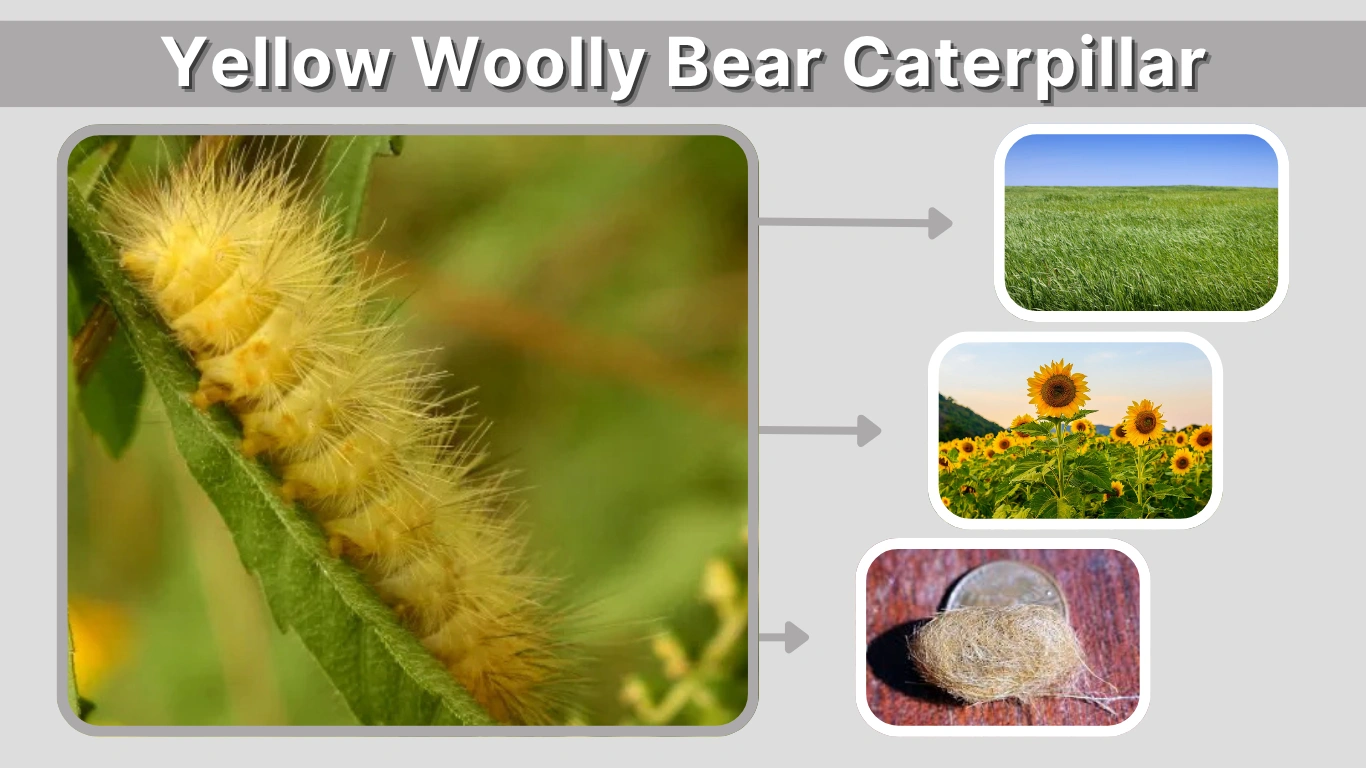
The yellow woolly bear caterpillar, easily recognized by its soft golden fuzz, is one of the most beautiful and misunderstood insects in North America. Scientifically known as Spilosoma virginica, this fuzzy creature eventually transforms into the elegant Virginian tiger moth. Despite its bright color and bristly appearance, the yellow woolly bear is harmless and gentle. It plays an important ecological role while captivating nature lovers with its striking color variations and seasonal appearances.
Identification

Physical Appearance
The yellow woolly bear caterpillar stands out for its bright, creamy-yellow or golden coat made of long, silky hairs. It typically measures between 1 and 1.5 inches in length. Some individuals appear nearly white, while others range from deep orange to pale gold, depending on diet, environment, and maturity. Occasionally, darker “spikes” or black-tipped bristles appear, but these are natural and not harmful.
When disturbed, the caterpillar may curl into a ball — a classic defensive posture shared by other woolly bear species. Though fuzzy and dense, its hair is soft and rarely causes irritation. Unlike many stinging caterpillars, the yellow woolly bear’s bristles are non-venomous and pose no threat to humans or pets.
Color Variations and Meaning
Color differences in yellow woolly bears often lead to myths about their ability to predict weather. Folklore suggests that brighter or paler caterpillars indicate milder winters, while darker ones forecast cold, harsh seasons. However, this is purely myth. Scientists confirm that color intensity is influenced by molting stages, humidity, temperature, and sunlight exposure rather than weather prediction.
Scientific Classification
- Scientific Name: Spilosoma virginica
- Common Names: Yellow woolly bear, Virginian tiger moth caterpillar
- Family: Erebidae (Tiger moth family)
- Adult Form: Virginian tiger moth
Habitat and Range

Geographic Distribution
The yellow woolly bear caterpillar is widely distributed across North America, including the United States, southern Canada, and parts of Mexico. It’s a familiar sight in states like Texas, Michigan, and Colorado, especially during late summer and fall when it’s most active.
It favors temperate climates but can adapt to different conditions, thriving in both humid and dry regions. In colder northern areas, the caterpillars appear in late summer, while in southern states, they can be seen nearly year-round.
Preferred Habitat
These caterpillars prefer grassy fields, open meadows, gardens, and woodland edges. They are often found feeding on wild plants or resting on leaves during the day. Gardeners may notice them on flowers and vegetables, although they rarely cause significant damage. Their flexible feeding habits allow them to coexist peacefully with most plant life, making them an integral part of the ecosystem.
Life Cycle of the Yellow Woolly Bear Caterpillar

Egg Stage
The life of a yellow woolly bear begins when a female Virginian tiger moth lays clusters of tiny, round eggs on the undersides of plant leaves. This usually happens in late spring or early summer. The eggs are pale yellow and hatch within five to ten days, releasing tiny larvae that immediately begin feeding on their host plants.
Caterpillar Stage
This is the most recognizable and longest stage in the woolly bear’s life cycle. The yellow woolly bear caterpillar feeds voraciously on a wide range of plants to build energy reserves for metamorphosis. As it grows, it sheds its skin multiple times — a process known as molting. Each molt may slightly change its color, with older individuals appearing deeper yellow or even orange.
During this stage, it measures around an inch long and continues feeding until autumn. In some climates, there may be two generations per year, allowing for both summer and fall populations.
Cocoon Stage
When fully grown, the yellow woolly bear stops eating and searches for a sheltered place to pupate. It spins a silky white cocoon, often incorporating its own hairs into the structure for insulation. The cocoon may be attached to grass, leaves, or even walls and garden fences. Inside, it transforms into a pupa, a stage that lasts about two to three weeks in warm conditions. In cooler climates, the pupa may overwinter and hatch the following spring.
Adult Moth Stage
The adult form is the Virginian tiger moth, a graceful white moth with delicate black specks across its wings. It has a wingspan of about two inches and a furry white or yellowish thorax. The moth is nocturnal, drawn to lights at night, and typically lives only long enough to mate and reproduce. Its short adult lifespan contrasts sharply with the caterpillar’s long and resilient larval period.
Diet and Feeding

What They Eat
The yellow woolly bear caterpillar is a generalist feeder, which means it eats a wide variety of plants. Common food sources include:
- Dandelions
- Clover
- Nettles
- Sunflowers
- Plantains
- Cabbage, spinach, or lettuce (in captivity)
Its ability to feed on multiple host plants helps it survive in diverse environments. These caterpillars can often be found munching on garden weeds, which makes them more helpful than harmful in many cases.
Feeding Behavior
They are primarily nocturnal eaters, feeding actively at dusk and dawn to avoid predators. During the day, they rest curled on the underside of leaves or within vegetation. The yellow woolly bear’s chewing mouthparts are strong for its size, allowing it to consume tender foliage efficiently. This active feeding period continues until the caterpillar prepares for pupation.
Feeding in Captivity
When raised indoors, these caterpillars thrive on common greens like spinach, lettuce, or clover leaves. Keep them in a ventilated container with fresh leaves replaced daily. Mist lightly with water to maintain moisture but avoid over-watering. As the caterpillar nears pupation, it will stop eating and begin to spin its cocoon — a clear sign that metamorphosis is about to begin.
Behavior and Adaptation

Hibernation and Seasonal Cycle
The yellow woolly bear caterpillar displays remarkable adaptability to changing climates. In northern regions, it typically hibernates through winter inside its silky cocoon, often hidden under leaves, soil, or plant debris. The cocoon acts as insulation, protecting the pupa from freezing temperatures. In warmer southern states, the species may produce two or even three generations a year, skipping dormancy altogether. When spring arrives, the overwintering pupa emerges as a fully formed Virginian tiger moth, beginning the cycle anew.
Defense and Survival
Despite its bright, eye-catching color, the yellow woolly bear caterpillar relies on subtle defense mechanisms rather than aggression. Its long, fuzzy hairs serve as a deterrent to birds and small mammals. When disturbed, it rolls into a compact ball, using its hairs as a protective barrier. These bristles can sometimes cause mild irritation for sensitive skin but contain no toxins or venom. Unlike stinging caterpillars such as the saddleback or puss moth, the yellow woolly bear is entirely harmless.
Movement and Behavior
These caterpillars move slowly, using their 16 small legs to grip surfaces and navigate leaves and stems. They are most active during cool mornings and evenings, often seen crawling across gardens and meadows. In late summer and early fall, their wandering behavior increases as they search for ideal pupation spots. This wandering habit sometimes brings them onto roads or walls, making them easy to spot during their seasonal journeys.
Myths and Misconceptions
Is the Yellow Woolly Bear Caterpillar Poisonous?
One of the most common questions about the yellow woolly bear caterpillar is whether it’s poisonous. The answer is no — these caterpillars are completely harmless. Their bright color can be misleading, as bright hues in nature often signal toxicity, but this species is an exception. Its hairs are non-venomous, and it poses no threat to humans, pets, or even chickens, which can safely eat them without any ill effects.
Sting and Rash Myth
The yellow woolly bear does not sting or bite. However, some people may experience mild skin irritation if the caterpillar’s hairs brush against their skin repeatedly. This irritation is mechanical rather than chemical — the tiny barbed hairs can create a mild, itchy rash, similar to a grass irritation. Washing the affected area with mild soap and water usually resolves the discomfort quickly.
Weather and Color Folklore
Like its banded cousin, the yellow woolly bear is surrounded by myths suggesting it can predict the weather. Some people believe its brightness or color intensity reflects the upcoming winter’s harshness. However, scientific research shows that coloration is determined by age, humidity, and temperature during growth, not future weather. The myth persists because it adds charm and folklore to this beloved creature’s story.
Interaction with Humans
Caring for a Yellow Woolly Bear Caterpillar
Caring for a yellow woolly bear caterpillar can be an enjoyable educational project. Here’s how to do it safely:
- Place it in a ventilated container with soil or paper towel bedding.
- Provide fresh leaves daily (clover, dandelion, or plantain work best).
- Keep the habitat lightly moist but not wet.
- Offer twigs or paper for cocoon building.
- Once it spins its cocoon, leave it undisturbed until the moth emerges.
After metamorphosis, gently release the Virginian tiger moth outdoors, preferably at night when temperatures are mild.
Ecological Role and Garden Impact
Yellow woolly bears play a small but positive role in their environment. They help control plant overgrowth by feeding on common weeds and serve as a food source for birds, spiders, and predatory insects. Although they may nibble on garden plants, they rarely occur in large enough numbers to cause significant damage. Their presence is a sign of a balanced, healthy ecosystem.
Managing Populations Naturally
If yellow woolly bears become too numerous on certain plants, hand removal is the simplest and most eco-friendly solution. Encouraging natural predators like birds and beneficial insects can also help maintain population balance. Avoid using pesticides, as these chemicals harm pollinators and other helpful species more than they control caterpillars.
Comparison Table
| Feature | Yellow Woolly Bear | Banded Woolly Bear | Arctic Woolly Bear |
| Color | Cream to golden yellow | Black and brown bands | Dark brown |
| Moth Form | Virginian tiger moth | Isabella tiger moth | Arctic tiger moth |
| Habitat | Gardens and meadows | Fields and roadsides | Arctic tundra |
| Lifespan | ~1 year | ~1 year | Up to 14 years |
| Poisonous? | No | No | No |
FAQs
What does a yellow woolly bear caterpillar turn into?
It transforms into the Virginian tiger moth (Spilosoma virginica), a white moth with black specks across its wings. The entire process, from caterpillar to adult moth, typically takes several months, depending on temperature and region.
Is the yellow woolly bear caterpillar poisonous or does it sting?
No — this species is completely harmless. Its soft bristles can cause mild skin irritation in rare cases but contain no toxins or stingers. It neither bites nor poses any danger to people or pets.
What does the yellow woolly bear caterpillar eat?
It feeds on a wide variety of plants such as dandelions, clover, nettles, and sunflowers. In captivity, it will happily eat spinach, cabbage, or lettuce. Its flexible diet allows it to thrive in gardens and wild meadows alike.
Where does the yellow woolly bear caterpillar live?
These caterpillars are common throughout North America, including Texas, Michigan, and Colorado. They prefer open habitats like fields, gardens, and woodland edges where host plants are abundant.
How do you care for a yellow woolly bear caterpillar?
Provide leafy greens, mild humidity, and a cool, shaded place for it to spin its cocoon. Once it pupates, let it rest undisturbed. In a few weeks, it will emerge as the beautiful Virginian tiger moth ready to be released into the wild.