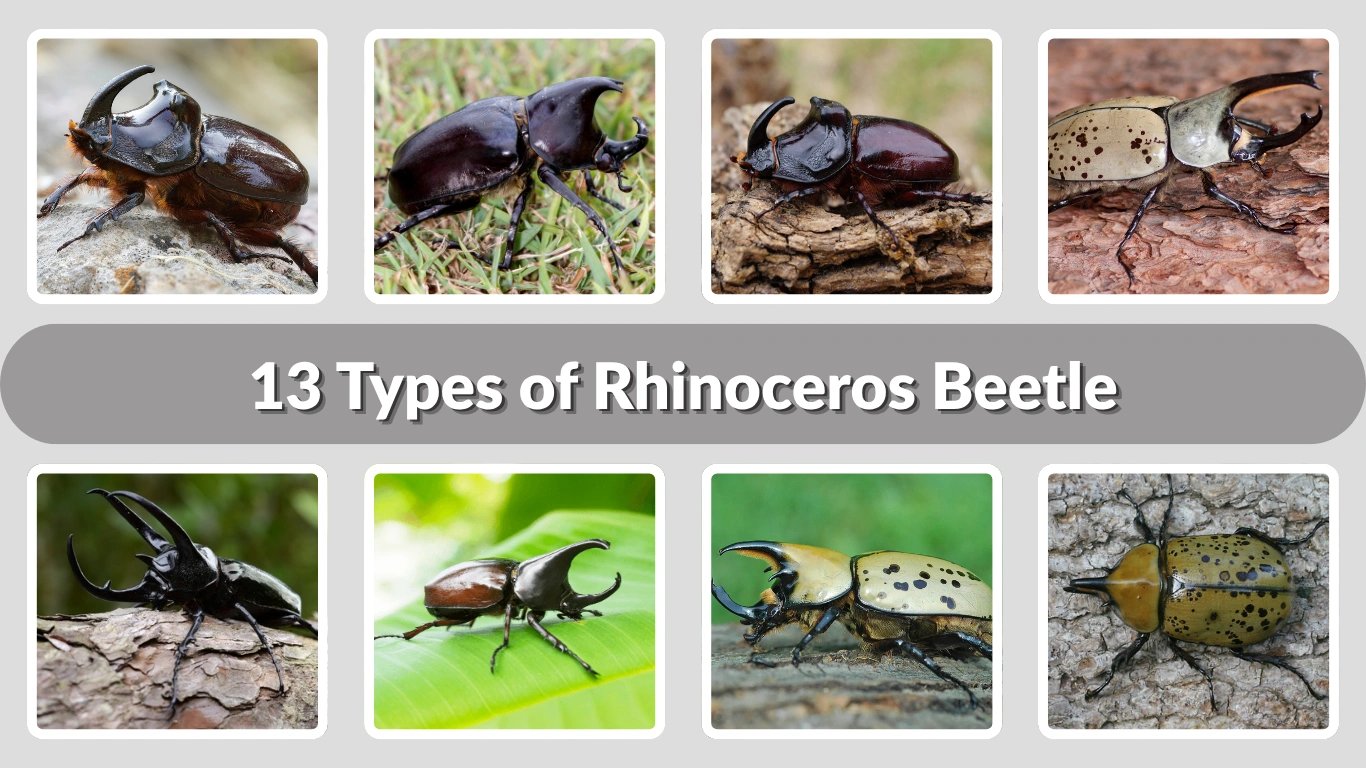
Rhinoceros beetles are among the most powerful insects on Earth, celebrated for their impressive horns and incredible strength. Found across tropical and temperate regions, these beetles play vital ecological roles in decomposing organic matter. With over 300 species worldwide, each has unique adaptations and appearances. From the mighty Hercules beetle to the elegant European rhinoceros beetle, these remarkable insects showcase nature’s engineering at its finest.
1. Hercules Beetle

The Hercules beetle (Dynastes hercules) is one of the largest beetles in the world, known for its impressive horned males and incredible strength. Native to Central and South America, this beetle can lift objects up to 850 times its body weight. Its striking appearance and massive size make it a favorite among insect enthusiasts.
Identification
- Scientific Name: Dynastes hercules
- Size: Up to 7 inches (including horn)
- Color: Olive-green or brown elytra with black spots
- Horn: Long, forked horn on males; females lack horns
- Habitat: Rainforests of Central and South America
Risk
Hercules beetles are harmless to humans. They do not bite or sting, and their horns are used only in combat between males during mating competitions. However, habitat destruction poses a threat to their population, reducing breeding and feeding grounds in tropical forests.
Diet & Lifecycle
The larvae feed on decaying wood, helping recycle nutrients in the ecosystem. Adult beetles consume fruit and tree sap. Their lifecycle lasts about one to two years, including a lengthy larval stage before metamorphosis into adulthood. The adult lifespan is typically three to six months.
2. Atlas Beetle

The Atlas beetle (Chalcosoma atlas) is a powerful rhinoceros beetle named after the Titan Atlas from Greek mythology. Native to Southeast Asia, this beetle is admired for its immense strength and distinctive horns. Males use their horns in fierce battles for territory and mates, showcasing their dominance in the insect world.
Identification
- Scientific Name: Chalcosoma atlas
- Size: 2.5 to 5 inches long
- Color: Shiny black or dark brown
- Horn: Three prominent horns on males
- Habitat: Tropical forests of Southeast Asia
Risk
Atlas beetles are not dangerous to humans. Their aggression is limited to other males during fights. However, deforestation and habitat loss threaten their natural environments, reducing populations in the wild. Captive breeding programs help maintain their numbers.
Diet & Lifecycle
Larvae feed on decaying wood and organic matter, while adults consume sap and ripe fruits. The larval stage lasts around 12 to 15 months before pupation. Adult beetles live for three to five months, emerging during humid seasons to breed and feed.
3. Elephant Beetle

The Elephant beetle (Megasoma elephas) is a massive rhinoceros beetle species native to Central and South American rainforests. Known for its thick exoskeleton and impressive horn structure, it resembles an elephant’s trunk, which inspired its name. Despite its intimidating appearance, this beetle is gentle and vital for forest ecosystems.
Identification
- Scientific Name: Megasoma elephas
- Size: 2.5 to 4.5 inches long
- Color: Yellowish-brown with fine hair-like texture
- Horn: Large, curved horn on males; females lack horns
- Habitat: Humid tropical forests of Central and South America
Risk
Elephant beetles pose no threat to humans. They do not bite or sting and are mostly nocturnal. However, they face environmental risks from deforestation and climate change, which disrupt their natural habitats and food sources.
Diet & Lifecycle
Larvae feed on decaying wood and plant matter, while adults prefer fruit and sap. The entire lifecycle takes about two years, with the larval stage lasting up to 18 months. Adults live for several months, primarily focused on reproduction and feeding.
4. Japanese Rhinoceros Beetle

The Japanese rhinoceros beetle (Trypoxylus dichotomus) is one of Japan’s most iconic insects, often kept as a pet and featured in popular culture. Known locally as “kabutomushi,” it’s admired for its majestic horn and shiny armor-like body. These beetles play a vital role in decomposing organic matter in forest ecosystems.
Identification
- Scientific Name: Trypoxylus dichotomus
- Size: 1.5 to 3 inches long
- Color: Glossy dark brown or black
- Horn: Single Y-shaped horn on males; females are hornless
- Habitat: Forested regions across Japan, Korea, Taiwan, and China
Risk
Japanese rhinoceros beetles are completely harmless to humans. They use their horns solely for male-to-male battles during mating season. However, habitat loss and light pollution have impacted some wild populations, reducing their breeding success in certain areas.
Diet & Lifecycle
Larvae feed on decaying wood and organic soil matter, while adults enjoy fruit, sap, and tree juice. Their life cycle spans one year — about 10 months as larvae, a few weeks as pupae, and three to four months as adults, mostly active in summer.
5. Eastern Hercules Beetle

The Eastern Hercules beetle (Dynastes tityus) is one of the largest beetles found in North America. Its size, strength, and striking coloration make it a fascinating species. Males have long, curved horns used for combat, while females are more rounded and lack horns entirely.
Identification
- Scientific Name: Dynastes tityus
- Size: Up to 2.5 inches long
- Color: Greenish-yellow or gray with black spots
- Horn: Long, forward-curving horn on males
- Habitat: Deciduous forests of the southeastern United States
Risk
The Eastern Hercules beetle poses no danger to humans. It doesn’t bite or sting, and its horns are used solely for territorial disputes among males. However, habitat loss from logging and deforestation has slightly reduced its range in some regions.
Diet & Lifecycle
Larvae feed on rotting logs and organic debris, aiding in forest nutrient recycling. Adults consume sap, decaying fruits, and tree juices. Their development takes around one to two years, with a long larval stage and an adult life of three to six months, typically active during warm summer nights.
6. Ox Beetle

The Ox beetle (Strategus aloeus) is a robust rhinoceros beetle species native to North and Central America. Named for its horn-like structures resembling ox horns, this beetle is known for its digging strength and distinctive appearance. Males are heavily armored, while females are smaller and lack the signature horns.
Identification
- Scientific Name: Strategus aloeus
- Size: 1 to 2 inches long
- Color: Reddish-brown to black
- Horn: Three short horns on males; none on females
- Habitat: Sandy soils, grasslands, and woodlands across the Americas
Risk
Ox beetles are harmless to humans and beneficial to the environment. They help decompose organic material and aerate the soil through burrowing. However, urban development and pesticide use can negatively affect their populations in some areas.
Diet & Lifecycle
Larvae feed on decaying wood and compost, playing an essential role in nutrient cycling. Adults eat sap, rotting fruit, and plant juices. The complete lifecycle lasts about one year, with larvae developing underground for several months before pupating and emerging as adults during warmer seasons.
7. Rhinoceros Beetle

The rhinoceros beetle (Xylotrupes gideon) is one of the most recognizable species in the insect world. Found across Southeast Asia and parts of Oceania, it’s known for its impressive horns and strength. Male beetles use their horns in fierce battles over territory and mates, while females remain hornless and smaller.
Identification
- Scientific Name: Xylotrupes gideon
- Size: 1.5 to 3 inches long
- Color: Shiny black or dark brown
- Horn: Distinct forked horn on males; females lack horns
- Habitat: Tropical forests and plantations of Southeast Asia
Risk
Rhinoceros beetles are entirely harmless to humans. Their horns are purely for mating competitions, not defense. The greatest threats they face are habitat destruction and the pet trade, which sometimes removes them from their natural ecosystems.
Diet & Lifecycle
Larvae feed on decaying wood, while adults enjoy sap and overripe fruit. Their lifecycle takes about one year, with a larval stage lasting eight to ten months. Adults live for several months, mostly active during humid nights in the wet season.
8. Caucasus Beetle

The Caucasus beetle (Chalcosoma chiron) is a large and striking rhinoceros beetle found in Southeast Asia, especially Malaysia and Indonesia. Known for its three impressive horns, this beetle is admired for both its strength and glossy appearance. Males use their horns to wrestle rivals during mating competitions.
Identification
- Scientific Name: Chalcosoma chiron
- Size: 2.5 to 5 inches long
- Color: Shiny black or deep brown
- Horn: Three long, curved horns on males
- Habitat: Tropical rainforests of Southeast Asia
Risk
Caucasus beetles are harmless to humans and do not damage crops or structures. Their main threats come from deforestation and illegal collecting for the exotic pet trade, which has led to population decline in certain areas.
Diet & Lifecycle
Larvae feed on decaying logs and organic debris, contributing to forest decomposition. Adults feed primarily on tree sap and fruits. Their development takes around 12 to 18 months, with a lengthy larval period followed by a few months of adult life focused on mating and feeding.
9. Grant’s Rhinoceros Beetle

Grant’s rhinoceros beetle (Dynastes granti) is a magnificent North American species known for its striking coloration and large horned males. Found primarily in the southwestern United States, this beetle is closely related to the Hercules beetle and is a favorite among collectors for its pearly appearance.
Identification
- Scientific Name: Dynastes granti
- Size: 1.5 to 2.5 inches long
- Color: Silvery-gray or white with black spots
- Horn: Prominent single horn on males
- Habitat: Arid forests and desert edges of Arizona and New Mexico
Risk
Grant’s rhinoceros beetles are harmless to humans and play an essential ecological role by recycling decaying wood. However, habitat loss and collection for the pet trade pose minor threats to their natural populations.
Diet & Lifecycle
Larvae feed on decaying wood and roots, while adults prefer fruit and sap. Their life cycle lasts about one to two years, with the larval stage taking up most of that time. Adults live for several months, emerging in late summer for mating.
10. Five-Horned Rhinoceros Beetle

The Five-horned rhinoceros beetle (Eupatorus gracilicornis) is one of the most extraordinary beetles in the world, easily recognized by the five impressive horns adorning the male’s head and thorax. Native to Southeast Asia, this species is admired for its regal look and strong combat behavior among males.
Identification
- Scientific Name: Eupatorus gracilicornis
- Size: 2.5 to 4 inches long
- Color: Glossy black with golden or brown elytra
- Horn: Five distinct horns on males; females are smooth-backed
- Habitat: Mountainous forests of Thailand, Myanmar, and Laos
Risk
The Five-horned rhinoceros beetle is not dangerous to humans. However, due to deforestation and overcollection for insect trade, their numbers are declining in some regions. Conservation efforts are vital to protect their native habitats.
Diet & Lifecycle
Larvae feed on decomposing wood and organic matter, enriching forest soil. Adults consume fruit and tree sap, especially during humid seasons. The life cycle typically spans one year, with the larval stage lasting 8–10 months before transforming into the striking adult beetle.
11. Coconut Rhinoceros Beetle

The Coconut rhinoceros beetle (Oryctes rhinoceros) is a destructive species known for attacking coconut and palm trees. Native to Southeast Asia, it has spread to many tropical islands, where it’s considered a serious pest. Despite its threat to crops, it remains an impressive insect with remarkable strength and resilience.
Identification
- Scientific Name: Oryctes rhinoceros
- Size: 1.2 to 2.4 inches long
- Color: Shiny dark brown or black
- Horn: Short, curved horn on males; smaller or absent in females
- Habitat: Coconut plantations, palm forests, and tropical islands
Risk
This species is a major agricultural pest. Adult beetles bore into the crowns of coconut and oil palm trees to feed on sap, damaging the growing tissue and reducing yield. It’s considered invasive in several Pacific and Indian Ocean islands.
Diet & Lifecycle
Larvae feed on decaying organic matter such as compost and fallen logs. Adults prefer sap and palm tree tissue. The complete life cycle lasts about four to nine months, depending on climate. Effective control includes pheromone traps and biological agents to prevent crop damage.
12. Australian Rhinoceros Beetle

The Australian rhinoceros beetle (Xylotrupes ulysses) is a large, glossy beetle native to northern and eastern Australia. Known for its impressive horn and tough exoskeleton, it is one of the continent’s most powerful insects. Males use their horns in dominance battles, while females remain smooth-backed and smaller.
Identification
- Scientific Name: Xylotrupes ulysses
- Size: 1.5 to 2.5 inches long
- Color: Dark brown to black with metallic sheen
- Horn: Single large horn on males; absent in females
- Habitat: Tropical forests and gardens of northern Australia
Risk
The Australian rhinoceros beetle is harmless to humans but can damage ornamental palms by feeding on their sap. Its population remains stable in most regions, though pesticide use and habitat disturbance can impact local numbers.
Diet & Lifecycle
Larvae feed on decaying wood, compost, and leaf litter, aiding in decomposition. Adults consume tree sap and fruit. Their life cycle lasts around one year — with larvae developing underground for several months before emerging as adults during the warm, humid summer season.
13. European Rhinoceros Beetle

The European rhinoceros beetle (Oryctes nasicornis) is one of Europe’s largest and most admired beetles. Known for its curved horn and robust body, it symbolizes strength and resilience. Despite its formidable look, this beetle is harmless and plays an essential ecological role in breaking down decaying wood.
Identification
- Scientific Name: Oryctes nasicornis
- Size: 1 to 2 inches long
- Color: Reddish-brown with a shiny surface
- Horn: Single curved horn on males; females have smaller humps
- Habitat: Woodlands, compost heaps, and decaying logs across Europe
Risk
European rhinoceros beetles pose no risk to humans. They are protected in many countries due to declining populations caused by habitat loss and pesticide use. Conservation programs encourage the preservation of rotting wood habitats vital for their larvae.
Diet & Lifecycle
Larvae feed on decaying wood and organic material, helping recycle nutrients in forest soil. Adults feed sparingly, mainly on tree sap. Their development takes 2–3 years, most of which is spent in the larval stage before pupating and emerging as adults during summer.