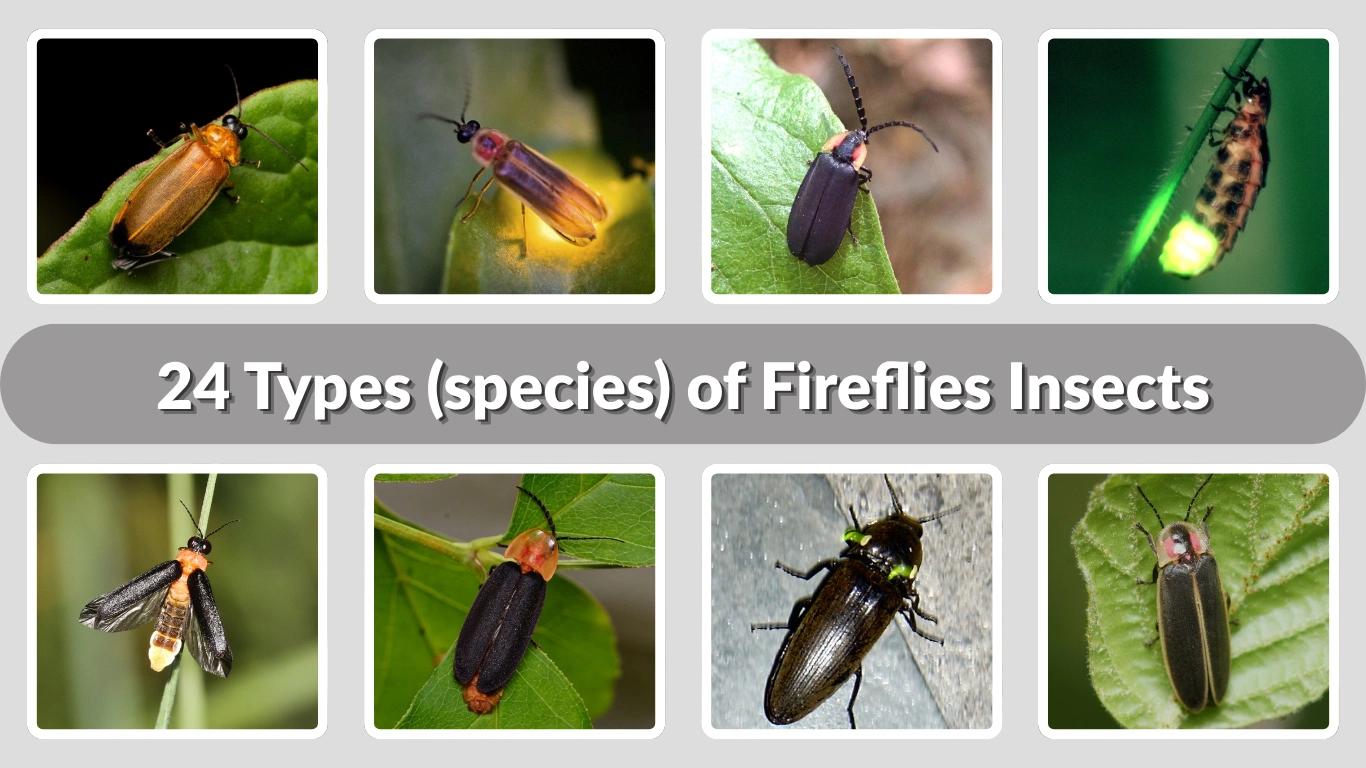
Fireflies, or lightning bugs, are among nature’s most mesmerizing insects, known for their bioluminescent glow that lights up warm summer nights. With over 2,400 species found worldwide, each displays unique light colors, patterns, and behaviors. From the synchronized Photinus carolinus of North America to the glowing Pteroptyx tener of Malaysia, these enchanting beetles illuminate ecosystems across the globe, blending science, beauty, and wonder.
Sure! Here’s the detailed section for the first firefly species, following your requested structure and format style (Spider 1 layout — with H2, H3, and list formatting where needed):
1. Photinus pyralis

The Photinus pyralis, also known as the Common Eastern Firefly, is one of the most familiar and widely seen species in North America. It is best known for its characteristic “J-shaped” flight pattern and bright yellow-green light flashes during summer evenings. These beetles belong to the family Lampyridae and are admired for their rhythmic luminescence.
Identification
- Scientific Name: Photinus pyralis
- Common Name: Common Eastern Firefly
- Family: Lampyridae
- Color: Dark brown to black body with light orange borders on the pronotum
- Light Color: Yellow-green
- Length: Approximately 10–14 mm
- Distinctive Trait: Emits a J-shaped flash while flying
Habitat
Photinus pyralis thrives in moist, warm environments like grasslands, forest edges, and gardens. They are commonly found across eastern and central North America, particularly near bodies of water where humidity levels are high. These habitats provide ideal conditions for their larvae to hunt and for adults to perform light displays.
Behaviors
This species is famous for its unique flashing communication, where males emit timed flashes to attract females. Each species has its own flash pattern, and females respond with a delay to indicate interest. They are most active during dusk and early evening, especially in warm summer months.
Diet & Lifecycle
The larvae of Photinus pyralis are predatory, feeding on small insects, snails, and slugs, using digestive enzymes to liquefy their prey. Adult fireflies, however, consume little to no food and live mainly to mate and reproduce. Their lifecycle includes four stages: egg, larva, pupa, and adult, with most of their lives spent as larvae underground.
2. Pennsylvania Firefly (Photuris pennsylvanica)

The Pennsylvania Firefly is one of the most widespread species in the United States. Known for its distinctive greenish-yellow light, this species is often seen in fields and suburban areas during summer nights. Females of this genus are sometimes called “femme fatales” due to their predatory mimicry behavior.
Identification
- Scientific Name: Photuris pennsylvanica
- Common Name: Pennsylvania Firefly
- Family: Lampyridae
- Color: Dark brown to black with pale yellow markings
- Light Color: Bright greenish-yellow
- Length: Around 10–13 mm
- Distinctive Trait: Females mimic flash patterns of other fireflies to lure and prey on males
Habitat
This species inhabits open meadows, forest edges, and gardens across North America. They prefer humid areas near water sources, where vegetation provides cover for resting and hunting. Urban lawns and parks are also frequent habitats due to the abundance of insects.
Behaviors
Males display a rhythmic flashing courtship pattern, and females respond selectively. Interestingly, some females of this species mimic flashes of other firefly species to attract and consume rival males, a behavior known as aggressive mimicry. They are nocturnal and highly active during warm, humid evenings.
Diet & Lifecycle
Larvae feed on small invertebrates such as snails and worms, while adults primarily consume nectar or may not feed at all. Their life cycle includes a long larval stage spent in soil and a short adult lifespan lasting only a few weeks for reproduction.
3. Black Firefly (Lucidota atra)

The Black Firefly is unique among North American species because adults are usually non-luminous. Despite their lack of visible light, they are true members of the Lampyridae family, identified by their soft bodies and the bioluminescent capabilities of their larvae.
Identification
- Scientific Name: Lucidota atra
- Common Name: Black Firefly
- Family: Lampyridae
- Color: Deep black with faint reddish margins
- Light Color: Larvae emit pale yellow light; adults rarely glow
- Length: 8–11 mm
- Distinctive Trait: Adults do not produce visible light signals
Habitat
Black Fireflies inhabit wooded areas, leaf litter, and damp forest floors. They prefer shaded and moist environments in eastern North America, often found resting under logs or leaves during the day. Their larvae thrive in decaying organic matter, feeding on small soil organisms.
Behaviors
Unlike other species, adults communicate through pheromones instead of light flashes. They are active mostly at dusk and night, flying low near the ground. Their silent and lightless behavior makes them less noticeable, but they play an important ecological role in decomposition and soil health.
Diet & Lifecycle
Larvae are predatory, consuming worms, snails, and soft-bodied insects. Adults have short lifespans and may feed on nectar or not at all. Their life cycle spans a full year, with the majority of time spent in the larval stage before pupating into adults during summer.
4. Blue Ghost Firefly (Phausis reticulata)

The Blue Ghost Firefly is one of the most mysterious and enchanting species found in the Appalachian Mountains of the United States. Instead of flashing, males emit a continuous blue-green glow that hovers low to the ground, creating a mesmerizing effect often described as a “ghostly mist.”
Identification
- Scientific Name: Phausis reticulata
- Common Name: Blue Ghost Firefly
- Family: Lampyridae
- Color: Dark brown to black body
- Light Color: Steady blue-green glow
- Length: Around 7–9 mm
- Distinctive Trait: Males produce a continuous light instead of flashes
Habitat
These fireflies inhabit moist, forested areas—especially rich, shaded hardwood forests in the Appalachian region. They prefer habitats with dense leaf litter and high humidity, which help protect their fragile larvae. Blue Ghosts are often seen near mountain streams and wooded trails at elevations between 1,000 and 3,000 feet.
Behaviors
Unlike most fireflies that communicate through rhythmic flashes, Blue Ghost males emit a steady glow while flying close to the ground in search of wingless females. Their glowing displays can last several seconds, creating a surreal blue illumination that captivates observers during late spring and early summer.
Diet & Lifecycle
The larvae of this species are carnivorous, feeding on small insects, worms, and snails found in moist soil. Adults have short lifespans and may not feed at all. Their life cycle involves overwintering as larvae before pupating and emerging as adults during the warmer months for mating.
5. Common Glow-worm (Lampyris noctiluca)

The Common Glow-worm is a fascinating European species known for the brilliant green light produced by females to attract males. Unlike other fireflies, females are flightless but emit a bright, steady glow visible even from several meters away in the dark countryside.
Identification
- Scientific Name: Lampyris noctiluca
- Common Name: Common Glow-worm
- Family: Lampyridae
- Color: Brown to dark olive body
- Light Color: Bright green
- Length: Females up to 25 mm; males smaller with wings
- Distinctive Trait: Females glow continuously to attract flying males
Habitat
This species is widespread across Europe and parts of Asia, often found in grasslands, hedgerows, and woodland clearings. They prefer dry, open environments where vegetation provides shelter for larvae and adults. Glow-worms are often seen glowing on summer nights along rural paths and meadows.
Behaviors
Female glow-worms climb vegetation and emit continuous green light from their abdomen to attract mates. Males locate females by flying toward their glow. Once mating occurs, females stop glowing. Adults are mostly nocturnal and do not feed, focusing their short lives on reproduction.
Diet & Lifecycle
Larvae are active predators that feed on snails and slugs, injecting enzymes to dissolve their prey. The life cycle lasts about one to two years, with larvae overwintering before pupation in spring. Adults emerge in early summer, living only long enough to reproduce and lay eggs for the next generation.
6. Genji-botaru (Luciola cruciata)

The Genji-botaru, or Luciola cruciata, is one of Japan’s most celebrated fireflies, symbolizing summer nights and romance. Known for its synchronized flashing displays along rivers, it emits a soft yellow-green light that creates breathtaking illumination scenes cherished in Japanese culture.
Identification
- Scientific Name: Luciola cruciata
- Common Name: Genji-botaru (Japanese Firefly)
- Family: Lampyridae
- Color: Dark brown body with pale yellow underside
- Light Color: Yellow-green
- Length: 12–15 mm
- Distinctive Trait: Emits long, rhythmic flashes lasting 2–3 seconds
Habitat
Genji-botaru prefers clean, slow-moving freshwater streams surrounded by lush vegetation. Found primarily in Japan’s Honshu and Kyushu islands, they rely on aquatic conditions during their larval stage, which makes them sensitive to water pollution and environmental changes.
Behaviors
These fireflies display synchronized light flashing, where large groups of males emit coordinated light pulses to attract females. The flashing intensity and rhythm differ by region. Mating flights occur just after sunset, and the luminous dance lasts for several weeks in late spring and early summer.
Diet & Lifecycle
Larvae are aquatic predators, feeding on freshwater snails and small mollusks. Adults typically live for only a few weeks and focus entirely on reproduction. Their life cycle includes aquatic larval and pupal stages before transforming into glowing adults. Clean rivers are essential for their survival and breeding success.
7. Heike-botaru (Luciola lateralis)

The Heike-botaru is another iconic Japanese firefly, slightly smaller than the Genji-botaru. It is often associated with the tale of the Genji and Heike clans, representing opposing forces through their alternating flash patterns. This species is famous for its short, rhythmic glows over rice paddies and wetlands.
Identification
- Scientific Name: Luciola lateralis
- Common Name: Heike-botaru
- Family: Lampyridae
- Color: Brown to black body with lighter elytra edges
- Light Color: Bright yellow-green
- Length: 8–10 mm
- Distinctive Trait: Emits shorter flashes compared to Genji-botaru
Habitat
Heike-botaru thrives in rice fields, ponds, and marshes, often coexisting with Genji-botaru populations. Found widely across Japan and parts of East Asia, this species prefers humid, lowland habitats with still or slow-moving freshwater.
Behaviors
Heike-botaru males emit quick flashes lasting less than one second, creating a contrasting rhythm to Genji-botaru’s longer pulses. Their courtship displays are synchronized within colonies, lighting up the night air in a spectacular alternating pattern. This flashing rivalry has deep cultural significance in Japan.
Diet & Lifecycle
Larvae feed mainly on aquatic snails and small invertebrates. Adults live briefly, usually less than two weeks, focusing on reproduction. Their lifecycle is closely tied to rice paddy ecosystems, with larvae developing underwater before pupating in the soil at the field’s edge.
8. Chinese Firefly (Luciola substriata)

The Chinese Firefly, scientifically known as Luciola substriata, is a luminous insect widely distributed in East Asia, particularly in China. It is famous for its bright yellow-green flashes and is a common symbol of summer nights in many rural and suburban regions across southern China.
Identification
- Scientific Name: Luciola substriata
- Common Name: Chinese Firefly
- Family: Lampyridae
- Color: Dark brown body with lighter underparts
- Light Color: Yellow-green
- Length: 9–12 mm
- Distinctive Trait: Bright, rhythmic flashes during flight over grasslands and wetlands
Habitat
This species thrives in humid areas, especially rice paddies, grasslands, and near ponds. It is most abundant in southern and eastern China, where temperature and moisture levels favor larval development. Populations often peak in June and July when nights are warm and still.
Behaviors
Male Chinese Fireflies use distinct flash sequences to locate females. Their lights are bright and rhythmic, often creating spectacular synchronized displays in dense populations. Adults are nocturnal and gather near water sources, while larvae remain hidden in moist soil, emerging only during the rainy season.
Diet & Lifecycle
Larvae are carnivorous, preying on snails and soft-bodied insects. They undergo several molts before pupating underground. Adults have short lifespans and focus on reproduction. The life cycle typically lasts one year, with eggs laid in damp environments where larvae can find abundant prey.
9. European Firefly (Luciola mingrelica)

The European Firefly, or Luciola mingrelica, is a rare species found mainly in southeastern Europe and parts of the Caucasus region. It is recognized for its glowing abdomen and nocturnal courtship displays that resemble those of Asian fireflies but occur in temperate woodlands.
Identification
- Scientific Name: Luciola mingrelica
- Common Name: European Firefly
- Family: Lampyridae
- Color: Brownish-black with pale orange highlights
- Light Color: Greenish-yellow
- Length: 8–11 mm
- Distinctive Trait: Gentle flashes emitted by males during flight
Habitat
This species inhabits woodlands, forest clearings, and meadows with sufficient humidity. It is found in Greece, Turkey, Georgia, and surrounding areas, where warm nights and vegetation provide ideal conditions for adults and larvae.
Behaviors
Males emit intermittent green flashes to attract females resting on vegetation. Courtship involves repeated flash exchanges before mating. Activity peaks at dusk and continues until midnight during late spring and early summer, when the air is warm and calm.
Diet & Lifecycle
Larvae are predators of small invertebrates, particularly snails. They develop slowly, often overwintering before pupation in soil. Adults live for a few weeks, with the life cycle spanning approximately one year. The species’ glowing displays are crucial for mating success in the dark forest environment.
10. Small Firefly (Luciola parvula)

The Small Firefly, scientifically known as Luciola parvula, is a delicate and lesser-known member of the Lampyridae family. Despite its small size, it emits a surprisingly bright flash and is commonly found across Southeast Asia, where it lights up grasslands and riversides during warm nights.
Identification
- Scientific Name: Luciola parvula
- Common Name: Small Firefly
- Family: Lampyridae
- Color: Brownish body with lighter abdominal segments
- Light Color: Yellow-green
- Length: 6–8 mm
- Distinctive Trait: Smallest member of the Luciola genus with vivid flashes
Habitat
Small Fireflies inhabit damp grasslands, rice fields, and tropical riverbanks. They thrive in humid and warm environments across Thailand, Vietnam, Malaysia, and Indonesia. The larvae require moist soil for survival, making these habitats ideal for their life cycle.
Behaviors
Males emit rapid flashing patterns to attract females resting on vegetation. The synchronized light activity often occurs in large groups, creating twinkling displays over fields. They are most active during twilight and early night hours when temperatures remain stable.
Diet & Lifecycle
Larvae feed primarily on snails and soft-bodied insects using their specialized mandibles. Adults live briefly—about two weeks—and focus on reproduction. The life cycle includes several larval molts before pupation underground, culminating in adult emergence during the rainy season.
11. Red Firefly (Pyrocoelia rufa)

The Red Firefly, or Pyrocoelia rufa, is a striking species native to East and Southeast Asia. Unlike most fireflies, it features a distinct reddish coloration and produces a bright, continuous glow rather than intermittent flashes.
Identification
- Scientific Name: Pyrocoelia rufa
- Common Name: Red Firefly
- Family: Lampyridae
- Color: Reddish-brown elytra with darker markings
- Light Color: Bright yellow
- Length: 10–13 mm
- Distinctive Trait: Emits continuous light rather than flashing
Habitat
This species inhabits humid forests, mountain slopes, and bamboo groves throughout China, Japan, and Taiwan. It prefers shaded, moist environments where the larvae can thrive under decaying leaves and logs. Adults are often seen glowing steadily near the ground during midsummer.
Behaviors
Unlike other fireflies that flash in rhythmic sequences, Pyrocoelia rufa glows steadily, especially during mating periods. The continuous glow of males serves to attract females hiding in vegetation. Their soft, persistent light distinguishes them from most other species in their range.
Diet & Lifecycle
The larvae are nocturnal predators, feeding on snails, slugs, and worms. Adults rarely feed and survive mainly for reproduction. The life cycle lasts about one year, with larvae overwintering before pupation. Adults emerge during the warm months, glowing continuously to signal potential mates.
12. Asian Red Firefly (Pyrocoelia analis)

The Asian Red Firefly, or Pyrocoelia analis, is a beautiful species distinguished by its reddish body and bright yellow light. It is widespread throughout East Asia and is often seen glowing in quiet forest areas during humid summer nights.
Identification
- Scientific Name: Pyrocoelia analis
- Common Name: Asian Red Firefly
- Family: Lampyridae
- Color: Reddish-brown elytra with black markings
- Light Color: Yellow
- Length: 10–12 mm
- Distinctive Trait: Emits steady light similar to Pyrocoelia rufa
Habitat
This firefly species inhabits forested hills, mountain valleys, and moist grasslands across Japan, Korea, China, and Taiwan. It prefers damp environments with abundant vegetation and decaying plant matter where its larvae can thrive. Adults are often seen glowing steadily on humid summer evenings.
Behaviors
Unlike flashing species, Pyrocoelia analis males produce a constant glow to signal females resting on leaves. The calm, unbroken light distinguishes them from other nearby species. Their synchronized, stationary illumination creates a peaceful, glowing landscape at night.
Diet & Lifecycle
Larvae feed on snails, slugs, and other soft-bodied invertebrates, injecting enzymes to digest them externally. The life cycle lasts roughly one year, with larvae overwintering in moist soil before pupation. Adults emerge during summer, glowing continuously for mate attraction.
13. Click Beetle Firefly (Pyrophorus noctilucus)

The Click Beetle Firefly, or Pyrophorus noctilucus, is one of the brightest bioluminescent insects in the world. Although not a true firefly, it belongs to a closely related family (Elateridae) and produces brilliant light from organs on both its thorax and abdomen.
Identification
- Scientific Name: Pyrophorus noctilucus
- Common Name: Click Beetle Firefly
- Family: Elateridae
- Color: Dark brown or black body with yellowish edges
- Light Color: Bright green
- Length: 25–30 mm
- Distinctive Trait: Glowing organs on both thorax and abdomen
Habitat
This luminous species is found in Central and South America, inhabiting tropical forests, fields, and rural areas. They are often observed flying at night near open grasslands or agricultural zones, where their light can be seen from several meters away.
Behaviors
The Click Beetle Firefly uses its glowing organs for defense and communication. When disturbed, it clicks its body to flip into the air while glowing brightly to startle predators. Both larvae and adults emit light continuously, making them visible throughout the night.
Diet & Lifecycle
Larvae are soil-dwelling predators that feed on other insect larvae and organic material. Adults consume nectar or may not feed at all. The life cycle spans about one year, with the pupal stage occurring underground. Their exceptional brightness makes them valuable for bioluminescence studies.
14. Curtatus Firefly (Photinus curtatus)

The Curtatus Firefly is a widespread North American species known for its distinct flashing rhythm and bright yellow light. Commonly seen in meadows and suburban lawns, it plays a major role in the summer light displays that define many rural landscapes in the eastern United States.
Identification
- Scientific Name: Photinus curtatus
- Common Name: Curtatus Firefly
- Family: Lampyridae
- Color: Dark brown body with pale margins on the pronotum
- Light Color: Yellow
- Length: 10–13 mm
- Distinctive Trait: Quick, double-flash pattern during flight
Habitat
Curtatus Fireflies inhabit open fields, gardens, and forest edges across eastern and central North America. They prefer moist soil and tall grasses, which provide shelter for larvae and ideal spots for adults to perform mating flashes during humid evenings.
Behaviors
Males use short, double flashes to communicate with females, who respond with delayed signals from the ground. Courtship takes place shortly after sunset, when temperatures and humidity are high. Their flashes are among the most easily recognizable in North American species.
Diet & Lifecycle
Larvae are carnivorous, feeding on worms and slugs in the soil. Adults rarely feed, living mainly to reproduce. The life cycle includes egg, larval, pupal, and adult stages, typically spanning one year with larvae overwintering before emergence in early summer.
15. MacDermott’s Firefly (Photinus macdermotti)

The MacDermott’s Firefly, or Photinus macdermotti, is a smaller but visually striking firefly found across the eastern United States. It is known for its distinctive flash pattern and early summer activity, often seen glowing near wooded areas and grasslands.
Identification
- Scientific Name: Photinus macdermotti
- Common Name: MacDermott’s Firefly
- Family: Lampyridae
- Color: Dark brown with orange-yellow pronotum edges
- Light Color: Yellow-green
- Length: 8–11 mm
- Distinctive Trait: Emits slow, singular flashes at short intervals
Habitat
MacDermott’s Fireflies inhabit wooded clearings, grassy fields, and moist lowlands. They are commonly found along forest margins in the eastern and southeastern United States, where conditions are humid and vegetation is abundant for mating displays.
Behaviors
This species performs a slow, single flash pattern, allowing easy recognition by observers. Males fly low while flashing to attract females hidden among vegetation. The calm, unhurried light rhythm gives this species a distinct presence during midsummer evenings.
Diet & Lifecycle
Larvae prey on soil-dwelling invertebrates like snails and slugs. Adults may sip nectar or not feed at all. Their life cycle includes a lengthy larval stage lasting nearly a year, followed by a brief adult phase dedicated to reproduction and light signaling.
16. Multicolored Firefly (Photuris versicolor)

The Multicolored Firefly, scientifically named Photuris versicolor, is an enchanting North American species known for its variable flash patterns and distinct coloration. It is particularly famous for its predatory females that mimic other species’ light signals to capture unsuspecting males.
Identification
- Scientific Name: Photuris versicolor
- Common Name: Multicolored Firefly
- Family: Lampyridae
- Color: Black with yellow and orange markings
- Light Color: Yellow-green
- Length: 10–14 mm
- Distinctive Trait: Females mimic flash patterns of other species for predation
Habitat
This species is found throughout eastern and southern North America, especially in meadows, marshes, and forest edges. It prefers moist, warm areas with tall vegetation that provides perching sites for females and hunting grounds for larvae.
Behaviors
Multicolored Fireflies exhibit complex flashing behavior, varying between regions and individuals. Males emit characteristic flashes during flight, while females use mimicry to lure and feed on males of other species. This deceptive behavior has earned them the nickname “femme fatales.”
Diet & Lifecycle
Larvae are voracious predators feeding on soft-bodied invertebrates such as snails and slugs. Adults may consume other fireflies or nectar. The life cycle includes overwintering as larvae before pupating in spring, emerging as adults in early summer for a short reproductive period.
17. Obscure Firefly (Photinus obscurellus)

The Obscure Firefly, or Photinus obscurellus, is a common yet often overlooked firefly found across eastern North America. It emits soft, golden flashes low to the ground, blending beautifully with evening light displays in open meadows and grassy areas.
Identification
- Scientific Name: Photinus obscurellus
- Common Name: Obscure Firefly
- Family: Lampyridae
- Color: Dark brown to black with light orange thoracic margins
- Light Color: Golden yellow
- Length: 9–12 mm
- Distinctive Trait: Emits gentle, low-altitude flashes near vegetation
Habitat
This firefly inhabits fields, gardens, and forest edges, preferring humid, grassy regions across the eastern United States and Canada. It thrives in suburban areas with minimal pesticide use and abundant low vegetation.
Behaviors
Males emit soft flashes while flying low over the grass to signal females resting near the ground. The light pattern is simple and brief, occurring at regular intervals. Their subtle glow makes them less noticeable but equally captivating during early summer nights.
Diet & Lifecycle
Larvae are predatory, feeding on earthworms, slugs, and other small soil invertebrates. Adults have short lifespans and may not feed at all. Their life cycle lasts about a year, with the majority spent underground as larvae before emerging for mating season.
18. Synchronous Firefly (Photinus carolinus)

The Synchronous Firefly, or Photinus carolinus, is one of the most spectacular species in North America, famed for its perfectly synchronized flashing displays. These light shows attract thousands of visitors to places like the Great Smoky Mountains every summer.
Identification
- Scientific Name: Photinus carolinus
- Common Name: Synchronous Firefly
- Family: Lampyridae
- Color: Dark brown body with yellow-orange pronotum
- Light Color: Bright yellow
- Length: 10–12 mm
- Distinctive Trait: Emits synchronized flashes in rhythmic bursts
Habitat
This firefly species inhabits moist forests, river valleys, and mountain meadows. It is found primarily in the Appalachian region, especially in Tennessee, North Carolina, and Georgia. They thrive in areas with high humidity and rich vegetation that supports their larvae.
Behaviors
Synchronous Fireflies are famous for their coordinated flashing—males emit light bursts in unison, followed by periods of darkness. This synchronized rhythm helps females identify mates. Their glowing displays usually occur between late May and mid-June, during warm, calm nights.
Diet & Lifecycle
Larvae feed on worms and slugs, hunting in moist soil. Adults do not feed, dedicating their short lifespan to reproduction. Their life cycle spans about a year, with the larvae overwintering underground before emerging as adults to perform synchronized mating displays.
19. Malaysian Synchronizing Firefly (Pteroptyx malaccae)

The Malaysian Synchronizing Firefly, or Pteroptyx malaccae, is a stunning Southeast Asian species known for its dazzling light displays along mangrove rivers. These fireflies create waves of synchronized flashing that illuminate entire riverbanks, attracting both tourists and scientists alike.
Identification
- Scientific Name: Pteroptyx malaccae
- Common Name: Malaysian Synchronizing Firefly
- Family: Lampyridae
- Color: Brownish-black with yellow thoracic margins
- Light Color: Bright yellow
- Length: 7–9 mm
- Distinctive Trait: Perfectly synchronized flashes across large colonies
Habitat
This species thrives in coastal mangrove forests and riverbanks of Malaysia, Thailand, and Indonesia. They prefer warm, humid environments near tidal estuaries, where they gather in dense colonies on trees such as Sonneratia caseolaris (berembang trees).
Behaviors
Male Malaysian Fireflies emit synchronized flashes from tree canopies, lighting up riversides in breathtaking unison. The synchronization serves both mating and defensive purposes, helping reduce predation. Their displays occur nightly, typically just after dusk.
Diet & Lifecycle
Larvae are aquatic or semi-aquatic predators feeding on snails and soft-bodied insects. Adults rarely eat and live only a few weeks. The life cycle lasts around one year, including larval and pupal stages, before adults emerge during the wet season for mating displays.
20. Riverine Firefly (Pteroptyx tener)

The Riverine Firefly, or Pteroptyx tener, is one of Southeast Asia’s most iconic bioluminescent species, renowned for its dazzling, synchronized displays along tropical riverbanks. Its luminous performances attract visitors from around the world to Malaysia’s mangrove ecosystems.
Identification
- Scientific Name: Pteroptyx tener
- Common Name: Riverine Firefly
- Family: Lampyridae
- Color: Brownish-black with light yellow markings
- Light Color: Yellow-green
- Length: 6–8 mm
- Distinctive Trait: Males flash in perfect synchronization from mangrove trees
Habitat
This species inhabits mangrove forests and tidal riverbanks in Malaysia, Thailand, and Indonesia, particularly along the Selangor and Kuala Selangor rivers. They depend on healthy mangrove ecosystems for breeding and larval development, often clustering in large colonies on riverbank trees.
Behaviors
Riverine Fireflies are famous for their coordinated flashing displays, where thousands of males illuminate trees in rhythmic harmony. These synchronized patterns attract females perched nearby and are most visible during warm, calm nights after dusk.
Diet & Lifecycle
Larvae are aquatic or semi-aquatic predators that feed on snails and other invertebrates. Adults live for only two to three weeks, focusing entirely on mating. The life cycle includes aquatic larval and pupal stages, both reliant on moist soil and mangrove conditions.
21. Asian Firefly (Curtos costipennis)

The Asian Firefly, scientifically named Curtos costipennis, is a vibrant species native to Southeast Asia. It is known for its bright flashes and widespread distribution, often seen illuminating rice fields and forested areas during humid summer nights.
Identification
- Scientific Name: Curtos costipennis
- Common Name: Asian Firefly
- Family: Lampyridae
- Color: Dark brown with light yellow thoracic borders
- Light Color: Bright yellow
- Length: 9–11 mm
- Distinctive Trait: Emits regular, rhythmic flashes while flying low
Habitat
This species thrives in lowland forests, grasslands, and agricultural regions across Thailand, Malaysia, and the Philippines. It prefers warm, humid climates with abundant vegetation and nearby water bodies, where its larvae can develop safely.
Behaviors
Asian Fireflies perform steady rhythmic flashes during courtship flights at twilight. Males fly in low, looping patterns while females remain stationary, responding with faint flashes. Their consistent glow creates beautiful shimmering effects across rice paddies and field edges.
Diet & Lifecycle
Larvae feed on soft-bodied insects and snails found in damp soil. Adults rarely feed and survive only a few weeks, dedicating their time to reproduction. The life cycle spans about a year, with eggs laid in moist areas that support larval hunting and pupation.
22. Giant Firefly (Lamprigera yunnana)

The Giant Firefly, or Lamprigera yunnana, is one of the largest firefly species in the world, native to the mountainous regions of China and Southeast Asia. Its impressive size and brilliant glow make it a fascinating subject of study and admiration among entomologists and nature enthusiasts.
Identification
- Scientific Name: Lamprigera yunnana
- Common Name: Giant Firefly
- Family: Lampyridae
- Color: Dark brown to black with orange-yellow markings
- Light Color: Bright yellow-green
- Length: 25–35 mm (one of the largest fireflies)
- Distinctive Trait: Large body with continuous bright glow
Habitat
This species inhabits forested hills, valleys, and bamboo groves in southern China, Myanmar, and northern Thailand. It prefers humid, shaded environments with rich vegetation and abundant moisture. Larvae live in soil and leaf litter, often found near forest streams.
Behaviors
The Giant Firefly emits a steady, bright light, often visible from long distances at night. Males use their strong glow to attract females resting in low vegetation. Their slow movements and persistent illumination make them easy to observe in their natural habitats.
Diet & Lifecycle
Larvae are active predators that feed on snails and other soft-bodied invertebrates. Adults typically do not feed and survive only for reproduction. Their life cycle includes several larval molts before pupation, with adults emerging during warm, rainy months for mating.
23. Lesser Firefly (Luciolinae macdermotti)

The Lesser Firefly, or Luciolinae macdermotti, is a small, glowing beetle species found across tropical Asia. Though diminutive, it contributes beautifully to the collective nighttime glow of grasslands and riverbanks where large firefly gatherings occur.
Identification
- Scientific Name: Luciolinae macdermotti
- Common Name: Lesser Firefly
- Family: Lampyridae
- Color: Light brown to amber
- Light Color: Pale yellow
- Length: 6–8 mm
- Distinctive Trait: Small body with gentle, rhythmic glow
Habitat
This species inhabits rice paddies, grassy wetlands, and lowland forests in Southeast Asia. It thrives in warm, moist environments where vegetation offers shelter and high humidity supports larval development. Populations often appear near water sources during the wet season.
Behaviors
Males display soft, pulsing flashes while hovering above vegetation to attract females. Their faint, rhythmic light contributes to the collective shimmer of tropical firefly colonies. They are most active during warm evenings, just after sunset.
Diet & Lifecycle
Larvae are predatory, consuming snails and worms in damp soil. Adults live for only a short time, mainly to reproduce. The life cycle lasts about a year, with larvae developing through several instars before pupation and emergence as glowing adults in the rainy season.
24. Chinese Firefly (Abscondita chinensis)

The Chinese Firefly, or Abscondita chinensis, is a recently reclassified species belonging to the genus Abscondita. It is one of the most common and visually stunning fireflies in East Asia, known for its vibrant flashes that light up rice fields and riversides during warm summer nights.
Identification
- Scientific Name: Abscondita chinensis
- Common Name: Chinese Firefly
- Family: Lampyridae
- Color: Dark brown with faint yellow margins
- Light Color: Yellow-green
- Length: 7–10 mm
- Distinctive Trait: Bright, pulsing flashes emitted in short intervals
Habitat
This species inhabits lowland grasslands, wetlands, and rice paddies across China, Taiwan, and northern Vietnam. It thrives in moist, warm climates where larvae can burrow into soft soil and adults can easily find mates in open vegetation.
Behaviors
Chinese Fireflies are nocturnal and highly luminous, performing rhythmic flash displays during twilight. Males fly in looping patterns, flashing regularly to attract stationary females. Large colonies often produce synchronized light shows, creating spectacular nightscapes across Asian wetlands.
Diet & Lifecycle
Larvae are predatory, feeding on snails, slugs, and other invertebrates. They remain underground for months before pupating. Adults live only for a few weeks, focusing solely on reproduction. The life cycle lasts about a year, with larval development timed to coincide with the summer rainy season.