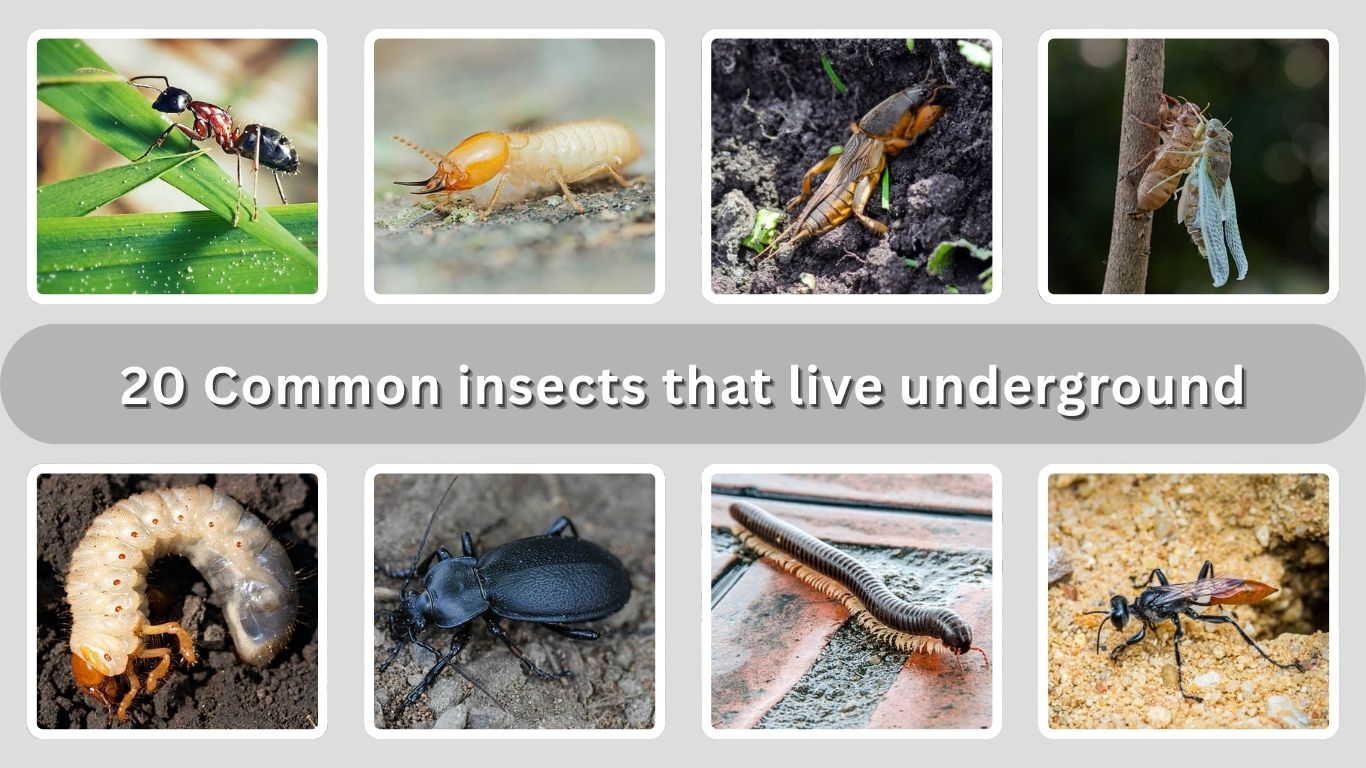
Underground insects play a vital role in maintaining healthy soil ecosystems. From ants and termites to tiny mites and larvae, these creatures live beneath the surface where they dig tunnels, recycle nutrients, and interact with plant roots. While some are beneficial decomposers or predators, others can become pests. Understanding these soil-dwelling insects helps in gardening, farming, and appreciating the hidden world beneath our feet.
1. Ants

Ants are among the most common insects that live underground, forming complex colonies beneath soil surfaces worldwide. These social insects build intricate tunnel systems that house thousands—sometimes millions—of individuals. Their भूमिगत habitats protect them from predators and environmental extremes while allowing efficient food storage and reproduction.
Identification
- Small-bodied insects, typically 2–25 mm in length
- Distinct narrow “waist” (petiole) between thorax and abdomen
- Elbowed antennae
- Colors vary: black, brown, red, or yellow
- Strong mandibles for carrying food and digging
Habitat and Behavior
Ants construct underground nests with multiple chambers for queens, workers, and larvae. These nests may extend deep into the soil, depending on the species. Workers constantly expand tunnels and forage above ground, often forming visible trails. Moist soil and shaded areas are their preferred environments.
Diet and Feeding Habits
Ants are omnivorous and highly adaptable feeders. They consume sugars, seeds, fungi, and other insects. Some species farm aphids for honeydew, while others cultivate fungus inside their nests. Their cooperative foraging behavior allows them to exploit a wide range of food sources efficiently.
Role in the Ecosystem
Ants play a crucial ecological role by aerating soil, improving nutrient cycling, and controlling pest populations. Their tunneling enhances soil structure and water infiltration. Despite sometimes being household pests, they are essential contributors to maintaining healthy ecosystems.
2. Termites

Termites are underground-dwelling insects often mistaken for ants but differ significantly in behavior and structure. Known as “silent destroyers,” they live in large colonies beneath the soil and feed primarily on cellulose materials like wood. Their भूमिगत nests help maintain humidity and protect them from predators.
Identification
- Soft-bodied insects, usually pale white or cream-colored
- Straight antennae (not elbowed like ants)
- Thick waist (no narrow constriction)
- Winged reproductives (swarmers) have equal-sized wings
- Workers and soldiers are wingless
Habitat and Behavior
Termites build elaborate underground colonies connected to food sources through mud tubes. These tubes protect them from light and dry air. Colonies include workers, soldiers, and reproductive individuals, each with specialized roles. They thrive in warm, moist environments.
Diet and Feeding Habits
Termites feed on cellulose found in wood, dead plants, and paper. Specialized gut microbes help them digest tough plant fibers. Some species prefer decaying wood, while others attack structural timber, making them significant pests in homes.
Role in the Ecosystem
Despite their destructive reputation, termites are vital decomposers. They break down dead plant material, recycling nutrients back into the soil. Their activity improves soil fertility and structure, supporting plant growth in many ecosystems.
3. Mole Crickets

Mole crickets are unique underground insects named for their mole-like digging behavior. They spend most of their lives beneath the soil, creating tunnels that can damage lawns and crops. Their strong forelimbs make them excellent burrowers.
Identification
- Medium-sized insects, about 3–5 cm long
- Velvety brown body
- Enlarged, spade-like front legs for digging
- Short antennae
- Cylindrical body adapted for underground movement
Habitat and Behavior
Mole crickets prefer moist, sandy soils where digging is easier. They create extensive tunnel systems just below the surface. Males produce loud chirping sounds from their burrows to attract females, especially at night.
Diet and Feeding Habits
They are omnivorous, feeding on roots, grasses, and small soil organisms. Some species are more plant-focused, causing damage to turf and crops, while others consume insects and organic matter.
Role in the Ecosystem
Mole crickets contribute to soil aeration through their burrowing. However, in large numbers, they can become agricultural pests by damaging plant roots and disrupting soil stability.
4. Cicada Nymphs

Cicada nymphs spend most of their lives underground, sometimes for several years, before emerging as adult cicadas. These immature stages are rarely seen but are essential to the cicada life cycle. Նրանք live quietly beneath the soil, feeding on plant roots and developing slowly over time.
Identification
- Pale to light brown, soft-bodied insects
- Stout body with strong, digging front legs
- Large, prominent eyes
- Wing pads visible (in later stages)
- Typically 2–5 cm long depending on species
Habitat and Behavior
Cicada nymphs live underground near tree roots, where they remain for years. They dig tunnels and move through the soil as they grow. When fully mature, they emerge from the ground, climb trees, and shed their exoskeleton to become winged adults.
Diet and Feeding Habits
They feed on xylem sap from plant roots using piercing-sucking mouthparts. This diet is low in nutrients, which is why their development takes years. They remain relatively inactive compared to other insects.
Role in the Ecosystem
Cicada nymphs help aerate the soil through their tunneling. Their emergence provides a massive food source for birds and other predators. After death, their bodies enrich the soil with nutrients.
5. Ground Beetles

Ground beetles are fast-moving insects that often live in soil burrows or under debris. While not all species live entirely underground, many spend significant time beneath the soil surface, especially during the day.
Identification
- Elongated, flattened body shape
- Dark coloration (black, brown, or metallic)
- Long legs adapted for running
- Strong mandibles
- Size ranges from 2 mm to over 3 cm
Habitat and Behavior
Ground beetles prefer moist environments such as soil, leaf litter, and under stones. Many species dig shallow burrows or use existing underground spaces. They are mostly nocturnal and emerge at night to hunt.
Diet and Feeding Habits
These beetles are primarily carnivorous, feeding on other insects, larvae, and pests. Some species may also consume seeds. Their predatory behavior makes them beneficial in gardens and farms.
Role in the Ecosystem
Ground beetles are important natural pest controllers. By feeding on harmful insects, they help maintain ecological balance. Their presence is often considered a sign of a healthy soil environment.
6. June Beetle Grubs

June beetle grubs are the larval stage of scarab beetles and are commonly found living underground. These white, C-shaped larvae spend most of their life beneath the soil, feeding on plant roots. They are often discovered while gardening or digging.
Identification
- White or cream-colored, C-shaped body
- Brown head with strong chewing mouthparts
- Soft, segmented body
- Six small legs near the head
- Typically 2–4 cm long
Habitat and Behavior
These grubs live just below the soil surface, especially in lawns, gardens, and agricultural fields. They remain hidden during the day and feed continuously on roots. As they mature, they pupate underground before emerging as adult beetles.
Diet and Feeding Habits
June beetle grubs feed mainly on grass roots and other plant roots. Heavy infestations can cause significant lawn damage, leading to brown patches and weakened plants.
Role in the Ecosystem
While they can be harmful to crops and turf, these grubs also serve as an important food source for birds, mammals, and other insects. They contribute to the natural food chain within soil ecosystems.
7. Wireworms

Wireworms are the underground larvae of click beetles and are known for their tough, wire-like bodies. They can live in the soil for several years, making them persistent agricultural pests.
Identification
- Slender, elongated, worm-like body
- Hard, shiny outer covering
- Yellow, brown, or reddish color
- Small head with strong jaws
- Usually 1–4 cm in length
Habitat and Behavior
Wireworms live in soil, particularly in grassy fields and farmlands. They move slowly through the ground and can survive for multiple years in the larval stage. They are most active in moist soil conditions.
Diet and Feeding Habits
They primarily feed on seeds, roots, and underground plant parts. Their feeding can damage crops like potatoes, corn, and wheat by boring into roots and stems.
Role in the Ecosystem
Although considered pests, wireworms play a role in breaking down organic matter. However, their impact on agriculture often outweighs their ecological benefits, making them a concern for farmers.
8. Centipedes

Centipedes are fast-moving, predatory arthropods that often live underground or within soil layers. Although not true insects, they are commonly found in subterranean habitats where they hunt other small organisms. Their भूमिगत lifestyle helps them stay hidden and maintain moisture.
Identification
- Long, flattened body with many segments
- One pair of legs per body segment
- Yellow, brown, or reddish coloration
- Prominent antennae
- Front legs modified into venomous claws (forcipules)
Habitat and Behavior
Centipedes prefer damp, dark environments such as soil, leaf litter, and under rocks. Many species dig shallow burrows or hide in existing underground spaces. They are nocturnal and move quickly to catch prey.
Diet and Feeding Habits
They are carnivorous, feeding on insects, larvae, worms, and other small invertebrates. Their venom helps immobilize prey quickly, making them efficient hunters underground.
Role in the Ecosystem
Centipedes help control pest populations by preying on harmful insects. Their presence contributes to maintaining ecological balance in soil environments.
9. Millipedes

Millipedes are slow-moving, soil-dwelling arthropods often found underground or within decaying organic matter. Unlike centipedes, they are harmless decomposers that play a key role in breaking down plant material.
Identification
- Cylindrical body with many segments
- Two pairs of legs per segment
- Dark brown or black coloration
- Slow-moving and curls into a spiral when disturbed
- Length varies from a few millimeters to several centimeters
Habitat and Behavior
Millipedes thrive in moist soil, leaf litter, and decaying wood. They often burrow into the ground to stay protected from dryness and predators. They are most active in humid conditions.
Diet and Feeding Habits
They feed primarily on decaying plant material, fungi, and organic debris. Their feeding helps break down dead matter into simpler nutrients that enrich the soil.
Role in the Ecosystem
Millipedes are essential decomposers. They improve soil fertility by recycling nutrients and enhancing soil structure, making them highly beneficial for healthy ecosystems.
10. Earwigs

Earwigs are nocturnal insects that often hide underground or in moist soil during the day. While they are more commonly seen under rocks or debris, many species create shallow burrows in the soil to stay protected from light and predators.
Identification
- Elongated, flattened body
- Brown to reddish-brown coloration
- Pair of distinctive forceps (pincers) at the rear
- Short wings (rarely used for flying)
- About 1–2.5 cm in length
Habitat and Behavior
Earwigs prefer damp environments such as soil, mulch, and garden beds. They dig small tunnels or use natural crevices to shelter themselves during daylight hours. At night, they emerge to search for food.
Diet and Feeding Habits
They are omnivorous, feeding on plant material, decaying organic matter, and small insects. While they can damage seedlings and soft plants, they also help control pests like aphids.
Role in the Ecosystem
Earwigs have a mixed role in ecosystems. They act as both decomposers and predators, helping recycle nutrients and manage pest populations, though they may occasionally harm garden plants.
11. Burrowing Bugs

Burrowing bugs are true insects that spend most of their lives underground, feeding on plant roots. They are less commonly noticed due to their hidden lifestyle but can be found in agricultural soils.
Identification
- Small, oval-shaped body
- Dark brown or black coloration
- Shield-like appearance similar to stink bugs
- Strong legs adapted for digging
- Typically 5–10 mm in length
Habitat and Behavior
These insects live beneath the soil surface, especially in fields and grassy areas. They burrow into the ground and remain hidden while feeding. Their underground activity makes them difficult to detect.
Diet and Feeding Habits
Burrowing bugs feed on plant roots using piercing-sucking mouthparts. Some species can damage crops by weakening root systems and reducing plant health.
Role in the Ecosystem
Although some species are agricultural pests, burrowing bugs are part of the soil ecosystem. They contribute to nutrient cycling and serve as prey for other animals, maintaining ecological balance.
12. Tiger Beetle Larvae

Tiger beetle larvae are fierce underground predators that live in vertical burrows. While adult tiger beetles are fast runners, their larvae remain hidden beneath the soil, waiting to ambush prey from their burrow entrances.
Identification
- Pale, grub-like body with a large, dark head
- Strong, sickle-shaped jaws
- Hump-backed appearance
- Hook-like structures on the back to anchor in burrows
- Typically 1–3 cm long
Habitat and Behavior
These larvae dig deep, narrow burrows in sandy or loose soil. They stay near the entrance with only their head exposed, waiting motionless for passing prey. When disturbed, they quickly retreat into their tunnels.
Diet and Feeding Habits
Tiger beetle larvae are carnivorous ambush predators. They feed on ants, small insects, and other arthropods that pass by their burrow openings. Their powerful jaws allow them to capture prey instantly.
Role in the Ecosystem
They play an important role in controlling insect populations. As predators, they help maintain balance in soil ecosystems by reducing numbers of smaller insects.
13. Antlion Larvae

Antlion larvae are famous for creating pitfall traps in sandy soil to catch prey. These underground dwellers are often called “doodlebugs” due to the patterns they leave while digging.
Identification
- Short, stout body with a large, flattened head
- Long, curved mandibles (jaws)
- Brown or gray coloration for camouflage
- No visible wings (larval stage)
- About 1–2 cm in length
Habitat and Behavior
Antlion larvae live in dry, sandy soil where they construct cone-shaped pits. They bury themselves at the bottom, leaving only their jaws exposed. When prey falls in, they grab it quickly and pull it under the sand.
Diet and Feeding Habits
They are carnivorous, feeding mainly on ants and other small insects. The pit trap makes it easy for them to capture prey without actively hunting.
Role in the Ecosystem
Antlion larvae help regulate populations of ants and other small insects. Their unique hunting method also contributes to the diversity of predatory strategies in soil ecosystems.
14. Scarab Beetles

Adult scarab beetles are often associated with underground environments, especially during parts of their life cycle. While many species are active above ground, they frequently burrow into the soil for laying eggs, hiding, or overwintering.
Identification
- Oval, robust body shape
- Hard, shiny exoskeleton
- Colors range from brown and black to metallic green
- Clubbed antennae
- Size varies from 1–5 cm
Habitat and Behavior
Scarab beetles are commonly found in soil, especially in grasslands, forests, and agricultural areas. Many species dig into the ground to lay eggs or escape extreme temperatures. Some, like dung beetles, bury organic material underground.
Diet and Feeding Habits
Adult scarabs have varied diets depending on the species. Some feed on plant leaves and flowers, while others consume dung or decaying organic matter. Their feeding habits are diverse and adaptable.
Role in the Ecosystem
Scarab beetles play key roles in nutrient recycling, especially dung beetles, which help decompose waste and improve soil fertility. Their burrowing also enhances soil aeration.
15. Rove Beetles

Rove beetles are slender insects commonly found in soil and underground habitats. They are highly active and often live in burrows or within decaying organic matter beneath the surface.
Identification
- Elongated body with very short wing covers
- Flexible abdomen often curved upward
- Dark brown or black coloration
- Fast-moving with well-developed legs
- Typically 3–25 mm long
Habitat and Behavior
Rove beetles thrive in moist soil, compost, and leaf litter. Many species hide underground during the day and emerge at night. They may use natural soil spaces or dig shallow burrows for shelter.
Diet and Feeding Habits
Most rove beetles are predatory, feeding on small insects, larvae, and mites. Some species also consume decaying organic material, making them both predators and scavengers.
Role in the Ecosystem
Rove beetles are beneficial insects that help control pest populations. Their presence contributes to soil health and ecological balance by reducing harmful insects and aiding decomposition.
16. Root Maggots

Root maggots are small, underground larvae of certain fly species that live in the soil and feed on plant roots. They are common in gardens and farms, where they can cause significant damage to crops.
Identification
- Small, legless, worm-like body
- White or cream-colored
- Tapered at one end
- Soft-bodied with no visible head capsule
- Usually less than 1 cm long
Habitat and Behavior
Root maggots live just below the soil surface, especially around the roots of host plants. They remain hidden underground throughout their larval stage, feeding continuously before pupating in the soil.
Diet and Feeding Habits
They feed primarily on plant roots, particularly vegetables like cabbage, onions, and radishes. Their feeding can weaken plants, stunt growth, and sometimes kill young seedlings.
Role in the Ecosystem
Although considered pests, root maggots are part of the soil food web. They help break down organic material and serve as prey for predators such as beetles and birds.
17. Fungus Gnat Larvae

Fungus gnat larvae are tiny, soil-dwelling insects commonly found in moist environments. They are especially prevalent in potted plants, greenhouses, and areas with high organic matter.
Identification
- Small, translucent or white body
- Black head capsule
- Slender, worm-like appearance
- Legless
- Usually 3–8 mm long
Habitat and Behavior
These larvae thrive in damp soil rich in organic matter. They live near the surface and are often found in indoor plant pots or greenhouse soils. High moisture levels favor their development.
Diet and Feeding Habits
Fungus gnat larvae feed mainly on fungi, algae, and decaying organic material. However, in large numbers, they may also damage plant roots, especially in seedlings.
Role in the Ecosystem
They contribute to decomposition by feeding on fungi and organic matter. While beneficial in small numbers, large infestations can negatively affect plant health, particularly in controlled environments like greenhouses.
18. Springtails

Springtails are tiny, soil-dwelling arthropods commonly found in underground environments. Although not true insects, they are closely related and play a major role in soil ecosystems. They are named for their ability to “spring” into the air using a სპეციალური tail-like structure.
Identification
- Very small, usually 1–6 mm long
- Soft-bodied, often white, gray, or bluish
- Wingless
- Possess a forked appendage (furcula) used for jumping
- Rounded or elongated body shape
Habitat and Behavior
Springtails thrive in moist soil, leaf litter, and decaying organic matter. They stay underground or in damp environments to avoid drying out. When disturbed, they use their furcula to leap away from danger.
Diet and Feeding Habits
They primarily feed on fungi, algae, bacteria, and decomposing plant material. Their feeding helps break down organic matter into nutrients that plants can absorb.
Role in the Ecosystem
Springtails are essential decomposers. They improve soil fertility and structure by aiding decomposition and supporting microbial activity, making them vital for healthy soil ecosystems.
19. Soil Mites

Soil mites are microscopic arthropods that live underground in vast numbers. Though tiny and often overlooked, they are among the most abundant organisms in soil ecosystems.
Identification
- Extremely small, often less than 1 mm
- Oval or round body shape
- Usually white, brown, or translucent
- Eight legs (as adults)
- Barely visible without magnification
Habitat and Behavior
Soil mites inhabit moist soil, compost, and leaf litter. They move slowly through soil particles and organic debris. Many species spend their entire life cycle underground.
Diet and Feeding Habits
Their diet varies widely—some feed on fungi and decaying organic matter, while others are predatory and consume small invertebrates and eggs.
Role in the Ecosystem
Soil mites play a key role in decomposition and nutrient cycling. By breaking down organic material and regulating microbial populations, they help maintain soil health and productivity.
20. Woodlice

Woodlice, also known as pill bugs or sow bugs, are small crustaceans that often live in soil and underground environments. যদিও তারা প্রকৃত পোকা নয়, they are commonly included in soil-dwelling insect lists due to their مشابه habitat and behavior.
Identification
- Oval, segmented body
- Gray or brown coloration
- Seven pairs of legs
- Hard, plate-like exoskeleton
- Some species can roll into a ball (pill bugs)
Habitat and Behavior
Woodlice prefer moist, dark environments such as soil, under rocks, logs, and leaf litter. They often burrow slightly into the ground to maintain humidity and avoid drying out. They are mostly active at night.
Diet and Feeding Habits
They feed on decaying organic matter, including dead leaves, wood, and plant debris. Their diet helps break down tough plant materials into simpler compounds.
Role in the Ecosystem
Woodlice are important decomposers. They contribute to nutrient recycling by breaking down organic matter and enriching the soil. Their activity supports healthy soil structure and plant growth.
FAQs
What insects live underground the most?
Ants, termites, beetle larvae (like grubs), and mole crickets are among the most common underground insects. Many spend their entire life cycle in the soil, while others live underground during specific stages like larvae or nymphs.
Are underground insects harmful to plants?
Some are harmful, such as root maggots and wireworms that feed on plant roots. However, many others, like ants and springtails, improve soil health and actually benefit plant growth by enhancing nutrient cycling.
Why do insects live underground?
Living underground provides protection from predators, extreme temperatures, and environmental changes. It also offers easy access to food sources like roots, organic matter, and other small organisms.
How can I identify underground insects in my garden?
You can identify them by digging small sections of soil and observing their size, color, and body shape. Signs like damaged roots, tunnels, or soil mounds also indicate their presence.
How do underground insects benefit the ecosystem?
They aerate soil, decompose organic matter, recycle nutrients, and control pest populations. These activities improve soil structure and fertility, supporting plant growth and overall ecosystem balance.