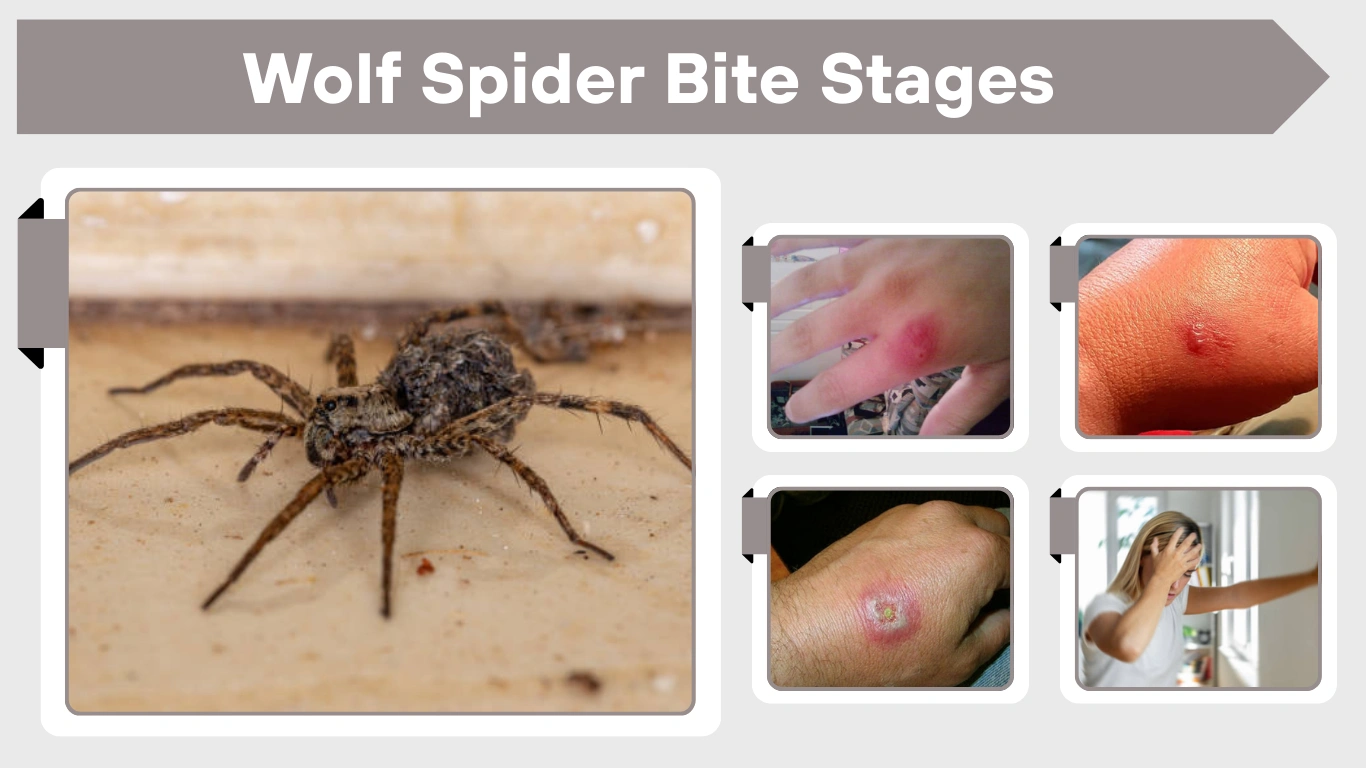
A wolf spider bite can be frightening, especially when redness, swelling, or pain appears soon after contact. Many people search for “wolf spider bite stages” to understand what happens on day one, how symptoms progress, and when a bite becomes serious. While wolf spiders are not considered dangerous to humans, their bites can still cause noticeable skin reactions. This guide explains the early stage, day-by-day changes, and what a normal healing timeline looks like.
Understanding Wolf Spider Bites
Wolf spiders are ground-dwelling hunters that do not spin capture webs. They usually bite only when threatened, trapped in clothing, or pressed against skin. Unlike medically significant spiders, wolf spider venom is mild and designed to subdue insects rather than harm large animals.
Most bites cause localized skin reactions rather than systemic illness. The severity of symptoms depends on several factors, including the person’s skin sensitivity, the bite location, how quickly the area is cleaned, and whether scratching introduces bacteria. In healthy adults, wolf spider bites typically heal without complications, but the early stages can still look dramatic and are often mistaken for more dangerous spider bites or skin infections.
Early Stage Wolf Spider Bite (First 1–6 Hours)

The early stage begins almost immediately after the spider bites. This phase focuses on the body’s first inflammatory response.
- Sudden pin-prick or sharp pain
- Mild burning or tingling sensation
- Small red spot at the bite site
- Slight swelling or raised skin
- Warmth and tenderness around the area
In many cases, the pain fades within minutes and leaves behind a small bump that looks similar to a mosquito bite. Because symptoms are often mild at first, people may not realize they were bitten by a spider. This is also why the beginning stages of a wolf spider bite are frequently ignored or misidentified as minor insect bites.
During this stage, the body releases histamines and inflammatory chemicals. These cause blood vessels to widen, producing redness and warmth. Early care—such as washing the skin and applying a cold compress—can significantly reduce how intense later stages become.
Day 1 Wolf Spider Bite Stages

Within the first 24 hours, visible changes usually become clearer. The bite often shifts from a small red spot to a more defined area of irritation.
Swelling may increase slightly, and the skin around the bite can feel firm. Itching often becomes more noticeable than pain, though some people experience a dull, throbbing sensation. The bite usually remains localized rather than spreading aggressively across the skin.
Typical Symptoms in the First 24 Hours
During day one, most wolf spider bites show a predictable pattern. Redness becomes more distinct, and the surrounding skin may appear mildly inflamed. The area can feel sore when touched, and itching may come and go. Some people notice that the center of the bite looks paler or slightly raised, surrounded by a red ring.
These symptoms are part of normal inflammation and do not usually indicate a dangerous bite. However, increasing discomfort is often what leads people to start searching online for bite stages.
What a Day-One Bite Usually Looks Like
Visually, a day-one wolf spider bite often resembles a small welt or pimple-like bump. The surface skin may look shiny or tight due to swelling. Color can range from light pink to deeper red depending on skin tone and sensitivity.
Unlike more serious spider bites, wolf spider bites rarely form deep ulcers or large blisters in the first 24 hours. If blistering or darkening occurs rapidly, it is more often related to irritation, infection, or misidentification rather than the venom itself.
Stages of a Wolf Spider Bite: Full Timeline

Wolf spider bites usually move through several recognizable stages as the body reacts and then repairs the skin.
- Stage 1: Immediate reaction (0–6 hours)
Mild pain, tingling, and a small red bump appear as inflammation begins. - Stage 2: Early inflammation (6–24 hours)
Redness becomes clearer, swelling is slightly more noticeable, and itching often replaces sharp pain. - Stage 3: Peak symptoms (1–3 days)
This is often the most uncomfortable phase. The bite may look darker red, feel tender, and appear firmer. Minor blistering can occur in sensitive individuals. - Stage 4: Healing phase (3–7 days)
Swelling gradually subsides. Itching becomes more prominent than pain. Skin texture starts returning to normal. - Stage 5: Late recovery (7–14 days)
Redness fades, and only a faint mark, dryness, or light scabbing may remain.
This staged progression is important because it helps distinguish a normal healing bite from one that is becoming infected or abnormally severe.
What a Wolf Spider Bite Looks Like in Different Stages
In the earliest stage, the bite often appears as a tiny red dot or slightly raised bump. As inflammation increases, it may become a round, swollen patch of skin that feels warm and tender. During peak symptoms, the area can look more intensely red and slightly glossy due to fluid buildup under the skin.
As healing begins, the bite flattens, redness fades, and the skin may peel lightly or form a small scab. By the late recovery stage, most wolf spider bites leave little to no visible trace. The changing appearance across stages is normal and reflects the body’s natural repair process rather than ongoing venom activity.
Early Stage Bad Wolf Spider Bite: When It’s Not Normal

Most wolf spider bites remain mild, but in some cases the early stage can develop into a more problematic reaction. These situations are usually related to secondary infection, strong allergic response, or misidentified spider bites rather than venom strength.
- Rapidly spreading redness beyond the bite area
- Severe or worsening pain after 24 hours
- Blistering or breakdown of the skin
- Pus, yellow discharge, or foul odor
- Fever, chills, fatigue, or red streaks from the bite
When these signs appear, the bite is no longer following a normal healing stage. Bacterial infection from scratching is the most common cause. In rare cases, immune reactions can exaggerate swelling and discomfort. These warning signs indicate the need for closer monitoring or medical care.
First Aid During the Beginning Stages
Early care plays a major role in how intense later bite stages become. Cleaning the skin and reducing inflammation help the body move quickly from the reaction phase into healing.
Gently washing the area with soap and clean water removes surface bacteria and venom residue. A cold compress reduces blood flow, helping limit swelling and redness. Over-the-counter antihistamines can decrease itching, while mild pain relievers help with soreness. Applying a thin layer of antibiotic ointment lowers the risk of infection.
Simple Home Treatment Steps
Clean the bite as soon as possible. Apply a cool compress for 10 minutes, then allow the skin to rest before repeating. Keep the area dry and uncovered when possible. Avoid scratching, which introduces bacteria and delays healing. If itching becomes intense, a hydrocortisone cream can calm skin irritation.
How First Aid Affects Healing Stages
Prompt care often shortens the peak inflammation stage. Instead of lasting several days, swelling may begin improving within 24 to 48 hours. Proper first aid also reduces the chance of blistering, scabbing, and long-term marks. When bites worsen, it is often because early care was delayed or the skin was repeatedly irritated.
How Long Do Wolf Spider Bite Stages Last?
For most healthy adults, wolf spider bites begin improving within two to three days. The most noticeable redness and tenderness usually peak during the first one to three days. By day four or five, swelling commonly decreases and itching becomes the main symptom.
Complete healing generally occurs within one to two weeks. Sensitive skin, repeated scratching, or bites in high-movement areas such as hands and ankles may take longer. If redness, pain, or swelling continue to intensify after the third day, the bite may not be following a normal recovery pattern.
When to See a Doctor
Medical evaluation is recommended if a bite becomes increasingly painful, develops open sores, or shows signs of infection. Spreading redness, pus, fever, muscle aches, or swollen lymph nodes should never be ignored.
People with weakened immune systems, diabetes, or known insect-sting allergies should seek care earlier. Children should also be monitored closely, as their skin reacts more strongly and infections can progress faster. While wolf spider venom is not considered dangerous, skin complications can require professional treatment.
FAQs
What does a wolf spider bite look like on day one?
On the first day, a wolf spider bite usually appears as a small red, swollen bump with mild to moderate itching. The skin may feel warm and slightly firm. Some bites show a pale center with a red ring, which often causes concern but is usually part of normal inflammation.
How can I identify the early stage of a wolf spider bite?
The early stage is marked by a sudden pin-prick sensation followed by a small red spot and light swelling. Tingling or mild burning may occur. At this point, the bite often resembles a mosquito bite and stays localized without severe pain or spreading redness.
Do wolf spider bite stages include blistering?
Blistering is not typical but can occur in sensitive individuals or when the skin becomes irritated. Most wolf spider bites remain as red, raised areas without skin breakdown. Blisters are more often linked to infection, scratching, or misidentified spider species rather than normal wolf spider bites.
How long does each wolf spider bite stage last?
Immediate reactions happen within hours. Inflammation usually peaks between one and three days. Healing begins by day three to five, with full recovery often occurring within seven to fourteen days. Duration varies depending on skin sensitivity, bite care, and whether infection develops.
When should I worry about a wolf spider bite?
Concern is warranted if pain becomes severe, redness spreads rapidly, pus forms, or symptoms like fever, chills, or red streaks appear. These signs suggest infection or allergic response rather than a normal bite stage and should be evaluated by a medical professional.