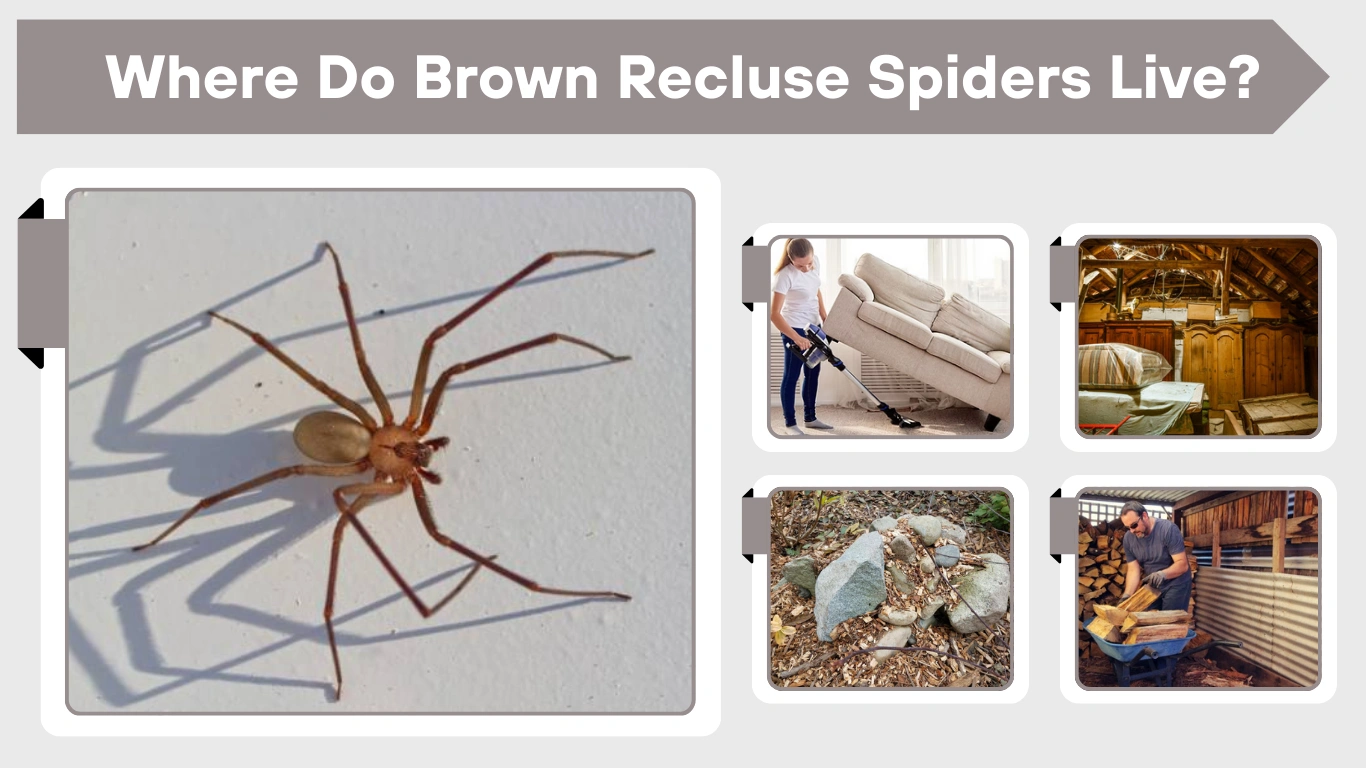
Brown recluse spiders are venomous arachnids known for their reclusive nature and distinctive violin-shaped marking. Understanding where they live is crucial for preventing accidental bites. While they are most commonly found in south-central U.S. states like Texas, Missouri, Kansas, and Oklahoma, they are often misidentified in many northern and coastal states. Knowing their indoor and outdoor habitats, preferred environmental conditions, and hiding spots can help homeowners take preventive measures and avoid dangerous encounters.
Overview of Brown Recluse Spider Habitats
Brown recluse spiders are nocturnal hunters that prefer warm, dry, and undisturbed areas. They rarely come into direct contact with humans and typically bite only when provoked or trapped. Their secretive behavior makes them hard to spot, but understanding their habitat preferences is key to reducing risk.
Although reports of brown recluse spiders occur in states like Michigan, New Jersey, and New Hampshire, these are usually misidentifications of harmless spiders. Correct identification relies on recognizing the spider’s physical features, including the violin-shaped mark, six eyes arranged in three pairs, and slender legs.
Identification of Brown Recluse Spiders

Key Physical Features (List Items)
- Color & Markings: Light to dark brown with the distinctive violin-shaped marking on the cephalothorax, with the “neck” of the violin pointing toward the abdomen.
- Size & Legs: Adults measure 6–20 mm with long, thin legs covered in fine hairs.
- Eyes: Unlike most spiders, brown recluses have six eyes arranged in three pairs, not eight.
- Web & Habitat: Sparse, irregular webs in dark corners, attics, basements, closets, and occasionally outdoors under rocks or woodpiles.
- Bite Signs: Mild to moderate redness, swelling, or blistering. Necrosis is rare but can occur in severe cases.
Behavioral Traits
Brown recluses are nocturnal and reclusive. They avoid light and disturbance, often hiding during the day and hunting small insects at night. Despite their venomous bite, they are non-aggressive and will bite only when trapped against skin or handled carelessly.
Where Brown Recluse Spiders Live in the United States
Core Range States (List Items)
Brown recluse spiders are concentrated in the south-central United States, where environmental conditions favor their survival.
- Texas: Attics, basements, garages, and sheds.
- Missouri: Dark corners indoors, storage areas, barns.
- Kansas & Oklahoma: Indoors in closets and basements; outdoors under woodpiles.
- Arkansas, Tennessee, Kentucky, Georgia: Both indoor and outdoor hiding spots.
Other Reports Across the U.S.
- Florida, California, Arizona: Rare indoor sightings, often in storage areas.
- North Carolina & South Carolina, Alabama, Illinois, Iowa: Occasional sightings.
- Michigan, Ohio, New Jersey, New Hampshire, West Virginia, Massachusetts: Most reported sightings are misidentifications of harmless spiders that resemble brown recluses.
Map and Geographic Distribution
Distribution maps show dense populations in the south-central U.S., while northern and coastal states report mostly anecdotal sightings. Understanding confirmed populations versus reported sightings helps homeowners assess actual risk.
Indoor Habitats: Where Brown Recluses Hide in Homes

Brown recluse spiders often live in places that are quiet, dark, and undisturbed. They prefer hidden spaces where human activity is minimal.
Common Indoor Locations (List Items)
- Attics, basements, and closets.
- Behind or under furniture.
- Inside storage boxes, piles of clothes, and cardboard.
- Behind appliances and wall-mounted fixtures.
- Garages and indoor sheds.
Behavioral Traits Indoors
- Nocturnal: Active at night when hunting for small insects.
- Secretive: Avoids light and human interaction.
- Bite Risk: Mostly bites occur when accidentally pressed against skin.
By knowing these hiding spots, homeowners can inspect and prevent infestations more effectively.
Outdoor Habitats: Where Brown Recluses Live in the Wild

Brown recluse spiders are also found outdoors, but they favor hidden, dry, and undisturbed areas. Unlike some spiders that build visible webs, brown recluses rely on camouflage and seclusion.
Common Outdoor Locations (List Items)
- Under rocks and logs: Provides shelter from predators and moisture.
- Woodpiles and debris: Stacked wood and leaves offer ideal hiding spaces.
- Sheds, barns, and garages: Dark, rarely accessed areas are perfect for their secretive behavior.
- Dry areas with limited disturbance: Avoids high traffic areas where humans and animals are active.
Environmental Preferences
- Warm, dry climates with stable temperatures.
- Areas sheltered from rain and extreme cold.
- Minimal natural predators, allowing them to thrive in quiet outdoor environments.
Understanding these preferences helps homeowners manage outdoor spaces, reducing the risk of accidental encounters.
Brown Recluse Spiders Around the World
Although brown recluse spiders are native to the U.S., rare international sightings have occurred. They are not naturally established outside the United States, but accidental transport in shipped goods or luggage has occasionally brought them abroad.
- Native range: South-central United States (Texas, Missouri, Kansas, Oklahoma, Arkansas, Tennessee, Kentucky, Georgia).
- Rare international reports: Some sightings in Europe and Asia due to human transport.
- Not found in Canada except for isolated incidents.
Global sightings are extremely uncommon, and most non-U.S. reports are accidental introductions, not established populations.
How to Identify Their Hiding Spots
Indoors
- Small, sparse webs in corners, behind furniture, or in closets.
- Storage areas with boxes, old clothing, or cluttered items.
- Behind baseboards, appliances, and wall fixtures.
Outdoors
- Under woodpiles, rocks, and debris.
- Inside sheds, barns, and garages.
- In dry, secluded spots away from frequent human activity.
Regular inspection of these areas can significantly reduce the risk of encounters.
Safety & Prevention Tips (List Items)

Preventing brown recluse spider infestations involves a combination of cleaning, sealing, and cautious handling:
- Seal entry points: Close gaps around doors, windows, and walls.
- Declutter spaces: Keep homes, garages, and sheds organized to eliminate hiding spots.
- Wear gloves: Always use gloves when handling boxes, firewood, or furniture in storage.
- Clean regularly: Vacuum and sweep basements, attics, and dark corners.
- Educate household members: Teach family how to identify brown recluses and avoid risky areas.
These steps are especially important in states with confirmed populations, including Texas, Missouri, and Oklahoma, but are also useful anywhere spiders may accidentally appear.
First Aid for Brown Recluse Spider Bites
Bites from brown recluse spiders are rarely fatal, but early action is essential to prevent complications.
Immediate Steps
- Wash the bite thoroughly with soap and water.
- Apply a cold compress to reduce swelling and pain.
- Keep the affected area elevated if possible.
Symptoms to Monitor
- Redness or mild swelling around the bite.
- Blister formation or necrosis in severe cases.
- Fever, nausea, or other systemic reactions (rare).
When to Seek Medical Help
- Severe or spreading necrosis at the bite site.
- Signs of infection, such as pus or increasing redness.
- Systemic symptoms like dizziness, chills, or difficulty breathing.
Prompt medical attention ensures proper treatment and prevents serious complications.
FAQs
Where do most brown recluse spiders live in the U.S.?
They are concentrated in south-central states like Texas, Missouri, Kansas, and Oklahoma. They prefer undisturbed indoor areas like basements and closets, as well as outdoor locations like woodpiles and sheds.
Can brown recluse spiders live in Michigan or Ohio?
These states are outside the spider’s natural range. Most sightings are actually harmless spiders misidentified as brown recluses.
Where do brown recluse spiders like to live in a house?
They hide in dark, quiet, and undisturbed areas, including attics, basements, closets, behind furniture, and inside boxes.
Where do brown recluse spiders live outdoors?
Outdoors, they are found under rocks, logs, woodpiles, and debris, as well as in sheds, barns, and other structures away from frequent human activity.
Are brown recluse spiders found worldwide?
Brown recluse spiders are native to the U.S. south-central region. Rare international sightings occur due to accidental transport, but they are not established in Canada, Europe, or Asia.