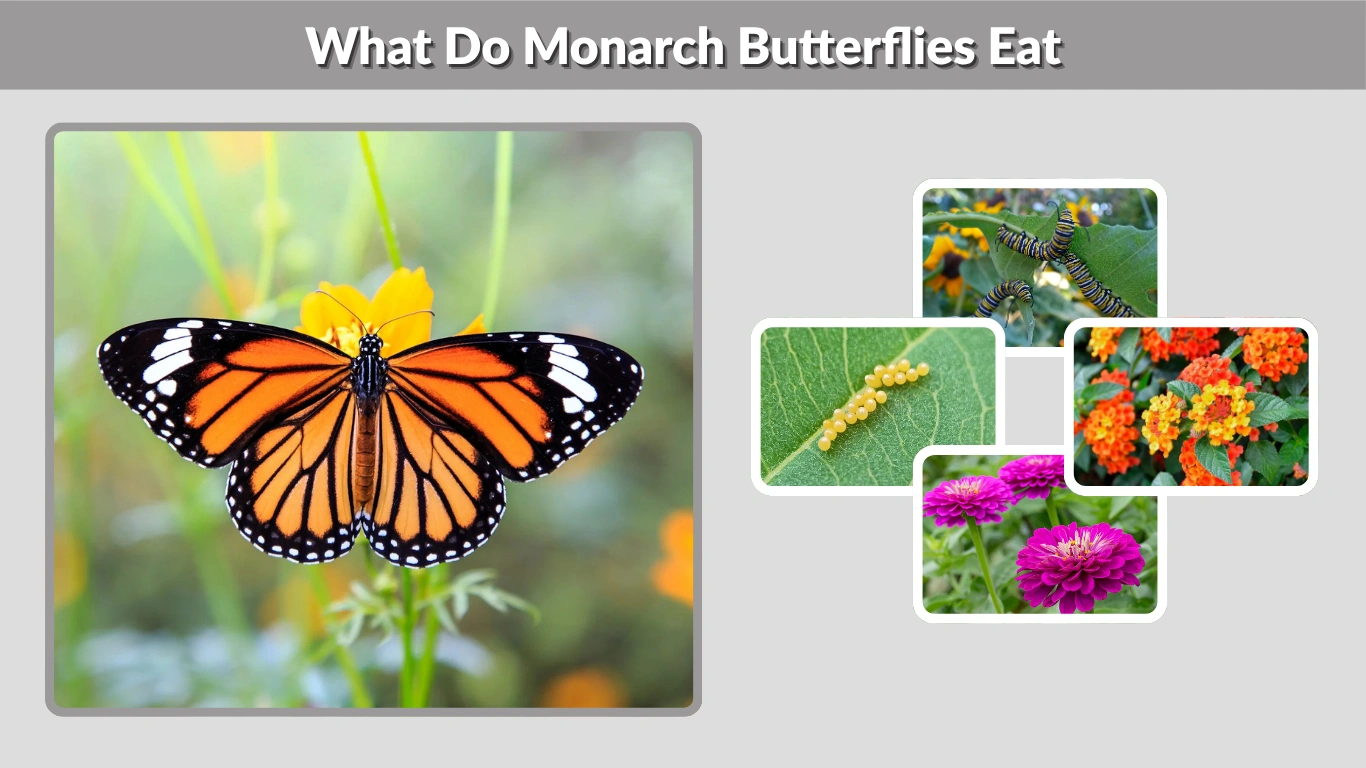
Monarch butterflies are one of nature’s most iconic pollinators, known for their stunning orange wings and long migrations across North America. Their diet changes significantly as they progress from caterpillar to adult butterfly, reflecting their fascinating transformation. Understanding what monarch butterflies eat helps protect them and the ecosystems they support. Let’s explore their feeding habits, favorite plants, and how diet fuels their incredible life cycle and journey.
Overview of the Monarch Butterfly Diet

Understanding Their Feeding Behavior
Monarch butterflies are herbivores, but their eating habits vary dramatically depending on their life stage. As caterpillars, they feed exclusively on the leaves of milkweed plants. As adults, they rely on nectar from flowers for energy. Each stage of their diet serves a unique biological purpose — from building strength during the larval phase to fueling migration as adults.
How Their Diet Changes Over Time
The monarch’s diet evolves as it develops. The caterpillar’s milkweed-only diet allows it to absorb protective toxins that make it unappealing to predators. Once transformed into a butterfly, it shifts to a liquid diet of flower nectar, using its proboscis (a long, straw-like tongue) to sip sweet fluids. This shift enables adults to sustain flight, reproduction, and migration.
What Do Monarch Caterpillars Eat

Milkweed: The Sole Food Source
Monarch caterpillars eat only milkweed, a plant essential for their survival. The leaves contain nutrients vital for growth and toxins called cardenolides, which deter predators like birds and lizards. Without milkweed, monarch caterpillars cannot survive — it’s the only food they can digest.
Why Milkweed Is Essential
The bond between monarchs and milkweed is one of nature’s most remarkable partnerships. Female monarchs lay their eggs exclusively on milkweed leaves to ensure their larvae have immediate access to food upon hatching. This dependency highlights why milkweed conservation is critical to sustaining monarch populations.
Types of Milkweed Monarchs Prefer
Monarchs feed on different types of milkweed depending on their region. Some of the most common varieties include:
- Common milkweed (Asclepias syriaca) – found across North America.
- Swamp milkweed (Asclepias incarnata) – thrives in moist environments.
- Butterfly weed (Asclepias tuberosa) – bright orange flowers attract both caterpillars and adults.
- Tropical milkweed (Asclepias curassavica) – often grown in gardens and rearing habitats.
Each type offers similar nutritional value, but native species are best for supporting the monarch’s natural life cycle.
Feeding Behavior and Growth
Once a caterpillar hatches, it immediately begins feeding. In its first meal, it often consumes part of its eggshell for extra protein. Over the next two weeks, it eats constantly, devouring milkweed leaves at a remarkable rate. As it grows, the caterpillar molts five times — shedding its skin between each phase, known as instars. By the fifth instar, it’s about two inches long and ready to form its chrysalis.
What Do Adult Monarch Butterflies Eat

Nectar: The Main Source of Energy
Adult monarchs feed exclusively on nectar — a sugary liquid produced by flowers. This energy-rich diet fuels their flight, reproduction, and long migratory journeys. They use their proboscis to reach deep into flower centers and sip the nectar. Unlike caterpillars, adult monarchs do not eat solid food.
Favorite Flowers and Nectar Plants
Monarch butterflies are drawn to brightly colored, nectar-filled flowers. They prefer plants that bloom continuously through the seasons, providing consistent food sources. Common nectar plants include:
- Lantana
- Zinnias
- Coneflowers (Echinacea)
- Goldenrod
- Blazing Star (Liatris)
- Asters
- Milkweed flowers
Gardeners and conservationists often plant these species to attract monarchs and provide essential nourishment during migration seasons.
What Monarchs Eat Besides Nectar
When nectar sources are limited, monarch butterflies supplement their diet with other natural options. They may sip juice from overripe fruit such as oranges, watermelon, and bananas. Some also drink tree sap, dew, or water droplets for hydration. In rare cases, they engage in mud-puddling — absorbing minerals from damp soil, which aids in reproduction and flight endurance.
What Do Monarch Butterflies Eat After They Hatch

First Meals of the Newly Emerged Butterfly
A newly emerged monarch butterfly doesn’t eat right away. After breaking free from the chrysalis, it must hang upside down to allow blood (hemolymph) to flow into its wings, making them strong enough for flight. This process takes several hours before the butterfly can fly and begin feeding.
Beginning Nectar Feeding
Once ready, the butterfly’s first meal is nectar. Early feeding focuses on easily accessible flowers like zinnias or lantana. These provide quick energy for flight and help the butterfly gain strength for mating or migration. Newly hatched butterflies often feed multiple times a day as they build stamina and store energy.
What Do Monarch Butterflies Eat During Migration
Nectar-Rich Plants Along the Route
Migration is an energy-intensive journey, requiring monarchs to fly thousands of miles between the United States, Canada, and Mexico. During this time, they rely heavily on nectar from fall-blooming wildflowers like goldenrod, asters, and sunflowers. These plants provide essential sugars to sustain flight and maintain fat reserves for overwintering.
Feeding Behavior in Mexico and Wintering Sites
Once in Mexico’s oyamel fir forests, monarchs eat very little. Cooler temperatures slow their metabolism, allowing them to conserve the energy stored from their pre-migration feeding. They occasionally sip dew and water droplets to stay hydrated, waiting for spring to return before resuming their active feeding and reproduction cycle.
What Do Monarch Butterflies Eat in Different Regions

North America
In North America, monarch butterflies have access to a wide variety of nectar plants and milkweed species. During the spring and summer breeding seasons, they feed on native flowers such as milkweed, coneflower, and clover. These nectar sources provide the sugars needed for reproduction and migration preparation. The abundance of native flora supports strong populations during the warm months, helping them build energy for their southward journey to Mexico.
Hawaii, Australia, and New Zealand
Outside North America, monarch butterflies have adapted their diets to regional plants. In Hawaii, they often feed on crown flower (Calotropis gigantea), a tropical relative of milkweed. In Australia and New Zealand, monarchs enjoy nectar from swan plants, bottlebrush, and lantana. These substitutes offer similar nutrients, showing the species’ remarkable ability to adapt while maintaining its preference for milkweed during the larval stage.
Captive and Garden Environments
When raised in captivity or garden settings, monarchs can thrive on a simple diet. Adults feed on fresh flowers or artificial nectar made by mixing sugar with water in a 1:10 ratio. Some caretakers offer slices of fruit such as oranges, watermelon, or bananas to provide hydration and natural sugars. Caterpillars, on the other hand, should always be fed fresh, pesticide-free milkweed leaves to ensure healthy growth and successful metamorphosis.
What Do Monarch Caterpillars Eat in the Wild

Milkweed Consumption Patterns
In the wild, monarch caterpillars remain loyal to milkweed. They usually feed on the underside of the leaves to avoid predators and harsh sunlight. Each caterpillar can consume large sections of a leaf daily, growing rapidly as it progresses through its five instars. The soft inner tissue of the leaf is their preferred portion, packed with nutrients essential for development.
Other Host Plant Possibilities
While milkweed remains the exclusive host plant, monarchs occasionally nibble on other Asclepias species when milkweed availability is limited. These related plants can provide temporary sustenance, but without true milkweed, larvae struggle to reach maturity. This emphasizes the importance of planting native milkweed species to sustain wild populations.
What Do Monarch Butterflies Eat in Winter
Limited Feeding During Cold Months
As winter approaches, monarch butterflies enter a state of dormancy, known as diapause, especially in Mexico’s oyamel fir forests. During this time, they eat very little or not at all. The energy reserves built up from nectar feeding before migration sustain them through the winter months.
Energy Conservation
In their overwintering colonies, monarchs cluster tightly together on tree branches to preserve heat and reduce energy loss. Their slowed metabolism allows them to survive for several months without constant feeding. When temperatures rise in early spring, they begin to feed again on early-blooming flowers before migrating north to start a new generation.
Interesting Facts About Monarch Butterfly Feeding
- Monarch caterpillars eat only milkweed, while adults feed mainly on flower nectar.
- The toxins in milkweed make monarchs distasteful to most predators.
- A monarch’s proboscis functions like a straw, perfectly designed for sipping nectar.
- During migration, monarchs increase feeding to build fat reserves for the winter.
- Monarchs are pollinators, transferring pollen while feeding, which benefits countless wildflowers.
- Adult monarchs can detect nectar from long distances using chemical sensors on their antennae.
- Planting native milkweed and nectar flowers can significantly support their population recovery.
FAQs
What do monarch butterfly caterpillars eat?
Monarch caterpillars eat only milkweed leaves. This single plant provides all the nutrition they need for growth and protection. The cardenolide toxins in milkweed make caterpillars poisonous to many predators, offering a natural defense as they develop.
What do adult monarch butterflies eat?
Adult monarchs feed on nectar from a wide variety of flowers such as zinnias, coneflowers, lantanas, and milkweed blossoms. The sugary nectar fuels their flight, reproduction, and migration. They may also sip juices from rotting fruit or tree sap when nectar is limited.
What do monarch butterflies eat during migration?
During migration, monarch butterflies depend on late-season wildflowers like goldenrod and asters for energy. These blooms provide the rich nectar needed to build fat reserves for their winter stay in Mexico’s mountains. Feeding stops almost entirely once they reach overwintering sites.
Do monarch butterflies eat anything besides milkweed?
Caterpillars eat only milkweed, but adult monarchs occasionally supplement nectar with other sources such as overripe fruit, dew, or even minerals from damp soil (a behavior known as mud-puddling). Still, nectar remains their primary and most important food source.
What plants attract monarch butterflies?
Monarch butterflies love bright, nectar-filled flowers. Planting native species such as coneflower, lantana, aster, zinnia, and milkweed can create a haven for both adult monarchs and their caterpillars. These plants provide essential food throughout their life cycle and migration.