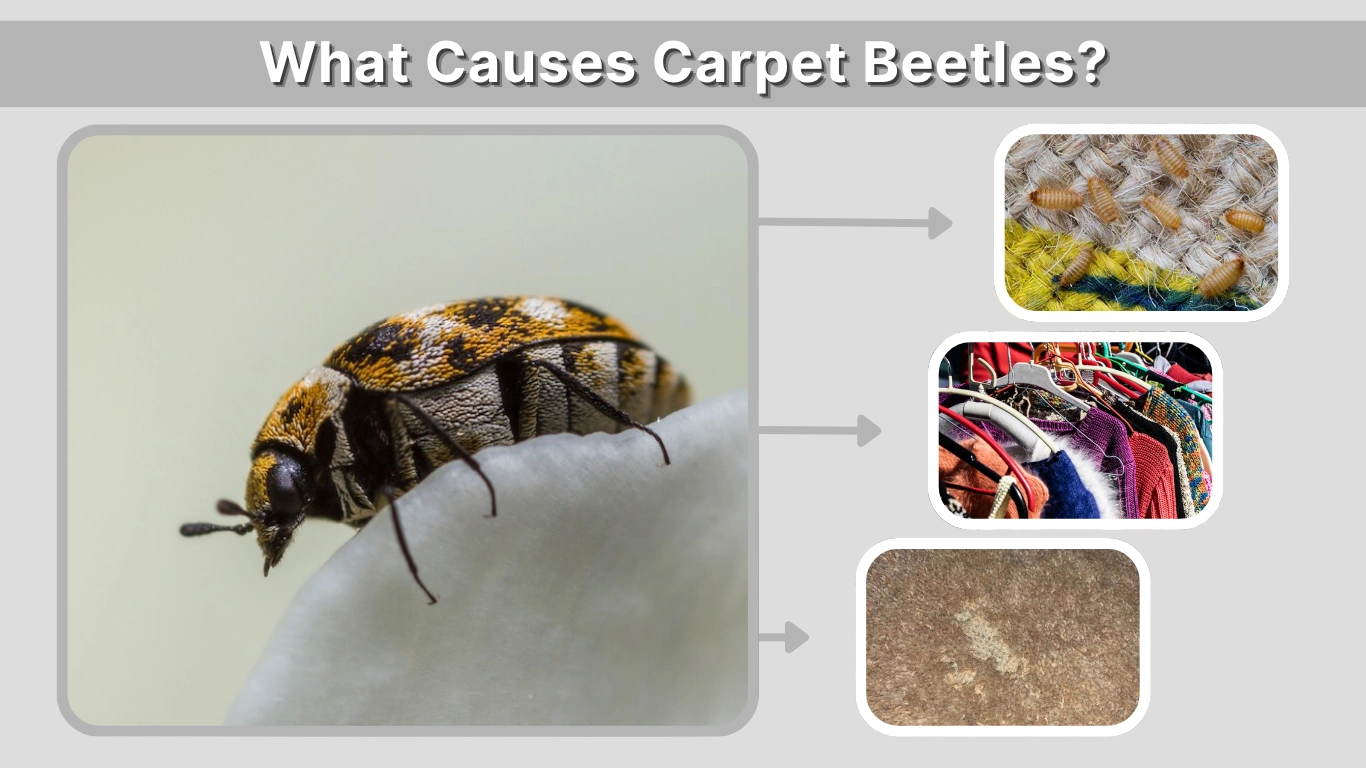
Carpet beetles are one of the most misunderstood household pests. Many people notice holes in clothing, damaged carpets, or fuzzy larvae hiding in corners long before they realize the true cause. Carpet beetles can enter homes through windows, flowers, clothing, second-hand furniture, and even simple household dust. Understanding why they appear is the key to preventing infestations and stopping recurring problems. This guide explains the main causes of carpet beetles and how they spread in homes, cars, and stored fabrics.
What Are Carpet Beetles & Why Do They Come Indoors?

Carpet beetles are tiny insects that naturally live outdoors but frequently enter homes in search of food sources. While adults are harmless and primarily feed on pollen, the real trouble comes from their larvae. These larvae feed on natural materials found inside homes, which is why they thrive in spaces with fabrics, dust, and organic debris.
Basic Biology of Carpet Beetles
Carpet beetles come in several species—varied, black, brown, furniture, and others—but they all share similar behaviors. Their life cycle includes:
- Eggs: Laid in dark, hidden places.
- Larvae: Cause most of the damage by feeding on organic materials.
- Pupa: Transition stage.
- Adult beetles: Small, flying insects attracted to sunlight.
Adults are often found near windows, while larvae hide in carpets, closets, and clothing.
Adult Beetles vs Larvae (Which Ones Cause Problems)
Many homeowners mistake adult beetles for the source of damage, but adults do not eat fabric. The larvae are responsible for:
- Eating fibers
- Damaging carpets
- Creating small holes in clothing
- Triggering skin irritation
Adults only enter homes to lay eggs—larvae are the ones that stay, hide, and cause long-term problems.
The Main Causes of Carpet Beetles

Understanding what attracts carpet beetles is essential for breaking the infestation cycle. These insects do not randomly choose a home—they are drawn by very specific food sources and conditions.
Natural Fiber Materials
Larvae feed heavily on animal-based fibers such as:
- Wool
- Silk
- Fur
- Leather
- Feathers
Homes with wool carpets, feather pillows, wool clothing, or fur items are especially attractive to carpet beetles. Even a small amount of natural fiber is enough to support larvae.
Accumulated Dust, Lint & Hair
Dust is one of the biggest causes of carpet beetle infestations. Dust contains:
- Shed human skin cells
- Hair
- Pet dander
- Organic debris
All these materials are ideal food for larvae. Areas that collect dust—under furniture, inside closets, along carpet edges—become perfect hiding spots.
Dead Insects & Organic Waste
Few people realize this, but carpet beetles love to feed on dead insects. If you have:
- Spiders
- Ants
- Roaches
- Flies
that die in corners, lights, attics, basements, or air vents, larvae will feed on them. This is why attics, crawlspaces, and garages often serve as breeding grounds.
Open Doors, Windows & Light Attraction
Adult carpet beetles are strong fliers and are naturally attracted to light. They enter homes through:
- Open windows
- Screen gaps
- Door cracks
- Vent openings
Once inside, they lay eggs near natural fibers, starting the infestation cycle.
What Causes Carpet Beetles in the House?

Carpet beetles don’t need dirty homes—they need access to the materials they love. Any house, even a spotless one, can attract them.
Infested Clothing & Fabrics
One of the most common causes is bringing in infested items, including:
- Thrift store clothing
- Second-hand furniture
- Vintage fabrics
- Stored clothing from basements or attics
Eggs and larvae are small and easy to overlook, so they enter unnoticed.
Carpets, Rugs & Upholstery
Thick materials give larvae protection and food. They often hide:
- Under rugs
- Along carpet edges
- Inside furniture
- Beneath cushions
- In fabric seams
Older carpets with natural fibers are especially vulnerable.
Attics, Basements & Air Ducts
These locations often contain:
- Dust buildup
- Animal nests
- Dead insects
- Insulation with organic material
All of these provide abundant food sources for larvae, allowing populations to grow unnoticed until adults begin appearing around windows.
What Causes Carpet Beetle Larvae?

Carpet beetle larvae are the destructive stage of the life cycle, and understanding what causes them specifically helps prevent severe infestations.
Egg Laying Behavior
Adult females prefer to lay eggs in:
- Dark, undisturbed places
- Areas with natural materials
- Hidden spaces with dust or lint
This includes closets, drawers, vents, and under furniture.
Readily Available Food
Larvae thrive where there is:
- Keratin (hair, feathers, wool)
- Skin cells
- Pet hair
- Organic fibers
Homes with pets usually experience more larvae because pet hair creates a consistent food source.
Poor Storage Practices
Clothing or blankets stored improperly—especially in cardboard boxes, open bins, or plastic bags—provide easy access for larvae to feed and hide.
What Causes Carpet Beetles in Cars?

Carpet beetles don’t only invade homes—they can also appear inside vehicles. Cars provide an ideal environment for larvae because they contain fabric seats, carpets, and insulation that can trap dust and organic debris.
Pet Hair & Food Crumbs
If you transport pets frequently, your car may contain:
- Shed fur
- Dander
- Skin flakes
These materials are perfect food sources for larvae. Similarly, spilled snacks, crumbs, and food wrappers attract insects that later become beetle food.
Dead Insects in Vents or Under Seats
Car vents often trap small insects while driving. Over time, these insects accumulate and become a food source for carpet beetle larvae. The same applies to insects hidden under seats, in trunk corners, or inside floor mats.
Infested Items Brought Into the Car
Carpet beetles can enter your vehicle through:
- Blankets
- Clothing
- Bags or luggage
- Boxes stored in the trunk
If these items were previously exposed to larvae, they can cause an infestation inside the car.
Causes of Black Carpet Beetles & Varied Carpet Beetles

Different species of carpet beetles have slightly different preferences, which affects how and why they enter homes.
Black Carpet Beetles
Black carpet beetles are among the most destructive. Their larvae are larger, eat more aggressively, and survive on a wider range of materials. Causes include:
- Stored grains or pantry items
- Natural fabrics
- Bird nests or rodent nests near the home
- Open windows where adults fly in
They thrive in warm, dark areas, making attics and closets prime environments.
Varied Carpet Beetles
Varied carpet beetles often come from outdoor sources such as:
- Flowering plants
- Garden areas
- Window sills
Since adults feed on pollen, they easily enter homes through open windows in spring and summer. Once inside, they lay eggs in any area containing natural fibers.
Why Species Differences Matter
Understanding the species helps determine:
- Where infestations began
- What they’re feeding on
- How fast the population may grow
- Where to look for larvae
This helps in both treatment and prevention.
What Causes Carpet Beetles in the UK & Australia?
Carpet beetle activity differs slightly depending on location, climate, and common household materials.
Climate Factors
Both the UK and Australia have climates that support carpet beetle populations.
- UK: Mild summers and heated homes during winter help larvae survive year-round.
- Australia: Warm weather encourages faster reproduction and outdoor-to-indoor movement.
Home Materials & Lifestyle
Many UK homes contain wool carpets—an ideal food source for larvae. Australian homes often store natural materials in garages or sheds, which become hotspots for beetle activity.
Seasonal Infestation Patterns
- UK: Most infestations occur in late spring and early summer when adults emerge.
- Australia: Infestations occur throughout the year due to warmer conditions.
What Damage Do Carpet Beetles Cause?

The damage caused by carpet beetles varies based on the type of materials in the home and the severity of infestation.
Damage to Clothing & Fabrics
Larvae chew irregular holes in:
- Wool sweaters
- Cashmere
- Silk garments
- Felt hats
- Scarves
- Blankets
The holes tend to be uneven, unlike moth damage which is more circular.
Damage to Carpets, Rugs & Upholstered Furniture
Carpet beetle larvae often feed along the edges of carpets where dust accumulates. They may also invade:
- Sofas
- Chairs
- Mattresses
- Fabric seams
Older furniture with natural stuffing is especially vulnerable.
Skin Allergies From Larvae Hairs
Although carpet beetles don’t bite, their larvae shed tiny hairs that can cause:
- Red, itchy rashes
- Small bumps
- Dermatitis-like irritation
This can make people believe the insects are biting, even though the reaction is allergic.
How to Get Rid of the Causes of Carpet Beetles

To stop carpet beetles, you must eliminate the conditions that allowed larvae to thrive.
Deep Cleaning & Vacuuming
Vacuum areas where larvae hide:
- Under furniture
- Closet floors
- Carpet edges
- Air vents
- Upholstery
Vacuuming daily for a week helps remove eggs, hairs, and larvae.
Washing Fabrics on High Heat
Wash the following items at 60°C/140°F or hotter:
- Bedding
- Blankets
- Clothing
- Curtains
Heat kills both eggs and larvae effectively.
Sealing Cracks & Entry Points
Carpet beetles enter homes easily, so sealing gaps helps prevent future infestations.
Seal:
- Window frame cracks
- Door gaps
- Attic vents
- Chimney openings
- Wall gaps around utility pipes
Removing Infested Items
Severely infested materials (especially old wool carpets or heavily damaged clothing) may need to be discarded.
How to Prevent Carpet Beetles Long-Term
Prevention is essential because carpet beetles can return if conditions remain favorable.
Proper Fabric Storage
Store materials in:
- Airtight plastic bins
- Vacuum-sealed bags
- Cedar-lined containers
- Closets with moth and beetle repellents
This protects wool, silk, and seasonal clothing.
Regular Home Maintenance
Routine cleaning helps break the larvae food cycle:
- Vacuum weekly
- Dust shelves and corners
- Clean behind large furniture
- Replace HVAC filters regularly
Inspecting High-Risk Areas
Check:
- Closets
- Storage boxes
- Under beds
- Basements and attics
- Pet bedding
- Air vents and ducts
Frequent inspections help catch early signs before large infestations develop.
FAQs
Do carpet beetles come from being unclean?
Not necessarily. Even clean homes attract carpet beetles if they contain natural fibers or dust. However, clutter, pet hair, and infrequently cleaned areas increase the likelihood of larvae finding food and surviving long-term.
What is the number one cause of carpet beetles?
The biggest cause is accessible food sources such as wool, feathers, hair, and dust. Adult beetles usually enter through windows, but larvae stay because they find organic material to feed on within the home.
Why do I keep getting carpet beetles?
Recurring infestations usually happen when larvae food sources remain, such as dust buildup, natural fabrics, or dead insects in hidden areas. If these issues aren’t eliminated, adults will continue laying eggs in the same locations.
What causes carpet beetles in bedrooms?
Bedrooms often contain natural fibers like blankets, clothing, carpets, and pillows. Dust accumulates under beds, and closets provide dark, undisturbed areas ideal for egg-laying and larvae feeding.
What causes carpet beetles suddenly appearing?
Sudden appearances usually result from seasonal activity, open windows, or bringing in infested items. Once adults enter, they quickly lay eggs on materials like carpets, clothing, or stored fabrics, making the infestation seem sudden.