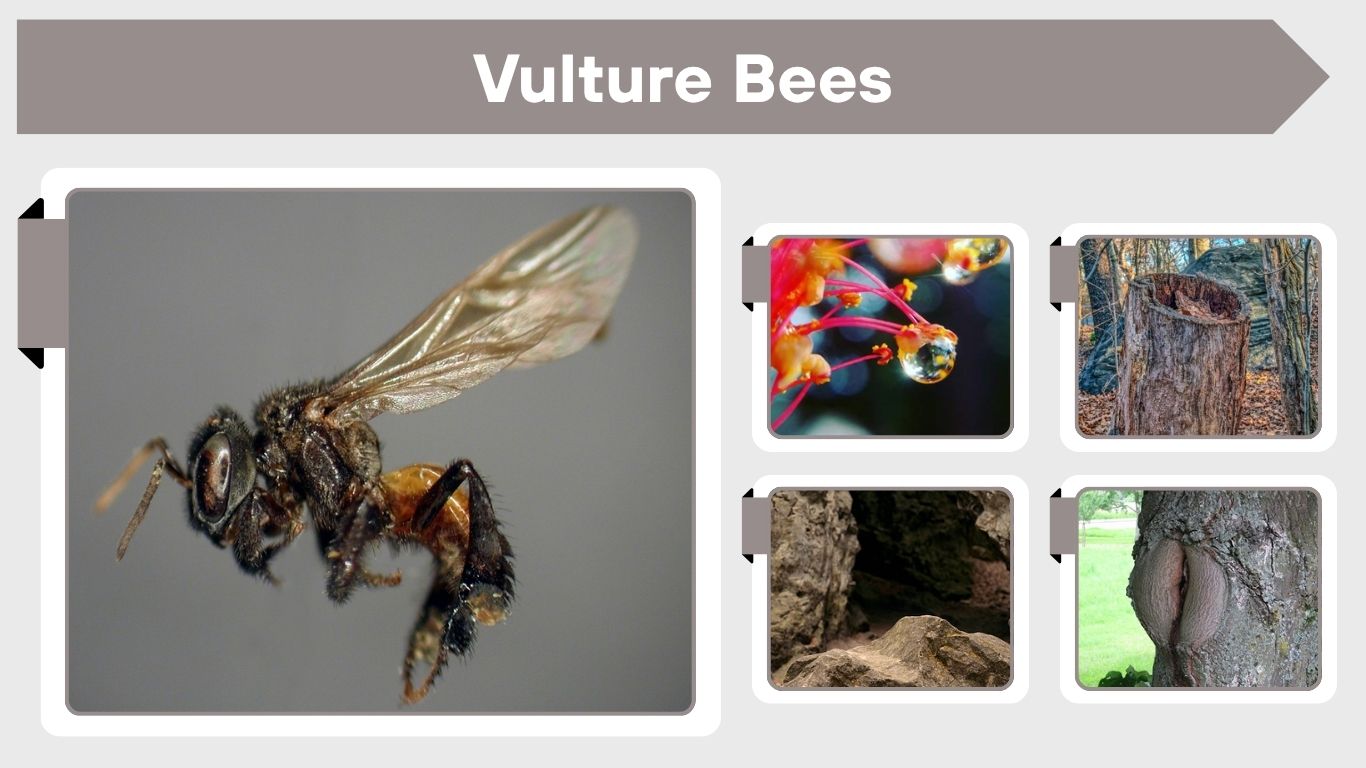
Vulture bees are among the most unusual insects in the bee world. Unlike typical bees that rely on nectar and pollen, these stingless bees have evolved to feed on decaying animal matter. Found mainly in tropical regions, they play a unique ecological role by recycling nutrients. Their strange diet, combined with their ability to produce a honey-like substance from meat, makes them a fascinating subject for both researchers and nature enthusiasts.
What Are Vulture Bees?
Vulture bees are a group of stingless bees belonging to the genus Trigona. They are best known for their scavenging behavior, feeding on carrion instead of flowers. Despite their unusual diet, they are still social insects that live in organized colonies. Their adaptation to a meat-based diet sets them apart from nearly all other bee species in the world.
Key Characteristics of Vulture Bees

- Stingless bees with reduced, non-functional stingers
- Strong mandibles used for cutting flesh
- Feed primarily on decaying animals
- Produce a unique type of honey from protein sources
- Thrive in tropical and subtropical environments
Types of Vulture Bees
Vulture bees are relatively rare, and only a few species are well-documented. These species belong mainly to the Trigona group and share similar scavenging behaviors.
Common Species
- Trigona hypogea
- Trigona necrophaga
- Trigona crassipes
Habitat and Distribution

Vulture bees are mainly found in warm, tropical regions where food sources and nesting sites are abundant. Their environment plays a key role in supporting their unusual feeding habits and colony structure.
Where Do Vulture Bees Live?
These bees are commonly found in Central and South America, particularly in tropical rainforests. Countries like Brazil, Mexico, and Costa Rica provide ideal conditions with high humidity, warm temperatures, and access to both plant and animal resources. They are rarely found outside these regions due to their specialized diet and environmental needs.
Nesting Behavior
Vulture bees typically build their nests in tree cavities, hollow logs, or underground spaces. Like other stingless bees, they use a mixture of wax and plant resins to construct and seal their nests. Inside, the colony is highly organized, with separate areas for brood, food storage, and honey pots. The nests are often well-protected and hidden to avoid predators.
Diet and Feeding Behavior

One of the most fascinating aspects of vulture bees is their diet. Unlike most bees, they do not depend on flowers as their primary food source.
What Do Vulture Bees Eat?
Vulture bees feed mainly on carrion, which includes dead animals such as small mammals, reptiles, or birds. Worker bees use their strong mandibles to scrape off flesh, which is then carried back to the hive. Although they may occasionally visit flowers for nectar, their primary source of nutrition comes from animal protein.
How Do They Make Honey?
Instead of producing traditional honey from nectar, vulture bees process the collected meat inside their hive. The protein is broken down and transformed into a substance similar to honey, often referred to as “meat honey.” This material is stored in special containers made of wax and resin. Unlike regular honey, it has a different texture, smell, and chemical composition.
Vulture Bee Honey: Composition and Uses
- Produced from processed animal protein rather than floral nectar
- Typically darker and more pungent in smell and taste
- Stored in resin-based pots within the hive
- Rarely consumed by humans due to its unusual properties
- Primarily used as a food source for the bee colony
Identification Guide
- Small to medium-sized black or dark brown bees
- Lack of a functional sting
- Strong, visible jaws adapted for cutting
- Smooth, less hairy bodies compared to pollen-collecting bees
- Often observed around decaying organic matter
Behavior and Colony Structure
Vulture bees are highly social insects that live in structured colonies similar to other stingless bees. Each colony consists of a queen, worker bees, and developing brood. The queen is responsible for reproduction, while workers carry out tasks such as foraging, nest maintenance, and caring for larvae.
Despite lacking a sting, these bees are not entirely defenseless. They can bite using their strong mandibles if disturbed. Their colonies are usually well-organized and protected, with workers actively guarding the nest entrance. Communication among colony members is also essential, helping them locate food sources and maintain efficiency within the hive.
Vulture Bees vs Honey Bees

Vulture bees and honey bees may belong to the same broader group of insects, but their behavior, diet, and ecological roles are very different. Understanding these differences helps highlight how unique vulture bees truly are.
| Feature | Vulture Bees | Honey Bees |
| Diet | Feed on carrion (decaying meat) | Feed on nectar and pollen |
| Sting | No functional sting | Functional sting for defense |
| Honey Type | Protein-based “meat honey” | Sweet floral honey |
| Habitat | Tropical forests | Found worldwide |
| Role in Ecosystem | Decomposers and recyclers | Pollinators |
Are Vulture Bees Dangerous?
Vulture bees are generally not considered dangerous to humans. Since they lack a functional sting, they cannot inject venom like honey bees or wasps. However, they are capable of biting if they feel threatened, using their strong mandibles. These bites are usually harmless and cause only minor discomfort.
Their attraction to decaying matter might make them seem unpleasant, but they do not actively seek out humans. In most cases, they avoid contact unless their nest is disturbed. This makes them relatively safe compared to many other insects.
Ecological Importance of Vulture Bees
Vulture bees play a unique and valuable role in their ecosystems. By feeding on carrion, they help break down dead animals and recycle nutrients back into the environment. This process supports soil health and contributes to the natural balance of tropical ecosystems.
In addition to their scavenging role, vulture bees may also contribute to pollination when they occasionally visit flowers. While they are not as efficient as traditional pollinators, their dual role makes them an important part of biodiversity. Their presence highlights the adaptability of bees and their ability to fill different ecological niches.
FAQs
What is a vulture bee?
A vulture bee is a type of stingless bee that feeds primarily on decaying animal matter instead of nectar. These bees belong to the Trigona genus and are known for their unusual diet and ability to produce a honey-like substance from protein sources.
Do vulture bees make honey?
Yes, vulture bees produce a form of honey, but it is very different from regular honey. Instead of using nectar, they process animal protein into a substance often called “meat honey,” which has a distinct texture and smell.
Is vulture bee honey edible?
Vulture bee honey is not commonly consumed by humans. Its unusual composition, strong odor, and potential safety concerns make it less desirable compared to traditional honey. It is mainly used as a food source within the colony.
Where are vulture bees found?
Vulture bees are mostly found in tropical regions of Central and South America. They thrive in warm, humid environments such as rainforests, where both nesting sites and food sources are readily available.
Do vulture bees sting or bite?
Vulture bees do not have a functional sting, so they cannot sting like other bees. However, they can bite using their strong jaws if threatened. These bites are usually mild and not harmful to humans.