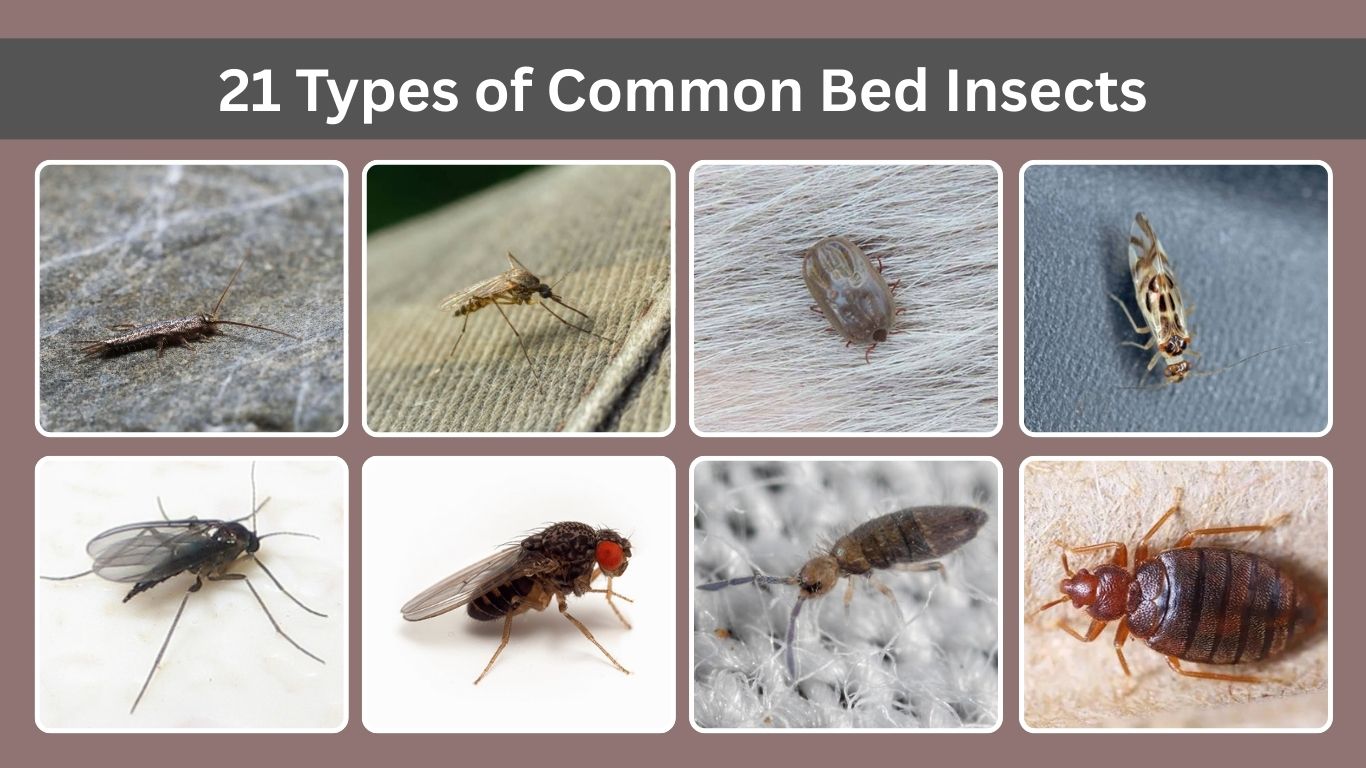
Bed insects are tiny creatures that often invade sleeping areas, creating discomfort and health risks for humans. While some are harmless nuisances, others can bite, trigger allergies, or transmit diseases. From blood-feeding pests like bed bugs and fleas to fabric-damaging silverfish and carpet beetles, these insects thrive in homes where warmth, food, and moisture are available. Knowing how to identify them helps in managing infestations and protecting your living space.
1. Bed Bugs

Bed bugs are small, nocturnal insects that thrive in human living spaces, especially in and around beds. They are known for feeding on blood at night and can quickly spread in households, hotels, and dormitories. Though not known to transmit diseases, their bites cause itching, discomfort, and allergic reactions in some people.
Identification
- Small, oval, and flat-bodied
- Reddish-brown color
- About the size of an apple seed (4–6 mm)
- Wingless, with six legs and short antennae
Habitat
Bed bugs hide in cracks and crevices close to where humans sleep. Common places include mattresses, box springs, bed frames, headboards, and even behind wallpapers or electrical outlets. They prefer dark, warm areas near a host.
Bite and Danger to Humans
Bed bug bites appear as small, red, itchy welts, often in clusters or lines on exposed skin. While they don’t spread diseases, the bites can cause severe itching, skin irritation, and insomnia due to discomfort. In sensitive individuals, allergic reactions may occur, requiring medical attention.
2. Fleas

Fleas are tiny, wingless parasites that live on warm-blooded animals such as cats, dogs, and even humans. They are notorious for their jumping ability and for spreading quickly in households. Fleas can cause itching, irritation, and transmit certain diseases through their bites.
Identification
- Very small (1.5–3 mm)
- Dark brown, flat, and wingless
- Powerful hind legs for jumping
- Hard body makes them difficult to crush
Habitat
Fleas thrive in pet bedding, carpets, upholstered furniture, and cracks in floors. They prefer warm, humid environments and usually infest areas where pets sleep.
Bite and Danger to Humans
Flea bites appear as red, itchy bumps, often on ankles and legs. They can transmit tapeworms, Bartonella (cat scratch disease), and in rare cases, plague bacteria. Repeated bites may cause allergic reactions or dermatitis in sensitive individuals.
3. Ticks

Ticks are arachnids that latch onto animals and humans to feed on blood. They are commonly found outdoors but can be carried indoors by pets or clothing. Their bites can lead to serious illnesses if left untreated.
Identification
- Small, flat-bodied before feeding, engorged after feeding
- Eight legs (as arachnids)
- Colors vary from brown to reddish
- Size ranges from 3 mm (unfed) to 10 mm (engorged)
Habitat
Ticks are often found in tall grass, wooded areas, leaf litter, and shrubs. Indoors, they may cling to pets or humans after outdoor exposure.
Bite and Danger to Humans
Tick bites are usually painless but can transmit dangerous diseases such as Lyme disease, Rocky Mountain spotted fever, and babesiosis. Symptoms may include fever, fatigue, rashes, and joint pain. Prompt removal of ticks is critical to reduce infection risks.
4. Lice

Lice are tiny, wingless insects that live on the human body, feeding on blood several times a day. They spread easily through close personal contact or shared belongings such as combs and hats.
Identification
- Small (2–4 mm), flat-bodied
- Grayish-white to tan in color
- Wingless with six short legs ending in claws
- Visible to the naked eye, especially in hair
Habitat
Lice live on the scalp, body, or pubic region depending on the species. They cling tightly to hair shafts or clothing fibers and are most common in crowded or unclean conditions.
Bite and Danger to Humans
Lice bites cause intense itching, redness, and sometimes small sores. Persistent scratching can lead to secondary skin infections. While lice are irritating, they rarely transmit diseases except for body lice, which can spread typhus and trench fever.
5. Mites

Mites are microscopic arthropods related to ticks and spiders. Many are harmless, but some species infest human skin, bedding, and furniture, causing irritation and allergies.
Identification
- Extremely small, often less than 1 mm
- Oval-shaped with eight legs
- Colors range from white to reddish-brown
- Require magnification to see clearly
Habitat
Mites thrive in dust, bedding, upholstered furniture, and carpets. Some species, like scabies mites, burrow into human skin, while others, like dust mites, feed on skin flakes.
Bite and Danger to Humans
Mite bites or infestations can cause rashes, itching, and allergic reactions. Scabies mites cause intense itching and burrow lines on the skin, requiring medical treatment. Dust mites, while not biting, trigger asthma and allergies in sensitive individuals.
6. Carpet Beetles

Carpet beetles are small household pests that often go unnoticed until their larvae cause damage to fabrics, carpets, and furniture. While adults feed on pollen, the larvae are destructive to natural fibers indoors.
Identification
- Adults: 2–4 mm long, oval-shaped
- Colors vary: black, brown, or patterned with white, yellow, and orange
- Larvae are hairy, brownish, and worm-like
- Slow-moving compared to other household insects
Habitat
Carpet beetles live in dark, undisturbed areas like carpets, wardrobes, upholstered furniture, and storage boxes. They thrive where natural fibers like wool, silk, or fur are present.
Bite and Danger to Humans
Carpet beetles do not bite humans, but their larvae’s hairs can cause skin irritation or allergic reactions. Infestations damage clothing, carpets, and furniture, leading to costly repairs or replacements.
7. Cockroaches

Cockroaches are resilient insects that infest homes, especially kitchens and bathrooms. They are nocturnal scavengers known to spread bacteria and allergens, making them a major household pest.
Identification
- Flattened, oval bodies
- Reddish-brown to dark brown color
- Long antennae and spiny legs
- Size ranges from 1.5 cm to 5 cm depending on species
Habitat
Cockroaches hide in dark, moist places such as kitchens, drains, basements, and behind appliances. They are often found where food and water are easily accessible.
Bite and Danger to Humans
Cockroaches rarely bite, but when they do, it may result in small, itchy red marks. Their real danger lies in contaminating food and surfaces with bacteria, triggering allergies, and worsening asthma symptoms through shed skin and droppings.
8. Booklice

Booklice are tiny insects that thrive in humid indoor environments. Despite their name, they don’t feed on blood but instead consume mold, fungi, and starchy materials. They are a nuisance pest often mistaken for bed bugs due to their small size.
Identification
- Very small (1–2 mm)
- Soft-bodied, pale gray or translucent
- Some species are wingless, others have small wings
- Move quickly and are often found in clusters
Habitat
Booklice prefer damp, moldy areas such as books, paper, cardboard, window sills, and stored food. They flourish in high humidity, making bathrooms, kitchens, and basements common sites of infestation.
Bite and Danger to Humans
Booklice do not bite or spread diseases. Their presence is more of a nuisance, and large infestations may contaminate stored food or damage books and papers.
9. Silverfish

Silverfish are fast-moving, wingless insects known for their silvery scales and carrot-shaped bodies. They are nocturnal scavengers that damage household items by feeding on starchy substances.
Identification
- Slender, elongated body (12–19 mm)
- Covered in silvery-gray scales
- Long antennae and three bristle-like tails at the rear
- Quick, darting movements
Habitat
Silverfish hide in dark, damp places such as bathrooms, kitchens, basements, and attics. They are often found in cracks, behind baseboards, and under sinks where moisture is present.
Bite and Danger to Humans
Silverfish do not bite humans and are not dangerous directly. However, they damage paper, clothing, wallpaper, and food items containing starch or sugar, making them destructive household pests.
10. Ants

Ants are one of the most common household insects, often entering homes in search of food and water. While most species are harmless, some can bite or sting, and infestations can quickly become difficult to control.
Identification
- Small size, ranging from 2–15 mm depending on species
- Colors vary: black, brown, red, or yellow
- Elbowed antennae and narrow waist
- Social insects living in colonies
Habitat
Ants build nests in soil, wood, or wall voids. Indoors, they are commonly found in kitchens, bathrooms, and near food sources. Outdoor nests may be in gardens, lawns, or under pavements.
Bite and Danger to Humans
Most ants are not dangerous, but species like fire ants deliver painful stings that cause swelling, itching, and sometimes allergic reactions. Carpenter ants damage wood structures, while pharaoh ants can spread bacteria in hospitals and homes.
11. Spiders

Spiders are arachnids often found indoors, where they help control insect populations. While most are harmless, a few species pose risks due to their venom. They are not true “bed insects” but may appear in bedrooms.
Identification
- Eight legs and two body segments
- Colors vary from brown and black to patterned
- Size ranges from a few millimeters to several centimeters
- Most species spin webs, though some are hunters
Habitat
Spiders hide in corners, closets, basements, and other undisturbed areas. They may enter homes seeking prey and shelter, often setting up webs near windows, ceilings, or under furniture.
Bite and Danger to Humans
Spider bites are rare and usually harmless, causing mild redness or swelling. However, dangerous species like black widows or brown recluses can cause severe pain, necrosis, or systemic reactions, requiring medical attention.
12. Mosquitoes

Mosquitoes are small flying insects best known for feeding on human and animal blood. They are one of the most dangerous pests worldwide because they transmit serious diseases through their bites.
Identification
- Slender bodies with long legs
- One pair of scaled wings
- Females have long, needle-like mouthparts (proboscis)
- Usually 3–6 mm in size, gray to brown in color
Habitat
Mosquitoes breed in stagnant water such as ponds, puddles, bird baths, and containers. Indoors, they rest in dark, humid areas like bathrooms, closets, and under furniture.
Bite and Danger to Humans
Mosquito bites cause itchy, red welts on the skin. More dangerously, they transmit malaria, dengue, Zika virus, and West Nile virus, making them one of the deadliest insects to humans worldwide.
13. Termites

Termites are social insects that feed on cellulose, primarily wood and paper products. Though they rarely come into direct contact with humans in bed, their presence in homes can cause severe structural damage.
Identification
- Small, soft-bodied insects (4–10 mm)
- Pale white to light brown in color
- Straight antennae and thick waists
- Some have wings during swarming season
Habitat
Termites live in colonies inside soil, wood, or walls. Indoors, they are found in wooden furniture, flooring, beams, and hidden structural areas.
Bite and Danger to Humans
Termites do not bite humans, but their damage to wooden structures can be dangerous and costly. Infestations often go unnoticed until significant destruction has occurred, making them a major household pest.
14. Centipedes

Centipedes are elongated, many-legged arthropods that often invade homes in search of insects to feed on. Though they are predators, their appearance in bedrooms and bathrooms can be unsettling.
Identification
- Long, flattened bodies with 15–177 pairs of legs (one per body segment)
- Usually yellowish-brown with darker stripes or markings
- Size ranges from a few millimeters to over 15 cm depending on species
- Fast-moving with long antennae
Habitat
Centipedes prefer damp, dark environments such as basements, bathrooms, under floorboards, or within cracks. Outdoors, they live under rocks, logs, and leaf litter.
Bite and Danger to Humans
Centipedes can bite using their venomous front claws, causing localized pain, redness, and swelling. While not life-threatening, larger species may deliver more painful bites, though serious medical issues are rare.
15. Earwigs

Earwigs are nocturnal insects that often enter homes in search of food or moisture. Their pincers give them a frightening appearance, but they are generally harmless to humans.
Identification
- Slender, dark brown to reddish bodies
- 5–25 mm in size depending on species
- Prominent pincers (cerci) at the rear
- Winged, though rarely fly
Habitat
Earwigs hide in damp, dark places such as bathrooms, kitchens, basements, and gardens. Indoors, they may be found under bedding, furniture, or carpets when seeking shelter.
Bite and Danger to Humans
Earwigs do not bite, but they may pinch with their cerci, which can cause minor discomfort. They are not venomous and pose little health risk, though their presence can be a nuisance in large numbers.
16. Crickets

Crickets are nocturnal insects often recognized by their chirping sounds. While harmless in small numbers, infestations indoors can cause damage to fabrics and create noise disturbances.
Identification
- Cylindrical bodies with long antennae
- Large hind legs for jumping
- Brown, black, or green in color
- Size ranges from 15–25 mm
Habitat
Crickets prefer warm, moist environments. They are commonly found in basements, kitchens, and near heat sources indoors. Outdoors, they live in grass, soil, and under debris.
Bite and Danger to Humans
Crickets rarely bite, and their bites are not dangerous. However, they may chew on clothing, paper, and upholstery, causing household damage. Their constant chirping can also be a nuisance at night.
17. Firebrats

Firebrats are close relatives of silverfish and are known for their destructive feeding habits. They thrive in hot, humid areas and can damage household items made of starch and cellulose.
Identification
- Small, wingless insects (10–15 mm)
- Grayish-brown bodies with mottled patterns
- Long antennae and three bristle-like tails
- Fast-moving and nocturnal
Habitat
Firebrats prefer warm, humid places like attics, boilers, laundry rooms, and kitchens. They hide in cracks, crevices, and under insulation where temperatures are high.
Bite and Danger to Humans
Firebrats do not bite humans and are not venomous. Their danger lies in damaging books, clothing, wallpaper, and stored food, similar to silverfish.
18. Weevils

Weevils are small beetles commonly found in stored food products such as rice, flour, and grains. They are pantry pests rather than direct threats to humans, but infestations can contaminate food supplies.
Identification
- Tiny beetles (2–10 mm)
- Usually brown to black in color
- Distinctive elongated snout (rostrum)
- Winged, though most species rarely fly indoors
Habitat
Weevils live in stored grains, flour, rice, pasta, and seeds. They are often introduced to homes through infested packaged foods and multiply rapidly in pantries.
Bite and Danger to Humans
Weevils do not bite or harm humans. Their danger comes from contaminating and destroying stored food, leading to significant food waste if infestations are not controlled.
19. Gnats

Gnats are tiny flying insects that often swarm around lights, plants, and food indoors. They can be a nuisance in bedrooms and kitchens, especially in damp or poorly ventilated areas.
Identification
- Very small (1–3 mm)
- Slender bodies with long legs
- Typically black, brown, or gray
- Weak fliers that often appear in groups
Habitat
Gnats breed in moist soil, drains, decaying organic matter, and overwatered houseplants. Indoors, they are often seen around windows, lights, and bathrooms.
Bite and Danger to Humans
Some species of gnats bite and cause small, itchy red welts. While most are harmless, certain biting gnats can transmit diseases in outdoor environments. Indoors, they are mainly considered a nuisance pest.
20. Fruit Flies

Fruit flies are tiny flying insects that thrive around ripening or decaying fruits and vegetables. They are one of the most common indoor pests, especially in kitchens.
Identification
- Very small (2–4 mm)
- Tan or brown body with bright red eyes
- Two wings, short antennae
- Slow fliers, often hovering near food sources
Habitat
Fruit flies breed in fermenting fruits, vegetables, garbage, drains, and empty bottles or cans. They are usually found around kitchens, dining areas, and pantries.
Bite and Danger to Humans
Fruit flies do not bite or sting humans. Their main danger lies in contaminating food with bacteria and pathogens from decaying matter, making them a hygiene concern.
21. Springtails

Springtails are minute, wingless insects named for their ability to jump using a forked appendage under their abdomen. They are usually harmless but may appear in large numbers indoors.
Identification
- Extremely small (1–2 mm)
- Soft-bodied, white, gray, or dark-colored
- Wingless, with a distinctive jumping ability
- Found in clusters in damp areas
Habitat
Springtails thrive in moist environments such as bathrooms, basements, kitchens, and around potted plants. Outdoors, they live in soil, leaf litter, and under mulch.
Bite and Danger to Humans
Springtails do not bite or transmit diseases. They are considered nuisance pests when they invade homes in large numbers, especially during humid or rainy seasons.