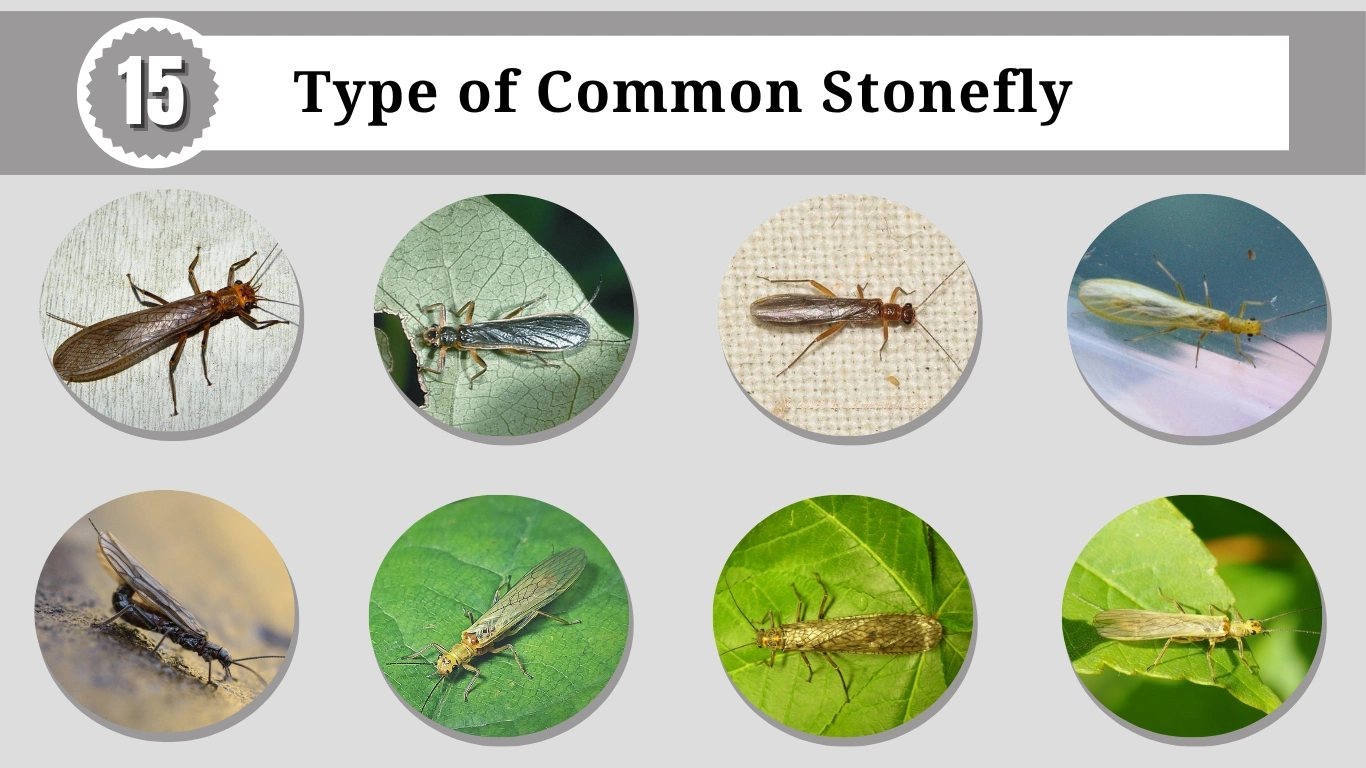
Stoneflies are aquatic insects known for their sensitivity to clean, oxygen-rich water, making them excellent indicators of freshwater health. Found in rivers, streams, and mountain brooks, these insects play vital roles in aquatic ecosystems. Their diverse forms and habits reveal fascinating adaptations to life in moving water. This guide explores 15 common stonefly species, highlighting their identification, habitats, behaviors, diets, and lifecycles.
1. Perla marginata

The Perla marginata, commonly known as the large stonefly, is a widespread European species often found along clean, fast-flowing rivers and streams. Recognized for its impressive size and striking coloration, it serves as an important bioindicator of freshwater purity and ecological balance.
Identification
- Adult length: 2.5–3.5 cm (1–1.4 inches)
- Yellow to golden-brown body with darker thorax markings
- Transparent wings folded flat over the abdomen
- Long antennae and two prominent tail filaments (cerci)
- Nymphs are large, flattened, and dark brown with strong legs
Habitat
Perla marginata prefers cool, oxygen-rich rivers and streams with rocky or gravel bottoms. Nymphs live beneath stones in the current, while adults are commonly seen resting on riverbank vegetation or rocks during spring and early summer.
Behaviors
The species is mainly diurnal. Nymphs are active hunters, moving between stones to catch prey. Adults have a slow, fluttering flight and are often found crawling rather than flying. Males attract females using low-frequency drumming signals produced by tapping their abdomen on surfaces.
Diet
Nymphs are carnivorous, feeding on smaller aquatic invertebrates such as mayfly and midge larvae. Adults may consume algae or decaying plant matter but often rely on stored nutrients from their nymphal stage.
Lifecycle
The lifecycle includes egg, nymph, and adult stages. Eggs are laid in water, adhering to stones or gravel. Nymphs undergo 10–12 molts over one to three years before emerging as adults. Adults live for only a few weeks, focusing primarily on reproduction.
2. Pteronarcys dorsata

The Pteronarcys dorsata, commonly known as the giant stonefly or salmonfly, is one of the largest stonefly species in North America. Renowned for its impressive size and importance to anglers, this species is an indicator of pristine water quality and healthy stream ecosystems.
Identification
- Adult length: 4–5 cm (1.6–2 inches)
- Dark brown to black body with orange highlights on the thorax and abdomen
- Large, net-like wings folded flat when at rest
- Long, slender antennae and two tail filaments
- Nymphs are robust, brown, and heavily segmented with strong legs
Habitat
Found in cold, fast-moving streams and rivers throughout North America, especially in the northern United States and Canada. Nymphs live under stones in riffles, where oxygen levels are high, while adults emerge in late spring or early summer near riparian vegetation.
Behaviors
Nymphs are strong swimmers and active predators, hiding beneath rocks during the day. Adults are clumsy fliers, often seen crawling on rocks or tree trunks near water. They are most active at dusk and play a vital role in trout diets during their emergence period.
Diet
Nymphs are omnivorous, feeding on algae, decaying vegetation, and small aquatic insects. Adults consume little to no food, surviving mainly on stored energy from their nymphal stage.
Lifecycle
Females lay hundreds of eggs on the water surface, which sink and attach to the streambed. Nymphs take two to four years to mature, undergoing multiple molts. Adults emerge synchronously in spring, living only a few weeks to mate and reproduce.
3. Isoperla grammatica

The Isoperla grammatica, also called the green stonefly or yellow sally, is a small and widely distributed species found throughout Europe and North America. Known for its vibrant yellow-green coloration, it is commonly seen near clear, cold rivers during spring and early summer.
Identification
- Adult length: 1–1.5 cm (0.4–0.6 inches)
- Yellow-green body with brown markings on the thorax
- Transparent wings with visible veins
- Long antennae and two slender cerci (tail filaments)
- Nymphs are flattened, olive-brown, and agile swimmers
Habitat
Prefers cool, fast-flowing streams and rivers with rocky or gravel bottoms. Nymphs dwell under submerged stones in oxygen-rich water, while adults rest on nearby vegetation or stones along the banks.
Behaviors
Nymphs are active predators, often seen crawling along the streambed hunting for prey. Adults emerge in spring and are most active on sunny days. Males produce faint drumming sounds to attract females.
Diet
Nymphs are carnivorous, feeding on mayfly and midge larvae. Adults may sip water or nectar but mostly rely on stored energy reserves from their nymphal stage.
Lifecycle
Eggs are laid on water surfaces, sinking to attach to rocks. The nymphal stage lasts one to two years, with several molts before adulthood. Adults live briefly—typically a few weeks—focused on reproduction.
4. Leuctra nigra

The Leuctra nigra, commonly known as the needle stonefly or black needlefly, is a small, slender species widespread across Europe and North America. Its elongated body and folded wings give it a needle-like appearance, making it easy to identify near freshwater streams.
Identification
- Adult length: 0.8–1.2 cm (0.3–0.5 inches)
- Shiny black or dark brown body
- Narrow, overlapping wings extending past the abdomen
- Long, fine antennae
- Nymphs are slender, dark, and cling tightly to rocks
Habitat
Thrives in small, cool mountain streams and forest brooks with clean, well-oxygenated water. Nymphs live among gravel and stones, while adults are often found resting on streamside rocks and vegetation.
Behaviors
This species is active during early spring and late autumn, unlike most stoneflies that emerge in warmer months. Adults are weak fliers but crawl efficiently across surfaces. Males communicate by drumming to attract females.
Diet
Nymphs are detritivorous, feeding on decomposing leaves and organic matter, helping recycle nutrients in freshwater ecosystems. Adults rarely feed and live only a few days after emergence.
Lifecycle
Eggs are deposited directly into the water, hatching within a few weeks. Nymphs develop slowly over a year, molting multiple times before maturing. Adults appear in cool seasons, with short lifespans dedicated mainly to mating and egg-laying.
5. Nemoura cinerea

The Nemoura cinerea, often called the common spring stonefly, is a small and abundant species found across Europe and parts of North America. It is one of the earliest stoneflies to emerge each year, often seen in late winter and early spring near cold, clean streams.
Identification
- Adult length: 0.8–1.2 cm (0.3–0.5 inches)
- Dark brown to grayish body with slightly smoky wings
- Long, thread-like antennae
- Wings folded flat over the body when at rest
- Nymphs are short-bodied with broad heads and strong legs
Habitat
Found in cool, well-oxygenated streams and small rivers, often in shaded forested areas. Nymphs cling to the undersides of stones in riffles and shallow sections, while adults rest on streamside vegetation or rocks.
Behaviors
Nymphs are active throughout the winter and early spring, surviving in near-freezing water. Adults are among the first insects to appear in spring, often seen crawling on snow or ice near stream edges. Males communicate through drumming vibrations to attract females.
Diet
Nymphs are detritivores, feeding on decaying leaves and fine organic material, helping to recycle nutrients in cold-water ecosystems. Adults do not feed and live only briefly to reproduce.
Lifecycle
Eggs are laid in clusters on the water surface or attached to submerged vegetation. Nymphs develop over one year, molting several times before adulthood. Adults emerge in early spring and live only a few days to mate and lay eggs.
6. Taeniopteryx nebulosa

The Taeniopteryx nebulosa, commonly known as the early brown stonefly, is a hardy species that thrives in cold climates. It often emerges in late winter or early spring, providing an early food source for fish and other wildlife.
Identification
- Adult length: 1–1.5 cm (0.4–0.6 inches)
- Brown to dark chestnut-colored body
- Slightly mottled wings with fine venation
- Long antennae and two tail filaments
- Nymphs are elongated, dark brown, and flattened with distinct wing pads
Habitat
Prefers cold, slow-moving streams and small rivers with clean, well-oxygenated water. Nymphs live among stones and submerged debris, while adults are often seen on snowbanks or vegetation near the water.
Behaviors
Adults are among the earliest insects to emerge, often during late winter thaw. They are weak fliers but crawl efficiently across rocks and ice. Males drum to attract mates, and mating typically occurs close to the water.
Diet
Nymphs feed primarily on decaying organic matter and algae, acting as essential decomposers in freshwater ecosystems. Adults rarely feed and rely on stored energy reserves.
Lifecycle
Eggs are laid directly into the water, where they sink and adhere to stones. Nymphs develop for roughly one year, enduring cold water conditions. Adults emerge during late winter or early spring and live for about one week, completing their short reproductive cycle.
7. Chloroperla tripunctata

The Chloroperla tripunctata, also known as the yellow sally stonefly, is a small and delicate species that brightens up the banks of clean streams and rivers across Europe. Its pale green to yellow coloration helps it blend seamlessly with riparian vegetation during spring and summer.
Identification
- Adult length: 0.8–1.2 cm (0.3–0.5 inches)
- Pale green or yellow body with translucent wings
- Distinct three dark spots on the thorax (hence “tripunctata”)
- Long antennae and two fine tail filaments
- Nymphs are slim, olive-colored, and agile swimmers
Habitat
Found in clear, fast-flowing rivers and streams with stony or gravelly substrates. The larvae prefer well-oxygenated water and are common in upland or mountain regions with clean flow.
Behaviors
Adults are active during late spring and early summer, often flying low over the water surface. Males attract females using gentle drumming signals. Nymphs are good indicators of unpolluted freshwater ecosystems.
Diet
Nymphs are mostly herbivorous, grazing on algae and biofilm from submerged stones. Adults occasionally sip water or nectar but rely mainly on stored energy from the larval stage.
Lifecycle
Eggs are laid on the water surface and sink to attach to stones. Nymphs develop for one to two years underwater, molting several times. Adults live only a few weeks, focusing on reproduction.
8. Dinocras cephalotes

The Dinocras cephalotes, commonly called the great spring stonefly, is one of Europe’s largest and most impressive stonefly species. Its large size and patterned wings make it a striking sight near cold, clear rivers.
Identification
- Adult length: 2.5–3.5 cm (1–1.4 inches)
- Brown to black body with lighter markings on thorax
- Transparent wings with fine veins and spotted patches
- Strong legs and long antennae
- Nymphs are large, flattened, and covered with short bristles
Habitat
Prefers clean, fast-flowing streams and rivers with rocky beds, especially in upland or mountainous areas. Nymphs live under stones in riffles, while adults rest on rocks or vegetation near water.
Behaviors
Adults are mostly nocturnal and are drawn to lights during warm spring nights. Nymphs are strong crawlers and active hunters, feeding on smaller aquatic insects. The adults have limited flight capability and spend much of their time near the water surface.
Diet
Nymphs are predatory, feeding on insect larvae, small crustaceans, and detritus. Adults rarely feed, surviving on reserves from their nymphal development.
Lifecycle
Females lay eggs directly into the water. The nymphal stage lasts two to three years, with several molts before emergence. Adults appear in late spring or early summer and live only a few weeks, during which they reproduce and complete the cycle.
9. Protonemura meyeri

The Protonemura meyeri, commonly called the Meyer’s stonefly, is a small, early-emerging species found in mountain streams and cool forested brooks across Europe. It plays an important ecological role in breaking down organic matter in clean, fast-flowing waters.
Identification
- Adult length: 0.8–1.2 cm (0.3–0.5 inches)
- Dark brown to gray body with narrow, translucent wings
- Slender build with long, thread-like antennae
- Two short cerci (tail filaments)
- Nymphs are compact, dark, and often covered in fine hairs
Habitat
Prefers cold, oxygen-rich mountain streams and shaded forest waterways. Nymphs live under stones and submerged leaves in riffle zones, while adults are usually found resting on rocks or vegetation near water.
Behaviors
Emerges early in the year, often during late winter or early spring. Adults are weak fliers but crawl actively along stream banks. Males communicate with drumming signals, and mating occurs near water surfaces or on rocks.
Diet
Nymphs feed primarily on decomposing plant material, biofilm, and detritus. Adults do not feed and rely on energy stored from their nymphal stage.
Lifecycle
Eggs are laid directly into streams, sinking to adhere to stones. The nymphs develop over one year, molting several times before maturity. Adults emerge during early spring, living briefly to reproduce before dying within a few days.
10. Capnia bifrons

The Capnia bifrons, known as the snowfly or winter stonefly, is a small species notable for emerging during the coldest months of the year. It is one of the few aquatic insects active on snow, often seen crawling across icy streambanks.
Identification
- Adult length: 0.6–1 cm (0.25–0.4 inches)
- Dark brown to nearly black body
- Narrow, folded wings that extend slightly beyond the abdomen
- Long antennae and two short tail filaments
- Nymphs are slender and dark with distinct wing pads
Habitat
Found in cold, fast-flowing mountain streams and forested creeks. Nymphs inhabit rocky streambeds, clinging to stones in well-oxygenated water, while adults emerge along snowy or icy banks.
Behaviors
This species is highly cold-tolerant and emerges in late winter or early spring. Adults crawl actively across snow and ice to find mates. Males produce soft drumming sounds for communication.
Diet
Nymphs feed on decomposing plant matter, algae, and fine detritus, contributing to nutrient cycling in cold-water habitats. Adults typically do not feed.
Lifecycle
Eggs are laid on snow or directly into water, hatching when temperatures rise slightly above freezing. The nymphal stage lasts about a year, with multiple molts before adulthood. Adults live for less than a week, completing their brief reproductive phase in winter conditions.
11. Siphonoperla burmeisteri

The Siphonoperla burmeisteri, commonly known as the yellow stonefly, is a medium-sized species easily recognized by its pale yellow coloration and graceful flight. It is widely distributed across Europe and is often found near clean, cool mountain streams and rivers.
Identification
- Adult length: 1.2–1.8 cm (0.5–0.7 inches)
- Yellow-green body with transparent, finely veined wings
- Long antennae and two slender cerci
- Nymphs olive-brown with light-colored legs and strong mandibles
- Adults have bright greenish eyes
Habitat
This species prefers cool, fast-flowing, well-oxygenated streams, especially in forested or mountainous areas. Nymphs dwell beneath stones and gravel, while adults rest on nearby vegetation and rocks.
Behaviors
Adults emerge from late spring to mid-summer and are most active during warm daylight hours. Males attract females with soft drumming signals. Nymphs are strong swimmers and move actively along the substrate while foraging.
Diet
Nymphs are carnivorous, feeding on small aquatic insects and larvae. Adults rarely feed, sometimes taking small amounts of nectar or water droplets.
Lifecycle
Eggs are deposited directly into water and adhere to rocks or aquatic vegetation. The nymphal stage lasts about one year, with several molts before adulthood. Adults live for two to three weeks, during which they reproduce and complete their brief terrestrial stage.
12. Amphinemura sulcicollis

The Amphinemura sulcicollis, also known as the spring yellow stonefly, is a small species common throughout Europe and Asia. It is one of the first stoneflies to emerge in early spring, serving as an important early-season indicator of water quality.
Identification
- Adult length: 0.8–1.2 cm (0.3–0.5 inches)
- Dark brown to yellowish body with slightly smoky wings
- Slender build with long antennae and narrow legs
- Nymphs are compact, dark brown, and well-adapted for fast-flowing water
- Two short, segmented tail filaments
Habitat
Prefers cold, clear mountain streams and shaded forest brooks. Nymphs live among stones, gravel, and submerged leaf litter. Adults are usually seen crawling on rocks or snow near stream edges.
Behaviors
Adults appear early in spring, even in cool temperatures. They are weak fliers and prefer to walk on vegetation or stones near the water. Males communicate using faint drumming vibrations to locate mates.
Diet
Nymphs are detritivores, feeding on decomposing leaves, algae, and organic sediments. Adults do not feed and survive only a few days after emergence.
Lifecycle
Eggs are laid in clusters on the water surface or directly onto submerged vegetation. The nymphal stage lasts roughly one year, with multiple molts. Adults emerge in early spring, mate quickly, and die shortly afterward, completing a simple annual cycle.
13. Allocapnia granulata

The Allocapnia granulata, often referred to as the granulated snowfly, is a small winter-emerging stonefly found across North America. It is one of the few aquatic insects active during freezing temperatures and is commonly seen walking across snow near icy streams.
Identification
- Adult length: 0.6–1 cm (0.25–0.4 inches)
- Black to dark brown body with narrow, folded wings
- Long, thread-like antennae and short cerci
- Nymphs are slender, dark, and equipped with strong legs for clinging to rocks
- Wings slightly translucent with light venation
Habitat
Found in cold, fast-moving streams and rivers with rocky or gravel substrates. Nymphs dwell under submerged stones in highly oxygenated water, while adults emerge near snowy banks during winter or early spring.
Behaviors
Adults are highly cold-tolerant and remain active on snow and ice. They move slowly and crawl more than they fly. Males produce gentle drumming sounds to attract females, even in near-freezing temperatures.
Diet
Nymphs feed on decomposing organic material, algae, and detritus, helping maintain nutrient balance in freshwater ecosystems. Adults do not feed and live only long enough to mate and lay eggs.
Lifecycle
Eggs are laid on snow or directly in the stream, sinking to the substrate to develop. Nymphs grow throughout the year, molting several times before reaching adulthood. Adults appear during late winter or early spring, completing their lifecycle within one year.
14. Perlesta placida

The Perlesta placida, commonly known as the eastern summer stonefly, is a warm-weather species native to North America. It is widespread in the eastern and central United States, known for its amber wings and role in healthy stream ecosystems.
Identification
- Adult length: 1.5–2 cm (0.6–0.8 inches)
- Amber to golden-brown body with clear, glossy wings
- Long, fine antennae and slender legs
- Nymphs are robust, yellowish-brown, with distinct wing pads
- Two long tail filaments
Habitat
Prefers warm, moderately flowing streams and small rivers with gravelly or sandy bottoms. Nymphs inhabit riffles and shallow waters, while adults are often found resting on nearby vegetation during summer evenings.
Behaviors
Adults are active during warm nights, often attracted to lights. Males produce soft drumming sounds to attract females. Nymphs are agile and cling tightly to rocks in flowing water.
Diet
Nymphs are omnivorous, consuming algae, detritus, and small aquatic invertebrates. Adults typically do not feed and rely on stored energy from their nymphal phase.
Lifecycle
Eggs are laid in water during late summer. Nymphs develop rapidly over one year, molting several times before emergence. Adults appear from June to August, living for only a few weeks during the warmest months.
15. Acroneuria abnormis

The Acroneuria abnormis, also called the common stonefly or golden stonefly, is a large, striking species found throughout North America. It’s often seen near rivers and streams, serving as an important food source for fish such as trout.
Identification
- Adult length: 2.5–3.5 cm (1–1.4 inches)
- Golden-brown body with darker mottling on wings and thorax
- Clear, membranous wings folded flat over the abdomen
- Long antennae and cerci (tail filaments)
- Nymphs large, flattened, and patterned with yellow and brown markings
Habitat
Lives in clean, fast-flowing rivers and streams with rocky or gravel bottoms. Nymphs prefer well-oxygenated riffle zones, while adults are found resting on stones, logs, or foliage along the banks.
Behaviors
Adults are strong fliers and primarily nocturnal, emerging in late spring and early summer. Males drum to attract females, and mating occurs near the water’s edge. Nymphs are active predators, hiding beneath rocks during the day and foraging at night.
Diet
Nymphs are carnivorous, preying on smaller aquatic insects such as mayflies and midges. Adults rarely feed, surviving mainly on stored energy from their larval development.
Lifecycle
Females deposit eggs on the water surface, where they sink and attach to submerged stones. Nymphs take two to three years to mature, undergoing multiple molts. Adults live only a few weeks, completing their lifecycle in early summer.