Tiger moths are among the most colorful and diverse moth families in the world, known for their striking wing patterns and famously fuzzy caterpillars. From the well-loved Isabella tiger moth—the adult form of the woolly bear—to bold species like the garden tiger moth, these insects follow a fascinating life cycle shaped by climate, food plants, and ecological roles. This guide explores that life cycle in detail, comparing major tiger moth species including Isabella, milkweed, ruby, silver-spotted, and others.
Understanding the Tiger Moth Life Cycle

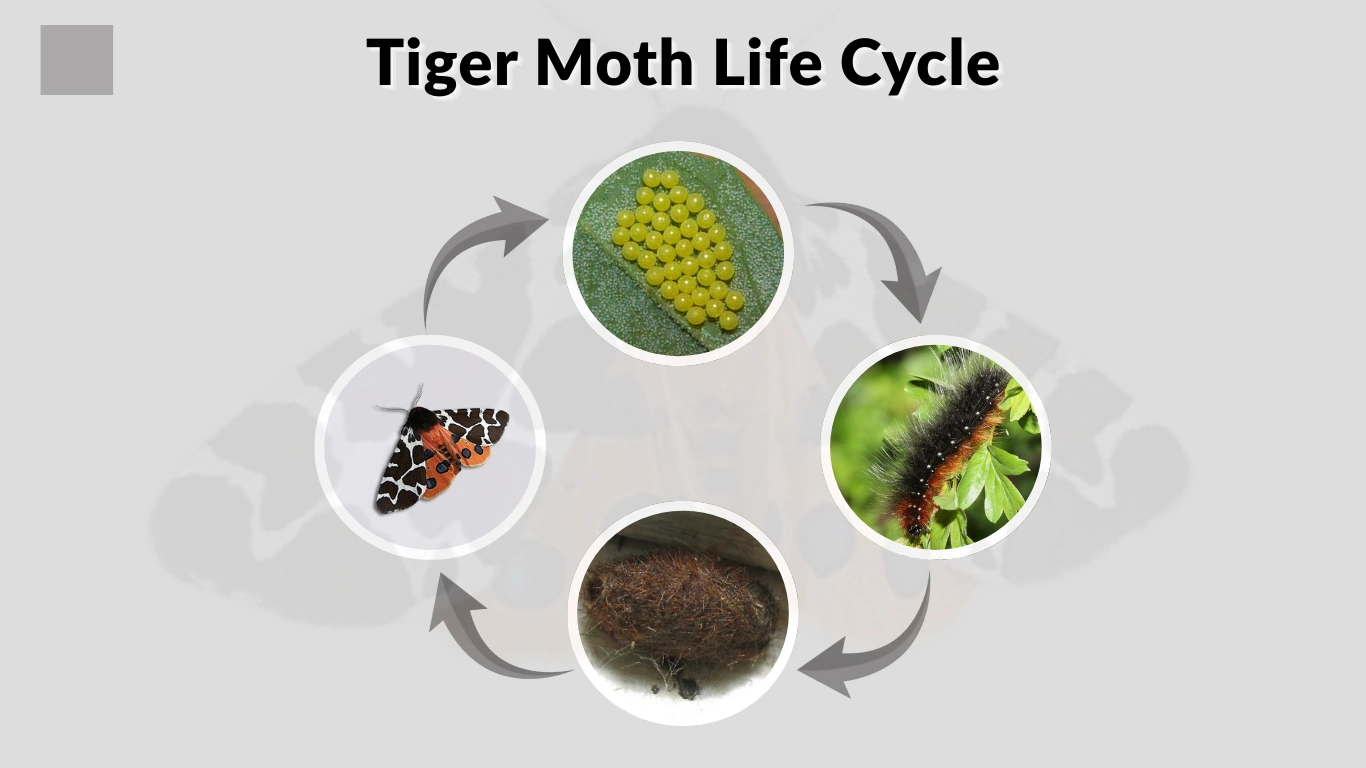
Tiger moths share a four-stage life cycle: egg, larva (caterpillar), pupa, and adult. While these stages are universal, how long they last and how each species survives seasonal changes varies widely.
The Four Main Stages
- Egg – A brief but important stage where embryos develop within clusters laid on leaves.
- Larva – The caterpillar stage, where feeding and growth occur.
- Pupa – A transformative resting stage inside a cocoon.
- Adult – A short-lived but visually stunning moth built for reproduction.
Why Life Cycles Differ Across Species
Tiger moths inhabit a wide range of climates, from cold northern regions to warm tropical areas. Species like the Isabella tiger moth must adapt to freezing winters, while others such as the milkweed tiger moth thrive in warm months and produce multiple generations per year. Their host plants, habitats, and predator pressures also influence the speed and timing of development.
Egg Stage

General Characteristics of Tiger Moth Eggs
Tiger moth eggs are typically laid in tight clusters, often on the underside of leaves or stems. They are tiny, pale yellow to cream-colored, and hatch within days to a few weeks depending on temperature. Warm conditions accelerate development, while cooler climates slow the hatching process.
Species Examples
Different species place eggs on different plants:
- Isabella tiger moth: Lays eggs on low vegetation like grasses, clover, and plantain.
- Garden tiger moth: Deposits eggs on nettles, docks, and herbaceous plants in meadows.
- Milkweed tiger moth: Places egg masses directly on milkweed leaves, setting the stage for larvae to feed on toxic foliage.
These early differences determine where the caterpillars will feed and grow.
Larval Stage (Caterpillar)

The larval stage is the most recognizable period in the tiger moth life cycle. Caterpillars grow rapidly, shedding their skin through several instars while feeding heavily on their preferred host plants.
Overview of Caterpillar Development
Tiger moth caterpillars are known for their dense hairs, vibrant colors, and unique defensive behaviors. Many species use chemical defenses, while others rely on bristly hairs to discourage predators. Growth varies widely—some species develop quickly within a single summer, while others, like woolly bears, overwinter and take months to complete their larval stage.
Isabella Tiger Moth Caterpillar (Woolly Bear)
One of the most iconic caterpillars in North America, the woolly bear features black bands at the ends and a rust-orange band in the middle.
Key traits:
- Survives winter by freezing almost completely
- Feeds on diverse low plants
- Takes several months to complete larval development
- Known in folklore for predicting winter severity based on band width
Garden Tiger Moth Caterpillar
The garden tiger moth larva is large, dark, and covered in thick hairs.
Features include:
- Long reddish and black bristles
- Feeding on nettles, docks, and wild plants
- Overwintering in sheltered areas
- Strong defensive behavior due to urticating hairs
This species is especially common in Europe and cooler Northern regions.
Milkweed Tiger Moth Caterpillar
Milkweed tiger moth larvae are easy to recognize thanks to their bright orange, white, and black tufts.
Traits include:
- Feeding exclusively on milkweed
- Absorbing milkweed toxins for protection
- Group feeding behavior in early instars
- Rapid growth in warm climates
This species is especially important in milkweed ecosystems where monarchs also feed.
Other Species
Tiger moth larvae come in a wide variety of forms:
- Ruby tiger moth: Brick-red larva with short hairs
- Silver-spotted tiger moth: Boldly patterned caterpillars
- Virginian tiger moth: Pale larvae with light hairs
- Painted & lined tiger moths: Striped or tufted caterpillars with diverse diets
These variations reflect adaptation to different habitats and predator pressures.
Pupal Stage (Cocoon)

The pupal stage is when the caterpillar transforms into an adult moth. Tiger moth cocoons are distinctive, often made from silk woven together with the caterpillar’s own shed hairs.
General Tiger Moth Cocoon Structure
Most tiger moth cocoons are:
- Oval-shaped
- Constructed from silk and bristles
- Found in leaf litter, soil, or plant stems
- Designed to protect the vulnerable pupa inside
Pupation typically lasts 1–4 weeks, but species in cold climates may overwinter inside their cocoon.
Adult Tiger Moths

The adult stage is the shortest but most visually striking part of the tiger moth life cycle. Their vibrant patterns, bright hindwings, and sometimes fuzzy bodies make them favorites among nature enthusiasts.
General Appearance & Traits
Adult tiger moths typically have:
- Bold wing patterns in orange, black, white, and red
- Hairy thoraxes and stout bodies
- Nocturnal behavior (most species)
- A short lifespan focused entirely on reproduction
Many species exhibit aposematic coloration—bright warning colors signaling toxicity or distastefulness to predators.
Isabella Tiger Moth Adult
The Isabella tiger moth, the adult form of the woolly bear, is surprisingly plain compared to its caterpillar.
It features:
- Soft orange-tan wings
- Scattered small black spots
- A fuzzy orange thorax
Adults live only one to two weeks, during which they mate and lay eggs for the next generation.
Garden Tiger Moth Adult
The garden tiger moth is one of the most beautiful moths in its family.
It displays:
- Dramatic brown-and-white forewings
- Bright orange hindwings with blue-black spots
- Strong warning coloration to deter predators
Some populations fly during the day, especially in northern Europe.
Milkweed Tiger Moth Adult
Milkweed tiger moth adults have:
- Soft gray or tan wings
- Subtle striping
- The unique ability to produce ultrasonic clicks
These clicks serve as a defensive warning to bats, signaling that the moth contains bitter milkweed chemicals.
Other Tiger Moth Species
- Ruby tiger moth: Reddish wings, compact body
- Scarlet tiger moth: Bright scarlet hindwings
- Silver-spotted tiger moth: Distinctive silver forewing patches
- Banded tiger moth & lined tiger moth: Striped wing patterns
- Virginian tiger moth: White wings with delicate markings
Each species follows the same life cycle but exhibits unique colors and regional adaptations.
Tiger Moth Diet Across the Life Cycle

Egg Stage
Until hatching, eggs rely entirely on nutrients provided by the female moth. No external feeding occurs at this stage.
Larval Stage Diet
Tiger moth caterpillars are primarily herbivores. Their diets vary widely across species:
- Isabella: Clover, grasses, dandelion, plantain, wild herbs
- Garden tiger moth: Nettle, burdock, dock, raspberry leaves
- Milkweed tiger moth: Exclusively milkweed foliage
- Ruby tiger moth: Low-growing plants & wildflowers
- Virginian tiger moth: Grasses, broadleaf plants
- Silver-spotted tiger moth: Various wild weeds and shrubs
Their food choices affect coloration, toxin levels, and growth rate.
Adult Diet
Adult tiger moths feed lightly or not at all.
Some species sip nectar, while others rely solely on energy stored from their caterpillar stage. This limited diet contributes to their short adult lifespan.
Habitat and Range

General Habitats
Tiger moths inhabit a wide range of ecosystems:
- Meadows
- Roadsides
- Gardens
- Woodland edges
- Coastal areas
- Dry fields and open grasslands
Their adaptability contributes to their large global range.
Species-Specific Ranges
- Isabella tiger moth: Entire U.S., Canada, northern Mexico
- Garden tiger moth: Europe, Asia, northern U.S., Canada
- Milkweed tiger moth: Wherever milkweed grows
- Ruby tiger moth: Europe and North America
- Virginian tiger moth: Eastern United States
- Silver-spotted tiger moth: Central and southern U.S.
Some species have a limited range; others are nearly continent-wide.
Lifespan and Seasonal Patterns
General Lifespan
- Eggs: 5–14 days
- Larvae: Weeks to months (longest stage)
- Pupa: Weeks or overwintering
- Adult: 7–21 days
Life cycle length varies widely across species and climates.
Species Examples
- Isabella tiger moth: One-year cycle; overwinter as caterpillars
- Garden tiger moth: Overwinter as pupae; adults emerge in summer
- Milkweed tiger moth: Often multiple generations per year in warm regions
- Ruby tiger moth: Fast development in summer months
Seasonal timing helps synchronize breeding with food availability.
Predators and Natural Defenses

Common Predators
Tiger moth eggs, larvae, and adults face predation from:
- Birds
- Rodents
- Predatory insects
- Parasitoid wasps and flies
- Bats (adults)
Defensive Adaptations
Tiger moths and their larvae use several survival strategies:
- Hairy bodies: Discourage predators and provide insulation
- Chemical defenses: Absorbing toxins like milkweed’s cardenolides
- Aposematic coloration: Bright patterns warn predators
- Startle colors: Flashing bright hindwings when threatened
- Ultrasonic clicking: Used by some adults to deter bats
- Curling behavior: Especially common in woolly bears
These defenses help them survive long enough to pupate and reproduce.
Tiger Moth Life Cycle Comparison Chart
| Species | Larval Duration | Pupation | Adult Lifespan |
| Isabella | Months; overwinter | Hairy cocoon | 1–2 weeks |
| Garden tiger | Summer–fall | Overwinter pupa | Few weeks |
| Milkweed tiger | Rapid | Short cocoon | 1–2 weeks |
| Ruby tiger | Swift | Short pupa stage | Short |
| Silver-spotted tiger | Variable | Multi-generation | Weeks |
This comparison highlights the strong influence of climate and host plant on life cycle timing.
FAQs
How long does a tiger moth live?
Most tiger moths live only one to three weeks as adults, though they spend much longer in the caterpillar and pupal stages.
What is the life cycle of the Isabella tiger moth?
Egg → woolly bear caterpillar (overwintering) → cocoon → adult. The cycle takes about one year.
Do all tiger moths have fuzzy caterpillars?
Most do, but fuzz density and color vary widely across species.
Are tiger moths harmful or dangerous?
No. They are not harmful to humans, and their caterpillars rarely damage plants significantly.
Which tiger moth species overwinter as caterpillars?
The Isabella tiger moth is the best-known species that overwinters in larval form.