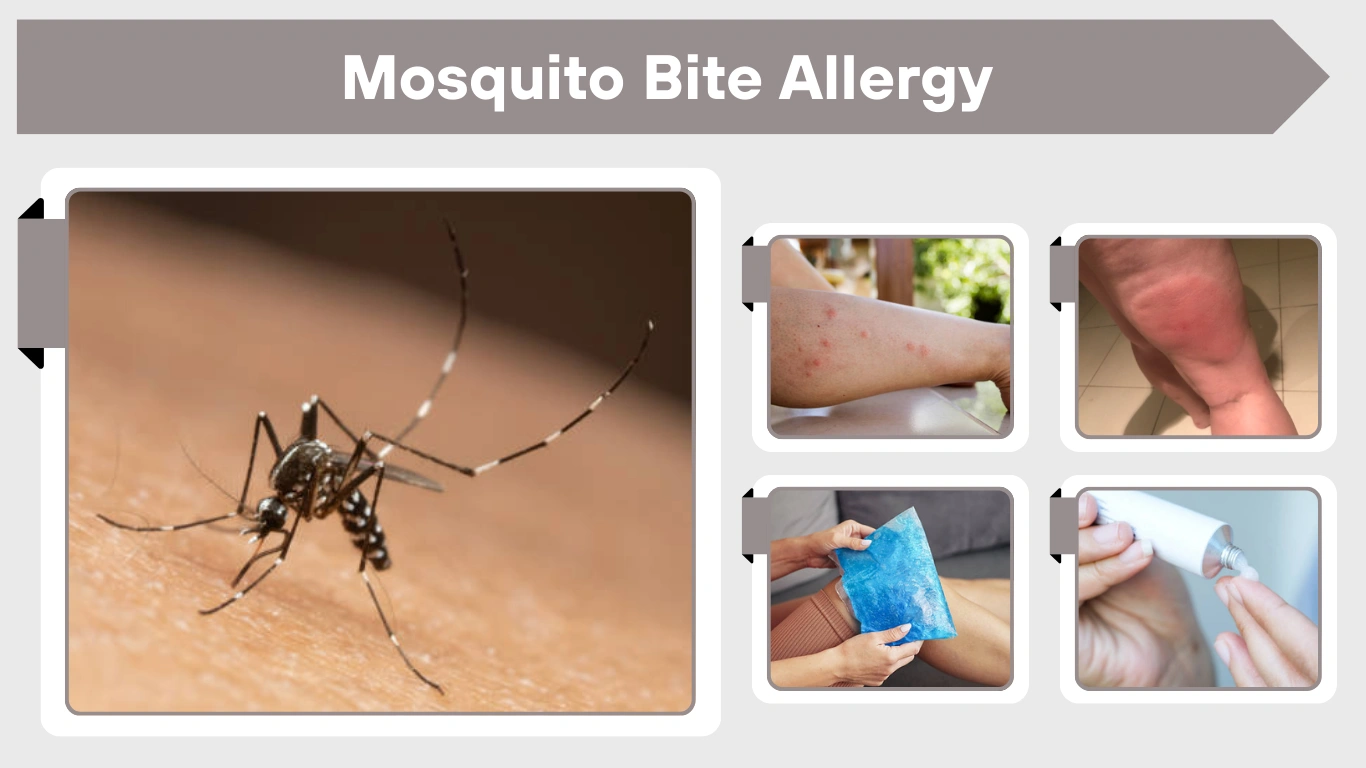
A mosquito bite allergy occurs when the body has an exaggerated immune response to proteins found in mosquito saliva. While most mosquito bites cause mild itching and redness, allergic reactions can lead to large swelling, intense itching, blisters, or hive-like rashes that look alarming. These reactions are more common in children and people with sensitive immune systems but can develop at any age. Understanding the difference between a normal mosquito bite and an allergic reaction helps you manage symptoms properly and know when medical care is needed.
What Is a Mosquito Bite Allergy
A mosquito bite allergy happens when the immune system reacts strongly to mosquito saliva rather than treating it as a minor irritant. When a mosquito bites, it injects saliva into the skin to prevent blood clotting. In allergic individuals, the immune system releases large amounts of histamine in response.
This histamine release causes increased swelling, redness, itching, and sometimes pain. Instead of a small bump, the bite may expand significantly and feel hot or firm to the touch. These reactions are not caused by infection but by inflammation.
Some people are allergic from childhood, while others develop mosquito bite allergies later in life due to immune system changes, repeated exposure, or environmental factors. Allergic reactions can also vary in severity from one bite to another.
Normal Mosquito Bite vs Allergy Reaction

A normal mosquito bite and an allergic reaction may look similar at first, but key differences usually appear within hours.
A normal bite is typically small, mildly itchy, and fades within a few days. An allergic mosquito bite becomes much larger, itchier, and more inflamed. Swelling may spread beyond the bite site, and symptoms often last longer than a week.
Reaction Timeline: Normal vs Allergic Bite
With a normal bite, swelling peaks within 24 hours and then steadily improves. In allergic reactions, swelling often increases rapidly within hours and may continue to worsen for 1–2 days before slowly resolving. Allergic bites also tend to feel warmer and more uncomfortable than regular bites.
What Does a Mosquito Bite Allergy Look Like
A mosquito bite allergy usually appears as a large red or pink swollen area that may measure several centimeters across. The skin often looks tight, shiny, and inflamed rather than forming a small raised bump.
In some cases, the bite resembles hives, with raised, irregular edges and intense itching. Blisters or fluid-filled bumps may form in more severe reactions, especially in children. Allergic bites may also feel painful or tender rather than just itchy.
Mosquito Bite Allergy Pictures and Images Explained
Photos of mosquito bite allergies typically show exaggerated swelling, uneven redness, and sometimes blistering. These images can look concerning but are often mistaken for infection. Unlike infected bites, allergic reactions usually itch intensely and lack pus, spreading redness, or fever.
Mosquito Bite Allergy Symptoms

Common symptoms of a mosquito bite allergy include:
- Large or spreading swelling
- Severe itching
- Redness extending beyond the bite
- Warm or firm skin
- Pain or tenderness
- Blisters or fluid-filled bumps
- Hive-like rashes near the bite
Symptoms may appear within minutes or a few hours after the bite and often last longer than a normal mosquito reaction.
Swelling from Mosquito Bite Allergy
Swelling is one of the most noticeable signs of a mosquito bite allergy. Allergic swelling happens because blood vessels become leaky in response to histamine, allowing fluid to collect in surrounding tissues.
Swelling may last 5 to 10 days or longer, depending on severity. Bites on the face, lips, or eyelids often swell more dramatically due to thinner skin and increased blood flow. Although facial swelling can look severe, it is not always dangerous unless it affects breathing or vision.
Blisters, Hives, and Skin Reactions
Some allergic reactions go beyond swelling and itching:
- Blisters: Caused by intense inflammation or repeated irritation
- Hives: Raised, itchy welts that may appear around or beyond the bite
- Bruised or blood-filled bites: Occur when small blood vessels are damaged
- Post-reaction sensitivity: Skin may remain sensitive after swelling subsides
These reactions usually heal without scarring if scratching is avoided.
Severe Mosquito Bite Allergy

Severe mosquito bite allergy involves extreme swelling, pain, or widespread skin reactions. In some cases, swelling may interfere with movement, vision, or daily activities. Although rare, systemic symptoms such as fever or fatigue can occur.
Severe reactions should not be confused with infection. Allergic reactions itch intensely and improve slowly, while infections often become more painful and worsen over time.
Skeeter Syndrome: Mosquito Bite Allergy Explained
Skeeter syndrome is a severe local allergic reaction to mosquito bites, most commonly seen in children. It causes very large, painful swelling, redness, and warmth that can mimic cellulitis.
Symptoms usually appear within hours of a bite and may last 7 to 14 days. Despite how serious it looks, Skeeter syndrome is an allergic reaction, not an infection, and usually resolves with proper treatment.
Skeeter Syndrome vs Normal Mosquito Bite
Skeeter syndrome differs from a normal mosquito bite in both severity and duration. A typical bite causes mild itching and fades within a few days. Skeeter syndrome, however, leads to intense swelling, redness, warmth, and sometimes pain that can last up to two weeks.
Unlike infections, Skeeter syndrome reactions appear quickly after a bite and are driven by the immune system rather than bacteria. Understanding this difference helps prevent unnecessary antibiotic use and reduces anxiety when swelling looks severe.
Mosquito Bite Allergy on the Face
Mosquito bite allergies on the face tend to look more dramatic due to thinner skin and increased blood flow. Bites near the eyes, lips, or cheeks can swell significantly, sometimes causing eyelids to close partially.
Facial allergic swelling usually peaks within 24–48 hours and gradually improves over several days. Medical attention is advised if swelling affects vision, breathing, or continues to worsen instead of improving.
Mosquito Bite Allergy in Infants and Toddlers

Infants and toddlers commonly experience stronger visible reactions to mosquito bites. Their immune systems are still developing, which can result in larger swelling, redness, and blistering.
Most allergic reactions in children resolve within 5 to 10 days. Parents should watch for excessive scratching, fever, spreading redness, or signs of infection. While reactions may look severe, they are often harmless when properly managed.
Tiger and Asian Tiger Mosquito Bite Allergy
Tiger and Asian tiger mosquitoes are known for causing more painful and aggressive bites. Their saliva tends to trigger stronger immune responses, making allergic reactions more intense.
Bites from these mosquitoes may swell more quickly, itch more severely, and last longer than regular mosquito bites. Allergic reactions can persist for 7 to 10 days, especially if scratched repeatedly.
How to Treat Mosquito Bite Allergy

Treating mosquito bite allergy focuses on reducing inflammation, relieving itching, and preventing infection. Early treatment can significantly shorten healing time and prevent complications.
Basic care includes cleaning the bite area, applying cold compresses, and avoiding scratching. Keeping the skin calm and protected allows the immune response to settle more quickly.
Mosquito Bite Allergy Treatment Options
Common treatment methods include:
- Cold compresses to reduce swelling
- Topical corticosteroid creams to calm inflammation
- Oral antihistamines to reduce allergic response
- Anti-itch lotions or creams to prevent scratching
In severe cases, a healthcare provider may recommend stronger prescription treatments.
Best Allergy Medicine for Mosquito Bites
Antihistamines are the most effective allergy medicines for mosquito bite reactions. They work by blocking histamine, the chemical responsible for swelling and itching.
Both daytime non-drowsy antihistamines and nighttime options can help reduce symptoms. Allergy medication is most effective when taken soon after a bite, before swelling becomes severe.
Do Allergy Medicines Help with Mosquito Bites?
Allergy medicines can significantly help with allergic mosquito bites, especially when swelling and itching are pronounced. They reduce inflammation and make itching more manageable.
However, allergy medications may not completely eliminate symptoms. Combining antihistamines with topical treatments often provides the best relief.
Allergy Shots for Mosquito Bites: Do They Exist?
Allergy shots for mosquito bites are rare and not commonly recommended. While immunotherapy exists for some insect allergies, mosquito saliva allergies are usually managed with avoidance and symptom treatment.
Allergy testing may be considered for individuals with severe or recurrent reactions, but most cases do not require long-term immunotherapy.
Can You Develop an Allergy to Mosquito Bites Later in Life
Yes, it is possible to develop a mosquito bite allergy later in life. Changes in immune function, repeated exposure, or environmental factors can trigger stronger reactions over time.
Some people notice that bites suddenly swell more or last longer than before. These changes do not necessarily indicate a serious condition but should be monitored.
Mosquito Bite Allergy Home Remedies
Home remedies may help mild allergic reactions:
- Cold packs
- Oatmeal compresses
- Aloe vera
- Baking soda paste
If swelling continues to worsen, medical treatment may be necessary.
When to See a Doctor for Mosquito Bite Allergy
Seek medical care if symptoms include:
- Severe or spreading swelling
- Fever or fatigue
- Signs of infection
- Difficulty breathing
- Reactions lasting longer than two weeks
FAQs
What does an allergy to mosquito bites look like?
A mosquito bite allergy usually causes large swelling, intense itching, redness, and sometimes blisters or hives rather than a small itchy bump.
How do you know if a mosquito bite is allergic?
If the bite swells significantly, feels hot or painful, spreads beyond the bite area, or lasts longer than a week, it is likely an allergic reaction.
What is the best treatment for mosquito bite allergy?
Cold compresses, antihistamines, and topical corticosteroid creams are the most effective treatments for allergic mosquito bites.
Can allergy medicine help mosquito bites?
Yes, allergy medicines help reduce itching and swelling by blocking histamine, especially in allergic reactions.
Is Skeeter syndrome dangerous?
Skeeter syndrome looks severe but is usually not dangerous. Medical care is needed if swelling affects breathing, vision, or worsens rapidly.