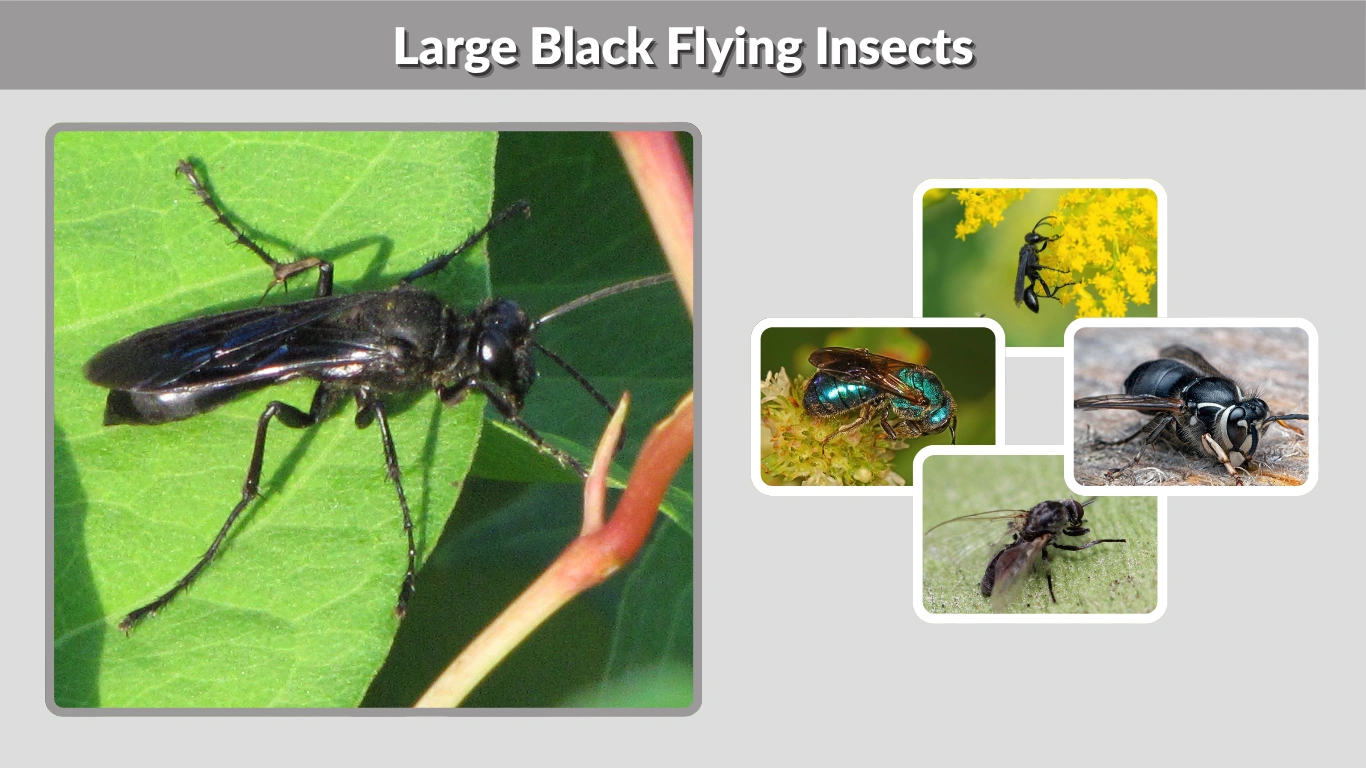
Large black flying insects can be startling due to their size, buzzing, and dark color. However, not all are dangerous—many are beneficial pollinators or pest controllers. Found across the world in varying climates, these insects range from shiny metallic wasps to fuzzy carpenter bees. Identifying their body structure, color variations, and flight behavior helps determine whether they’re harmless or potentially aggressive.
Identification of Large Black Flying Insects

General Appearance
Most large black flying insects measure between 1 and 2 inches, with powerful wings and robust bodies. Some species are glossy and smooth, while others are hairy or striped. Many display bright accents of yellow, orange, red, white, or blue, acting as visual warnings to predators. Their buzzing flight and size often cause alarm, but their purpose in nature is often essential.
Distinctive Features
When identifying these insects, look for:
- Body shape: Round and thick in bees, elongated in wasps.
- Wing color: Transparent, orange-tinted, or metallic blue.
- Markings: Stripes or spots in yellow, white, or red.
- Behavior: Hovering near wood (carpenter bees), circling flowers (pollinators), or guarding nests (hornets).
- Sound: A deep hum indicates a bee or hornet, while a high-pitched buzz may signal a fly.
Behavior and Flight Patterns
- Hoverers: Carpenter bees and hoverflies maintain steady flight near wood or flowers.
- Hunters: Wasps and hornets patrol areas for insects or sugary substances.
- Nesters: Many species build in trees, attics, or soil tunnels.
- Pollinators: Bees, hoverflies, and soldier flies move between blooms carrying pollen.
Common Types of Large Black Flying Insects

Carpenter Bees
Carpenter bees are among the most recognizable large black flying insects. They resemble bumblebees but have smooth, shiny abdomens instead of hairy ones. They bore round holes in wood to create nesting chambers, often in decks, fences, or roof beams. Found across Texas, Georgia, California, and the U.K., they rarely sting and are valuable pollinators.
Bald-Faced Hornets
Despite their name, bald-faced hornets are actually a type of yellowjacket. These large black-and-white striped insects are extremely protective of their paper nests. Common in North America, they can sting multiple times and are best left undisturbed.
Great Black Wasps
Sleek and metallic, great black wasps are long-bodied with blue-black wings. Found in Arizona, California, and the Carolinas, they are solitary hunters that prey on grasshoppers. They are non-aggressive toward humans and play a key role in pest control.
Horseflies
These large black fly-like insects have big compound eyes and powerful wings. Females bite animals and humans to feed on blood, causing itching and swelling. Found near lakes and forests in Florida, Texas, and Massachusetts, they are most active in hot, humid conditions.
Tarantula Hawk Wasps
Among the world’s largest wasps, tarantula hawks have black bodies and bright orange wings. They are native to Arizona, Australia, and tropical regions. Their sting is extremely painful but used only defensively. They prey on tarantulas to feed their larvae.
Black Soldier Flies
These large, metallic black flies are often mistaken for wasps due to their appearance. Harmless to humans, they are important decomposers and used in sustainable waste recycling and insect protein production.
Color Variations of Large Black Flying Insects

Large Black and Yellow Insects
Includes wasps, hornets, and bees, easily identified by their bright stripes. Common in Texas, the U.K., and Georgia, their yellow markings warn predators of a strong sting.
Large Black and White Insects
Species such as bald-faced hornets display white faces and bands. Found in Utah, New York, and Pennsylvania, they are territorial but vital for insect population control.
Large Black and Orange or Red Insects
These include tarantula hawks, soldier beetles, and red paper wasps. Their fiery coloring acts as a visual warning of toxicity or a painful sting. They’re found in Spain, the Dominican Republic, and southern U.S. states.
Large Black and Blue or Green Insects
Great black wasps and metallic blue bees shimmer in sunlight, appearing blue-black or greenish. Common in California, Australia, and Portugal, they are important pollinators that feed on nectar and small insects.
Regional Sightings
United States
In the U.S., large black flying insects appear in nearly every region:
- Texas & Florida: Warm and humid conditions attract carpenter bees, bald-faced hornets, and horseflies. These insects are especially active from late spring through early fall.
- California & Arizona: The dry climate supports tarantula hawks and great black wasps, both impressive but non-aggressive.
- Georgia & the Carolinas: Common species include carpenter bees and black soldier flies, which thrive near wooden fences and gardens.
- Northeast & Midwest (New York, Ohio, Michigan, Minnesota): Hornets and beetles are frequent visitors to wooded areas and flower gardens during summer.
United Kingdom & Europe
In the U.K., large black and yellow striped wasps, bumblebees, and hoverflies are common from May to September. In southern Europe—particularly Spain, France, Italy, and Greece—black-and-orange wasps and carpenter bees are abundant, often seen hovering near gardens, olive groves, and fruit trees.
Australia & Asia
Australia hosts several large species, including blue-winged wasps and giant carpenter bees. These insects are powerful pollinators and thrive in warm, dry environments. Across parts of Asia, such as Turkey and Singapore, black-and-orange wasps and metallic green beetles are frequent in tropical forests and gardens.
Caribbean & Mediterranean Regions
In the Dominican Republic and coastal Portugal, brightly colored black-and-orange or black-and-white insects are common. Their vivid hues often indicate mild toxicity or a strong sting used for defense.
Behavior and Stinging Risk

Non-Aggressive Species
Many large black flying insects, such as carpenter bees, soldier flies, and great black wasps, appear intimidating but are harmless. These insects are solitary, focusing on pollination or prey capture rather than defense. Their loud buzzing and size may seem alarming, but they typically avoid confrontation.
Aggressive or Defensive Species
Hornets, yellowjackets, and some wasps can be defensive, particularly when protecting nests. Their stings are painful and may cause swelling or allergic reactions. Unlike bees, wasps can sting multiple times. If a nest is found near your home, avoid disturbing it and contact pest control professionals.
Biting Species
Horseflies and black flies are biting insects that feed on blood. Their bites cause small, red welts that may itch or swell. These insects are drawn to moisture and movement, making them common around lakes, livestock, and wooded trails.
Control and Prevention
Outdoor Prevention
- Seal wooden surfaces: Paint or stain decks and fences to deter carpenter bees from nesting.
- Remove nests in winter: Old wasp and hornet nests are abandoned after cold seasons; remove them to discourage reuse.
- Limit attractants: Keep sugary drinks covered and compost bins sealed.
- Lighting: Use yellow-tinted bulbs outdoors; they attract fewer insects at night.
Indoor Prevention
- Install fine mesh screens on windows and vents.
- Keep garbage lids tightly closed and clean residue promptly.
- Avoid leaving food or pet bowls outdoors overnight.
- Inspect attics and garages periodically for early nest formations.
Natural Deterrents
Natural repellents are effective against wasps and hornets:
- Peppermint oil spray: Mix with water and spray around doors and windows.
- Clove and lemongrass oils: Repel most stinging insects naturally.
- Vinegar water solution: Cleans surfaces and removes pheromone trails that attract new nests.
Ecological Importance of Large Black Flying Insects
Despite their intimidating appearance, many of these insects play vital roles in the environment. Bees, wasps, and hoverflies pollinate plants and crops, ensuring fruit and seed production. Predatory wasps and hornets help regulate pest populations by hunting caterpillars, flies, and spiders. Flies and beetles contribute to decomposition, recycling nutrients back into the soil.
Even the feared species, such as hornets and tarantula hawks, support ecosystem balance by keeping insect populations in check. Respecting their space helps preserve biodiversity and natural pest control systems.
FAQs
What are the large black flying insects around my house?
They’re usually carpenter bees, hornets, or wasps. Carpenter bees hover near wooden structures, while hornets and wasps patrol open spaces near their nests.
Are large black flying insects dangerous?
Most are harmless unless threatened. However, hornets and wasps can sting defensively. Avoid swatting them or disturbing their nests.
What are large black-and-yellow flying insects?
These are often wasps or hornets. Their bold coloration serves as a warning signal to predators and humans alike.
Which large black flying insects are common in Texas and Florida?
In Texas, you’ll often find carpenter bees, horseflies, and bald-faced hornets. In Florida, great black wasps and metallic beetles are frequent during the warmer months.
How can I safely get rid of large black flying insects?
Remove attractants like exposed food, sugary drinks, or unpainted wood. Use peppermint oil sprays as natural deterrents, and for stinging species, contact professional pest control services for safe nest removal.