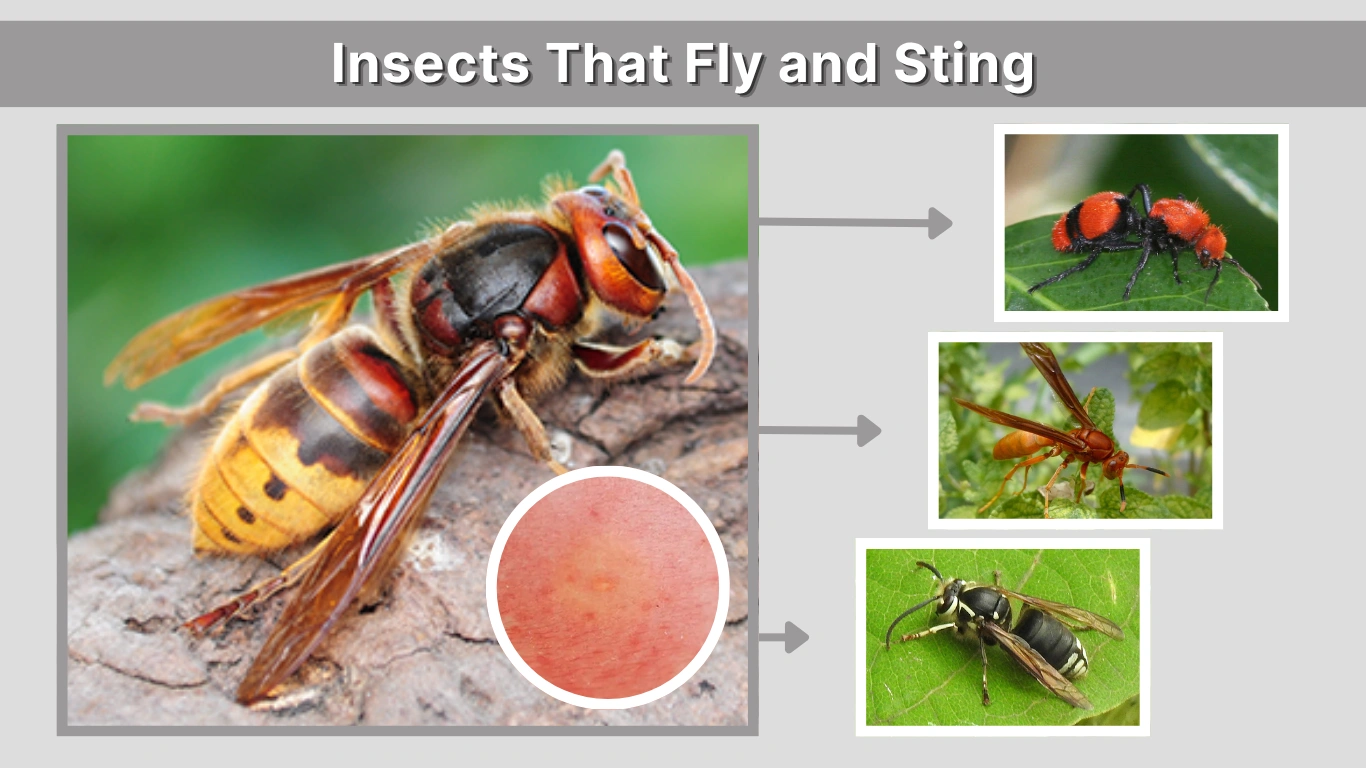
Flying insects that sting are among the most recognized and feared creatures in nature. Their stings can range from mildly painful to medically significant, depending on the species and individual sensitivity. These insects use their stingers as a defense mechanism or to subdue prey. Recognizing their colors, behavior, and habitats helps you stay safe and avoid unwanted encounters at home or outdoors.
Identification of Flying Stinging Insects

General Appearance
Insects that fly and sting usually have two pairs of wings, six legs, and a distinctive waist between the thorax and abdomen. Their bodies are often smooth or shiny, designed for agility in flight. Most display bright warning colors—especially yellow, black, red, and white—to signal danger to predators.
Key Characteristics
- Body shape: Narrow and sleek in wasps and hornets; round and fuzzy in bees.
- Color patterns: Bold yellow and black stripes, red-and-black contrasts, or even white markings.
- Stinger: A sharp organ at the rear used for defense or hunting.
- Behavior: Defensive when nests are disturbed, but otherwise avoid confrontation.
These traits make them easy to spot, though many harmless insects mimic their colors to deter predators.
Common Types of Flying Stinging Insects

Wasps
Wasps are slender insects with narrow waists and smooth, shiny bodies. Their yellow and black striping is a universal warning signal. They can sting multiple times, unlike bees, making them more aggressive. Common types include:
- Paper wasps: Build umbrella-shaped nests under eaves or decks; stings are painful but rare unless threatened.
- Yellowjackets: Highly aggressive and often nest underground or in walls. They are frequent around garbage or outdoor food.
- Mud daubers: Solitary wasps that create mud nests; they are gentle and rarely sting.
Hornets
Hornets are the largest members of the wasp family. Their bodies are robust and marked with black, white, or yellow bands. The bald-faced hornet, a black-and-white flying insect that stings, is common in New Jersey and other northern U.S. states. Hornets defend their papery nests fiercely and can sting repeatedly, injecting potent venom.
Bees
Bees are round-bodied, fuzzy insects that play a critical role in pollination. Honeybees and bumblebees are generally non-aggressive but will sting if their hive is threatened. Unlike wasps, honeybees sting only once before dying, while bumblebees can sting multiple times. Their stings are painful but rarely dangerous unless you’re allergic.
Red and Black Stinging Insects
Species such as red paper wasps and velvet ants (also called “cow killers”) fall into this category. Despite its name, the velvet ant is actually a wingless wasp with a powerful sting. Both species use red and black coloration as warning signs of their venomous defense.
Small Brown or Yellow Stinging Insects
Smaller stingers include sweat bees and solitary wasps. They are less aggressive and usually sting only when trapped or handled. Sweat bees are often seen hovering near humans in summer, drawn to perspiration.
Color Variations and Meanings

Black and Yellow Flying Insects That Sting
Perhaps the most recognizable pattern in nature, black and yellow stripes belong to wasps, hornets, and yellowjackets. This color combination warns of venom and signals danger to predators. These insects are widespread, especially active in late summer and early fall.
Black and White Flying Insects That Sting
The bald-faced hornet is the best-known example. With its contrasting white markings and black body, it’s often mistaken for a bee but is far more defensive. Its sting is sharp and can cause swelling and irritation.
Red and Black Flying Insects That Sting
Red paper wasps and velvet ants are striking examples. Found in warmer states, they are solitary hunters. Their sting is one of the most painful in the insect world, but they rarely attack unless provoked.
Small Yellow and Black Insects That Sting
Tiny yellowjackets or ground wasps may appear near lawns or picnic areas. Their stings are painful, and they often swarm if their nests are disturbed.
Regional Focus: Stinging Insects in the U.S. and Beyond
United States
Across the U.S., several species of flying stinging insects dominate depending on region:
- New Jersey and the Northeast: Bald-faced hornets and yellowjackets are common, nesting in trees and shrubs.
- Southern states: Red paper wasps and velvet ants are abundant, especially during hot summer months.
- Midwestern and Western states: Mud daubers and ground wasps thrive in dry, open areas and under decks or sheds.
These insects are most active from late spring through early fall when they forage and defend their colonies.
Europe and the U.K.
The European wasp and common hornet are the main stinging species in the U.K. and continental Europe. Their behavior mirrors that of American yellowjackets, often nesting underground or in wall cavities.
Global Distribution
In tropical and subtropical regions, red and black wasps and giant hornets are found year-round. The combination of warmth and humidity provides ideal breeding conditions for aggressive stinging insects.
Stinging Behavior and Risks

Defensive vs. Aggressive Behavior
Most insects that fly and sting are defensive, not aggressive. They only attack when their nests or territories are disturbed. However, yellowjackets and hornets can become territorial and sting multiple times when provoked.
Single vs. Multiple Stings
- Bees: Sting once and die afterward.
- Wasps and Hornets: Can sting repeatedly without losing their stinger.
- Velvet Ants: Solitary, but their single sting is extremely painful and long-lasting.
Health Effects
Stings cause immediate pain, redness, and swelling. In sensitive individuals, they can trigger allergic reactions or anaphylaxis, which requires emergency medical attention. Applying ice packs, baking soda paste, or antihistamine creams helps relieve mild symptoms.
How to Prevent Stings
Avoiding Provocation
- Stay calm when a stinging insect flies near you. Swatting or sudden movement may trigger a defensive response.
- Avoid bright floral clothing and strong perfumes, which attract wasps and bees.
- Keep outdoor food and drinks covered to prevent wasps from scavenging.
Home Protection
- Inspect eaves, attics, and garden sheds regularly for early nest formation.
- Seal cracks in walls and vents to block entry points.
- Use garbage bins with tight lids to avoid attracting yellowjackets.
- Hang decoy nests—they discourage wasps from building nearby.
Natural Repellents
Essential oils such as peppermint, clove, citronella, and lemongrass effectively deter wasps and hornets. Applying diluted solutions to outdoor furniture or patios keeps stinging insects away without harming beneficial species.
Ecological Importance
Despite their reputation, stinging insects are crucial to ecosystems.
- Bees are vital pollinators for crops, flowers, and fruit trees.
- Wasps and hornets control pest populations by feeding on flies, caterpillars, and spiders.
- Velvet ants and solitary wasps help balance insect ecosystems naturally.
Respecting their role in nature while managing nests near human activity promotes biodiversity and safety.
FAQs
What is the black and yellow flying insect that stings?
It’s likely a yellowjacket or paper wasp, both capable of multiple stings. They become aggressive when defending nests or seeking food in summer.
What is the black and white flying insect that stings?
That’s typically a bald-faced hornet, known for its bold color pattern and strong sting. It builds large, round paper nests high in trees or on structures.
What red and black flying insects can sting?
Red paper wasps and velvet ants fall into this group. Their sting is intensely painful, but they attack only when handled or threatened.
Are stinging insects in New Jersey dangerous?
While their stings can be painful, most are not dangerous unless you’re allergic. Still, it’s best to avoid nests and contact pest professionals for removal.
How can I prevent being stung by flying insects?
Stay calm around them, avoid wearing bright colors or perfume, and cover food outdoors. If a nest is close to your home, seek professional pest control assistance.