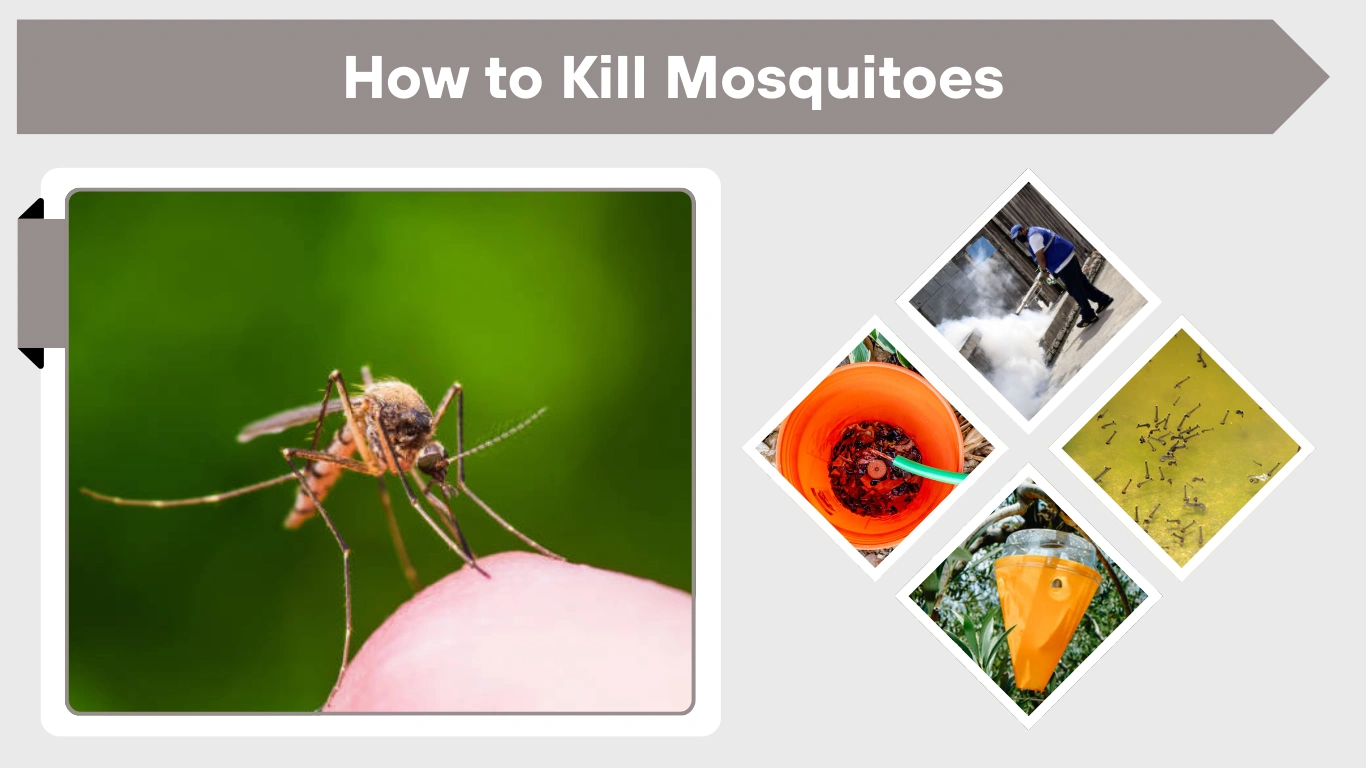
Mosquitoes are more than just an annoyance. They bite, disrupt sleep, and can spread disease, all while multiplying quickly if conditions are right. Many people try to kill mosquitoes as they see them, but that approach rarely solves the real problem. Effective mosquito control depends on where the mosquitoes are, which life stage you’re dealing with, and how you target them. Killing adult mosquitoes helps at the moment, but eliminating larvae and breeding sites is what creates lasting relief. This guide breaks down what actually works—indoors, outdoors, and at the source.
How to Kill Mosquitoes in the House
Indoor mosquitoes are especially frustrating because they’re confined to your living space and often active at night.
How Mosquitoes Get Inside
Mosquitoes usually enter homes through open doors and windows, damaged screens, vents, or garages. They can also slip inside when doors are opened briefly or hitch a ride on clothing or pets. Once indoors, warm temperatures and human scent allow them to survive longer than expected.
Best Ways to Kill a Mosquito Indoors
The simplest way to kill a mosquito indoors is direct contact. Swatting works, but it’s not always effective, especially when mosquitoes land on walls or ceilings.
Electric swatters are more reliable and kill mosquitoes instantly on contact. Another effective option is using a vacuum cleaner. Mosquitoes are weak fliers, and a quick pass with a vacuum hose can easily trap and kill them without chemicals.
Aerosol insect sprays can also be used indoors, but they should be applied carefully and according to label directions. These sprays are best for killing visible mosquitoes, not for long-term prevention.
How to Find and Kill a Mosquito in Your Room
Mosquitoes often rest on walls, ceilings, curtains, and in dark corners. Turning off lights and then turning on a single lamp can sometimes draw them into view. Using a fan can also help—air movement disrupts their flight and makes them easier to spot and kill.
How to Kill Mosquitoes Outside and in Your Yard

Outdoor mosquito control focuses on reducing populations rather than eliminating every individual mosquito.
Immediate Outdoor Kill Methods
Outdoor insecticide sprays and foggers can reduce adult mosquito populations quickly. These methods work best for short-term relief before events or gatherings. However, they don’t prevent mosquitoes from returning if breeding conditions remain.
Residual insecticides can be applied to vegetation and shaded areas where mosquitoes rest during the day. These products kill mosquitoes that land on treated surfaces over time.
Long-Term Yard Mosquito Control
The most effective outdoor strategy is eliminating breeding sites. Mosquitoes lay eggs in standing water, even in small amounts. Buckets, plant saucers, clogged gutters, birdbaths, and low spots in lawns can all support mosquito breeding.
Reducing dense vegetation and improving drainage helps remove resting areas and lowers humidity, making your yard less attractive to mosquitoes.
How to Kill Mosquito Larvae (Most Effective Strategy)
Killing mosquito larvae is the most efficient way to control mosquito populations. Larvae are confined to water and cannot escape, making them easier to eliminate than flying adults.
How to Kill Mosquito Larvae in Standing Water
Standing water is the primary breeding ground for mosquitoes. Any water that sits for more than a few days can produce larvae. Dumping and drying containers is the fastest solution when possible.
For water that can’t be removed, larvicides are the safest and most effective option. Products containing BTI (a naturally occurring bacterium) specifically target mosquito larvae without harming birds, pets, or beneficial insects.
How to Kill Mosquito Larvae in Pools and Ponds
Swimming pools with proper chlorine levels and circulation should not support mosquito larvae. If larvae appear, it usually indicates stagnant water or poor maintenance.
Ponds and decorative water features can be treated with mosquito dunks or mosquito fish, which feed on larvae. These methods control mosquitoes without damaging the ecosystem.
Why Killing Adult Mosquitoes Isn’t Enough
Killing adult mosquitoes provides temporary relief but does not stop new mosquitoes from emerging. A single female mosquito can lay hundreds of eggs, which means populations rebound quickly if larvae are left untreated.
What Kills Mosquito Larvae Instantly? (DIY vs Products)

Many people look for fast, inexpensive ways to kill mosquito larvae, but not all DIY methods are equally safe or effective.
Bleach and Chlorine
Bleach and chlorine can kill mosquito larvae quickly, but they should be used with caution. These chemicals are effective in pools and certain controlled environments, but pouring bleach into outdoor water sources can harm plants, wildlife, and water systems. In pools, proper chlorine levels and circulation are usually enough to prevent larvae without additional treatment.
Dish Soap
Dish soap works by breaking the surface tension of water, causing larvae to drown. While effective in small containers, it’s not suitable for large bodies of water and should be avoided in ponds or areas connected to natural waterways.
Why Some DIY Methods Fail
Many home remedies fail because they are diluted too quickly, washed away by rain, or applied incorrectly. They may kill larvae temporarily but don’t provide lasting control.
How to Kill Mosquitoes Naturally (Without Harming Bees)
Natural mosquito control focuses on reducing mosquitoes while protecting beneficial insects and the environment.
Biological Control Methods
Products containing BTI target mosquito larvae specifically and are safe for bees, butterflies, pets, and people. Mosquito fish can also be added to ponds to naturally reduce larvae populations.
Natural Methods That Don’t Work Well
Essential oils and plant-based sprays may repel mosquitoes temporarily but rarely kill them. Ultrasonic devices and vitamin-based remedies have not been shown to reduce mosquito populations.
How to Attract Mosquitoes to Kill Them

Trapping mosquitoes can help reduce adult populations when used correctly.
CO₂ and Scent-Based Traps
Commercial mosquito traps mimic human breath and scent using carbon dioxide and attractants. These traps can significantly reduce mosquito numbers over time when placed away from people.
DIY Mosquito Kill Buckets
DIY kill buckets use water, organic material, and larvicides to attract egg-laying mosquitoes. When maintained properly, they reduce future mosquito generations rather than just killing adults.
Why Bug Zappers Are Ineffective
Bug zappers kill large numbers of insects, but very few mosquitoes. Mosquitoes are not strongly attracted to light, making zappers inefficient for mosquito control.
How Cold or Hot Does It Have to Be to Kill Mosquitoes?
Temperature plays a major role in mosquito survival.
Cold Temperatures
Mosquitoes become inactive below 50°F and die after extended freezing conditions. However, eggs can survive winter and hatch once temperatures rise again.
Heat and Mosquito Survival
Extreme heat can kill mosquitoes, but temperatures required are impractical for control. Heat alone is not a reliable mosquito management strategy.
How Long Does It Take to Kill Mosquitoes With Insecticides?

Contact insecticides kill mosquitoes almost immediately upon exposure. Residual insecticides work more slowly, killing mosquitoes that land on treated surfaces over several hours or days. Results depend on product type, application method, and environmental conditions.
How Many Mosquito Bites Would It Take to Kill a Human? (Myth vs Reality)
The idea that mosquitoes could kill someone through blood loss is a myth. It would take an unrealistic number of bites to cause fatal blood loss. The real danger of mosquitoes comes from disease transmission, not the number of bites.
What Does NOT Work to Kill Mosquitoes
Many popular mosquito control products are ineffective. Bug zappers, ultrasonic repellents, vitamin supplements, and most light-based traps do little to reduce mosquito populations.
Best Overall Mosquito Control Strategy
The most effective approach combines multiple methods. Killing larvae, eliminating standing water, and controlling adult mosquitoes together produce the best results. No single method works on its own.
Key Takeaways
Mosquito control is most effective when larvae are eliminated before they mature. Indoor and outdoor strategies differ, and natural methods can work when applied correctly. Understanding what actually kills mosquitoes helps prevent wasted effort and delivers lasting relief.
FAQs
What is the most effective way to kill mosquitoes?
The most effective way to kill mosquitoes long-term is to eliminate mosquito larvae by removing standing water or treating it with larvicides like BTI. Killing adult mosquitoes provides short-term relief, but stopping larvae prevents new mosquitoes from emerging.
How do you kill mosquitoes inside the house?
Indoors, mosquitoes can be killed using electric swatters, vacuums, or targeted insect sprays. Fans also help by disrupting their flight. Sealing entry points like windows, doors, and screens prevents more mosquitoes from getting inside.
What kills mosquito larvae instantly?
Bleach, chlorine, and dish soap can kill mosquito larvae quickly in small, controlled containers, but they should be used cautiously. For safer and longer-lasting control, BTI mosquito dunks are the most effective and environmentally friendly option.
Does cold weather kill mosquitoes?
Yes, adult mosquitoes die when exposed to extended freezing temperatures, and they become inactive below about 50°F (10°C). However, mosquito eggs can survive winter and hatch when temperatures rise again in spring.
How many mosquito bites would it take to kill a human?
It’s a myth that mosquitoes can kill someone through blood loss. It would take an unrealistically large number of bites. The real danger from mosquitoes comes from disease transmission, not the number of bites.