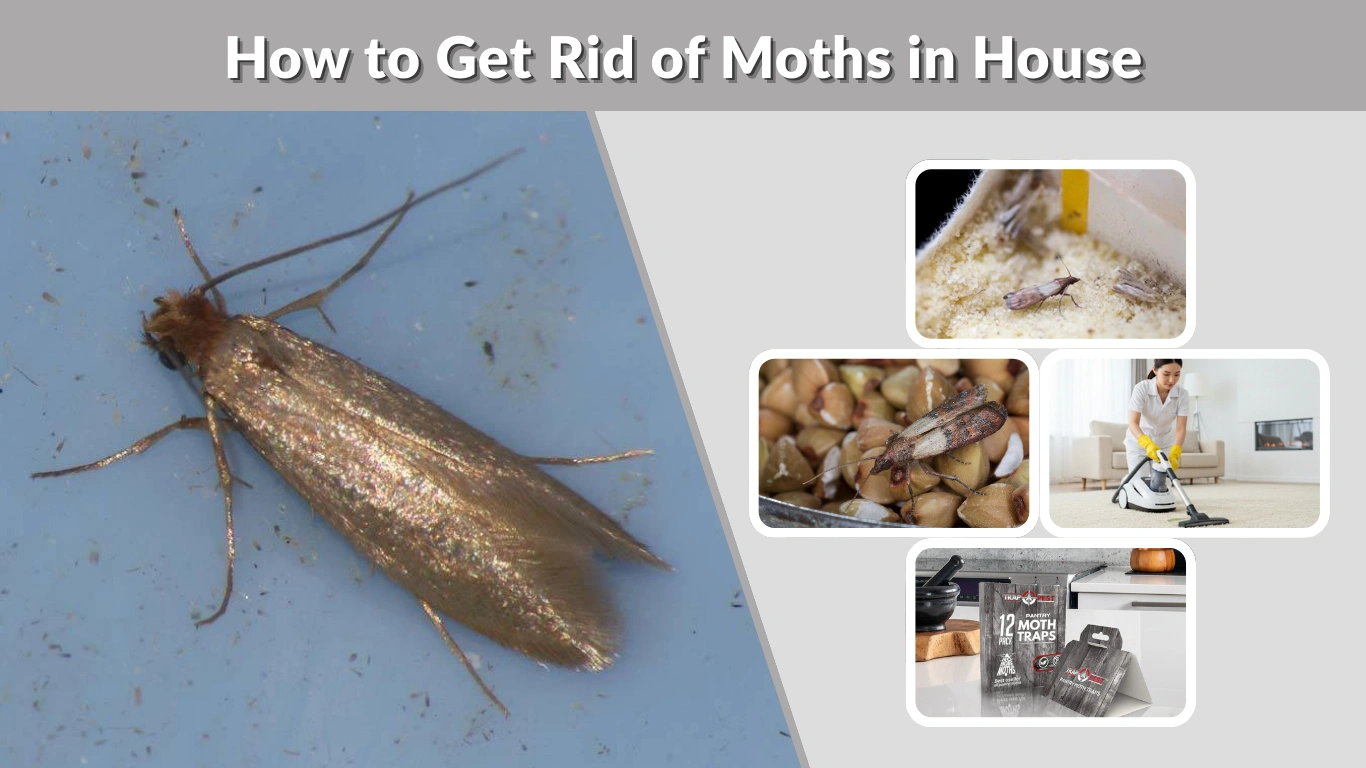
Moths in the house can be more than a simple nuisance—they can damage clothing, contaminate food, and quickly multiply if not treated correctly. Many people notice small flying moths in closets, kitchens, or even bathrooms without realizing that different moth species require different removal methods. Whether you’re dealing with clothes moths, pantry moths, tiny/baby moths, miller moths, or moth flies, the first step is always proper identification. This guide explains how to get rid of moths fast, naturally, and effectively, while also preventing them from returning.
Identify the Type of Moth in Your House First

Before taking action, you need to know which moth you’re dealing with. Each type requires a different approach, and treating the wrong source won’t eliminate the problem.
Clothes Moths
Clothes moths hide in dark areas like closets and drawers, feeding on natural fibers such as wool, cashmere, silk, and rugs. They rarely fly in bright light and are often seen crawling instead of fluttering. Their larvae cause the most damage, leaving holes in fabrics and tiny silk-like threads in corners.
Pantry/Indianmeal/Meal Moths
Pantry moths infest food areas. You’ll find them near cupboards, shelves, and food storage, especially where flour, rice, cereal, grains, nuts, and pet food are kept. They leave webbing inside food packages and their larvae may crawl onto walls or ceilings.
Tiny, Small, Brown, White, or Baby Moths
These are often juvenile stages of clothes or pantry moths. Small moths near the ceiling or tiny white/brown moths in corners usually indicate early infestation. They may appear harmless but typically signal an active breeding source.
Miller Moths and Outdoor/Indoor Flying Moths
Miller moths don’t cause damage but invade homes through open doors, chimneys, and windows—especially at night because they are strongly attracted to indoor lighting. These moths flutter around lamps and ceilings.
Moth Flies (Drain Flies)
Drain flies look like fuzzy tiny moths but are actually bathroom pests. They breed inside drains, pipes, and areas with moisture buildup. They won’t damage clothing or food, but they multiply quickly in damp environments.
Signs of a Moth Infestation in Your House

Recognizing the signs early will help stop an infestation before it spreads through your home.
Common signs include:
- Holes in clothes, blankets, sweaters, or carpets
- Small moths flying indoors at night
- Larvae crawling near baseboards or ceiling corners
- Sticky webbing inside pantry food packages
- Cocoons in closet corners or drawers
- Unusual musty or mothball-like smell
Clothes Moth Indicators
Clothes moth larvae cause 98% of the damage. You may notice shredded fibers, silky tunnels on rugs, and yellowish larvae in dark closet corners. Sometimes you’ll find adult moths sitting still on walls or shelves, rarely flying toward lights.
Pantry Moth Indicators
Pantry moths often spread faster than clothes moths. A single box of infested cereal can lead to dozens of adults. You may see tiny worms crawling near cupboards, moths fluttering around lights, and webbing inside food bags.
What Causes Moths to Come Into Your Home?

Understanding the cause helps you eliminate the source and prevent the problem from returning.
Food Sources (Pantry Moths)
Pantry moths enter homes through contaminated store-bought food, especially grains, cereals, rice, nuts, spices, and birdseed. Once inside, they quickly lay eggs in dry foods.
Natural Fibers (Clothes Moths)
Wool, silk, cashmere, fur, upholstered furniture, and carpets attract clothes moths. Dirty or sweaty clothing increases the risk, as larvae prefer fabrics containing natural oils.
Light Attraction (Miller Moths)
Miller moths and other large moths are drawn to porch lights, indoor bulbs, and window glow at night. Any open door or unsealed window becomes an entry point.
Moisture and Drains (Moth Flies)
Drain flies thrive in damp areas. Bathroom sinks, shower drains, and kitchen pipes with sludge create perfect breeding grounds.
How to Get Rid of Moths in the House (General Method)

These steps work for most household moth problems, especially when you aren’t sure which species you’re dealing with yet.
Step 1 — Locate the Infestation Source
Search closets, drawers, pantry shelves, behind appliances, air vents, and dark corners. Many infestations hide in rarely disturbed fabrics or forgotten food packages. Identifying the main breeding zone prevents wasted effort.
Step 2 — Clean Affected Areas Thoroughly
Vacuum carpets, baseboards, vents, and shelves. Use a crevice tool to reach tight spaces. In the pantry, remove all food items and wipe shelves thoroughly. In closets, vacuum corners, drawers, and under furniture.
Step 3 — Kill Eggs & Larvae
The larvae—not the adult moths—cause most damage. Effective methods include:
- Washing clothes at 55°C (131°F) to kill eggs
- Freezing items for 24–48 hours
- Using vinegar to wipe shelves
- Steam-cleaning carpets and rugs
Step 4 — Remove Adult Moths
Sticky traps catch flying moths, while vacuums help remove adults in closets or ceilings. For miller moths, gently vacuum or guide them out with light.
How to Get Rid of Clothes Moths Specifically

Clothes moths are destructive because their larvae feed on natural fibers. Removing them requires targeting both adults and hidden eggs.
Treat Clothes & Fabrics
Start by checking all natural-fiber clothing—wool, silk, cashmere, fur, and blended materials. Any item showing holes, threads, or larvae should be treated immediately. Wash what you can in hot water or freeze delicate items that cannot be laundered. Dry-cleaning is effective for suits, coats, and formal wear. Vacuum closets and drawers thoroughly to remove larvae and eggs hiding in corners.
Remove Larvae in Carpets & Closets
Carpets, rugs, and the edges of baseboards are common hiding spots. Steam-clean these areas, as high heat kills larvae instantly. Regular vacuuming helps prevent reinfestation. Exposing rugs or blankets to direct sunlight for several hours can also deter larvae, since they avoid bright conditions.
Natural Repellents for Clothes Moths
Natural scents repel adult moths and discourage egg-laying. You can place cedar blocks, lavender sachets, eucalyptus leaves, or cloves inside wardrobes. Replace them every few months for maximum effectiveness. While natural repellents do not kill larvae, they are excellent long-term prevention tools after cleaning.
How to Get Rid of Pantry Moths (Food Moths)

Pantry moths spread quickly because they lay eggs directly in food. Removing them requires eliminating all contaminated items.
Throw Away All Infested Food
Any container with webbing, larvae, or moths must be discarded. Check flour, cereal, rice, pasta, oats, chocolate, nuts, spices, and pet food. Even unopened boxes can contain eggs if they were contaminated before purchase.
Deep Clean Your Pantry
After removing the food, scrub shelves with hot, soapy water. Follow with a vinegar rinse to kill eggs. Clean cracks, corners, and under shelf liners. Allow everything to dry completely before placing food back.
Use Pheromone Traps
Pheromone traps attract male pantry moths using scented lures, breaking the breeding cycle. Place them near the pantry entrance and replace them every few weeks until no moths remain.
How to Get Rid of Tiny, Small, Baby, or White Moths
These moths usually signal an early-stage infestation.
Why Tiny Moths Appear
Tiny moths are often newly emerged adults from larvae hidden in clothing or food. Small white or brown moths around ceilings or corners often originate from pantry shelves or closets.
Removal Approach
Vacuum small moths immediately and clean surrounding surfaces. Inspect food packaging, closet floors, and air vents. Treat the source using the appropriate method—either pantry moth or clothes moth steps.
How to Get Rid of Miller Moths Indoors

Miller moths do not reproduce indoors, but they can be very annoying.
Why They Enter Homes
They migrate seasonally and are heavily attracted to lights. Homes with bright porch lights or uncovered windows are more likely to experience miller moth intrusions.
How to Remove Them
Reduce indoor lighting at night or switch to yellow outdoor bulbs. Close curtains after dark and seal gaps around windows and doors. To remove them, gently vacuum or guide them toward an open window using a light source placed outside. Avoid smashing them as they leave powdery residue.
How to Get Rid of Moth Flies (Drain Flies)
Drain flies require a different treatment because they breed in moisture.
Clean All Drains Thoroughly
Flush drains with boiling water daily for a week. Use a mixture of baking soda followed by vinegar to break down organic sludge. Enzyme drain cleaners are also effective for deep bacteria removal.
Remove Moisture Sources
Fix leaking pipes, clear blocked drains, and wipe moisture around sinks and showers. Without stagnant water, moth flies cannot reproduce.
Natural Ways to Get Rid of Moths
For those avoiding chemicals, natural solutions can be effective if combined with cleaning.
Natural Repellents
Lavender, cedar, bay leaves, eucalyptus, peppermint oil, and cloves repel adult moths and make spaces less inviting. Hang sachets in closets or place small bowls inside pantry shelves.
Natural Cleaning Methods
Use vinegar spray on shelves and closet corners. Steam-cleaning is one of the best natural ways to kill larvae instantly. Hot water and soap help eliminate eggs hidden on hard surfaces.
DIY Non-Toxic Moth Traps
You can create homemade sticky traps using glue boards combined with a few drops of essential oils like lavender or cedarwood. These help catch stray adults, especially clothes moths.
Prevention — Stop Moths from Coming Back
Long-term prevention matters because a single surviving moth can restart an infestation.
Clothing Protection Tips
Store off-season clothes in airtight bins or garment bags. Use cedar blocks in wardrobes and avoid leaving dirty clothing in closets. Shake out clothes regularly to disturb larvae.
Pantry Protection Tips
Transfer all dry foods into airtight glass or plastic containers. Regularly clean shelves and inspect groceries before storing them. Keep pet food sealed tightly.
Home Protection Tips
Install window screens, reduce bright outdoor lighting at night, and seal cracks around vents or chimneys. Miller moths, in particular, enter through tiny gaps attracted by indoor glow.
Comparison Table: Clothes Moths vs Pantry Moths vs Miller Moths

| Feature | Clothes Moths | Pantry Moths | Miller Moths |
| Found In | Closets, fabrics | Pantry, dry food | Near lights |
| Damage | Clothes | Food | None |
| Eggs | On fabric | In food | Outdoors |
| Removal | Heat/freezing | Food disposal | Light control |
FAQ
How do I get rid of moths fast?
Identify the moth type, clean the affected area, remove larvae, and set traps. Heat or freeze fabrics and throw out infested food.
What kills moth larvae instantly?
Heat (55°C/131°F), steam, and freezing at –18°C (0°F) for 24–48 hours.
How do I get rid of pantry moths permanently?
Remove infested food, deep-clean shelves, use pheromone traps, and store food in airtight containers.
Why do I see tiny moths in my house?
They are usually juvenile pantry or clothes moths emerging from larvae, signaling an active infestation.
Do natural repellents actually work?
Yes—cedar, lavender, eucalyptus, and bay leaves discourage adults from laying eggs, but they must be paired with proper cleaning.