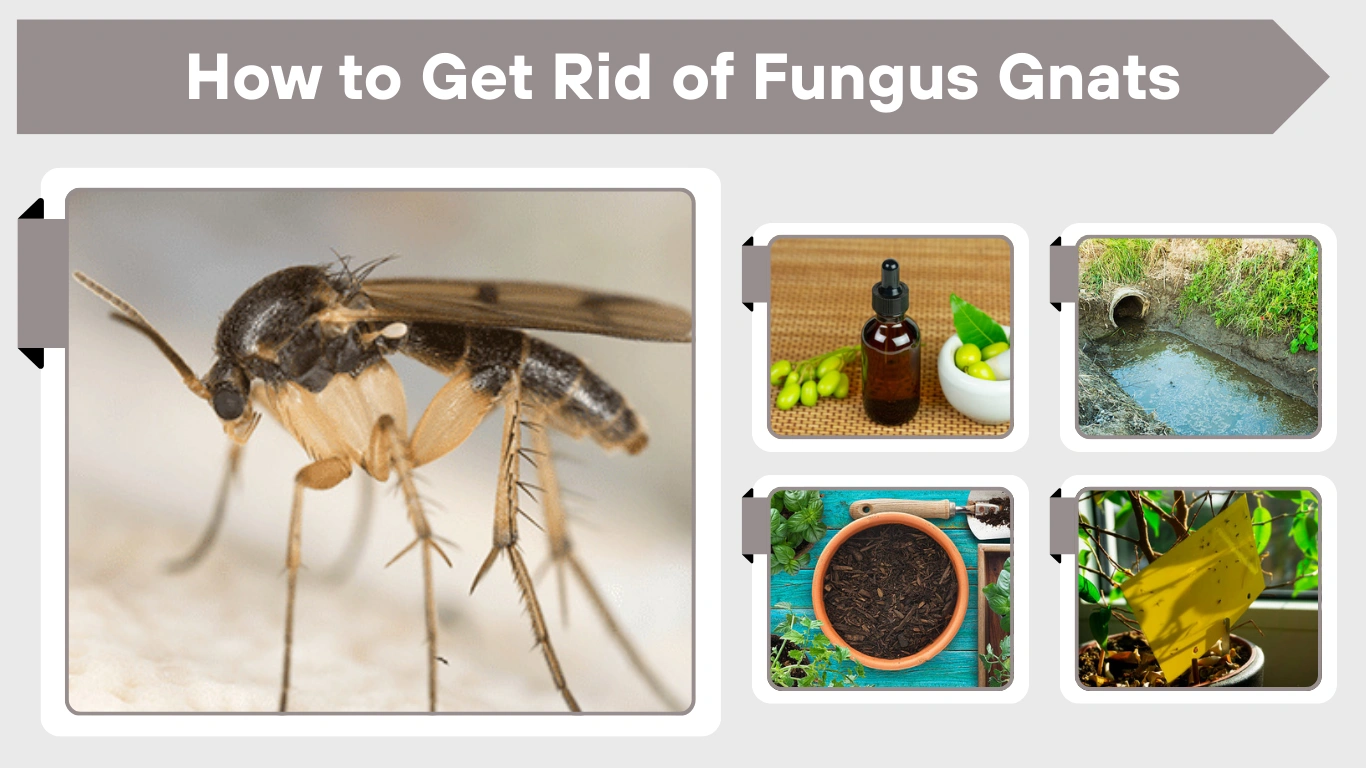
Fungus gnats are one of the most frustrating indoor plant pests. They seem to appear out of nowhere, hover around your plants and windows, and refuse to go away no matter how many you swat. While they’re small, fungus gnats can quickly become a big nuisance if the root cause isn’t addressed.
The good news? You can get rid of fungus gnats—and keep them from coming back—by breaking their life cycle and fixing the conditions that allow them to thrive.
This guide explains how to get rid of fungus gnats in houseplants, indoors, and in soil, using effective and plant-safe methods.
What Are Fungus Gnats?
Fungus gnats are tiny, dark-colored flies that resemble small mosquitoes. They’re usually about 2–4 mm long and are commonly found hovering around indoor plants or crawling on the surface of potting soil.
Adult fungus gnats don’t harm plants directly, but their larvae live in the soil, where they feed on fungi, organic matter, and sometimes delicate plant roots. This is why infestations are most common in houseplants that are consistently kept moist.
Because they reproduce quickly, ignoring them for even a short time can turn a minor annoyance into a persistent problem.
Where Fungus Gnats Come From

Understanding where fungus gnats come from is essential if you want to get rid of them permanently.
The most common causes include:
- Overwatered plants – Constantly wet soil creates the perfect breeding ground.
- Poor drainage – Pots without drainage holes or compacted soil trap moisture.
- Organic-rich potting soil – Decomposing matter feeds larvae.
- New plants – Fungus gnat eggs are often introduced when you bring a new plant home.
- High indoor humidity – Warm, damp environments speed up reproduction.
If fungus gnats keep returning, it’s almost always because one or more of these conditions hasn’t been corrected.
How to Tell If You Have Fungus Gnats
Fungus gnats are often mistaken for fruit flies, but there are a few clear differences.
Signs you have fungus gnats include:
- Small black flies hovering near plant pots
- Gnats flying up when you water or disturb the soil
- Tiny larvae visible just beneath the soil surface
- Plants that look weak or grow slowly despite proper care
A simple test is to gently tap or shake the pot. If several small flies immediately rise from the soil, you’re dealing with fungus gnats.
How to Get Rid of Fungus Gnats in Plants

To eliminate fungus gnats, you must target both adults and larvae. Killing only the flying gnats won’t solve the problem if larvae remain in the soil.
1. Stop Overwatering (The Most Important Step)
The single most effective way to get rid of fungus gnats in houseplants is to let the soil dry out.
Fungus gnat larvae need moisture to survive. Allowing the top 1–2 inches of soil to dry between waterings can dramatically reduce their numbers within days.
Tips:
- Check soil moisture before watering
- Use your finger or a moisture meter
- Water only when the plant actually needs it
Even moisture-loving plants can usually tolerate a short drying period better than an ongoing infestation.
2. Improve Soil Drainage
If your soil stays wet for too long, fungus gnats will keep coming back.
To improve drainage:
- Use pots with drainage holes
- Empty saucers after watering
- Repot plants using a well-draining potting mix
- Remove compacted or soggy soil
In severe cases, replacing the top layer of soil can remove a large number of eggs and larvae instantly.
3. Cover the Soil Surface
Adult fungus gnats lay their eggs in moist soil. Creating a physical barrier makes this much harder.
Effective soil covers include:
- Coarse sand
- Fine gravel
- Perlite
Apply a thin layer (about ½ inch) on top of the soil. This dries quickly and discourages egg-laying while still allowing air circulation.
How to Get Rid of Fungus Gnats Indoors

If you’re seeing fungus gnats throughout the house, not just near plants, it’s important to treat every plant at the same time.
Steps to control fungus gnats indoors:
- Place yellow sticky traps near plant pots to catch adults
- Reduce indoor humidity if possible
- Clean windowsills and nearby surfaces
- Avoid leaving standing water around plants
Sticky traps won’t eliminate larvae, but they help monitor progress and reduce the adult population while other treatments work.
Why Quick Fixes Often Fail
Many people try random home remedies or focus only on killing flying gnats. This usually leads to frustration because the larvae remain untouched in the soil.
To truly solve the problem, you must:
- Dry the soil
- Improve drainage
- Prevent egg-laying
- Kill larvae consistently
Without these steps, fungus gnats almost always return.
Natural Ways to Get Rid of Fungus Gnats
If you prefer plant-safe and chemical-free solutions, several natural methods are highly effective when used consistently.
1. Yellow Sticky Traps
Yellow sticky traps are one of the easiest ways to reduce adult fungus gnat populations. Fungus gnats are attracted to the color and become trapped when they land.
How to use them effectively:
- Place traps close to the soil surface
- Use one trap per pot for heavy infestations
- Replace traps when they become covered
Sticky traps won’t kill larvae, but they prevent adults from laying new eggs, which is essential for long-term control.
2. Beneficial Nematodes
Beneficial nematodes (specifically Steinernema feltiae) are microscopic organisms that naturally kill fungus gnat larvae in the soil.
Why they work:
- They seek out larvae directly
- They are safe for plants, pets, and humans
- They target the problem at the root level
Apply nematodes as a soil drench following the package instructions. Results are often noticeable within 7–14 days.
3. Neem Oil Soil Drench
Neem oil disrupts the fungus gnat life cycle and helps control larvae when applied to the soil.
How to use neem oil:
- Mix according to label directions
- Water the soil lightly, not to the point of saturation
- Repeat weekly if needed
Neem oil works best as part of a combined approach rather than a stand-alone solution.
4. Cinnamon and Chamomile (Mild Options)
Cinnamon has natural antifungal properties and can help reduce the fungi larvae feed on. Chamomile tea, when cooled and used to water plants, may also limit fungal growth.
These methods:
- Are safe but mild
- Work best for early or minor infestations
- Should not replace proper watering practices
How to Get Rid of Fungus Gnats Without Hydrogen Peroxide

Hydrogen peroxide is often recommended, but many plant owners prefer to avoid it due to sensitivity concerns.
Effective alternatives include:
- Letting soil dry between waterings
- Using beneficial nematodes
- Applying neem oil
- Adding sand or perlite to the soil surface
- Catching adults with sticky traps
When these methods are used together, hydrogen peroxide is unnecessary for most infestations.
How to Get Rid of Fungus Gnats Permanently
Permanent fungus gnat control depends on breaking the reproduction cycle and changing long-term plant care habits.
Key strategies:
- Water only when necessary
- Always use pots with drainage holes
- Quarantine new plants for 1–2 weeks
- Avoid leaving standing water
- Inspect soil regularly
Consistency is more important than intensity. One strong treatment followed by poor watering habits will not work long-term.
How Long Does It Take to Get Rid of Fungus Gnats?
Most infestations improve within one to three weeks, depending on severity.
Typical timeline:
- Days 1–5: Adult numbers decrease
- Week 1–2: Larvae population collapses
- Week 3: Infestation largely gone
If gnats persist beyond three weeks, review watering habits and drainage conditions.
Common Mistakes That Make Fungus Gnats Worse
Avoid these common pitfalls:
- Watering on a schedule instead of by soil moisture
- Treating only adult gnats
- Overusing home remedies
- Ignoring drainage issues
- Adding more plants before solving the problem
Fixing the environment matters more than killing individual insects.
Special Considerations for UK Homes
In the UK, fungus gnats are especially common during autumn and winter when plants are kept indoors and ventilation is reduced.
Helpful tips:
- Avoid overwatering during low-light months
- Improve airflow near plants
- Use dehumidifiers if humidity is high
- Choose indoor-friendly potting mixes
Most treatments discussed are readily available in the UK under garden or biological pest control products