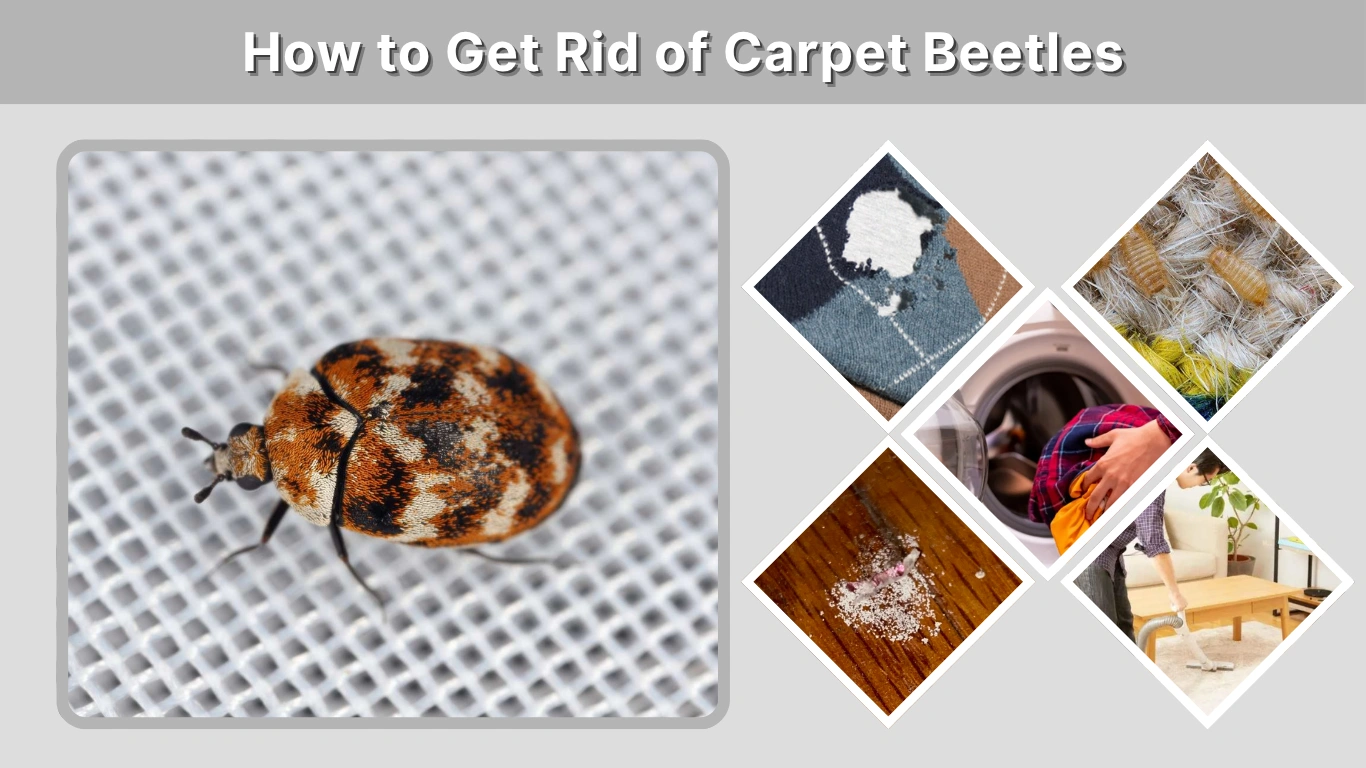
Carpet beetles are tiny yet persistent household pests that feed on fabrics, rugs, upholstery, and even pet hair. While adults may seem harmless, their larvae cause serious damage by chewing through natural fibers. These pests thrive in dark, undisturbed spaces such as closets, carpets, and bedding. If you’ve spotted small holes in clothes or tiny bristly worms, it’s time to act fast. This guide explains how to identify carpet beetles, eliminate them effectively, and prevent future infestations using safe and proven methods.
Understanding Carpet Beetles

What Are Carpet Beetles?
Carpet beetles are small insects from the Dermestidae family. The most common household species include the varied carpet beetle, black carpet beetle, and furniture carpet beetle. Adults are round, about 1/8 inch long, and often appear near windows because they’re attracted to light.
It’s the larval stage, however, that causes the real problem. Carpet beetle larvae are brown, bristly, and worm-like, measuring up to ¼ inch long. They feed on animal-based materials such as wool, silk, feathers, and leather, leaving behind holes and shed skins.
How Carpet Beetles Get Inside
Carpet beetles enter homes through open doors, windows, or vents. They can also hitch a ride on fresh flowers, animal fur, or secondhand fabrics. Once inside, adult beetles lay eggs in dark, protected places near a food source. Common nesting areas include carpet edges, closets, air ducts, and even behind baseboards.
Because larvae can survive months without feeding, they often go unnoticed until visible damage appears — making early detection critical.
Identifying an Infestation

Signs of Carpet Beetles
Carpet beetles are elusive, but they leave plenty of evidence behind. Watch for:
- Small irregular holes in clothing, upholstery, or curtains.
- Shed skins and brown shell-like casings where larvae have molted.
- Adult beetles crawling on walls, windowsills, or light fixtures.
- Tiny fecal pellets resembling grains of sand.
- Itchy rashes or allergic irritation, caused by contact with larval hairs.
If you notice any of these signs — especially along carpet edges or in dark corners — you likely have an infestation.
Where to Look
Carpet beetle larvae prefer undisturbed areas where lint, hair, and fibers accumulate. Check:
- Carpets and rugs, especially under furniture.
- Closets and drawers, particularly where wool or silk is stored.
- Mattresses and bedding, including seams and corners.
- Couches, curtains, and car interiors, where fabric and dust combine.
Because they avoid light, larvae tend to gather in hidden or dark areas. Thorough inspection is the first step in effective removal.
Step-by-Step Guide: How to Get Rid of Carpet Beetles

Step 1: Clean and Vacuum Thoroughly
Start by deep cleaning your entire home. Vacuum carpets, furniture, and corners daily for at least a week to remove larvae, eggs, and debris. Use the crevice attachment to clean baseboards, floor cracks, and under furniture. Pay attention to air vents, window sills, and closets — favorite nesting areas for larvae.
Empty the vacuum bag or canister immediately after each use to prevent re-infestation. If possible, use a vacuum with a HEPA filter to trap microscopic particles and allergens.
Step 2: Wash and Heat-Treat Infested Items
Heat kills all stages of carpet beetles, including eggs. Wash infested clothing, curtains, and bedding in hot water (at least 120°F or 49°C), then dry them on high heat for 30–40 minutes.
For delicate fabrics that can’t be washed, seal them in a plastic bag and place them in a freezer for 48 hours. This will eliminate larvae and eggs safely. Steam-clean carpets, rugs, and upholstered furniture to kill any hidden pests deep in fibers.
Step 3: Apply Safe Insecticides
If cleaning alone doesn’t solve the problem, insecticides can help. Use sprays containing bifenthrin, cyfluthrin, or deltamethrin around carpet edges, cracks, and crevices. Avoid spraying directly on fabrics or where pets sleep.
You can also use boric acid powder, which is lethal to beetles but safe for humans when used correctly. Lightly dust it under rugs, along baseboards, and inside closets. Vacuum after a few days to remove the residue and dead insects.
Step 4: Natural Remedies
If you prefer to avoid chemicals, several natural options work just as effectively with patience and consistency.
- Vinegar Solution: Mix equal parts white vinegar and water to wipe shelves, drawers, and baseboards. This dissolves larvae oils and deters adult beetles from returning.
- Diatomaceous Earth (DE): A fine, natural powder that dehydrates and kills larvae on contact. Sprinkle lightly on carpet edges and under furniture.
- Essential Oils: Use cedarwood, lavender, or eucalyptus oils to repel adult beetles. Add a few drops to cotton balls and place them in closets or dressers.
These remedies are safe for homes with children or pets and work best as a long-term preventive measure alongside regular cleaning.
How to Get Rid of Carpet Beetles in Specific Areas

In Carpets and Rugs
Vacuum regularly and focus on corners and edges where larvae hide. Use a steam cleaner once a month for added protection. Sprinkle diatomaceous earth beneath rugs or around carpet borders to kill larvae naturally. Replace heavily infested carpets if damage is severe.
In Clothes and Closets
Wash wool, silk, and cashmere in hot water or have them dry-cleaned. Always store clean clothes — carpet beetles are drawn to sweat and body oils. Use airtight plastic bins or vacuum-sealed bags for long-term storage, and keep cedar blocks or lavender sachets inside closets to repel adults.
In Beds and Mattresses
Carpet beetles don’t live on humans, but they can feed on natural fibers in bedding. Vacuum mattresses, headboards, and bed frames thoroughly. Wash linens and pillowcases weekly in hot water. Consider using mattress encasements to prevent larvae from nesting inside seams.
In Furniture and Couches
Carpet beetles often hide in upholstered furniture, especially in seams and underneath cushions. Begin by removing all cushions and vacuuming every surface, including crevices, seams, and the underside of the furniture. If the infestation is severe, use a handheld steam cleaner to kill hidden larvae and eggs.
For wooden or antique furniture, wipe surfaces with a vinegar-water solution or use a light mist of insecticidal spray designed for furniture. Avoid over-wetting fabrics to prevent staining. If your furniture is heavily infested, it may be best to call a pest control expert to apply professional treatments safely.
In Cars
Carpet beetles can infest vehicles, especially if pets, fabrics, or food crumbs are present. Vacuum the seats, floor mats, and trunk carefully. Pay close attention to areas beneath seats and inside the glove compartment.
To eliminate larvae and eggs, use a car-safe steam cleaner or an automotive insecticide approved for interior use. Avoid parking under trees or near bird nests where adult beetles may gather. Regular cleaning and vacuuming prevent reinfestation in vehicles.
Getting Rid of Carpet Beetles Naturally

Home Remedies That Work
If you prefer natural pest control, there are effective and eco-friendly options:
- White Vinegar: Destroys pheromones that attract beetles. Spray onto surfaces or wipe down walls, drawers, and closets.
- Diatomaceous Earth (DE): Sprinkle this natural dust around carpets, under rugs, and along window sills. It kills larvae by dehydrating them.
- Cedar Oil and Lavender: Place sachets or cotton balls soaked in these essential oils inside closets and drawers to repel adult beetles.
Pet-Safe Methods
Avoid harsh chemicals if you have pets or young children. Use food-grade diatomaceous earth or baking soda in problem areas. Regularly wash and vacuum pet beds, blankets, and soft toys, as carpet beetle larvae are attracted to pet fur and dander.
Clean and groom pets often — this removes hair that beetles might use as food. Keep pet food sealed and stored off the floor.
How to Get Rid of Carpet Beetle Eggs

Locating and Identifying Eggs
Carpet beetle eggs are extremely small (less than 1 mm long) and white or cream-colored. Females lay them in dark, undisturbed spots — inside fabric folds, under carpets, or along baseboards. Because eggs are sticky, they easily cling to fibers and furniture padding.
Destroying Eggs Effectively
- Heat Treatment: Wash affected items in hot water (≥120°F) or use a steam cleaner to kill eggs and larvae simultaneously.
- Vacuuming: Use a vacuum with a HEPA filter to capture eggs in rugs, upholstery, and clothing.
- Insecticide Treatment: Apply residual sprays or boric acid to cracks and baseboards where eggs may hide. Always test a small patch of fabric first.
Repeat cleaning and inspection every few days for at least two weeks — eggs may hatch in cycles.
Preventing Carpet Beetles from Coming Back
Regular Cleaning and Maintenance
The best defense against carpet beetles is cleanliness. Vacuum and dust regularly, especially in corners, under furniture, and near windows. Wash curtains, throws, and rugs frequently to remove dust and lint.
Keep storage spaces dry and well-ventilated. Use dehumidifiers in damp rooms since beetles prefer humid environments.
Proper Fabric Storage
Before storing seasonal items, wash or dry-clean them thoroughly. Dirty fabrics containing sweat or oils are magnets for beetles. Place items in airtight plastic bins or garment bags. Use cedar blocks, cloves, or lavender sachets for added protection.
Seal Entry Points
Inspect window screens, vents, and door seals. Repair any gaps that could let beetles in. Installing fine mesh on vents and chimneys can also prevent outdoor beetles from entering your home.
Monitor with Sticky Traps
Set pheromone traps in corners, closets, or attics to catch adult beetles. This helps detect re-infestations early and reduces their breeding cycle indoors.
Professional and Long-Term Solutions
When to Call Pest Control
If you’ve followed cleaning and treatment steps but still see larvae or adult beetles, professional help may be needed. Experts can locate hidden infestations — often inside walls, vents, or attics — and apply safe, long-lasting insecticides.
Pest control companies use methods such as fogging, aerosol sprays, and heat treatments, depending on infestation severity. They also provide follow-up visits to ensure beetles are completely eliminated.
Cost and Duration
Professional treatments typically cost between $150–$300 per session, though larger homes or recurring infestations may require multiple visits. The process usually takes a few hours and provides results within one to two weeks.
Long-Term Prevention
Once your home is pest-free, maintain a routine cleaning schedule and inspect fabrics monthly. Replace or wash air filters regularly and keep an eye on high-risk areas such as carpets, closets, and upholstered furniture.
FAQs
How hard is it to get rid of carpet beetles?
It depends on the infestation level. Mild cases can be resolved within two weeks with cleaning and natural treatments. Larger infestations may take a month or require professional extermination.
Do carpet beetles bite humans?
No, they don’t bite. However, their larvae have tiny hairs that can irritate the skin and cause red, itchy bumps resembling bug bites.
Can I get rid of carpet beetles naturally?
Yes. Vinegar, diatomaceous earth, and essential oils such as cedar and lavender are effective natural repellents when combined with consistent cleaning.
How do I prevent carpet beetles permanently?
Keep your home clean, wash fabrics regularly, store clothes in airtight containers, and use natural repellents. Regular inspection is key to early detection.
Are carpet beetles harmful to pets?
No, they don’t feed on live animals, but larvae can irritate pet skin. Wash pet bedding and vacuum around pet areas frequently to stay safe.