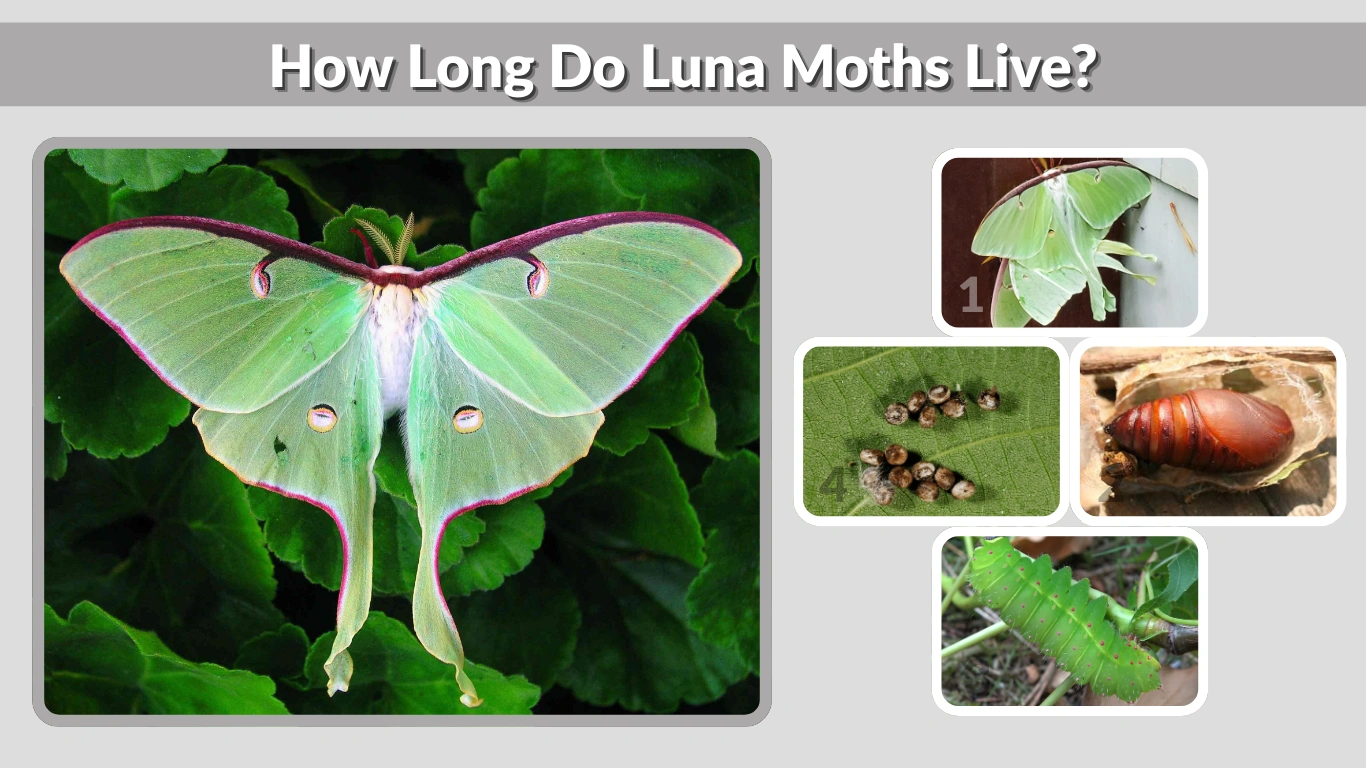
The luna moth is one of North America’s most iconic insects, admired for its pale green wings and mysterious, short-lived existence. Many people wonder how long luna moths live, how long they spend inside a cocoon, or how long their eggs take to hatch. The answer depends heavily on the stage of life. From a brief adult lifespan to a surprisingly long overwintering cocoon period, the luna moth lifecycle is a fascinating mix of speed and patience. This guide covers every stage in detail.
Overview of the Luna Moth Lifecycle

Four Main Stages
Like other giant silk moths, the luna moth (Actias luna) develops through four distinct phases:
- Egg – the beginning of the next generation
- Caterpillar (larval stage) – the primary feeding phase
- Pupa (cocoon) – transformation and overwintering
- Adult moth – a brief, reproduction-only stage
Each stage has its own timing, pressures, and survival challenges.
Why Lifespan Varies Between Stages
Temperature, season, humidity, and geographic region all influence how long each phase lasts. Caterpillars may grow quickly in warm, humid regions, while cocoons formed near winter may remain dormant for months. Understanding the luna moth’s survival strategy requires examining each life stage individually.
How Long Luna Moths Live at Each Life Stage

Egg Stage Duration
Luna moth eggs usually take 8–13 days to hatch. The timing is heavily dependent on temperature—warm conditions speed development, while cooler weather slows the process. Eggs laid in early spring may take longer to hatch, whereas summer-laid eggs may emerge in under ten days. Some eggs can remain viable longer in cool, dry conditions, though dormancy is limited compared to other insects.
Caterpillar Stage Duration
Luna moth caterpillars live for 4–6 weeks, passing through five distinct instar stages. Each instar ends with a molt as the caterpillar grows larger and prepares for the next phase. Larvae develop fastest in warm climates with abundant food sources such as hickory, walnut, or birch leaves. In northern regions, cooler temperatures can extend the larval period by slowing metabolism and growth. By the end of the fifth instar, the caterpillar is ready to spin its cocoon.
Cocoon/Pupal Stage Duration
Summer Cocoons
In warm weather, luna moth cocoons typically last 2–3 weeks before the adult emerges. This fast turnaround allows multiple generations per year in southern states. Pupae inside summer cocoons remain active and complete metamorphosis quickly while temperatures are high.
Overwintering Cocoons
Cocoons formed in late summer or fall can remain dormant for 6–9 months through winter. This is the longest stage in the luna moth lifecycle. The pupa enters diapause, a state of suspended development that protects it from freezing temperatures. In northern climates, overwintering is essential for survival, and these cocoons don’t hatch until late spring or early summer.
Answering the Key Cocoon Questions
This section addresses all major cocoon-related keyword variants:
- How long do luna moths stay in a cocoon?
Anywhere from 2 weeks to 9 months depending on season. - How long do luna moth caterpillars stay in their cocoon?
Usually the same timeframe—short in summer, long in winter. - How long do luna moths pupate?
Pupation itself lasts around 10–14 days, but diapause adds months. - How long for a luna moth cocoon to hatch?
14–21 days in warm weather; months in cold climates. - How long is a luna moth in a cocoon?
Typically 2–3 weeks, but may overwinter.
This stage is highly variable and depends on climate.
Adult Moth Lifespan

How Long Adults Live
Adult luna moths live only 7–10 days. This extremely short lifespan is due to one unique fact: adults have no functional mouthparts. They cannot eat or drink, so their energy comes entirely from fat stored during the caterpillar phase.
What Happens After They Hatch
Once they emerge from the cocoon, adults spend several hours expanding and drying their wings. Afterward, they begin searching for a mate. Females release pheromones at night, while males fly long distances using their large, feathery antennae to detect her scent.
How Long the Longest Luna Moth Has Lived
The maximum documented adult lifespan is typically around 11–12 days, though rare individuals may reach slightly longer under perfect conditions. However, nearly all adults die within a week to ten days.
How Long Luna Moths Live in Captivity

Adult Lifespan in Captivity
Even in captivity, adult luna moths live only 7–10 days. Their lifespan cannot be extended with food or water because they lack working mouthparts. Unlike butterflies raised indoors, luna moth adults cannot be sustained on sugar water or fruit. Captive environments mainly help by protecting them from predators—not by lengthening their natural lifespan.
Caterpillar and Cocoon Timing in Captivity
Caterpillars raised in captivity often grow faster because they have consistent access to fresh host leaves. Under ideal temperature and humidity, the larval stage may shorten slightly to 3.5–5 weeks. The cocoon period also depends on season: summer generations emerge quickly, while any cocoon formed in late autumn will overwinter just like wild cocoons. This means pupae kept indoors may still remain dormant for months due to their internal biological clock.
Lifespan by Region
Luna Moths in Virginia and the Southeast
In warm southeastern states, including Virginia, luna moths complete their lifecycle more quickly. The region can support two or even three generations per year, depending on climate and food availability. Eggs hatch faster, caterpillars grow more quickly, and cocoons rarely need to overwinter unless produced late in the season. Warm nights allow adults to stay active for most of their brief lifespans.
Northern States and Colder Regions
In areas like Minnesota, Wisconsin, and the Northeast, colder temperatures result in only one generation per year. Eggs hatch slowly, caterpillars take longer to develop, and most pupae overwinter. Cocoons may remain dormant for up to nine months, emerging the following spring. The short warm season compresses their life cycle into a brief window of summer activity.
Chinese Luna Moth Lifespan (Actias Species)
Several Asian relatives of the North American luna moth exist, including Actias sinensis and Actias dubernardi. Their lifespans are similar: adults live about a week, larval phases last 4–6 weeks, and cocoons vary by climate. Although visually distinct, these species share the same adult no-feeding strategy, resulting in comparable lifespan patterns.
Mating, Reproduction & Adult Behavior

How Long Adults Stay Connected (Mating Duration)
During mating, luna moths often stay connected for several hours, sometimes up to half the night. The male transfers sperm packets, while the female remains still. This extended timeframe increases the success of fertilization but also exposes both moths to predation. Their green wings offer good camouflage, but predators can still find them.
How Long a Female Luna Moth Waits to Mate
A newly emerged female typically begins releasing pheromones on her first night. She can wait one to two nights for a male to locate her. If she fails to mate quickly, her limited energy reserves drop rapidly. Most females succeed on the first night due to the powerful pheromones released from their abdominal glands.
How Long Until Eggs Hatch After Mating
After mating, females lay eggs within 24 hours, usually on the undersides of host tree leaves. These eggs require 8–13 days to hatch. Warmer temperatures speed development, while cool nights slow it down. In captivity, eggs protected indoors usually hatch near the lower end of this range.
Factors That Affect Luna Moth Lifespan

Environmental Factors
Temperature
Warm temperatures accelerate every stage, while cold conditions slow growth or induce dormancy.
Humidity
Eggs and cocoons require adequate humidity; overly dry air can delay or reduce hatch success.
Seasonal Timing
Fall cocoons remain dormant through winter, significantly extending the pupal stage.
Predators and Survival Rates
Throughout their lifecycle, luna moths face a wide range of predators:
- Birds
- Bats
- Frogs
- Spiders
- Parasitic wasps
Caterpillars suffer the highest mortality because they are soft-bodied and frequently exposed while feeding.
Human Influences
Artificial night lighting can disorient adult luna moths, reducing their already short reproductive time. Habitat loss and pesticides also impact lifecycle success, especially during egg and larval stages. However, luna moths remain common across their range due to their adaptable host plant choices.
Comparison to Other Giant Silk Moths
Polyphemus Moths
Polyphemus moths (Antheraea polyphemus) share a similar adult lifespan of 7–10 days. Their cocoon stage is also variable, with overwintering common in northern regions.
Cecropia Moths
Cecropia moths (Hyalophora cecropia) typically overwinter as cocoons, resulting in one generation per year. Adult cecropias also live about a week, matching the luna moth’s brief adult phase.
Table — Luna Moth Lifespan by Stage
| Stage | Duration | Notes |
| Eggs | 8–13 days | Faster in warm climates |
| Caterpillar | 4–6 weeks | Five instars; growth depends on temperature |
| Cocoon | 2–3 weeks (summer) / up to 9 months (winter) | Overwintering extends duration |
| Adult | 7–10 days | No feeding; must mate quickly |
FAQs
How long does a luna moth live overall?
From egg to adult death, a typical luna moth lives 1–9 months, depending on whether the cocoon overwinters. The adult phase alone lasts only a week.
How long is the adult phase?
Adults usually live 7–10 days. They cannot eat, so their main purpose is reproduction.
How long do larvae take to mature?
Caterpillars mature in 4–6 weeks, depending on temperature and host plant quality.
How long are cocoons dormant?
Summer cocoons hatch in 2–3 weeks; fall cocoons remain dormant for months until spring.
How long does metamorphosis take from egg to adult?
Under warm conditions, the full cycle can take as little as 6–8 weeks, but overwintering can extend it up to 9 months.