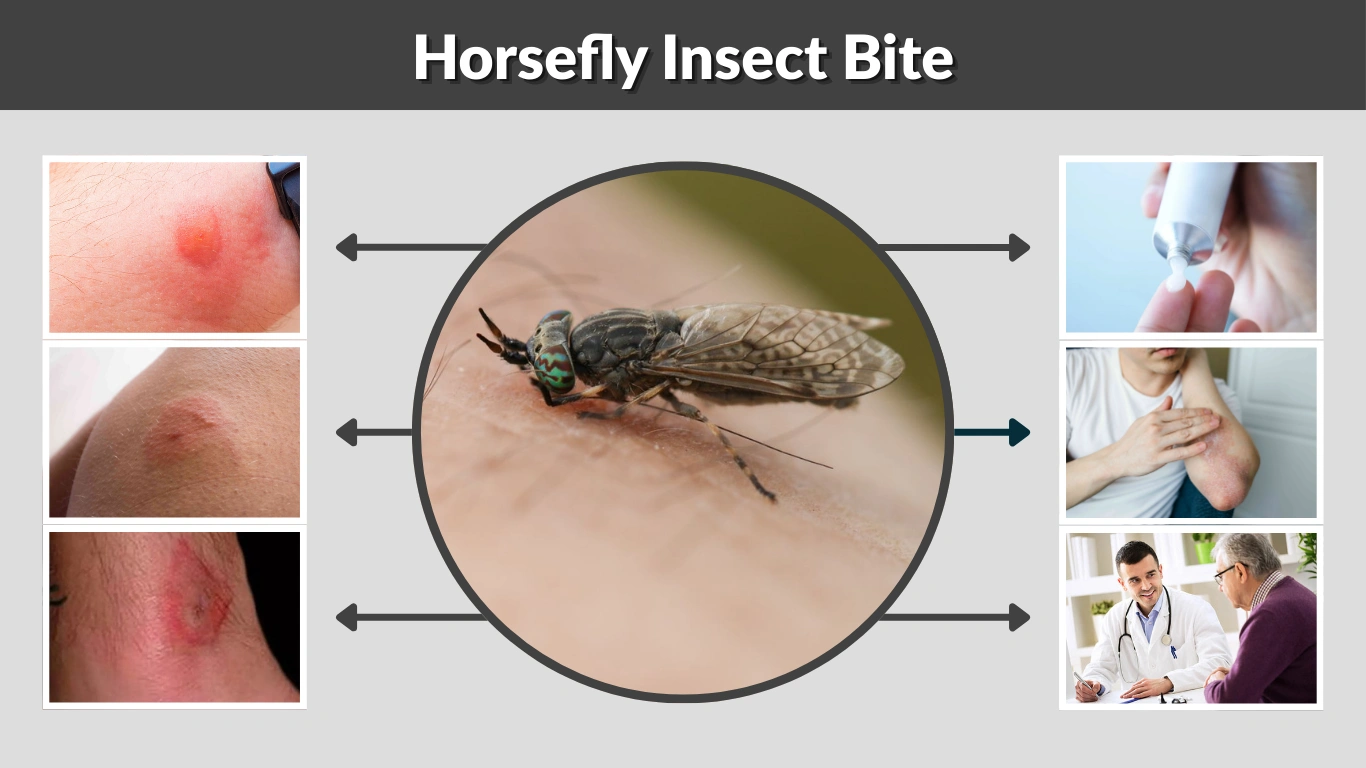
Horseflies are notorious for their painful and persistent bites. Unlike mosquitoes that pierce skin with a needle-like mouthpart, horseflies cut into the skin using sharp scissor-like jaws. This makes their bites far more painful and often more visible. For outdoor enthusiasts, farmers, or anyone spending time near wetlands, knowing how to recognize and treat these bites is essential.
Understanding Horseflies
Horseflies belong to the Tabanidae family and are among the largest blood-feeding insects. Adult females feed on blood to support reproduction, while males usually survive on nectar. They thrive in warm, humid environments and are especially common near water bodies, livestock farms, and forested areas.
What makes horseflies stand out is their persistence. Once they target a person, they are difficult to shoo away, often circling until they succeed in biting. This aggressive behavior, combined with the painful nature of the bite, makes them more troublesome than many other insects.
Identifying a Horsefly Bite

A horsefly bite is typically easy to distinguish once you know what to look for. The sharp pain felt at the moment of the bite is often the first giveaway—it feels more like a sting or a cut than a typical insect bite.
Key Features of a Horsefly Bite
- Painful entry point: Unlike mosquito bites, which may go unnoticed, horsefly bites cause immediate pain.
- Redness and swelling: The skin around the bite often becomes raised, hot, and inflamed.
- Bruising or welts: In some cases, the bite area may develop a dark mark or raised welt.
Differentiating from Other Insect Bites
- Mosquito bites: Usually appear as small, itchy bumps with mild irritation.
- Bee or wasp stings: Cause sharp pain but are often accompanied by venom-related swelling.
- Deer flies: Leave bites similar to horseflies but generally less severe.
These distinctions are useful, especially if you spend time outdoors and encounter different types of insects.
Body’s Reaction to Horsefly Bites

When a horsefly bites, it injects saliva containing anticoagulants that prevent blood from clotting. The body immediately reacts to these foreign proteins, which is why the symptoms are stronger than with mosquito bites.
Common Reactions
- Redness and itching: A normal response that usually lasts several hours.
- Swelling: The tissue around the bite may puff up and feel tender.
- Burning sensation: Many people describe the bite as having a lingering sting.
Severe Reactions (Less Common)
While most bites are mild to moderate, some individuals may experience stronger immune responses. These can include:
- Hives or rash spreading beyond the bite
- Difficulty breathing or tightness in the chest
- Dizziness or nausea
In such cases, immediate medical attention is necessary.
Symptoms of Horsefly Bites

The symptoms of horsefly bites vary depending on the person’s sensitivity and whether infection occurs.
Mild to Moderate Symptoms
- Intense pain at the site of the bite
- Local swelling that lasts one to two days
- Persistent itching, sometimes leading to scratching
- Temporary skin warmth or mild bruising
Severe or Complicated Symptoms
- Pus or fluid discharge indicating infection
- Fever or chills in case of systemic reaction
- Large areas of redness spreading outward
In most cases, symptoms fade within a few days. However, secondary infections caused by scratching can prolong healing.
First Aid and Home Care

Immediate care is the best way to reduce pain and prevent complications from horsefly bites. Acting quickly can make a big difference in recovery time.
Quick First Aid Steps
- Clean the wound – Wash the bite thoroughly with soap and water to remove saliva and bacteria.
- Apply a cold compress – Use an ice pack or chilled cloth to reduce swelling and numb the pain.
- Use topical creams – Antihistamine or hydrocortisone creams relieve itching and irritation.
- Avoid scratching – Though tempting, scratching increases the risk of infection.
Natural Remedies
Many people also find relief in natural home remedies:
- Aloe vera gel: Soothes and cools inflamed skin.
- Honey: Acts as a mild antibacterial and reduces swelling.
- Baking soda paste: Neutralizes itching and irritation.
- Tea tree oil: Offers antiseptic properties to prevent infection.
These remedies are especially useful if you prefer chemical-free alternatives or don’t have access to medications immediately.
Medical Treatment and When to Seek Help

In most cases, home treatment is sufficient. However, medical care may be required if symptoms persist or worsen.
When to See a Doctor
- Excessive swelling that spreads beyond the bite
- Signs of infection such as pus, warmth, or severe redness
- Fever, chills, or body aches
- Severe allergic reactions such as breathing difficulty
Doctors may prescribe stronger antihistamines, corticosteroid creams, or antibiotics for infected bites. In rare cases of severe allergy, an epinephrine injection may be necessary.
Preventing Horsefly Bites
Since horseflies are persistent, prevention is often better than cure. Simple protective measures can significantly reduce your chances of being bitten.
Practical Prevention Tips
- Wear protective clothing: Long sleeves, trousers, and hats create barriers.
- Choose light colors: Horseflies are attracted to dark and shiny surfaces.
- Use insect repellent: Products containing DEET or natural oils like eucalyptus are effective.
- Avoid peak times: Horseflies are most active during warm afternoons and near water.
- Stay away from livestock areas: Farms and stables attract horseflies in large numbers.
Adopting these strategies allows you to enjoy outdoor activities without constant worry.
Possible Complications
Though most bites heal quickly, complications may occur if the wound is neglected.
- Secondary infections: Scratching introduces bacteria, leading to painful infections.
- Allergic reactions: Rare but dangerous, especially for those with insect bite sensitivities.
- Prolonged healing: People with weak immune systems or chronic skin conditions may take longer to recover.
Recognizing early warning signs ensures timely treatment and prevents long-term discomfort.
Conclusion
Horsefly bites may be painful and alarming, but they are usually manageable with prompt care. Recognizing the unique features of these bites helps you act quickly and avoid complications. With preventive measures like protective clothing and insect repellents, you can reduce the risk of being bitten in the first place. Most importantly, seek medical advice if symptoms become severe—your health and safety should always come first.
FAQs
What does a horsefly bite look like?
It typically appears as a swollen, red bump with a painful center. In some cases, bruising or welts may develop around the bite.
How long do horsefly bite symptoms last?
Most symptoms fade within 2–3 days, though itching or swelling may persist longer if infection occurs.
Are horsefly bites dangerous?
While most bites are harmless, they can be dangerous if they cause an allergic reaction or become infected.
Can horsefly bites get infected?
Yes. Scratching often introduces bacteria, leading to pus, spreading redness, and sometimes fever. Proper cleaning reduces this risk.
What is the best way to prevent horsefly bites?
Wearing long clothing, using repellents, and avoiding horsefly-prone areas during peak times are the most effective strategies.