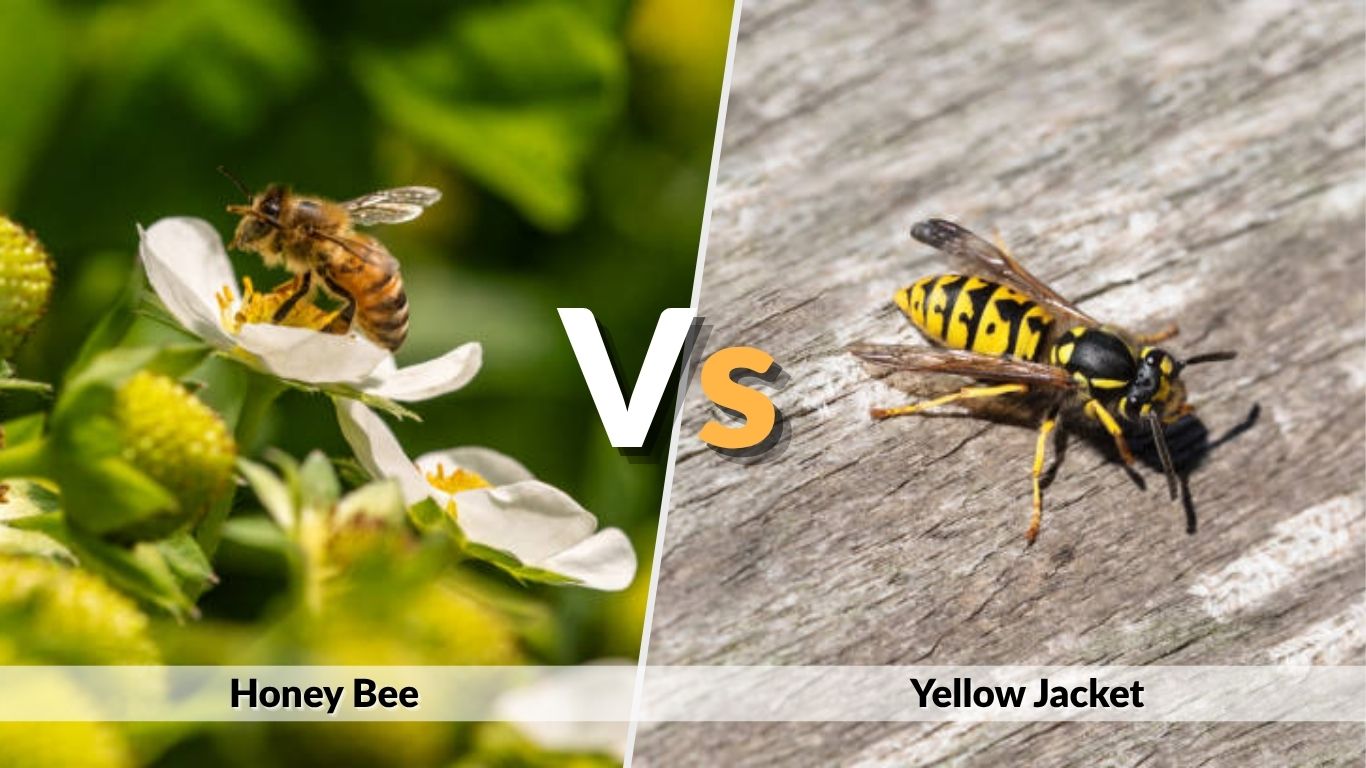
Many people confuse honey bees and yellow jackets because both are flying insects with similar colors. However, they are very different in behavior, appearance, and risk level. Honey bees are essential pollinators that support ecosystems, while yellow jackets are aggressive wasps often attracted to human food. Understanding these differences can help you identify them correctly, avoid unnecessary fear, and respond safely when you encounter them in your home, garden, or outdoor spaces.
Honey Bee vs Yellow Jacket: Quick Overview
At a glance, honey bees and yellow jackets may look similar, but they belong to entirely different groups of insects. Honey bees are pollinators that play a crucial role in agriculture and nature, while yellow jackets are a type of wasp known for their aggressive behavior and scavenging habits. Their diets, nesting styles, and interactions with humans differ significantly.
Key Differences at a Glance
- Honey bees are fuzzy and golden-brown
- Yellow jackets are smooth with bright yellow and black stripes
- Honey bees are generally calm unless threatened
- Yellow jackets are aggressive and easily provoked
- Honey bees die after stinging once
- Yellow jackets can sting multiple times
How to Identify Honey Bees vs Yellow Jackets

Correct identification is important because it determines how you should react around them. While their colors may overlap, their body structure and behavior provide clear clues. Observing closely can help you tell them apart quickly and avoid confusion, especially in outdoor environments where both may be present.
Body Shape and Appearance
- Honey bees have a rounder, hairy body
- Yellow jackets have a slim, shiny body
- Bees appear softer due to hair, wasps look smooth
Size and Structure
- Honey bees are thicker and more robust
- Yellow jackets are narrower with a defined waist
- Wings of yellow jackets appear longer relative to body
Behavior Around Humans
- Honey bees focus on flowers and ignore people
- Yellow jackets are attracted to sugary drinks and food
- Yellow jackets may hover aggressively around humans
Honey Bee vs Yellow Jacket Sting

The difference in sting behavior is one of the most important distinctions between these insects. While both can sting, the way they do it and the effects they cause are not the same. Understanding this can help reduce fear and guide proper response if you are stung.
Sting Mechanism
- Honey bees have a barbed stinger that gets stuck in skin
- They die after stinging once
- Yellow jackets have smooth stingers and do not die
Pain and Reaction
- Yellow jacket stings are often sharper and more intense
- Honey bee stings are painful but usually less severe
- Multiple stings from yellow jackets increase risk
Venom Differences
- Honey bee venom is designed for defense
- Yellow jacket venom can be more irritating
- Allergic reactions depend on individual sensitivity
Nest Differences: Honey Bee vs Yellow Jacket

The way these insects build their homes reflects their behavior and lifestyle. Honey bees create structured, organized hives, while yellow jackets build hidden nests that can sometimes pose a danger to humans. Knowing where they live can help you avoid disturbing them accidentally.
Honey Bee Hives
- Made from wax produced by bees
- Usually found in trees or managed boxes
- Large colonies with organized structure
Yellow Jacket Nests
- Made from paper-like chewed wood fibers
- Often located underground or inside walls
- Can be hidden and difficult to detect
Behavior and Aggression Levels
Behavior is one of the biggest differences between honey bees and yellow jackets. Honey bees are generally calm and focused on collecting nectar and pollen. They only sting when they feel directly threatened, such as when their hive is disturbed. This makes them relatively safe to be around if left alone.
Yellow jackets, on the other hand, are much more aggressive. They are highly territorial and will defend their nests actively. They are also attracted to human food, which increases the chances of interaction. Their ability to sting multiple times makes them more dangerous in many situations, especially during late summer when they become more active around people.
Diet Differences Between Honey Bees and Yellow Jackets
Diet plays a major role in how these insects behave and interact with humans. Honey bees rely on plant-based food sources, while yellow jackets have a more varied and opportunistic diet. This difference explains why bees are usually found around flowers, while yellow jackets often appear near human food and garbage.
Honey Bee Diet
- Nectar from flowers for energy
- Pollen for protein and nutrients
- Produces and consumes honey
Yellow Jacket Diet
- Sugary foods like fruits and drinks
- Protein sources such as insects
- Scavenges human food and waste
Honey Bee vs Yellow Jacket vs Wasp vs Hornet

Many people use the terms bee and wasp interchangeably, but they are not the same. Yellow jackets are actually a type of wasp, while honey bees belong to a different group entirely. Hornets are another category of wasps, typically larger and more intimidating in appearance.
Key Differences Explained
- Honey bees are pollinators and less aggressive
- Yellow jackets are wasps and more aggressive
- Hornets are larger and can be more dangerous
- Wasps in general are predators, unlike bees
Which One Should You Avoid?
- Yellow jackets due to aggressive behavior
- Hornets because of their size and strong sting
- Honey bees only if their hive is disturbed
Which Is More Dangerous?
When comparing danger levels, yellow jackets are generally considered more risky than honey bees. This is mainly because of their aggressive nature and their ability to sting multiple times without dying. Honey bees, while capable of stinging, are less likely to attack unless provoked.
The real danger for both insects comes from allergic reactions. For some people, even a single sting can cause serious health issues. In most cases, however, yellow jackets pose a greater everyday risk because they are more likely to come into contact with humans and react aggressively.
Honey Bee vs Bumblebee vs Yellow Jacket

People often confuse honey bees with bumblebees and yellow jackets due to similar coloring. However, each of these insects has unique characteristics that make them easy to distinguish when you know what to look for.
Bumblebee vs Honey Bee
- Bumblebees are larger and very fuzzy
- Honey bees are smaller and more slender
- Honey bees produce more honey
Bumblebee vs Yellow Jacket
- Bumblebees are gentle and rarely aggressive
- Yellow jackets are aggressive and territorial
- Bumblebees focus on flowers, not human food
Visual Differences and Identification Tips
Identifying these insects quickly can help you react appropriately and avoid unnecessary panic. Paying attention to small details like body texture, color brightness, and behavior can make a big difference when spotting them in real life.
What to Look For
- Fuzzy body indicates a honey bee
- Smooth, shiny body indicates a yellow jacket
- Bright yellow stripes are typical of yellow jackets
Quick Identification Tips
- Bees stay around flowers
- Yellow jackets hover near food and drinks
- Bees move calmly, wasps move aggressively
FAQs
Is a yellow jacket a bee?
No, a yellow jacket is not a bee. It is a type of wasp and behaves very differently from honey bees, especially in terms of aggression and diet.
Which sting hurts more, honey bee or yellow jacket?
Yellow jacket stings are generally more painful because they can sting multiple times and inject more venom compared to honey bees.
Can yellow jackets sting multiple times?
Yes, yellow jackets can sting repeatedly because their stinger is smooth and does not get stuck in the skin like a honey bee’s stinger.
Are honey bees dangerous to humans?
Honey bees are not usually dangerous and only sting when threatened. They are important pollinators and should be left undisturbed whenever possible.
How can I quickly tell the difference?
Look at the body. Honey bees are fuzzy and brownish, while yellow jackets are smooth with bright yellow and black stripes and appear more aggressive.