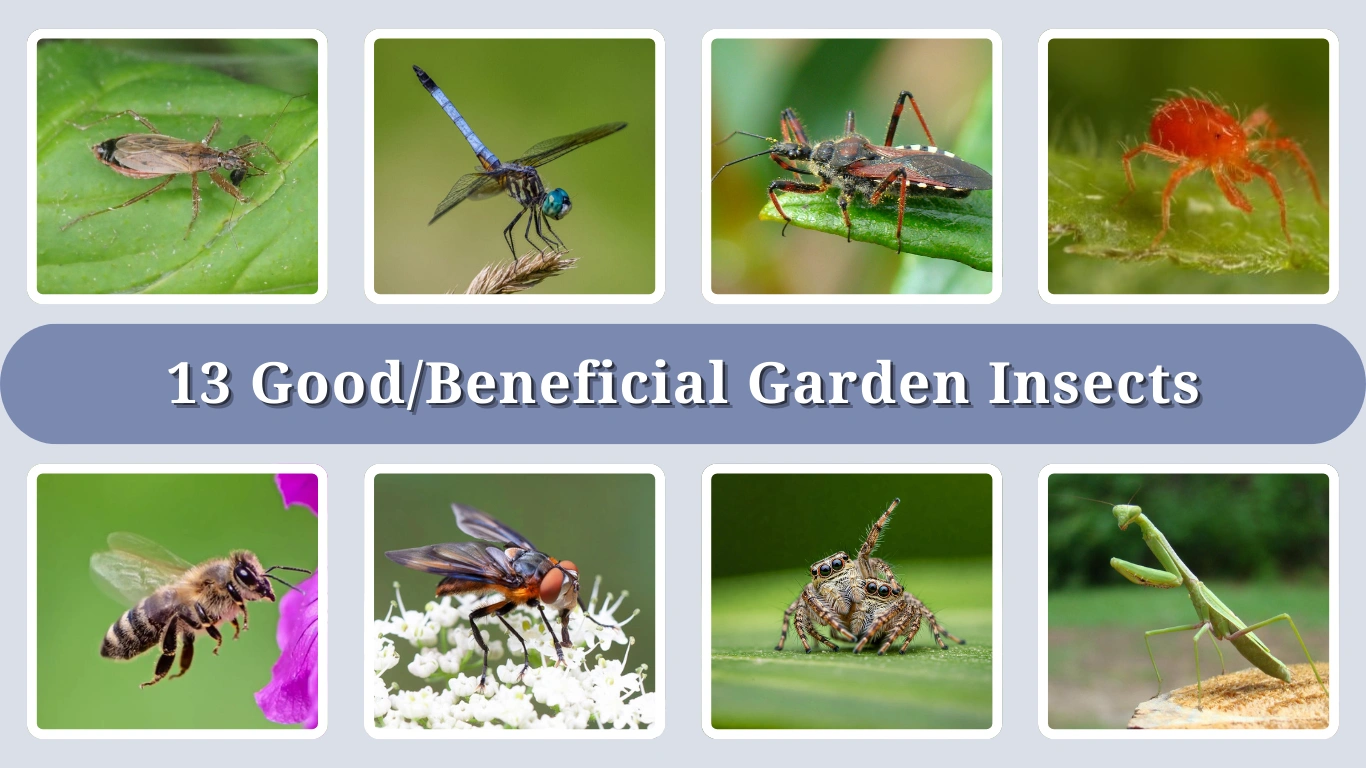
A thriving garden is more than just plants—it’s a balanced ecosystem supported by helpful insects. While some bugs damage crops, others protect them by controlling pests and boosting pollination. Beneficial insects are natural allies that reduce the need for chemical pesticides, improve plant health, and encourage biodiversity. Understanding which insects help your garden flourish is the first step toward creating a sustainable, productive growing space.
1. Ladybugs (Ladybird Beetles)

Ladybugs are among the most recognized beneficial insects in gardens. Known for their bright red or orange bodies with black spots, they are natural predators of many soft-bodied pests. Having them in your garden ensures healthier plants and reduced need for chemical pest control.
Identification
- Small, dome-shaped bodies, usually red, orange, or yellow with black spots
- Six short legs and antennae
- Range in size from 1 mm to 10 mm
- Larvae look like tiny alligators with elongated, spiny bodies
What Are Beneficial for Garden
Ladybugs are highly effective in controlling aphids, mites, whiteflies, and scale insects. A single ladybug can consume up to 50 aphids in a day, making them powerful allies for natural pest management.
Habitat and Diet
Ladybugs thrive in gardens with flowering plants, shrubs, and crops. They prefer environments rich in pollen and nectar for adults, while their larvae feed on pests. Common habitats include vegetable gardens, flower beds, orchards, and meadows.
2. Lacewings

Lacewings are delicate insects with transparent wings and slender bodies. They are valuable allies in the garden because their larvae are voracious predators of common pests. Attracting lacewings helps maintain natural pest control without chemical intervention.
Identification
- Slender, soft-bodied insects
- Two pairs of transparent, lace-like wings with visible veins
- Usually green or brown in color
- Larvae resemble tiny alligators with sickle-shaped jaws
What Are Beneficial for Garden
Lacewing larvae, often called “aphid lions,” feed aggressively on aphids, mealybugs, thrips, and small caterpillars. Their role in reducing pest populations makes them one of the most important beneficial insects for vegetable and flower gardens.
Habitat and Diet
Adults feed on nectar, pollen, and honeydew, while larvae feed on soft-bodied insects. They prefer gardens with flowering plants, hedges, and shrubs that provide both food sources and shelter.
3. Parasitic Wasps

Parasitic wasps are small, often unnoticed insects, but they play a major role in controlling destructive garden pests. They act as natural pest regulators by laying eggs inside or on host insects.
Identification
- Tiny, slender-bodied wasps (often less than 1 cm)
- Colors vary: black, brown, or metallic hues
- Long antennae and narrow waists
- Rarely sting humans
What Are Beneficial for Garden
Parasitic wasps target caterpillars, whiteflies, aphids, and beetle larvae. By parasitizing pests, they reduce infestations and protect vegetables, fruit trees, and flowers from damage.
Habitat and Diet
Adults feed on nectar and pollen, while larvae develop inside host pests. They thrive in gardens with diverse flowering plants and herbs, which provide essential nectar sources.
4. Ground Beetles

Ground beetles are hardy, fast-moving insects that live primarily on the soil surface. They are excellent natural pest controllers, feeding on many soil-dwelling and crawling garden pests.
Identification
- Dark, shiny bodies, usually black, brown, or metallic green
- Flattened, elongated shape with strong legs for running
- Most species are winged but rarely fly
- Range in size from 5 mm to over 25 mm
What Are Beneficial for Garden
Ground beetles help manage populations of slugs, cutworms, caterpillars, root maggots, and other soil pests that damage vegetable roots and young seedlings. They act as natural protectors for crops and ornamental plants.
Habitat and Diet
These beetles prefer cool, moist environments and are often found under rocks, mulch, logs, or leaf litter. They are nocturnal hunters that feed on soil-dwelling insects, larvae, and even weed seeds, contributing to both pest and weed control in gardens.
5. Hoverflies (Syrphid Flies)

Hoverflies, also known as syrphid flies or flower flies, are excellent beneficial insects for any garden. They are often mistaken for bees or wasps because of their yellow and black stripes, but they are harmless to humans. Both adults and larvae contribute to a healthier garden ecosystem.
Identification
- Small to medium-sized flies (6–20 mm)
- Black and yellow bands resembling bees/wasps
- Can hover in one place like a drone
- Large eyes and short antennae
- Larvae are legless, slug-like, and vary in color (green, brown, or translucent)
What Are Beneficial for Garden
Hoverfly larvae are voracious predators of aphids, thrips, and whiteflies, helping protect vegetable and flower crops. Adult hoverflies are important pollinators, visiting flowers in search of nectar and pollen, making them doubly beneficial.
Habitat and Diet
Adults thrive in gardens with a variety of flowers, especially those with open, flat blooms like dill, fennel, alyssum, and marigolds. Larvae feed on soft-bodied insect pests, while adults consume nectar and pollen, ensuring pollination and natural pest control.
6. Praying Mantises

Praying mantises are iconic garden predators, instantly recognizable by their triangular heads and folded forelegs that resemble a posture of prayer. They are powerful hunters that help keep many pest populations under control, though they are generalist predators and may eat both harmful and beneficial insects.
Identification
- Large insects, usually 5–10 cm in length
- Triangular head with large compound eyes
- Long, raptorial forelegs used for grasping prey
- Green, brown, or camouflaged coloration for blending with plants
- Slow, deliberate movements and excellent vision
What Are Beneficial for Garden
Praying mantises feed on a wide variety of pests such as caterpillars, grasshoppers, beetles, moths, and crickets. Their hunting skills make them valuable allies for controlling insect populations that threaten vegetables, flowers, and ornamental plants.
Habitat and Diet
They thrive in gardens with tall plants, shrubs, and flowering areas that provide good camouflage and hunting grounds. Mantises are carnivorous, feeding exclusively on live insects, and will consume nearly any pest they can catch. Their egg cases (oothecae) can often be found attached to twigs, stems, and plant surfaces.
7. Spiders

Spiders are often misunderstood in the garden, but they are among the most effective natural pest controllers. Unlike many other beneficial insects, spiders do not eat plants; instead, they feed on insects that can damage your garden. Their presence indicates a balanced ecosystem.
Identification
- Eight legs (unlike insects, which have six)
- Two main body parts: cephalothorax and abdomen
- Wide variety of colors, shapes, and sizes depending on species
- Often spin webs, though some species actively hunt without webs
What Are Beneficial for Garden
Spiders help control populations of flies, mosquitoes, aphids, beetles, and moths by trapping or hunting them. They reduce the need for chemical insecticides and keep pest levels in check throughout the growing season.
Habitat and Diet
Spiders inhabit nearly all garden spaces, including flower beds, shrubs, ground cover, mulch, and even corners of garden structures. They primarily feed on live insects, making them natural and consistent pest managers.
8. Tachinid Flies

Tachinid flies may look like ordinary houseflies, but they are one of the most important natural pest control allies in the garden. Their larvae act as internal parasites of many destructive insects, reducing pest populations naturally.
Identification
- Medium-sized flies, usually gray, brown, or black
- Bristly bodies, often resembling houseflies
- Range in size from 3 mm to 14 mm
- Adults often seen visiting flowers for nectar
What Are Beneficial for Garden
Tachinid flies control pests by laying eggs on or inside caterpillars, beetles, stink bugs, and other destructive insects. The larvae develop within the host, eventually killing it. This makes them highly valuable for keeping pest outbreaks under control.
Habitat and Diet
Adults feed on nectar, pollen, and honeydew, while their larvae develop inside host pests. They thrive in gardens rich in flowering plants such as dill, fennel, and Queen Anne’s lace, which provide nectar for adults and attract pests that serve as hosts for their young.
9. Bees

Bees are among the most essential beneficial insects in any garden. While they are not predators like some other helpful insects, their role as pollinators makes them vital for fruit, vegetable, and flower production. Without bees, many plants would struggle to reproduce and yield crops.
Identification
- Fuzzy bodies with yellow, black, or brown stripes
- Two pairs of transparent wings
- Range in size from 2 mm (tiny native bees) to 25 mm (bumblebees)
- Social bees (like honeybees and bumblebees) live in colonies; solitary bees nest in soil, wood, or stems
What Are Beneficial for Garden
Bees are the primary pollinators for many garden plants, including tomatoes, cucumbers, peppers, berries, melons, squash, and flowering ornamentals. By transferring pollen between flowers, they increase fruit set and crop yield.
Habitat and Diet
Bees thrive in gardens with diverse flowering plants that provide nectar and pollen. They prefer continuous blooms from early spring to late fall. Social bees often build hives in cavities, while solitary bees may nest in bare soil, hollow stems, or bee hotels. Their diet consists of nectar (energy source) and pollen (protein source).
10. Predatory Mites

Predatory mites are tiny, almost invisible to the naked eye, but they are powerful allies in controlling pest populations in the garden. Unlike harmful spider mites, these beneficial mites actively hunt and consume destructive insect pests.
Identification
- Very small, less than 1 mm in size
- Oval-shaped bodies, usually translucent, pale, or reddish-orange
- Move more quickly than pest mites
- Require a magnifying glass or microscope for clear identification
What Are Beneficial for Garden
Predatory mites are natural enemies of spider mites, thrips, and other tiny plant-sucking pests. By reducing infestations, they help protect vegetables, fruits, and ornamental plants from yellowing, stippling, and stunted growth caused by pest mites.
Habitat and Diet
They thrive in warm, humid environments where pest mite populations are present. Predatory mites feed directly on spider mites and their eggs, but they may also survive on pollen and other small prey when pests are scarce. They are commonly introduced into greenhouses and vegetable gardens as part of biological pest control programs.
11. Assassin Bugs

Assassin bugs are stealthy predators that play a major role in keeping pest populations under control. Although they look intimidating, they are beneficial for gardens because they feed on a wide range of harmful insects.
Identification
- Medium-sized insects, usually 10–25 mm long
- Elongated body with long legs
- Distinct narrow head with a curved, dagger-like beak (rostrum)
- Brown, black, or reddish coloration depending on species
What Are Beneficial for Garden
Assassin bugs prey on caterpillars, beetles, aphids, leafhoppers, and many other destructive garden insects. Their feeding habits make them excellent allies for reducing pest outbreaks without chemical pesticides.
Habitat and Diet
They live in shrubs, flower beds, vegetable gardens, and grassy areas where pests are abundant. Using their strong rostrum, assassin bugs pierce and inject enzymes into their prey, then consume the liquefied insides. They are active hunters and can help protect crops throughout the growing season.
12. Dragonflies

Dragonflies are fast-flying insects often seen darting around ponds, streams, and gardens. They are not only beautiful but also extremely beneficial because of their ability to control populations of small, flying pests.
Identification
- Slender, elongated bodies (2–5 inches long)
- Two pairs of large, transparent wings with visible veins
- Large compound eyes that cover most of their head
- Bright metallic or iridescent colors (blue, green, red, or bronze)
- Agile fliers capable of hovering and flying backward
What Are Beneficial for Garden
Dragonflies are natural predators of mosquitoes, gnats, midges, and small flies, making them excellent at reducing nuisance pests. They also prey on moths and other insects that can damage crops and flowers.
Habitat and Diet
Dragonflies thrive near water sources such as ponds, birdbaths, or streams, as their larvae (nymphs) develop in aquatic environments. Both nymphs and adults are carnivorous: nymphs feed on mosquito larvae and aquatic insects, while adults hunt flying pests midair.
13. Damsel Bugs

Damsel bugs are small but highly efficient garden predators. They are less well-known than ladybugs or lacewings but are just as important in controlling pest populations. Their slender bodies and quick movements make them effective hunters in both vegetable and flower gardens.
Identification
- Slender, elongated bodies, usually 6–12 mm long
- Brown, gray, or tan coloration for camouflage
- Long legs and antennae
- Distinctive piercing-sucking mouthparts (beak) used to feed on prey
What Are Beneficial for Garden
Damsel bugs prey on aphids, leafhoppers, caterpillars, thrips, and other soft-bodied pests. They help reduce infestations naturally and are especially valuable in vegetable gardens where these pests can cause significant damage.
Habitat and Diet
They live in grassy areas, shrubs, and flowering plants that provide cover and hunting grounds. Damsel bugs feed on a wide variety of insect pests, using their beak to pierce prey and suck out body fluids. They thrive in gardens with diverse vegetation and benefit from reduced pesticide use.