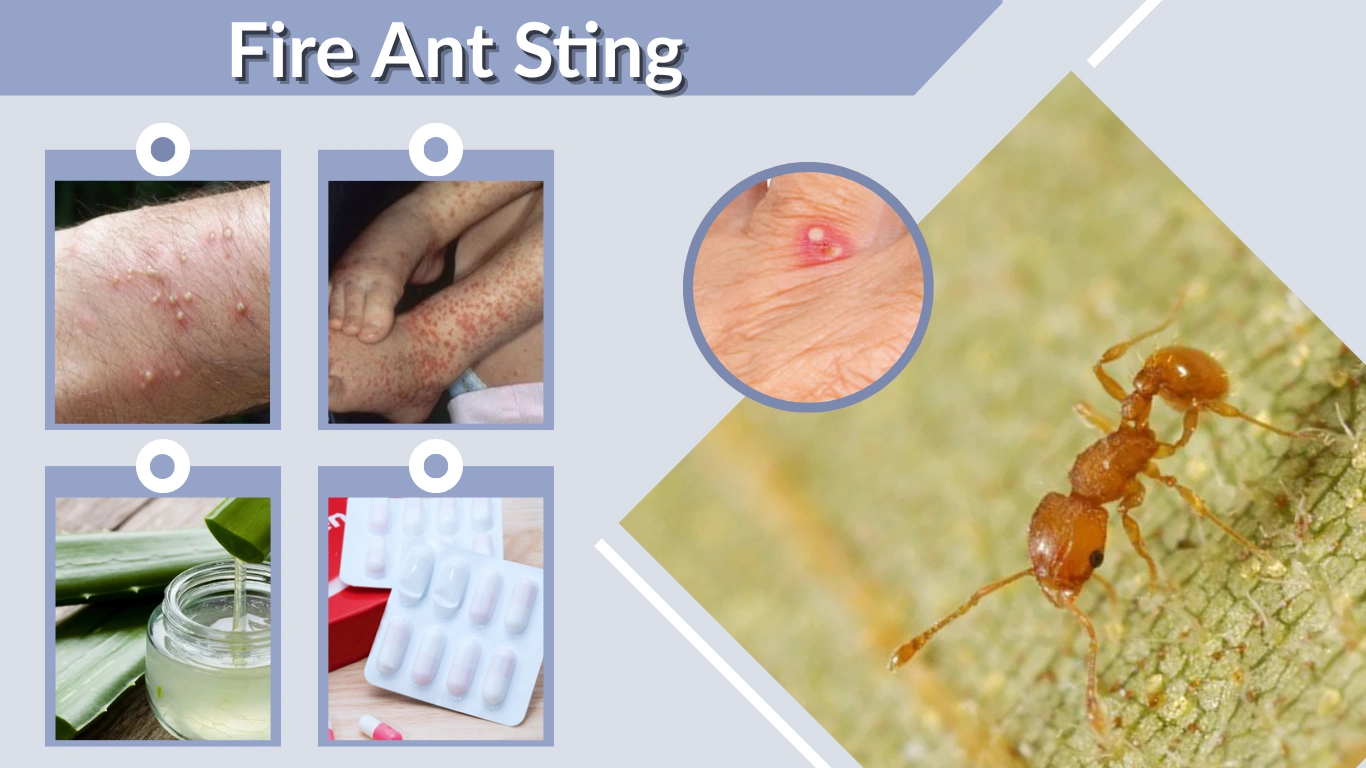
Fire ant stings are among the most painful and irritating insect attacks. When disturbed, fire ants defend their colony aggressively, delivering venom through multiple stings that cause burning pain, redness, and itchy pustules. These stings can range from mild to severe, depending on a person’s sensitivity. Understanding how fire ants sting, what symptoms to expect, and how to treat them properly helps prevent infections and long-lasting discomfort.
Do Fire Ants Bite or Sting?

Many people wonder whether fire ants bite or sting — the answer is both. Fire ants first bite with their strong mandibles to grip the skin and then sting multiple times using a sharp stinger at the end of their abdomen. Unlike bees, fire ants do not lose their stinger, meaning one ant can sting repeatedly.
How Fire Ants Attack
When a mound is disturbed, dozens or even hundreds of ants rush out instantly. They swarm up the legs or arms of the intruder, using their jaws to hold on. Once attached, they pivot in a circular pattern and inject alkaloid venom that causes an intense burning sensation — hence their name, “fire ants.”
Bite vs. Sting Difference
| Type | Function | Effect |
| Bite | To hold onto the skin | Causes slight pressure, not venomous |
| Sting | To inject venom | Produces pain, redness, and blisters |
This coordinated attack allows fire ants to deliver multiple stings in seconds, creating clusters of painful welts.
What Does a Fire Ant Sting Feel Like?

A fire ant sting feels like a hot needle puncture, followed by throbbing pain and itching. Within a few hours, small white pustules or blisters appear on the affected skin. These pustules are filled with sterile fluid, not pus, but can become infected if scratched.
Typical Sensations
- Sudden, sharp burning pain
- Red, raised bump within minutes
- Itching and irritation that lasts several days
- Formation of a white pustule after 24 hours
Some people experience multiple stings at once because fire ants swarm together. Each sting leaves a small circular mark, often clustered around the bite site.
Fire Ant Sting Symptoms

The severity of a fire ant sting depends on the individual’s immune response and the number of stings received. For most people, symptoms are local and short-term. However, allergic reactions can be serious and require medical attention.
Common Symptoms
- Sharp, burning pain
- Redness and swelling around the sting
- Itchy pustules or blisters
- Localized warmth and tenderness
- Clustered marks on the skin
3.2 Severe or Allergic Symptoms
In rare cases, individuals may experience:
- Difficulty breathing
- Swelling of the face, lips, or throat
- Dizziness or nausea
- Rapid heartbeat or chest pain
- Full-body hives or itching
These signs indicate a systemic allergic reaction, also known as anaphylaxis. Immediate medical care is essential in such cases, and people with known allergies should carry an epinephrine auto-injector (EpiPen).
Fire Ant Sting Pain and Duration

Fire ant stings rank high on the Schmidt Pain Index, just below wasps and bees. The pain typically peaks within minutes and subsides over several hours, but itching and redness can last for days. The pustules that form usually dry up naturally within 3 to 7 days.
How Long Does a Fire Ant Sting Last?
- Mild stings: Heal in 3–5 days
- Moderate reactions: Last about a week
- Severe reactions: May persist for up to 10 days or longer
Repeated scratching slows healing and increases the risk of infection or scarring.
Fire Ant Stinger: How It Works
The fire ant’s stinger is a small, needle-like structure located at the end of its abdomen. When the ant pierces the skin, it releases venom that contains piperidine alkaloids, chemicals responsible for the burning and itching sensation.
Unlike bees, fire ants do not leave their stinger in the skin. Instead, one ant can sting several times, rotating its body to inject venom repeatedly in a circular pattern. This explains why clusters of stings appear close together on the skin.
Why Fire Ant Stings Hurt So Much
The venom triggers an immediate inflammatory response, causing nerve irritation, redness, and pain. The alkaloid compounds also destroy skin cells, which leads to blister formation and the characteristic white pustules.
Fire Ant Sting Pictures and Identification

Fire ant stings are easy to recognize once you know what to look for. Initially, the affected area appears red and slightly swollen. After several hours, white or yellowish blisters form at the sting sites, surrounded by red rings. These pustules may look similar to pimples but should never be popped.
Visual cues of fire ant stings:
- Clusters of red bumps on feet, ankles, or hands
- Central blister or white pustule within 24 hours
- Surrounding redness and mild swelling
- Sometimes, small scabs appear as stings heal
If infection occurs, the area may become more painful, ooze fluid, or produce a foul odor — a sign that medical treatment is necessary.
Fire Ant Sting First Aid and Treatment

Prompt care after a fire ant sting greatly reduces pain and infection risk. Even though most stings heal naturally, early treatment speeds up recovery and provides relief.
Immediate First Aid Steps
- Move away from the mound quickly to avoid more stings.
- Clean the area thoroughly with soap and warm water.
- Apply a cold compress or ice pack for 10–15 minutes to reduce swelling.
- Use hydrocortisone cream or an antihistamine lotion for itching.
- Avoid scratching or popping pustules.
If several stings occur or an allergic reaction develops, take an oral antihistamine and seek medical attention immediately.
Fire Ant Sting Home Remedies

While most fire ant stings heal naturally, simple home remedies can reduce pain, itching, and swelling. These natural treatments are effective for mild reactions and provide quick comfort without harsh chemicals.
Best Home Remedies for Fire Ant Stings
- Baking Soda Paste: Mix baking soda with a few drops of water to form a paste. Apply it to the sting site to neutralize venom acidity and reduce irritation.
- Apple Cider Vinegar: Its mild acidity helps relieve itching and swelling. Dab gently using a cotton ball.
- Aloe Vera Gel: Known for its cooling properties, aloe vera soothes burning sensations and promotes faster healing.
- Honey: Acts as a natural antiseptic and moisturizer, preventing infection and reducing inflammation.
- Cold Green Tea Compress: Soak a clean cloth in chilled green tea and apply it to the sting to ease redness and calm the skin.
These remedies should be applied within the first hour after being stung for best results. Always clean the skin before using any treatment to avoid infection.
Medical Treatment for Fire Ant Stings

For people who experience moderate or severe symptoms, over-the-counter or prescribed medications may be required.
Common Medical Treatments
- Antihistamines (Diphenhydramine or Loratadine): Reduce itching and allergic reactions.
- Hydrocortisone Cream: Relieves swelling and inflammation.
- Antibiotic Ointments: Prevent infection if pustules rupture.
- Pain Relievers (Ibuprofen or Acetaminophen): Help reduce pain and tenderness.
If symptoms worsen or allergic reactions develop, a doctor may prescribe steroids or stronger antihistamines.
People with a history of severe allergies should always keep an EpiPen available for emergencies.
Fire Ant Sting Infection and Complications
Most stings heal without complications, but secondary infections can occur if pustules are scratched or burst. Signs of infection include:
- Pus or fluid discharge
- Increased pain and redness
- Warmth around the sting area
- Fever or swelling spreading beyond the site
Treating the area gently and applying antiseptic creams can help prevent infections. Avoid tight clothing over stings and keep the skin clean and dry during healing.
How to Stop Fire Ant Stings from Hurting
If the sting site continues to hurt, use simple pain relief and care techniques:
- Apply ice or cold compresses to numb the pain.
- Use topical anesthetic sprays containing lidocaine or benzocaine.
- Elevate the affected limb to minimize swelling.
- Take oral painkillers if discomfort persists.
Avoid scratching or rubbing, as this reopens wounds and can lead to infection. Proper rest and hydration also speed up recovery.
How Long Do Fire Ant Stings Last?
Fire ant stings usually heal within a week, but the exact duration depends on the person’s skin sensitivity and the number of stings.
| Reaction Type | Duration | Notes |
| Mild reaction | 3–5 days | Redness and itching only |
| Moderate reaction | 7–10 days | Pustules form and dry naturally |
| Severe allergic reaction | Up to 2 weeks | Medical treatment required |
The pustules left by fire ant stings should not be popped. They dry up on their own and fall off as the skin heals. Scratching them may leave scars or cause infections.
How to Prevent Fire Ant Stings
Prevention is the best protection when dealing with fire ants. Since they are highly territorial, avoiding their colonies reduces the risk of being stung.
Safety Tips
- Avoid walking barefoot in grassy areas or fields.
- Inspect lawns, gardens, and parks for visible mounds.
- Do not disturb ant mounds or pour water over them.
- Wear long pants and closed shoes when working outdoors.
- Treat infested areas with professional pest control if necessary.
For families, it’s important to teach children how to recognize fire ant mounds and stay away from them.
Fire Ant Stings and Pets
Pets, especially dogs and cats, can also suffer from fire ant stings. Symptoms in animals include paw licking, swelling, and restlessness.
If pets are stung, rinse the area with cool water, apply a mild antiseptic, and contact a veterinarian for further advice. Avoid using human creams or medications on animals without veterinary guidance.
FAQs
Do fire ants bite or sting?
Fire ants do both. They bite to anchor themselves to the skin and then sting repeatedly to inject venom. The stings cause burning pain, swelling, and white pustules that can last several days.
Are fire ant stings dangerous?
Yes. While most stings are mild, multiple stings can be dangerous, especially for people with allergies. Severe reactions may cause breathing difficulties, dizziness, or anaphylaxis. Medical help should be sought immediately in such cases.
Should you pop fire ant stings?
No, you should never pop fire ant pustules. They contain sterile fluid, not pus, and breaking them can cause bacterial infections and scarring. Let them dry and heal naturally, or apply antibiotic cream if they rupture on their own.
How long do fire ant stings itch?
The itching typically lasts two to five days, depending on skin sensitivity. Using antihistamine creams, cold compresses, or aloe vera gel can reduce discomfort and speed recovery.
Do fire ants die after they sting?
No. Fire ants retain their stinger and can sting multiple times. A single ant can deliver several stings in one attack, which is why victims often notice clusters of marks close together.