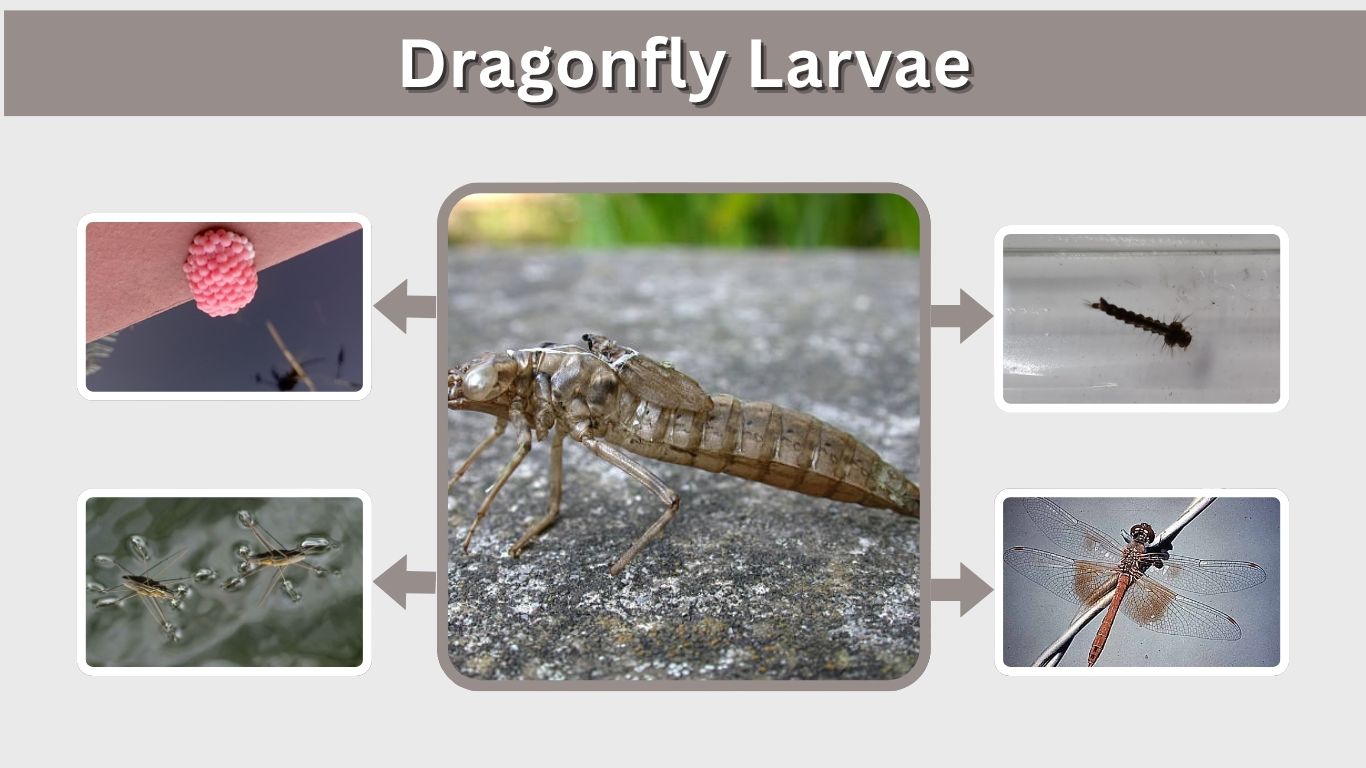
Dragonfly larvae are the underwater young of dragonflies, often called nymphs or naiads. While adult dragonflies are famous for their fast flight, the larval stage is usually longer and happens below the surface of ponds, lakes, wetlands, pools, and slow-moving water. These hidden predators play an important role in freshwater ecosystems by hunting mosquito larvae, tadpoles, small fish, and other aquatic creatures.
What Are Dragonfly Larvae?
Dragonfly larvae are immature dragonflies that live in water before becoming winged adults. They belong to the order Odonata, and unlike butterflies or beetles, dragonflies do not pass through a pupal stage. Their development is called incomplete metamorphosis, which means they grow from egg to nymph to adult.
Most people notice dragonflies only when they fly around ponds or gardens, but the larval stage is where much of their growth happens. Depending on the species, temperature, and food supply, dragonfly larvae may stay underwater for several months or even years.
Dragonfly larvae are not soft, worm-like larvae. They look more like small aquatic hunters with tough bodies, strong legs, large eyes, and extendable mouthparts. Their appearance can surprise people who find them in a pond, aquarium, pool, or bucket of standing water.
What Do Dragonfly Larvae Look Like?
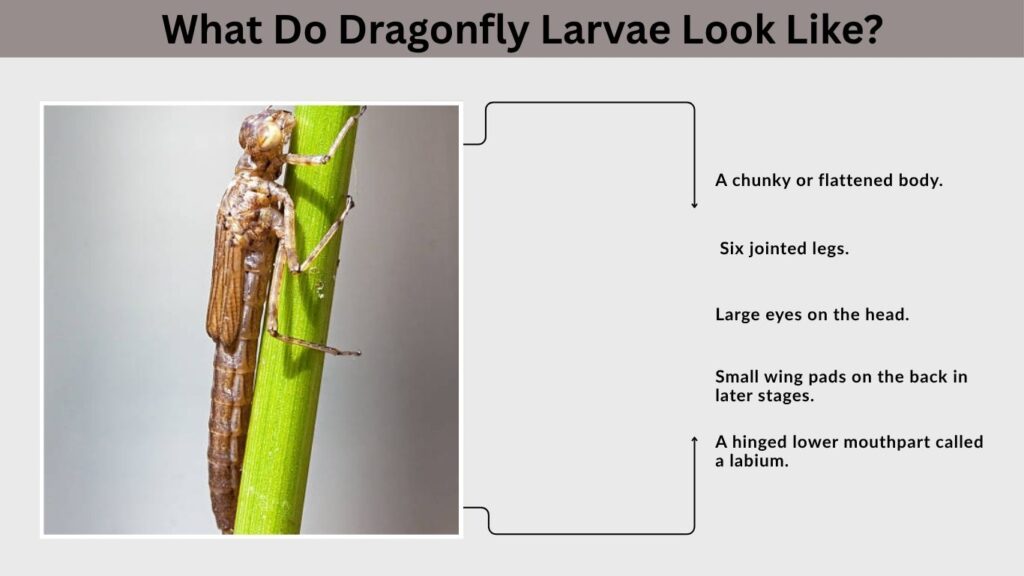
Dragonfly larvae usually have broad, sturdy bodies that are green, brown, tan, or dark gray. Their colors help them blend with mud, leaves, algae, and underwater plants. This camouflage allows them to ambush prey and avoid predators.
Key Identification Features
You can identify dragonfly larvae by looking for these traits:
- A chunky or flattened body
- Six jointed legs
- Large eyes on the head
- Small wing pads on the back in later stages
- A hinged lower mouthpart called a labium
- No leaf-like tail gills at the end of the body
The labium is one of their most unusual features. It works like a fast, extendable grabbing tool. When prey comes close, the larva shoots this mouthpart forward and pulls the prey back to its jaws.
Dragonfly Larvae vs Damselfly Larvae
Dragonfly larvae and damselfly larvae are often confused because both live in water and belong to the same insect order. However, they have clear differences.
| Feature | Dragonfly Larvae | Damselfly Larvae |
| Body shape | Broader, stockier, often flatter | Slimmer and more delicate |
| Tail end | No three leaf-like gills | Usually has three leaf-like gills |
| Movement | Crawls, climbs, or jet-propels through water | Often swims with a waving motion |
| Habitat style | Mud, plants, pond bottoms, submerged debris | Plants, stems, and shallower edges |
| Hunting style | Ambush predator with strong labium | Smaller predator, also uses labium |
Where Dragonfly Larvae Live in Water
Dragonfly larvae live in freshwater habitats where adult dragonflies can lay eggs. They are common in natural ponds, lakes, wetlands, marshes, ditches, slow streams, and garden water features.
Common Habitats
Dragonfly larvae may be found in:
- Backyard ponds with plants and shallow edges
- Natural wetlands and marshes
- Lakes and slow-moving streams
- Rain barrels or containers if left uncovered
- Swimming pools that are unused or poorly maintained
- Aquariums if eggs or larvae arrive with plants, mud, or live food
They prefer places with hiding spots. Submerged leaves, aquatic plants, mud, rocks, and woody debris give them cover while they wait for prey. A clean but overly bare pond may attract fewer larvae than one with natural edges and plant growth.
Dragonfly Larvae Life Cycle and Stages
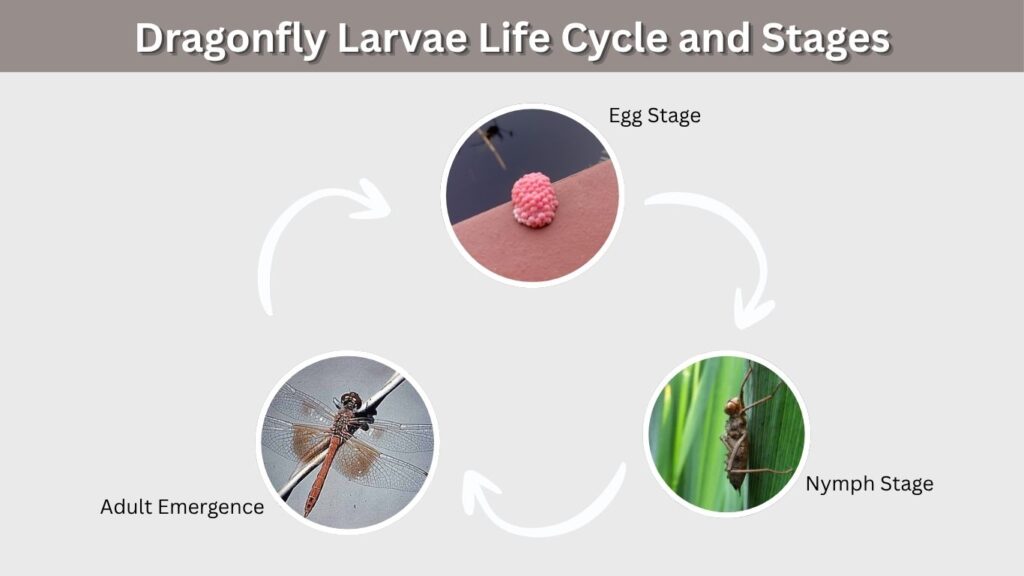
The dragonfly life cycle begins when a female lays eggs in or near water. Some species place eggs into plant tissue, while others drop or tap eggs onto the water surface. After hatching, the young dragonfly enters the aquatic larval stage.
Egg Stage
Eggs are usually laid around freshwater. They may hatch quickly in warm conditions, but timing depends on species and environment. Once the tiny young emerges, it soon becomes an active aquatic nymph.
Nymph Stage
The nymph stage is the longest part of the dragonfly’s life. During this stage, the larva feeds, grows, and molts many times. Each molt allows the body to become larger. As it matures, the wing pads become more visible.
Dragonfly larvae are strong predators even when small. As they grow, they can take larger prey. Some species remain small, while others become large enough to catch tadpoles, tiny fish, and other aquatic insects.
Adult Emergence
When fully developed, the larva climbs out of the water onto a plant stem, rock, log, or other surface. Its skin splits, and the adult dragonfly slowly emerges. The empty shell left behind is called an exuvia. After the wings harden, the adult flies away and begins the next stage of life above water.
What Do Dragonfly Larvae Eat?
Dragonfly larvae are carnivorous predators. They do not eat plants, algae, or pond sludge. Instead, they wait for moving prey and strike quickly.
Common Foods
Their diet may include:
- Mosquito larvae
- Midge larvae
- Small aquatic insects
- Worms and tiny crustaceans
- Tadpoles
- Small fish fry
- Other dragonfly or damselfly larvae
The exact diet depends on the larva’s size and what is available. Smaller larvae eat tiny prey, while larger larvae can attack surprisingly big animals for their size.
Do Dragonfly Larvae Eat Mosquito Larvae?
Yes, dragonfly larvae eat mosquito larvae when they can catch them. This is one reason dragonflies are often seen as helpful insects around ponds and wetlands. However, they should not be viewed as a complete mosquito-control solution on their own.
Mosquito larvae can develop quickly in small containers, buckets, tires, clogged gutters, and bird baths. Dragonfly larvae usually need a more stable aquatic habitat. For mosquito prevention, removing standing water and maintaining ponds properly is still more reliable than trying to rely only on dragonfly larvae.
Dragonfly Larvae vs Mosquito Larvae
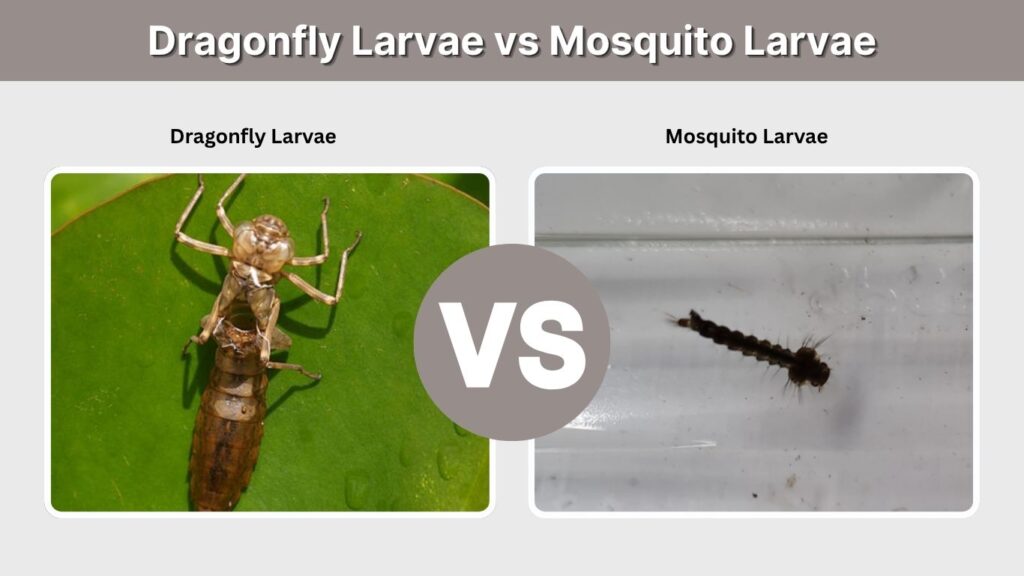
Mosquito larvae and dragonfly larvae both live in water, but they look and behave very differently.
Mosquito larvae are usually small, thin, and wriggly. They often hang near the water surface because they need access to air. They move with quick twitching motions and are commonly found in stagnant water.
Dragonfly larvae are larger, stronger, and more insect-like. They crawl along surfaces, cling to plants, or wait on the bottom. They have visible legs, a distinct head, and a predatory body shape.
Quick Differences
- Mosquito larvae are small, soft, and wriggling.
- Dragonfly larvae are larger, legged, and predatory.
- Mosquito larvae usually stay near the surface.
- Dragonfly larvae often hide among plants or debris.
- Mosquito larvae become mosquitoes.
- Dragonfly larvae become adult dragonflies.
Are Dragonfly Larvae Dangerous?
Dragonfly larvae are not dangerous to people, but large ones can pinch or bite if handled roughly. They do not sting, inject venom, or seek out humans. The best approach is to observe them without touching them.
They can be dangerous to very small pond animals. In aquariums, they may eat fish fry, shrimp, tiny fish, or tadpoles. This is why aquarium owners often remove them if they appear in a fish tank.
In Ponds
In a natural pond, dragonfly larvae are usually beneficial. They are part of a balanced food web and help control small aquatic animals, including mosquito larvae.
In Pools
In a swimming pool, dragonfly larvae usually mean adult dragonflies found standing water suitable for egg laying. Remove the larvae gently with a net, clean the pool, and restore proper filtration and chemical balance.
In Aquariums
In aquariums, dragonfly larvae are often unwanted. They may arrive on live plants or with outdoor pond material. If fish fry, shrimp, or small fish are present, remove the larva carefully and avoid adding untreated pond plants.
Can You Buy Dragonfly Larvae?
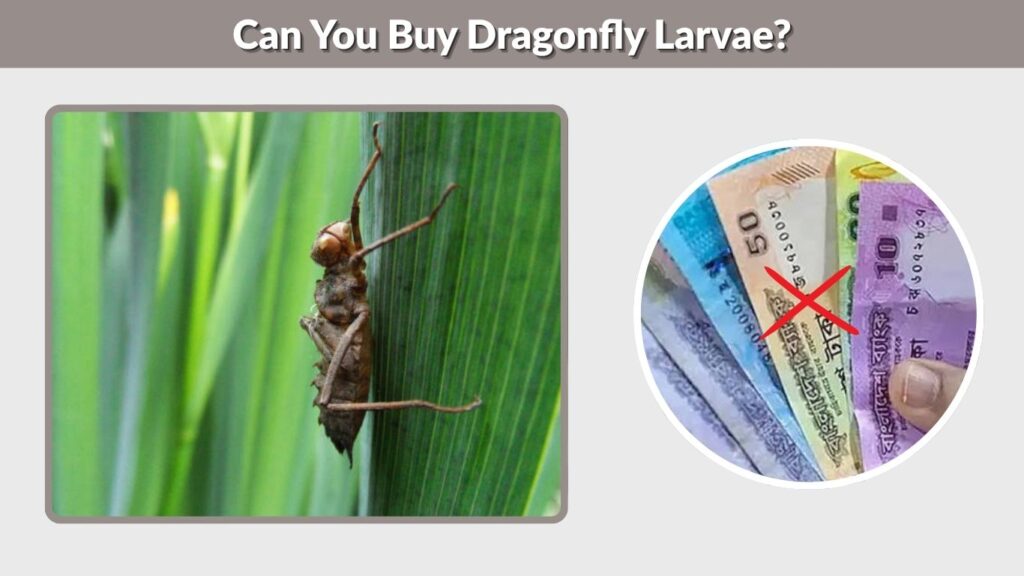
Many people search for dragonfly larvae for sale because they want natural mosquito control. However, buying live dragonfly larvae is not always practical or recommended. Dragonfly larvae are predators, may be regulated in some areas, and may not survive if released into unsuitable water.
Instead of buying larvae, it is usually better to create a dragonfly-friendly habitat.
Better Ways to Attract Dragonflies
To encourage dragonflies naturally:
- Build or maintain a freshwater pond
- Add native aquatic and marginal plants
- Avoid broad-spectrum insecticides near the pond
- Provide shallow edges and perching spots
- Keep some natural debris for shelter
- Avoid stocking too many fish, since fish may eat larvae
A balanced pond is more likely to attract adult dragonflies, which can lay eggs naturally. This method is safer than purchasing larvae online and releasing them without knowing the species or local rules.
Do Mosquito Dunks Kill Dragonfly Larvae?
Mosquito dunks commonly use Bti, short for Bacillus thuringiensis israelensis. Bti targets mosquito larvae and some related flies. It is generally considered specific to mosquito larvae and does not work like a broad insecticide.
For pond owners, this matters because many people want to reduce mosquitoes without harming dragonflies, fish, frogs, or other wildlife. Product directions should always be followed carefully, especially in small water features or habitats with sensitive animals.
Mosquito dunks can help reduce mosquito larvae while a pond ecosystem develops, but they should not replace basic prevention. Removing unnecessary standing water, keeping water moving, and supporting natural predators are all important.
Why Dragonfly Larvae Matter in Freshwater Ecosystems
Dragonfly larvae are important because they are both predators and prey. They feed on smaller aquatic animals, but they are also eaten by fish, frogs, birds, and larger insects. This makes them part of the natural balance in ponds and wetlands.
They can also indicate that a water habitat supports complex life. A pond with dragonfly larvae, aquatic plants, and other invertebrates is usually more ecologically active than a sterile pool of water.
Dragonfly larvae also connect water and land. They grow underwater, then emerge as flying adults that hunt insects in the air. This makes them valuable in both aquatic and garden ecosystems.
FAQs
What is the scientific name for dragonfly larvae?
Dragonfly larvae do not have one single scientific name because they belong to many species within the suborder Anisoptera and order Odonata. The immature stage is commonly called a nymph or naiad. Each dragonfly species has its own scientific name, but “dragonfly larva” describes the aquatic juvenile stage.
Can dragonfly larvae live out of water?
Dragonfly larvae cannot live out of water for long because they are adapted to aquatic life. They breathe through internal gills and need moisture to survive. When mature, they climb out of the water only to transform into adults. Before that final emergence, drying out can kill them.
Do fish eat dragonfly larvae?
Yes, many fish eat dragonfly larvae, especially smaller or newly molted individuals. Goldfish, mosquito fish, koi, and wild pond fish may all eat them when they can catch them. However, larger dragonfly larvae may also prey on fish fry, making the relationship two-sided in ponds and aquariums.
Why are dragonfly larvae in my pool?
Dragonfly larvae in a pool usually mean adult dragonflies laid eggs in the water when it was still, untreated, or attractive as a temporary habitat. Remove the larvae with a net, clean the pool, and restore normal filtration. Regular maintenance makes pools less suitable for aquatic insects.
Are dragonfly larvae good for mosquito control?
Dragonfly larvae can help by eating mosquito larvae, but they are not a complete mosquito-control method. They work best in balanced ponds with plants and stable water. For better control, remove unnecessary standing water, clean containers, maintain water movement, and use targeted products only according to label directions.