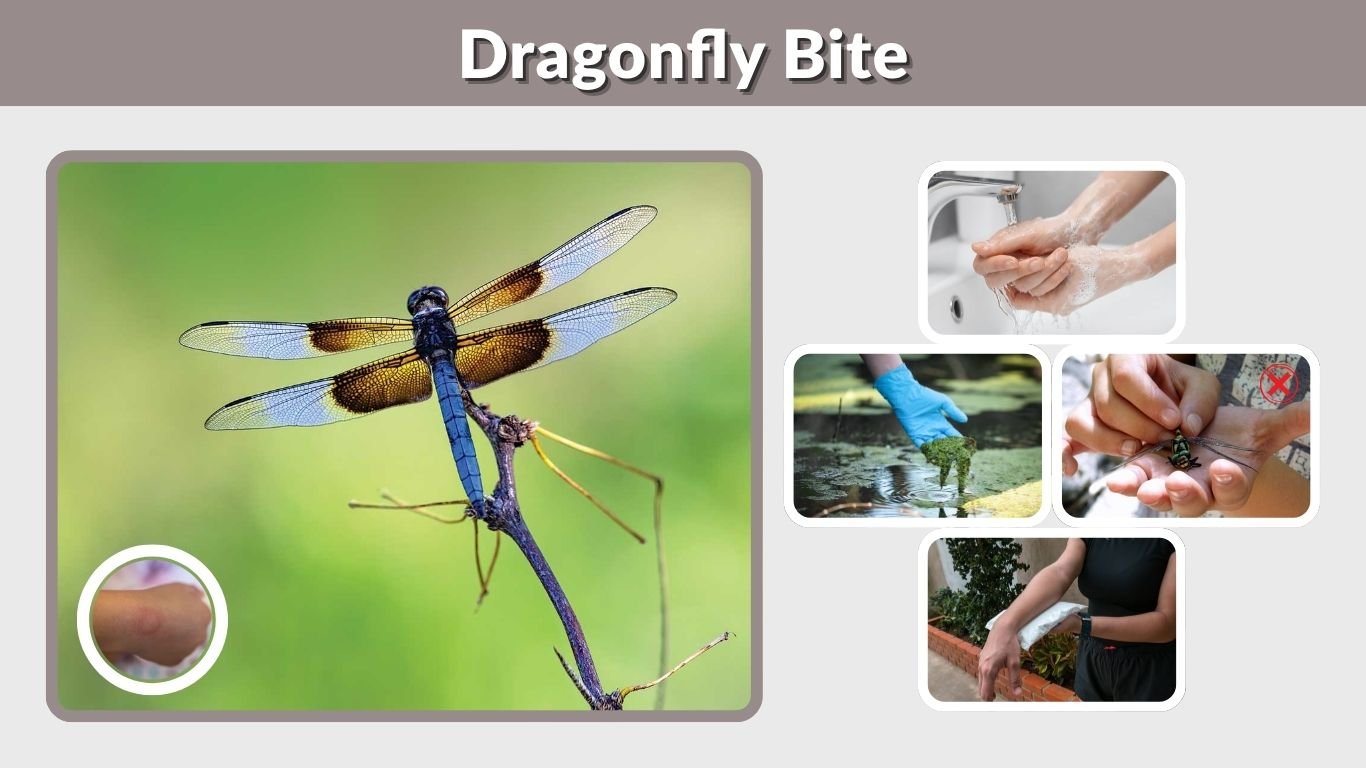
A dragonfly bite sounds alarming, especially when a large dragonfly lands on your skin. However, dragonflies do not normally attack humans and cannot sting. They possess strong chewing mouthparts for catching insects, but they may try to bite only when trapped, squeezed, or handled roughly. Most dragonflies cannot break human skin, although a very large species may produce a noticeable pinch or tiny superficial mark. Such bites are generally harmless and can be managed with simple first aid.
Can a Dragonfly Bite You?
Dragonflies are active predators equipped with mandibles for capturing mosquitoes, flies, midges, and other small insects. These mouthparts can technically pinch human skin. Nevertheless, a free-flying dragonfly has no reason to bite a person. Almost all reported incidents happen when someone catches or restrains the insect and it attempts to escape.
Why Would a Dragonfly Bite a Human?
A dragonfly may attempt to bite in self-defense under circumstances such as:
- Being held tightly in someone’s hand
- Becoming trapped inside clothing
- Being picked up by its wings or body
- Being handled during photography or collection
- Feeling unable to fly away from danger
Dragonflies do not pursue people for blood or food. Unlike mosquitoes, they have no biological reason to feed on humans.
Can Dragonflies Sting?
Dragonflies cannot sting because they do not possess a stinger. The long abdomen is sometimes mistaken for a stinging structure, but it contains no venom-injecting organ.
Female dragonflies have reproductive structures used to place eggs in water, mud, or aquatic plants. These structures are not used to attack humans. Traditional names such as “horse stinger” and “devil’s darning needle” are based on myths rather than the insect’s actual behavior.
What Does a Dragonfly Bite Look Like?
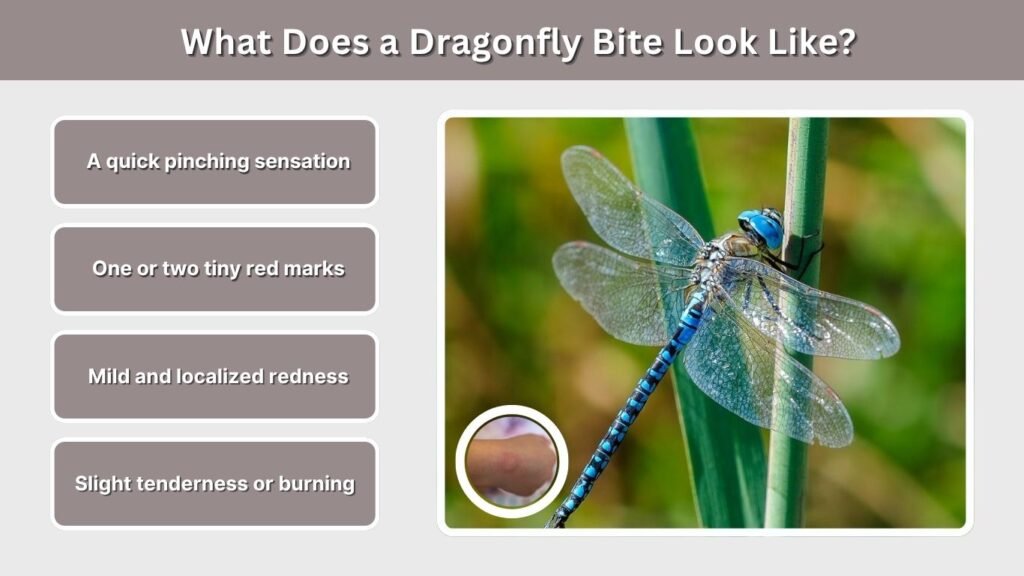
Because a genuine dragonfly bite is uncommon, many marks blamed on these insects are probably caused by mosquitoes, biting flies, ants, or other arthropods nearby. When a large dragonfly does pinch hard enough to affect the skin, the resulting mark is usually small, localized, and superficial rather than a spreading venomous wound.
Possible Dragonfly Bite Symptoms
A genuine bite or pinch may produce:
- A quick pinching sensation
- One or two tiny red marks
- Mild and localized redness
- Slight tenderness or burning
- Minor swelling around the mark
- A shallow scratch if the skin was broken
- Temporary discomfort when the area is touched
Symptoms should remain limited to the affected area and gradually improve. Dragonflies are not venomous, so their bites do not cause venom-related tissue damage.
What Does a Dragonfly Bite Feel Like?
A bite usually feels like a brief pinch. Small species may not be strong enough to produce any noticeable sensation, while large dragonflies can exert more pressure with their jaws.
If the insect releases its grip quickly, discomfort may disappear almost immediately. A stronger pinch may leave temporary soreness, but severe, spreading, or long-lasting pain would be unusual and may have another cause.
Are Dragonfly Bites Dangerous?
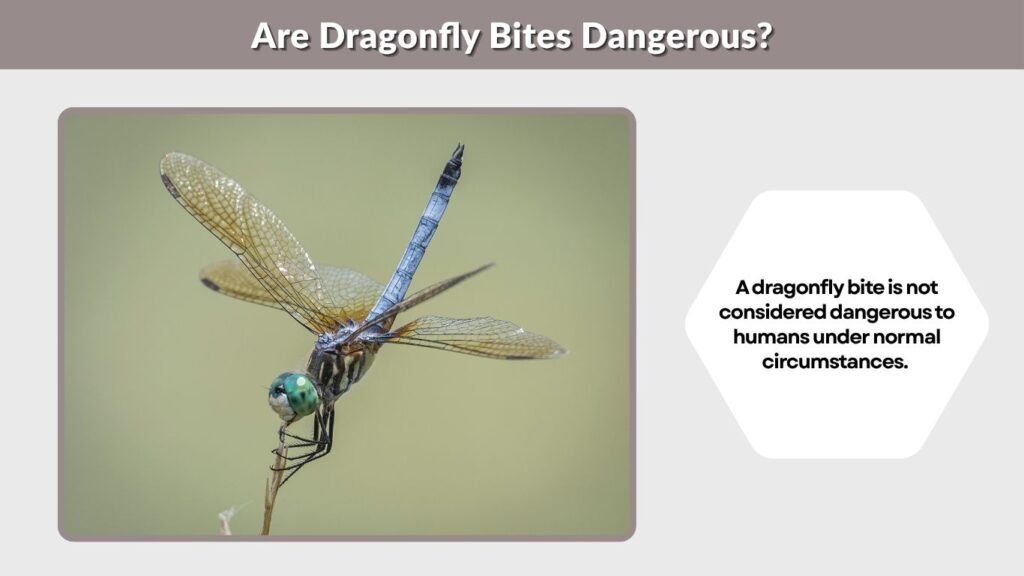
A dragonfly bite is not considered dangerous to humans under normal circumstances. Dragonflies lack venom, do not inject poison, and are not recognized as transmitters of human disease through biting. Even when a large individual breaks the skin, the injury is generally comparable to a minor scratch or superficial pinch.
Possible Risks After a Bite
Although serious reactions are not expected, watch for:
- Increasing redness around broken skin
- Growing swelling or warmth
- Pus or fluid coming from the wound
- Pain that becomes worse instead of better
- Red streaks extending from the affected area
- Fever or other signs of infection
These symptoms would be more consistent with a secondary skin infection or a different type of bite. They should be evaluated by a healthcare professional.
Can You Die From a Dragonfly Bite?
A dragonfly bite is not fatal. Dragonflies do not have medically significant venom, and their mouthparts are not adapted to feed on human blood.
Difficulty breathing, facial swelling, faintness, widespread hives, or other severe symptoms should never be assumed to be a normal dragonfly-bite reaction. Seek emergency medical assistance because another insect, an allergic reaction, or an unrelated medical problem may be responsible.
Dragonfly Bite Treatment

Most suspected bites need little more than basic skin care. Treatment should focus on cleaning any damaged skin, reducing discomfort, and preventing infection. If you did not see the insect bite you, avoid automatically assuming that every unexplained red bump is a dragonfly bite.
How to Treat a Dragonfly Bite
- Wash the area gently with soap and clean water.
- Pat the skin dry with a clean towel.
- Apply a wrapped cold pack for 10–15 minutes.
- Avoid scratching, squeezing, or repeatedly touching the mark.
- Cover broken skin with a clean, light dressing if necessary.
- Monitor the area for increasing redness, pain, or swelling.
- Ask a pharmacist or doctor before using medication on children.
A mild mark should improve without specialized treatment. Antibiotics, antivenom, and aggressive wound treatments are not normally necessary.
When Should You See a Doctor?
Contact a healthcare professional if the skin was deeply damaged, the discomfort persists, or the affected area becomes increasingly red, painful, warm, or swollen. Medical evaluation is also advisable when pus, fever, spreading redness, or red streaks appear.
Get urgent help for difficulty breathing, swelling of the lips or throat, fainting, severe dizziness, or widespread hives. Such symptoms are not typical of a dragonfly bite and require immediate assessment.
Do Large Dragonflies Bite Harder?
Larger dragonflies have stronger jaws because they capture relatively large flying prey. Species commonly described as giant darners, green darners, emperor dragonflies, golden-ringed dragonflies, or spiketails may therefore produce a more noticeable pinch when restrained. Their size does not make them aggressive toward people.
Giant Darner and Emperor Dragonfly Bites
A giant darner or emperor dragonfly could potentially break the skin if handled carelessly, although this remains unusual. The insect would be acting defensively rather than attempting to feed.
The same basic treatment applies regardless of species: wash the area, use a cold compress, and monitor any broken skin. Black, red, green, blue, and golden dragonflies do not present different bite risks simply because of their color.
Can Baby Dragonflies Bite?
Young dragonflies, called nymphs or naiads, live underwater and possess specialized mouthparts for catching aquatic prey. Larger nymphs may pinch if handled, but they do not actively hunt humans.
Avoid collecting them with bare hands. If you find one in pond vegetation or an aquarium sample, use a net or container and return it carefully without direct handling.
How to Prevent a Dragonfly Bite
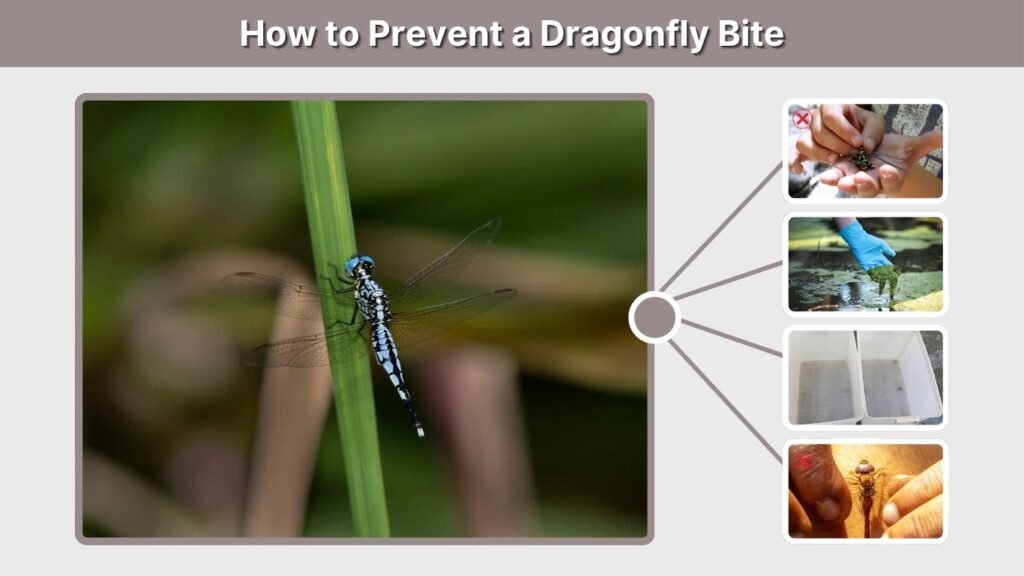
Avoiding a bite is simple because dragonflies do not naturally target people. Watching them without capturing them protects both you and the insect. Dragonflies are beneficial predators that consume mosquitoes, midges, flies, and other insects, so there is generally no reason to remove them from a yard or garden.
Safe Ways to Avoid Being Bitten
- Do not grab a dragonfly with your bare hands.
- Never squeeze its body or pull its wings.
- Allow a resting dragonfly to leave by itself.
- Use an open container to move one trapped indoors.
- Supervise children who want to touch large insects.
- Wear gloves when handling aquatic plants containing nymphs.
- Observe and photograph dragonflies without restraining them.
If one lands on you, remain calm. It is probably resting briefly and will normally fly away without causing harm.
FAQs
Do dragonflies bite or sting humans?
Dragonflies cannot sting. A large individual may try to bite when caught or handled, but dragonflies do not normally bite people during flight.
Does a dragonfly bite hurt?
It may feel like a brief pinch, particularly from a large species. Most dragonflies cannot break human skin, and any discomfort is generally mild and temporary.
What does a dragonfly bite mark look like?
A possible mark may appear as a tiny red spot, shallow scratch, or mildly swollen area. This appearance is not distinctive enough to confirm that a dragonfly caused it.
Is a dragonfly bite poisonous?
No. Dragonflies do not inject poison or venom when they bite. Their jaws are designed for chewing insect prey rather than delivering toxins.
Can a dragonfly bite become infected?
Any break in the skin can potentially become infected, especially when scratched or left dirty. Wash the area and seek medical advice if redness, warmth, swelling, pus, or pain continues to increase.