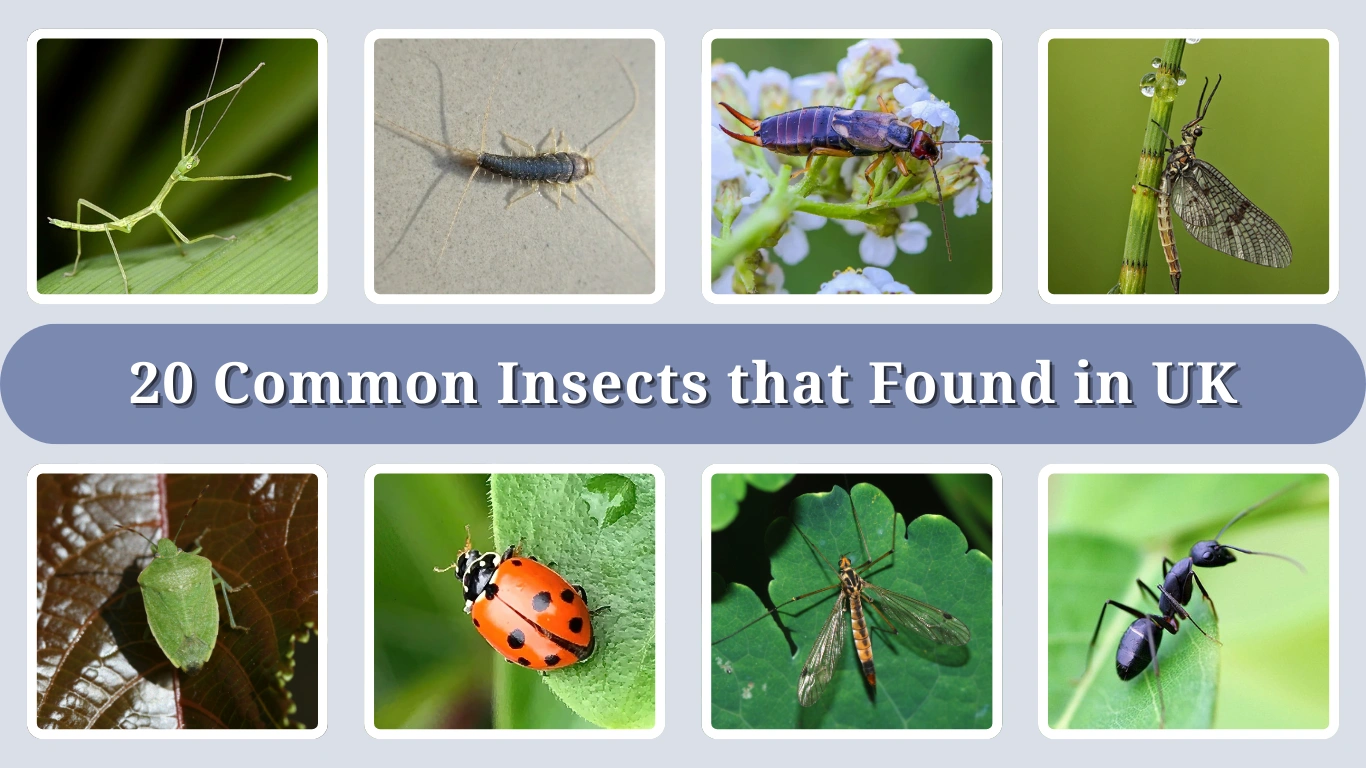
Insects play an important role in the UK ecosystem, but many can also bite or sting, leaving uncomfortable or even dangerous reactions on human skin. From common household pests to stinging garden visitors, recognising the insects around you can help with prevention and treatment. This guide introduces 20 key insects found in the UK, covering their identification, habitats, behaviours, and lifecycles for easy reference.
1. Mosquito

Mosquitoes are among the most common biting insects in the UK, known for their irritating bites that often cause redness, itching, and swelling. While they are more active in summer, warmer homes and gardens can also attract them. UK species are generally less dangerous than tropical ones, but they can still cause discomfort and allergic reactions.
Identification
- Small, slender-bodied insect with long legs.
- Typically grey, brown, or black in colour.
- Long, needle-like mouthparts (proboscis) for piercing skin.
- Wings often appear transparent with delicate veins.
Habitat
Mosquitoes thrive near stagnant or slow-moving water such as ponds, marshes, rainwater containers, and even blocked gutters. They are commonly found in gardens, wetlands, and coastal areas in the UK.
Behaviors
Mosquitoes are most active during dusk and dawn. Females feed on blood for egg development, while males consume nectar. They are drawn to body heat, carbon dioxide, and human scent, making people prime targets outdoors in summer evenings.
Lifecycle
The mosquito lifecycle has four stages: egg, larva, pupa, and adult. Eggs are laid on water surfaces, hatching within days. Larvae develop in water before maturing into adults. The entire process can take as little as 10–14 days in warm conditions.
2. Horsefly

Horseflies are large biting insects in the UK, known for their painful bites that can cause swelling, bruising, and even allergic reactions. They are strong fliers and often target livestock, pets, and humans in rural and wetland areas.
Identification
- Robust, dark body with large, patterned eyes.
- Clear or slightly smoky wings.
- Females have sharp, blade-like mouthparts for cutting skin.
- Size ranges from 1–2.5 cm.
Habitat
Commonly found near wetlands, rivers, meadows, and farmland. They thrive in humid conditions and are especially prevalent during the summer months in the UK.
Behaviors
Females are aggressive bloodsuckers, leaving behind noticeable bite marks that may resemble insect bite bruises. Males feed on nectar and do not bite. They are most active during hot, sunny days.
Lifecycle
Eggs are laid on vegetation near water. After hatching, larvae drop into moist soil or water to feed before pupating. Development may take up to a year, depending on environmental conditions.
3. Midge (Highland Midge)

Midges are tiny but notorious biting insects in the UK, especially in Scotland, where they can appear in dense swarms. Their bites often cause small red spots and intense itching.
Identification
- Very small, usually 1–3 mm in size.
- Dark, gnat-like body.
- Short legs and wings.
- Often seen in swarms.
Habitat
They breed in damp soil, marshes, woodland edges, and grassy areas near water. Midges are especially abundant in the Scottish Highlands and other moist regions of the UK.
Behaviors
Only female midges bite, using their sharp mouthparts to draw blood. They are most active in overcast, humid, and calm weather. Their bites can be numerous, making outdoor activities uncomfortable.
Lifecycle
Eggs are laid in wet soil or boggy ground. Larvae develop in moist conditions, feeding on decaying organic matter. They pupate and emerge as adults within weeks, with peak activity from late spring through early autumn.
4. Bedbug

Bedbugs are household biting insects in the UK that cause itchy red bites, often appearing in clusters or lines on exposed skin. They are not known to transmit diseases but can lead to significant discomfort, sleeplessness, and allergic reactions.
Identification
- Small, flat, oval-shaped body (4–6 mm long).
- Reddish-brown in colour, turning darker after feeding.
- No wings; move quickly across surfaces.
- Bites often appear on arms, neck, or face.
Habitat
Bedbugs thrive in human environments—particularly in beds, mattresses, furniture seams, carpets, and cracks in walls. They are often introduced through second-hand furniture or luggage after travel.
Behaviors
Primarily nocturnal, bedbugs hide during the day and emerge at night to feed. They detect body heat and carbon dioxide, feeding on exposed skin areas. Their bites are painless initially but become itchy and inflamed later.
Lifecycle
Females lay tiny white eggs in secluded cracks. Eggs hatch within 7–10 days. Bedbugs pass through five nymphal stages before adulthood, requiring a blood meal at each stage. They can survive several months without feeding, making eradication difficult.
5. Flea

Fleas are common biting insects in UK homes, especially in houses with pets. Their bites typically appear as small red spots surrounded by halos, often around ankles and legs.
Identification
- Tiny, wingless insect (2–3 mm long).
- Laterally flattened body, reddish-brown in colour.
- Strong legs allow them to jump great distances.
- Bites are often grouped in threes (known as “breakfast, lunch, and dinner” pattern).
Habitat
Fleas thrive in homes with cats, dogs, and other animals. They live in carpets, pet bedding, furniture, and cracks in floors. Outdoors, they are found in shaded, humid areas.
Behaviors
Adult fleas feed on the blood of animals and occasionally humans. They are highly mobile, jumping onto passing hosts. Flea infestations spread rapidly if untreated. Their bites can cause allergic reactions and transmit tapeworms to pets.
Lifecycle
Eggs are laid on host animals but quickly fall into the environment. Larvae develop in carpets, bedding, and soil, feeding on organic debris. They spin cocoons and emerge as adults when they detect vibrations, heat, or carbon dioxide, ensuring a host is nearby.
6. Tick

Ticks are blood-sucking arachnids common in the UK, particularly in grassy and wooded areas. Their bites can transmit infections such as Lyme disease, making them one of the most medically important biting insects in the region.
Identification
- Small, flat-bodied arachnids (2–3 mm unfed; swell to 10 mm when engorged).
- Eight legs (like spiders).
- Reddish-brown to dark grey.
- No wings or antennae.
Habitat
Ticks thrive in long grass, woodlands, heathlands, and areas with abundant wildlife such as deer. They are often found in rural and suburban gardens where animals pass through.
Behaviors
Ticks attach themselves to hosts (humans, pets, livestock) to feed on blood. They climb onto grass tips and wait for a host to brush past. Once attached, they may feed for several days. Bites are usually painless, which allows infections to spread unnoticed.
Lifecycle
Ticks undergo four life stages: egg, larva, nymph, and adult. Each stage requires a blood meal to progress. The full lifecycle can take up to three years, depending on climate and availability of hosts.
7. Wasp

Wasps are one of the most feared stinging insects in the UK, especially during late summer when they become more aggressive. Their stings are painful and can trigger severe allergic reactions in some individuals.
Identification
- Black and yellow striped body, narrow waist.
- Smooth, shiny body (unlike hairy bees).
- About 1–2 cm in size.
- Two pairs of wings and strong mandibles.
Habitat
Wasps build papery nests in sheltered places such as roof spaces, sheds, lofts, trees, and wall cavities. They are widespread across the UK in both urban and rural areas.
Behaviors
Wasps are social insects living in colonies. Workers scavenge for sugary foods and protein. Unlike bees, wasps can sting multiple times. They are most aggressive in late summer when colonies start to collapse and food sources run low.
Lifecycle
A queen starts the colony in spring, laying eggs that become workers. Throughout summer, workers maintain the nest and feed larvae. By autumn, new queens and males emerge, mate, and the old colony dies off. Fertilised queens hibernate until the next spring.
8. Hornet (European Hornet)

Hornets are the largest stinging insects in the UK, related to wasps but generally less aggressive unless provoked. Their sting is painful, and multiple stings can be dangerous, though they rarely attack without reason.
Identification
- Large insect, 2.5–3.5 cm long.
- Brown and yellow striped abdomen (less bright than wasps).
- Broad head with reddish-brown markings.
- Strong wings and loud buzzing flight.
Habitat
Hornets prefer rural areas, woodlands, orchards, and gardens. They nest in hollow trees, sheds, attics, and sometimes underground. Their paper nests are larger than wasp nests and usually hidden.
Behaviors
Hornets are social insects living in colonies. They hunt flies, caterpillars, and other insects, making them useful natural pest controllers. They are mostly active in the evening and less attracted to human food than wasps. However, if disturbed near the nest, they can sting repeatedly.
Lifecycle
Queens emerge from hibernation in spring to establish new colonies. Workers hatch in early summer and build up the nest. Colonies reach peak size in late summer to autumn. After producing new queens and males, the colony dies, and fertilised queens overwinter.
9. Honeybee

Honeybees are important pollinators in the UK and are also known for their defensive sting. Unlike wasps, a honeybee dies after stinging because the barbed stinger lodges in the skin.
Identification
- Small, hairy body, golden-brown with black bands.
- Size: around 1.2–1.5 cm long.
- Hind legs often carry pollen in “pollen baskets.”
- Slow, steady flight compared to wasps.
Habitat
Honeybees live in managed hives kept by beekeepers and in wild colonies inside tree hollows, walls, or roof spaces. They are widespread across the UK, particularly near gardens, fields, and orchards where flowering plants are abundant.
Behaviors
Honeybees are social insects forming large colonies of tens of thousands. They collect nectar and pollen, producing honey as a food reserve. Generally non-aggressive while foraging, they sting mainly to defend the hive. Their sting can trigger allergic reactions in sensitive individuals.
Lifecycle
The colony is active year-round. The queen lays eggs daily, workers perform tasks (foraging, hive maintenance, brood care), and drones (males) mate with new queens. Colonies reproduce by swarming, where a new queen and workers leave to establish another hive. Honeybees survive winter by clustering together and feeding on stored honey.
10. Bumblebee

Bumblebees are large, hairy insects that play an essential role in pollination across the UK. They are generally gentle compared to wasps and hornets, but they can sting if handled or threatened.
Identification
- Robust, round, and furry body.
- Black and yellow bands (some species may have orange or white).
- Size: 1.5–2.5 cm long.
- Slow, buzzing flight.
Habitat
Bumblebees live in small colonies in underground burrows, compost heaps, wall cavities, and grassy banks. They are found throughout the UK in gardens, meadows, and farmland where flowers are abundant.
Behaviors
Bumblebees are social insects but live in smaller colonies than honeybees. They forage on flowers for nectar and pollen and are active even in cooler temperatures. They rarely sting unless provoked, and unlike honeybees, they can sting multiple times.
Lifecycle
Queens emerge in spring to start new colonies. Early broods become workers that expand the nest. Colonies grow through summer, producing males and new queens in late summer. After mating, fertilised queens hibernate, while the rest of the colony dies off in autumn.
11. Ant (Black Garden Ant)

Black garden ants are among the most common insects in UK homes and gardens. While they do not usually bite humans, their large colonies can be a nuisance when they invade houses in search of food.
Identification
- Small, shiny black body (3–5 mm long).
- Elbowed antennae.
- Narrow waist between thorax and abdomen.
- Winged “flying ants” appear in summer.
Habitat
They nest in soil, lawns, paving cracks, walls, and beneath stones. Colonies are often close to human settlements, where food is readily available.
Behaviors
Black ants are social insects living in colonies with a single queen and thousands of workers. They are scavengers, often attracted indoors by sweet foods. During summer, winged males and females (flying ants) swarm for mating, a phenomenon known as “Flying Ant Day” in the UK.
Lifecycle
The queen lays eggs that develop into larvae, pupae, and then workers. Colonies can survive for many years. New queens mate during nuptial flights in summer and establish fresh colonies the following spring.
12. Firefly (Glow-worm)

In the UK, “firefly” usually refers to the glow-worm (Lampyris noctiluca), a beetle rather than a true fly. They are famous for their bioluminescence, used by females to attract males during mating. They are harmless to humans.
Identification
- Females: wingless, worm-like, up to 2 cm long.
- Males: small beetles with brown wing cases and large eyes.
- Glow: produced by females at night, greenish-yellow light.
- Found mainly in June and July.
Habitat
Glow-worms prefer chalk grasslands, hedgerows, woodland edges, and meadows. They are found in southern and central UK but are patchy and declining due to habitat loss and light pollution.
Behaviors
Females climb grass stems at night and glow to attract flying males. Males locate them using both sight and scent. Larvae and adults feed mainly on snails and slugs.
Lifecycle
Eggs are laid in damp soil or moss. Larvae take 1–3 years to mature, feeding on soft-bodied invertebrates. After pupation, adults emerge in summer. Males live only a few weeks, while females die soon after laying eggs.
13. Crane Fly (Daddy Longlegs)

Crane flies, often called “daddy longlegs” in the UK, are large, fragile-looking insects. Though harmless, they are often mistaken for giant mosquitoes.
Identification
- Long, slender legs and narrow body.
- Size: body length 1–3 cm, leg span up to 6 cm.
- Brown or grey body with transparent wings.
- No biting mouthparts.
Habitat
Crane flies breed in damp soil, lawns, fields, and meadows. They are common in gardens and houses during late summer and autumn, often attracted indoors by light.
Behaviors
Adult crane flies do not bite or sting. They feed little, if at all, and live only a few days. Larvae, known as “leatherjackets,” feed on grass roots and can damage lawns and crops.
Lifecycle
Eggs are laid in soil in autumn. Larvae (leatherjackets) feed underground for several months, sometimes causing brown patches in grass. Pupation occurs in late spring or early summer, with adults emerging from August to October.
14. Lacewing

Lacewings are delicate, beneficial insects in the UK, known for their striking green colour and net-like wings. They are important predators of garden pests and are completely harmless to humans.
Identification
- Slender, soft-bodied insect about 1 — 1.5 cm long.
- Bright green body (some species brown).
- Large, transparent wings with a fine lace-like network.
- Golden or copper-coloured eyes.
- Long, thin antennae.
Habitat
Lacewings are commonly found in gardens, hedgerows, meadows, and woodlands. They often enter houses in late summer and autumn while seeking shelter for overwintering.
Behaviors
Adult lacewings feed on nectar, pollen, and honeydew, but the larvae (known as “aphid lions”) are voracious predators of aphids, mites, whiteflies, and other soft-bodied pests. They are highly beneficial for natural pest control in gardens and agriculture.
Lifecycle
Eggs are laid on vegetation, each on the tip of a slender stalk to protect them from cannibalism. Larvae hatch and feed on pests for 2–3 weeks before pupating. Adults emerge and may live for several months. Many overwinter as adults in sheltered places such as sheds or leaf litter.
15. Ladybird

Ladybirds (often called ladybugs) are one of the most recognisable insects in the UK. They are beloved for their bright colours and are highly beneficial in gardens, as they feed on plant pests such as aphids. They are harmless to humans and do not bite or sting.
Identification
- Small, dome-shaped beetle, 4–8 mm long.
- Bright red, orange, or yellow wing cases with black spots (though some species are black with red or white spots).
- Black legs, head, and antennae.
- Harlequin ladybird (an invasive species) can vary in colour and pattern.
Habitat
Ladybirds live in gardens, hedgerows, woodlands, meadows, and parks across the UK. They are commonly found on plants infested with aphids or scale insects. In autumn, they often enter houses to hibernate.
Behaviors
Ladybirds are voracious predators of aphids and other plant pests, making them a natural pest-control ally. When threatened, they release a yellow fluid (reflex bleeding) that has a strong smell to deter predators. In winter, many species cluster together to hibernate in sheltered spots.
Lifecycle
Females lay clusters of small yellow eggs on the underside of leaves near aphid colonies. The larvae are long, spiky, and dark with orange markings, feeding on aphids before pupating. After about a week, the adult emerges from the pupa. A ladybird’s lifecycle can take 4–7 weeks, with multiple generations in a warm season.
16. Shield Bug (Stink Bug)

Shield bugs, also called stink bugs, are distinctive insects in the UK named after their shield-shaped bodies. While they do not bite or sting humans, they can release a strong odor when handled. Some species are native, while others, like the green shield bug, are more common in gardens.
Identification
- Flat, shield-shaped body (10–15 mm long).
- Colours vary: green, brown, or patterned, depending on species.
- Long antennae and piercing-sucking mouthparts.
- Nymphs resemble smaller, wingless versions of adults.
Habitat
Shield bugs are found in gardens, woodlands, hedgerows, and farmlands. They live on a wide range of plants, feeding on sap from leaves, stems, seeds, and fruits.
Behaviors
They are generally harmless to humans but may damage crops and garden plants by piercing and sucking plant juices. When threatened, they release a pungent odor from scent glands as a defence mechanism.
Lifecycle
Females lay clusters of barrel-shaped eggs on the underside of leaves. Nymphs hatch and pass through five stages (instars), gradually developing wings. Adults overwinter in sheltered spots, such as leaf litter, bark, or homes, and re-emerge in spring to reproduce.
17. Mayfly

Mayflies are delicate, short-lived flying insects commonly found near rivers and lakes in the UK. They are harmless to humans and are best known for their spectacular mass emergencies in late spring and summer.
Identification
- Slender body with two or three long tail filaments.
- Transparent, triangular wings held upright like a butterfly.
- Size: 1–2 cm, though some species can be larger.
- Adults have short antennae and lack functional mouthparts.
Habitat
Mayflies live in and around freshwater habitats—rivers, streams, ponds, and lakes. Nymphs (aquatic stage) are indicators of clean water, making them important in ecological monitoring. Adults swarm over water during their brief adult stage.
Behaviors
Adult mayflies do not feed and live only a few hours to a few days, focusing solely on reproduction. They form mating swarms over water, after which females lay eggs on the water’s surface. Nymphs, however, are active for months or years, feeding on algae and detritus.
Lifecycle
Mayflies undergo an incomplete metamorphosis: egg → nymph → subimago (winged stage) → adult. Nymphs live underwater for up to two years before emerging. The unique subimago stage is a dull-winged, immature adult that molts once more to become the fully mature, shiny-winged imago.
18. Earwig

Earwigs are common insects in the UK, often recognised by the pincers on their abdomen. Despite their appearance, they are harmless to humans and do not spread disease. They can occasionally nip if handled but are not dangerous.
Identification
- Slender, elongated body, 1–2 cm long.
- Dark brown or reddish-brown in colour.
- Characteristic forceps-like pincers at the rear (larger in males).
- Short wings folded under small wing cases, though rarely used for flying.
Habitat
Earwigs live in damp, dark environments such as under logs, stones, flower pots, compost heaps, and garden debris. They often enter houses, especially bathrooms and kitchens, in search of moisture and shelter.
Behaviors
Earwigs are nocturnal and hide during the day. At night, they feed on a variety of materials: decaying plant matter, fungi, and occasionally live plants or insects. Though sometimes seen as pests, they also eat aphids and other small garden pests, making them beneficial.
Lifecycle
Females lay eggs in the soil during late winter or early spring. Unlike many insects, female earwigs guard their eggs and young until the nymphs are independent. Nymphs resemble small adults and go through several molts before maturing. Adults may live through summer into autumn, with some surviving mild winters.
19. Silverfish

Silverfish are ancient, wingless insects commonly found in UK homes, especially in damp or humid areas. They are harmless to humans but are considered household pests because they feed on starchy materials and can damage books, wallpaper, and fabrics.
Identification
- Small, elongated, and flattened body (10–15 mm long).
- Silvery-grey, metallic scales covering the body.
- Long antennae and three tail-like appendages at the rear.
- Fast, wriggling, fish-like movement.
Habitat
Silverfish prefer dark, humid environments. They are frequently found in bathrooms, kitchens, basements, attics, and underfloor areas. They hide in cracks, crevices, behind skirting boards, or under damp wallpaper.
Behaviors
Nocturnal and shy, silverfish avoid light and come out at night to feed. They consume carbohydrates such as paper, glue, flour, fabrics, and even dust. Though harmless to humans, they can cause gradual damage to household items.
Lifecycle
Silverfish undergo incomplete metamorphosis. Eggs are laid in hidden crevices and hatch within a few weeks. Nymphs resemble smaller adults and molt many times throughout their lives. Silverfish can live for several years, making infestations persistent if conditions remain damp.
20. Stick Insect

Stick insects are exotic pets in the UK, though they are not native. They are harmless, plant-eating insects that resemble twigs or branches, using camouflage as their main defence. Several species are kept by hobbyists, including the Indian stick insect (Carausius morosus).
Identification
- Long, slender, twig-like body (5–10 cm, depending on species).
- Usually green or brown, matching vegetation.
- Wingless in most UK-kept species.
- Slow-moving and excellent at camouflage.
Habitat
In the wild, stick insects are native to tropical and subtropical regions, living in trees and shrubs. In the UK, they are mainly kept in terrariums by insect enthusiasts. Escaped populations occasionally survive in mild coastal areas (e.g., Cornwall).
Behaviors
Stick insects are nocturnal feeders, remaining still during the day to avoid predators. Their camouflage helps them blend with leaves and twigs. Some species can drop limbs to escape predators and regenerate them during molts. They are herbivorous, feeding on bramble, ivy, oak, and rose leaves in captivity.
Lifecycle
Most UK pet stick insects reproduce parthenogenetically (females lay fertile eggs without males). Eggs are dropped onto the ground and resemble plant seeds. After several months, nymphs hatch and gradually grow into adults through multiple molts. Adults live for around 1 year.