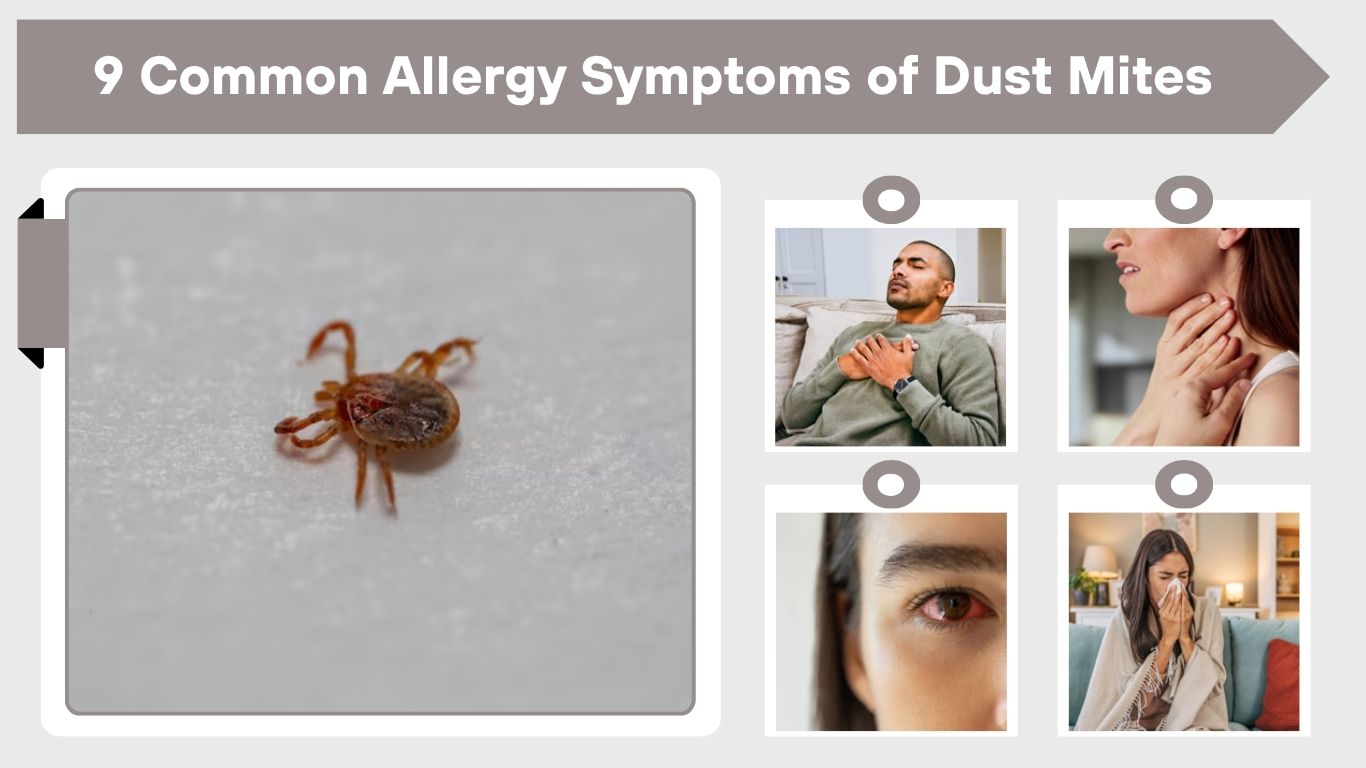
Dust mites are tiny, invisible creatures that thrive in household dust, especially in bedding, carpets, and upholstery. While they don’t bite, their waste and body fragments can trigger allergic reactions in many people. These reactions often mimic common cold symptoms but can persist much longer. Understanding the signs of dust mite allergies can help you identify the problem early and take steps to reduce exposure and manage symptoms effectively.
1. Sneezing

Overview: Sneezing is one of the most common and immediate reactions to dust mite allergens, especially when you’re exposed to them indoors.
When Sneezing Becomes Persistent
Occasional sneezing is normal, but with dust mite allergies, it often becomes frequent and repetitive. You may find yourself sneezing multiple times in a row, especially in the morning or while cleaning.
Triggers Inside the Home
Dust mites live in mattresses, pillows, curtains, and carpets. Activities like making your bed or sweeping can stir them into the air, triggering sneezing.
How It Differs from a Cold
Unlike a cold, allergy-related sneezing doesn’t come with fever or body aches and can last for weeks or months if exposure continues.
2. Runny or Stuffy Nose

Overview: Dust mite allergies commonly cause nasal irritation, leading to either a constantly runny nose or ongoing congestion.
Constant Nasal Congestion
Many people experience a blocked nose that makes breathing difficult, especially at night or early in the morning.
Clear vs Thick Mucus
Allergic reactions typically produce clear, watery mucus, unlike infections that may cause thicker, yellow or green discharge.
Morning Symptoms
Symptoms are often worse after waking up because dust mites thrive in bedding where prolonged exposure occurs overnight.
3. Itchy, Red, or Watery Eyes

Overview: Eye irritation is a frequent symptom caused by airborne dust mite allergens coming into contact with the eyes.
Why Eyes React to Dust Mites
When allergens enter the eyes, they trigger histamine release, leading to redness, itching, and excessive tearing.
Signs of Allergic Conjunctivitis
You may notice swollen eyelids, burning sensations, or sensitivity to light—classic signs of allergy-related eye inflammation.
Common Mistakes People Make
Rubbing the eyes can worsen irritation and even lead to infection, so it’s important to avoid touching them frequently.
4. Coughing

Overview: Dust mites can irritate the throat and airways, leading to a persistent cough that may be mistaken for a respiratory issue.
Dry vs Productive Cough
Allergy-related coughing is usually dry and non-productive, meaning it doesn’t bring up mucus like infections often do.
Nighttime Coughing
Symptoms may worsen at night due to increased exposure to dust mites in bedding.
When to Be Concerned
If coughing becomes chronic or interferes with sleep, it may indicate an underlying allergic condition or asthma.
5. Postnasal Drip

Overview: Postnasal drip occurs when excess mucus from the nose drips down the back of the throat, causing discomfort.
What Causes Postnasal Drip
Dust mite allergens trigger mucus production, which accumulates and drains into the throat.
Symptoms You May Notice
You may feel a constant need to clear your throat, along with irritation or a mild sore throat.
Long-Term Effects
If untreated, postnasal drip can lead to chronic throat irritation and even coughing.
6. Itchy Nose, Mouth, or Throat

Overview: One of the more irritating symptoms of dust mite allergies is persistent itching in the nose, mouth, or throat, often occurring alongside sneezing and congestion.
Why Itching Happens
Dust mite allergens trigger the immune system to release histamine, a chemical responsible for the itching sensation. This reaction can affect multiple areas of the upper respiratory tract at once.
Most Affected Areas
The roof of the mouth, inside the nose, and the back of the throat are especially sensitive. Many people describe a tingling or crawling feeling that makes them want to scratch or rub the area.
Relief Methods
Avoiding allergens is key, but antihistamines and saline rinses can help reduce irritation. Keeping indoor air clean and humidified may also ease symptoms over time.
7. Facial Pressure or Sinus Pain

Overview: Dust mite allergies can lead to inflammation in the sinuses, causing pressure and discomfort around the face.
Sinus Blockage Explained
When nasal passages become inflamed, mucus gets trapped in the sinus cavities. This buildup creates a feeling of fullness or pressure, especially around the cheeks, nose, and forehead.
Pain Around Eyes and Forehead
You may feel dull or throbbing pain behind the eyes or across the forehead. This discomfort often worsens when bending forward or lying down.
Chronic Sinus Issues
If exposure to dust mites continues, sinus inflammation can become long-term, increasing the risk of sinus infections or chronic sinusitis.
8. Skin Irritation or Eczema Flare-Ups

Overview: Dust mites don’t just affect the respiratory system—they can also trigger skin reactions, particularly in people with sensitive skin or eczema.
Connection Between Dust Mites and Eczema
Proteins found in dust mite waste can irritate the skin and weaken its protective barrier. This makes it easier for inflammation and dryness to develop.
Common Areas Affected
Eczema flare-ups often appear on the face, neck, hands, and inside the elbows or knees. The skin may become red, dry, cracked, and intensely itchy.
Managing Skin Symptoms
Regular moisturizing, using hypoallergenic bedding, and washing fabrics in hot water can help reduce exposure. In more severe cases, medicated creams may be necessary.
9. Difficulty Breathing or Asthma Symptoms

Overview: In more severe cases, dust mite allergies can affect the lower airways, leading to breathing difficulties or worsening asthma.
Wheezing and Shortness of Breath
You may notice a whistling sound when breathing (wheezing) or feel like you can’t take a full breath. These symptoms can be especially alarming and should not be ignored.
Asthma Triggers
Dust mites are a common indoor trigger for asthma attacks. Exposure can cause airway inflammation, tightening of chest muscles, and increased mucus production.
When to Seek Medical Help
If you experience frequent breathing problems, chest tightness, or severe wheezing, it’s important to consult a healthcare professional. Early treatment can prevent complications and improve quality of life.
FAQs
1. What causes dust mite allergies?
Dust mite allergies are caused by proteins found in the mites’ waste and body fragments. When these particles become airborne and are inhaled, the immune system mistakenly identifies them as harmful, triggering allergic reactions like sneezing, congestion, and itching.
2. How do I know if I have a dust mite allergy?
Common signs include persistent sneezing, runny or stuffy nose, itchy eyes, and symptoms that worsen indoors—especially in the morning or when cleaning. A doctor can confirm the allergy through skin or blood tests.
3. Where are dust mites commonly found in the home?
Dust mites thrive in warm, humid environments and are most commonly found in mattresses, pillows, bedding, carpets, curtains, and upholstered furniture. These areas provide the ideal conditions for them to grow.
4. Can dust mite allergies be cured?
There is no permanent cure, but symptoms can be effectively managed. Reducing exposure, using medications like antihistamines, and in some cases, allergy immunotherapy can significantly improve quality of life.
5. How can I reduce dust mites in my home?
Wash bedding in hot water weekly, use allergen-proof mattress and pillow covers, vacuum regularly with a HEPA filter, and keep indoor humidity low. Removing carpets and heavy curtains can also help reduce dust mite buildup.