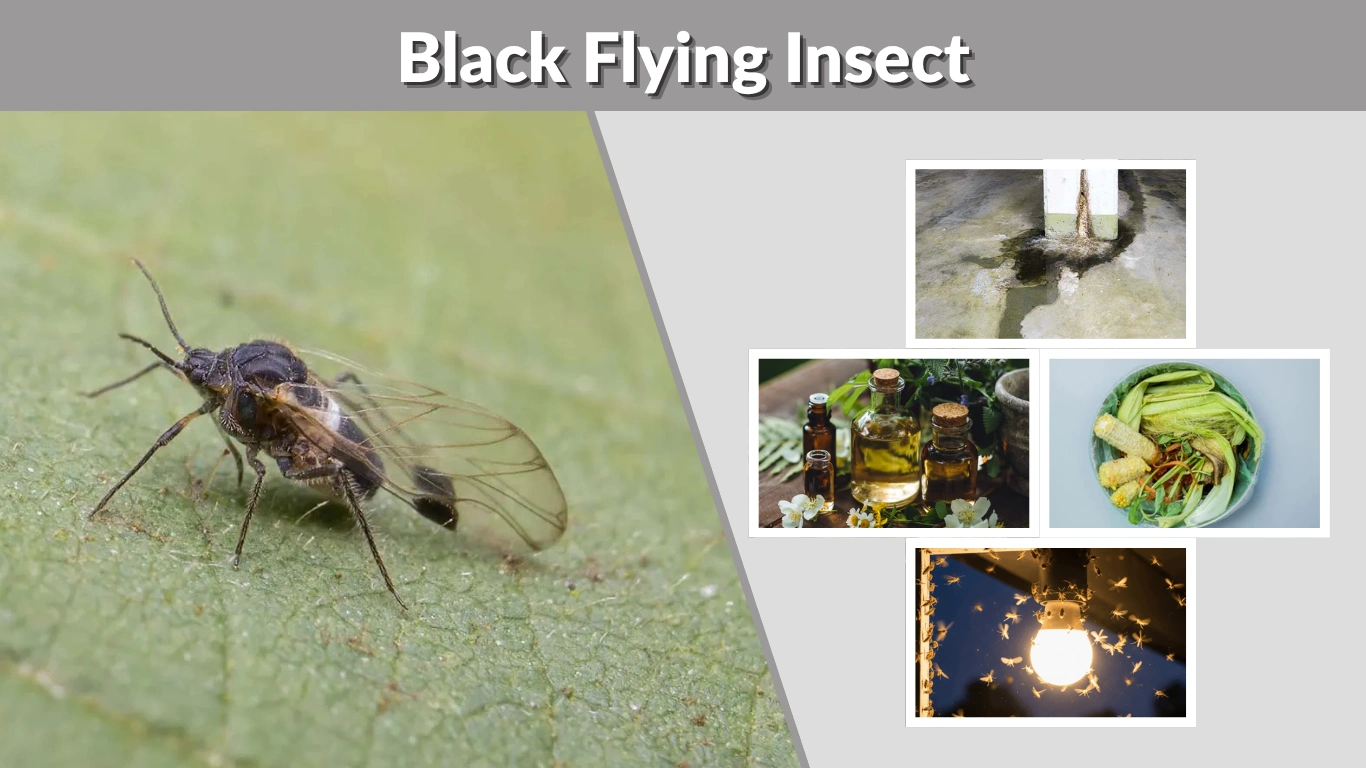
Black flying insects are some of the most commonly encountered pests, both indoors and outdoors. While some are harmless pollinators, others can bite, sting, or damage property. They vary greatly in size—from tiny gnats to large hornets—and may feature colorful markings like red, yellow, or white stripes. Learning how to identify these insects helps you handle them safely and protect your home from infestations.
Identification of Black Flying Insects

Appearance and Size
Black flying insects differ widely in body shape, size, and behavior. Small species such as gnats and black flies are often found near moisture, while larger species like carpenter bees or wasps are more active outdoors. Their bodies may appear glossy or dull, and some have visible hairs or stripes. The average size can range from just a few millimeters to over two inches in length.
Color and Markings
Though many appear completely black, others show distinct patterns:
- Black and yellow: Common in wasps and hornets.
- Black and white: Seen in bald-faced hornets or certain moths.
- Red and black: Found in firebugs and some beetles.
- Orange and black: Common among wasps and soldier beetles.
These colors often serve as warning signals, alerting predators and humans that the insect can sting or defend itself.
Common Body Features
- Long legs: Crane flies and ichneumon wasps have noticeably long legs.
- Stingers or tails: Female wasps and hornets use stingers defensively, while long “tails” in ichneumon wasps are harmless ovipositors for laying eggs.
- Wings: Most black flying insects have two pairs of wings, though some, like flies, have only one.
Common Types of Black Flying Insects

Black Flies
These tiny, dark-colored insects are typically found near rivers and streams. They feed on blood, often biting humans and animals. While their bites are painful, they are more of a nuisance than a threat in most regions.
Carpenter Bees
Carpenter bees are large black insects resembling bumblebees but with shiny, hairless abdomens. They bore into wooden structures to build nests, creating round holes in fences, eaves, or decks. Though intimidating, they rarely sting unless provoked.
Black Wasps and Hornets
These are among the most recognizable and feared black flying insects. Large black wasps, such as the great black wasp, are solitary and help control other pests by feeding on caterpillars. Hornets, like the bald-faced hornet with white stripes, live in colonies and defend their nests aggressively.
Crane Flies and Long-Legged Insects
Often mistaken for giant mosquitoes, crane flies have long, thin legs and fragile wings. Despite their size, they do not bite or sting and pose no threat. They are most active at night and are attracted to lights.
Black Soldier Flies
These medium-sized insects have dark metallic bodies and transparent wings. Although they may look intimidating, black soldier flies are harmless and even beneficial. Their larvae help decompose organic waste, and the species is now used for insect protein powder in sustainable human and animal diets.
Color Variations and Their Meanings

Red and Black Flying Insects
Insects with red and black coloration—such as firebugs, red wasps, or certain beetles—use bright colors as a warning mechanism. This pattern often signals venom or an unpleasant taste, discouraging predators.
Yellow and Black Flying Insects
These include familiar stinging insects like wasps, bees, and hornets. Their striped bodies warn of their ability to sting, making them one of nature’s most effective defense mechanisms.
Black and White Flying Insects
Bald-faced hornets and some moths show white patches or stripes against black bodies. The contrast helps them stand out as warning species while aiding recognition among their kind.
Orange and Black Flying Insects
Species such as orange wasps and soldier beetles display vivid orange and black combinations. These bright colors communicate toxicity or distaste to predators, protecting the insect from being eaten.
Black Flying Insects Found Indoors

Tiny and Small Black Flying Insects
In homes, you might encounter tiny black gnats, fruit flies, or drain flies. They gather around kitchen drains, garbage bins, and overwatered houseplants. These insects thrive in moist conditions and organic debris but are not dangerous.
Biting or Stinging Indoor Species
Some tiny black biting flies may sneak indoors through open windows or screens. They are drawn to light and warmth, particularly during humid months. Their bites cause minor irritation but rarely serious harm.
Entry Points and Attraction
Black flying insects enter homes through cracks, vents, and poorly sealed windows. They are often attracted by:
- Bright indoor lights at night
- Moisture or standing water
- Sweet food residues or fruit
- Warmth and shelter during cooler seasons
Dangerous and Stinging Black Flying Insects

Wasps and Hornets
Wasps and hornets are among the most aggressive black flying insects. They defend their nests fiercely and can sting multiple times. The sting causes immediate pain, redness, and swelling. Some people may experience allergic reactions that require medical attention. Black hornets, bald-faced hornets, and paper wasps are the most common stinging varieties found near homes and gardens.
Black Biting Flies
Black flies and horseflies belong to a group of biting insects that feed on blood. They are small but can cause significant irritation. Their bites often result in red bumps and itching. These flies are most active near water sources during warm months and are drawn to humans by body heat and carbon dioxide.
Long-Tailed or Stinger-Like Insects
Certain insects, such as ichneumon wasps, have long tails that look like stingers but are actually ovipositors used for laying eggs. They are harmless to humans and often prey on pests like caterpillars, making them beneficial in natural pest control.
How to Control Black Flying Insects

Remove Breeding Sources
Start by eliminating what attracts them. Clean up decaying organic matter, seal trash bins tightly, and remove standing water. Fix leaks in sinks or pipes to prevent damp environments that encourage breeding.
Safe Nest Removal
If hornets or wasps have built a nest near your home, do not attempt to remove it during the day. Instead, contact pest-control professionals or apply treatment at night when insects are less active. Always wear protective clothing to avoid stings.
Natural and Preventive Methods
- Essential oils: Peppermint, citronella, and lemongrass repel flying insects naturally.
- Lighting control: Use yellow or LED lights outside; these are less attractive to insects.
- Clean drains and surfaces: Prevent buildup of residue that attracts small black flies.
- Plant management: Avoid overwatering houseplants, which can harbor gnats and fungus flies.
Outdoor Prevention Tips
Trim overgrown vegetation, remove fallen fruit, and cover compost bins. Avoid using strong perfumes or bright clothing outdoors, as they can attract stinging species like wasps and hornets.
Ecological Importance of Black Flying Insects
Despite their intimidating appearance, many black flying insects are vital to the environment. Bees, wasps, and flies help pollinate crops and wildflowers. Others, like black soldier flies, break down organic waste and recycle nutrients back into the soil. Their larvae are even used in sustainable farming to create protein powder for humans and animals.
Predatory insects such as wasps and robber flies also maintain ecological balance by controlling pest populations naturally, reducing the need for chemical pesticides.
FAQs
What are common black flying insects found in houses?
Tiny black insects like fungus gnats, drain flies, and fruit flies are frequently seen indoors. They breed in damp areas such as drains, plant soil, or garbage bins. Regular cleaning and moisture control prevent infestations effectively.
Which black flying insects can sting or bite?
Wasps, hornets, and black biting flies are the main culprits. Stings can cause swelling or allergic reactions, while bites from black flies leave itchy red marks. It’s best to avoid disturbing nests or standing water where they breed.
What are black insects with yellow stripes?
Black and yellow insects are usually wasps, hornets, or bees. The pattern acts as a warning to predators. These insects are not aggressive unless threatened, but it’s wise to maintain a safe distance from their nests.
Are large black flying insects dangerous?
Not always. Large insects like carpenter bees or crane flies may look threatening but are mostly harmless. They do not sting unless provoked and play essential roles in pollination and the ecosystem.
What is black soldier fly powder used for?
Black soldier fly larvae are processed into protein-rich powder used in sustainable food and animal feed. It’s an eco-friendly protein source packed with amino acids, widely used in health supplements and agriculture.