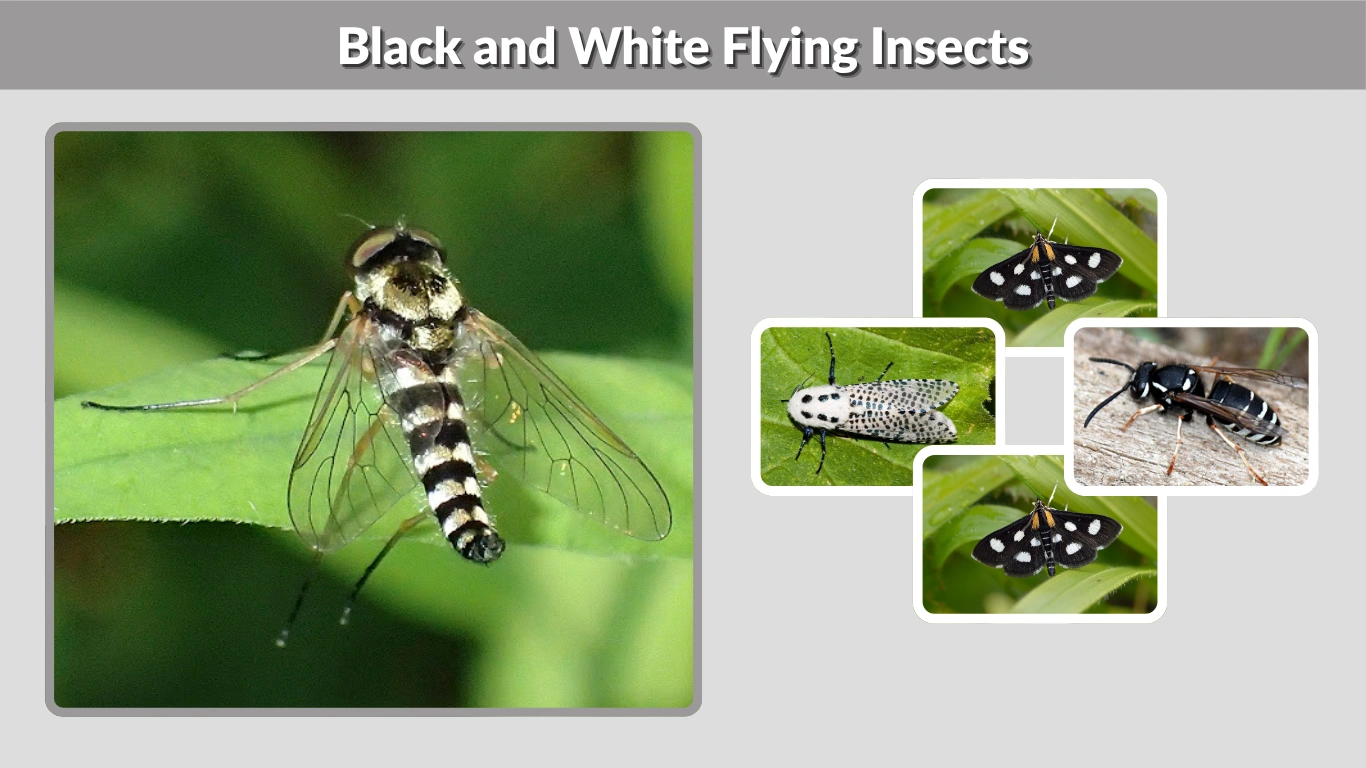
Black and white flying insects are some of the most visually distinct species in nature. Their bold contrast of color often serves as a warning or disguise, protecting them from predators. While some species can sting or bite, many are harmless and even beneficial to the environment. Learning to recognize their markings and behavior helps you tell them apart and respond safely.
Identification of Black and White Flying Insects

General Appearance
Most black and white flying insects have striped, spotted, or banded bodies with clear or dark-tinted wings. Their markings often make them look like wasps or hornets, even if they’re completely harmless. Sizes vary widely—from tiny 2 mm hoverflies to large hornets over 3 cm long.
Common physical features include:
- Two pairs of wings (some flies have one pair)
- Segmented black bodies with white patches or stripes
- Long antennae or white-banded feelers
- Smooth or fuzzy textures, depending on species
Their sharp contrast serves as an alert for potential danger, signaling to predators that they might sting, or as mimicry to imitate insects that can.
Typical Habitats
- Gardens and flowering plants: Hoverflies, beetles, and bees gathering nectar.
- Wooded or rural areas: Hornets, longhorn beetles, and wasps nesting in trees.
- Homes or sheds: Smaller flies and moths occasionally enter through windows.
- Water or vegetation areas: Crane flies and gnats with banded legs.
These insects are most active in summer and early fall, especially during daylight or warm evenings.
Common Types of Black and White Flying Insects

Bald-Faced Hornet
Despite its name, the bald-faced hornet is actually a species of yellowjacket. It has a shiny black body with white markings on the face and abdomen. Found throughout North America, it builds large paper nests in trees or under eaves. These hornets are territorial and capable of multiple stings, though they attack only when disturbed.
White-Spotted Sawyer Beetle
This long-horned beetle has a black body with white speckles on its wing covers. Its long antennae, sometimes banded in white, make it easy to identify. Common in forests across the U.S. and Canada, it’s drawn to pine trees and recently cut logs. Despite its intimidating look, it’s completely harmless.
Hoverflies
Hoverflies are small black-and-white striped insects that closely resemble wasps. They can hover mid-air, dart quickly, and often feed on flower nectar. These gentle insects are important pollinators and pose no threat to humans. Their mimicry protects them from predators like birds and spiders.
Black and White Moths
Several moth species, such as the Clymene moth and wood leopard moth, feature bold black-and-white wing patterns. These moths are usually nocturnal and attracted to light. During the day, they rest on walls, trees, or garden posts, blending into their surroundings.
Bee Flies and Fuzzy Species
Bee flies are small, fuzzy insects that resemble miniature bumblebees. Their bodies are dark, with fine white hairs or spots, and they often buzz around flowers. They’re harmless nectar feeders, seen frequently in gardens across the U.K., Ohio, and Virginia during warm months.
Crane Flies
Large and delicate, crane flies have banded black-and-white legs and long, thin bodies. They are often mistaken for giant mosquitoes but do not bite or sting. These insects are harmless and play a role in breaking down decaying vegetation.
Color and Pattern Variations

Black with White Stripes
Seen in hornets, hoverflies, and wasps, this pattern signals potential danger. It’s a defensive warning used by stinging insects and imitated by harmless ones.
Black with White Spots
Species like the white-spotted sawyer beetle or spotted moths show small white dots along their backs or wings. This spotting helps them camouflage against bark or light backgrounds.
Fuzzy Black and White
Insects such as bee flies or certain moths have white hair-like coatings that give them a soft, fuzzy look. These features protect them from the cold and help them blend into pollen-covered flowers.
Black and White with Color Accents
Some species, like red-tailed mason wasps or orange-tipped moths, include hints of red or orange alongside black and white. These bright colors reinforce their warning signals to predators.
Black with White Wings
Certain flies and moths have translucent or white-tinted wings that flash during flight. The contrast helps them appear larger or confuse predators midair.
Regional Sightings
United States
- Arizona: Large black-and-white striped wasps that build nests from leaves.
- Ohio & Indiana: Fuzzy bee flies and white-spotted beetles common in gardens.
- New York: Long-horn beetles with black-and-white markings seen near wooded areas.
- Virginia & Florida: Hornets and moths often active in humid summer evenings.
United Kingdom
The black-and-white potter wasp and orange soldier beetle are frequent garden visitors from late spring to early autumn. Harmless hoverflies also mimic these stinging insects for protection.
Australia
Home to black-and-white wasps, sawflies, and beetles, especially in coastal and bushland regions. The Australian potter wasp and striped hoverfly are common and beneficial to plant pollination.
Behavior and Safety

Stinging Species
Certain black and white flying insects—such as bald-faced hornets, potter wasps, and black-and-white paper wasps—are capable of stinging. Their coloration serves as a warning to predators. These insects will generally not attack unless they feel threatened or their nest is disturbed. The sting can cause redness, swelling, and temporary pain, though severe allergic reactions are rare.
If you encounter them, keep a safe distance and avoid sudden movements. Their nests, typically gray paper-like structures, are often found under eaves, tree branches, or sheds. If you discover one near your home, call a professional pest service instead of trying to remove it yourself.
Harmless Mimics
Many black and white flying insects—like hoverflies, sawyer beetles, and crane flies—mimic stinging species for protection but are harmless. This mimicry, known as Batesian mimicry, allows them to benefit from the reputation of dangerous insects without possessing stingers themselves. They often visit flowers, helping pollinate plants while posing no risk to humans.
Attraction to Light
Several black and white species, especially moths and long-horned beetles, are nocturnal and strongly attracted to artificial light. They may enter homes through open windows during summer nights. Switching to yellow “bug lights” or turning off porch lights helps reduce their presence indoors.
Signs of Nests or Infestations
If you notice clusters of black-and-white insects flying around one spot, it could indicate a nest or food source nearby.
- Hornets: Paper nests in trees or roof corners.
- Beetles: Found near decaying wood or logs.
- Hoverflies: Active around flowering plants.
Control and Prevention
Indoor Prevention
- Seal entry points: Close small cracks in windows, vents, and door frames.
- Dim lights at night: Turn off exterior lights that attract nocturnal insects.
- Maintain cleanliness: Dispose of food waste properly and cover sugary drinks.
- Use insect screens: Fine mesh screens can block small flying insects from entering.
Outdoor Prevention
- Inspect trees and eaves: Remove old nests during winter when inactive.
- Trim shrubs and vegetation: Avoid dense plant growth near walls or windows.
- Cover trash and compost bins: These can attract wasps, flies, and beetles.
- Plant natural repellents: Mint, basil, and lemongrass can help deter stinging insects.
Natural Repellents and Remedies
- Peppermint oil spray: Repels hornets and wasps naturally.
- Vinegar traps: Useful for catching small flies.
- Citrus peels: Their scent deters wasps and moths from entering homes.
- Clove or eucalyptus oil: Excellent deterrents for moths and beetles.
Ecological Importance
Despite their intimidating looks, black and white flying insects play vital ecological roles.
- Pollination: Hoverflies, beetles, and bee flies help fertilize plants.
- Pest control: Hornets and wasps feed on garden pests like caterpillars and flies.
- Decomposition: Beetles and moths help break down organic matter, enriching the soil.
Their presence in gardens is a sign of a healthy ecosystem, and most species are best left undisturbed.
FAQs
What are black and white flying insects?
They include hornets, hoverflies, beetles, moths, and wasps. The contrasting colors serve as a defense mechanism to warn predators or mimic dangerous species.
Are black and white flying insects dangerous?
Only stinging types, like bald-faced hornets or paper wasps, can pose a risk if provoked. Others—such as hoverflies and sawyer beetles—are harmless and beneficial.
What is the large black and white flying insect with spots?
That’s likely a white-spotted sawyer beetle, a harmless long-horned beetle commonly found near pine forests and wooded areas.
Why are black and white insects attracted to lights?
Moths and beetles use natural light from the moon for navigation. Artificial lights confuse them, drawing them indoors or toward bright surfaces.
How do I get rid of black and white flying insects around my home?
Keep outdoor lights dim, seal entry points, and remove old nests during winter. For stinging species, always contact professional pest control instead of attempting removal.