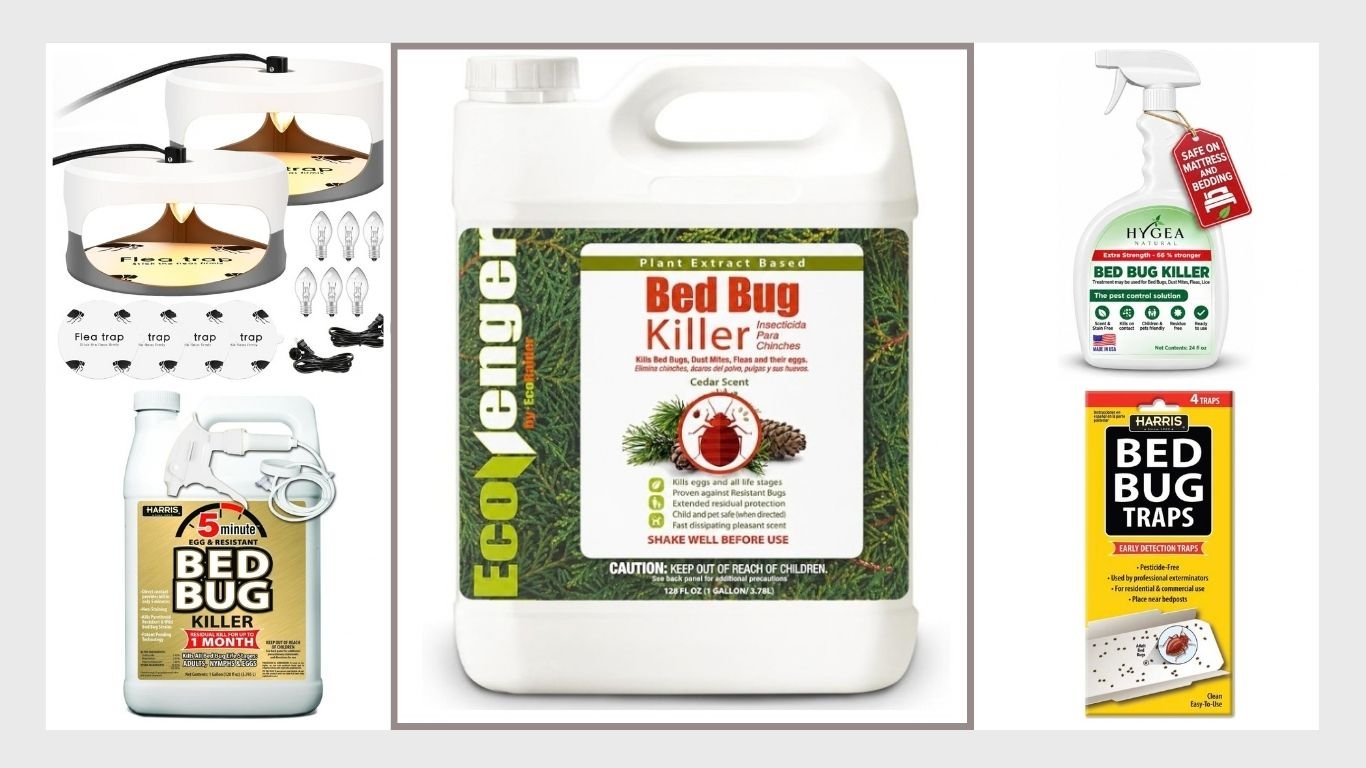
Bed bugs can spread quickly and become difficult to control once they settle into mattresses, furniture, cracks, and other hidden areas. Using the right combination of traps and sprays can help detect activity, reduce infestations, and target bugs where they hide. In this guide, we reviewed 10 of the best bed bug exterminator traps and sprays for home use, including detection traps, glue traps, residual sprays, and plant-based formulas designed for different levels of bed bug control.
1. MaxGuard Bed Bug Detection Traps – 24 Pack
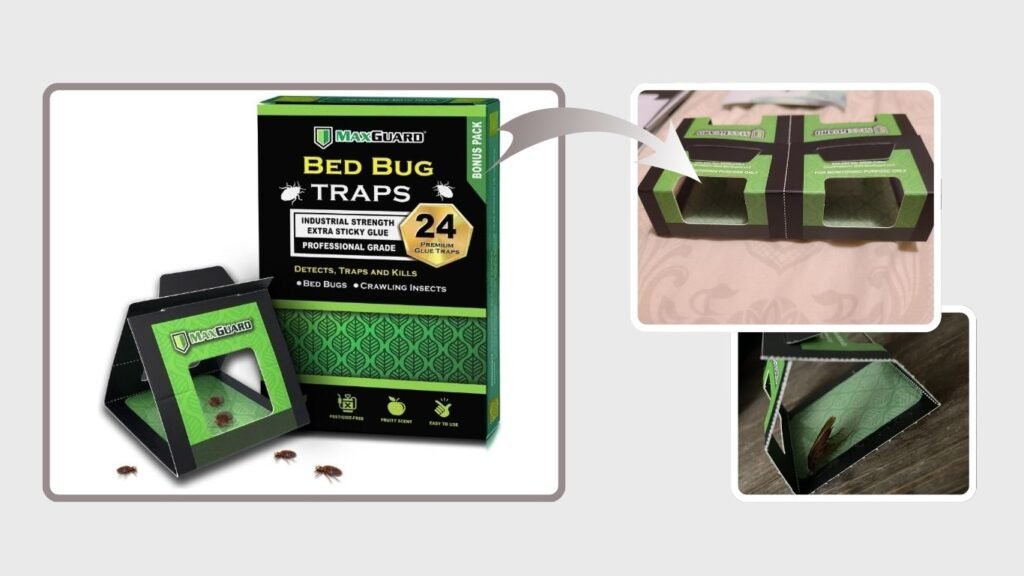
MaxGuard Bed Bug Detection Traps are designed for homeowners who want a simple way to detect bed bugs before an infestation becomes harder to control. The pack contains 24 adhesive traps that use a timed-release attractant and require no electricity or complicated setup. They can be positioned around beds, furniture, and other areas where crawling insects may travel.
Key Features
- Includes 24 individual adhesive traps
- Timed-release attractant for monitoring bed bugs
- Strong sticky trapping surface
- Non-electric, manual design
- Insecticide-free trapping method
- Can also catch ants, cockroaches, crickets, and spiders
- Compact paper construction
- Suitable for placement near beds and furniture
Why It’s Best for Early Bed Bug Detection
The main advantage of MaxGuard is its ability to provide multiple monitoring points throughout a room. Instead of relying on a single detector, the 24-pack allows traps to be positioned near bed frames, furniture legs, baseboards, and other suspected travel routes.
The timed-release attractant is another useful feature because it is designed to help draw crawling bed bugs toward the adhesive surface. This makes the traps particularly suitable for checking suspected activity or continuing to monitor a room after other bed bug treatments have been used.
Performance & Durability
MaxGuard traps work passively, so there are no batteries, electrical components, or liquids to maintain. Once assembled and positioned correctly, the adhesive surface captures insects that enter the trap.
Because these are disposable paper-based monitors, their performance can be affected by dust, debris, or poor placement. Regular inspection is therefore important. The generous 24-count package also makes replacing individual traps relatively convenient.
Pros, Cons & Overall Verdict
Pros
- Large 24-trap package
- Simple setup and placement
- No electricity required
- Useful for multiple monitoring locations
- Targets several crawling insects
Cons
- Primarily designed for detection and monitoring
- Sticky surfaces can collect dust over time
- Severe infestations generally require additional control methods
Overall Verdict: MaxGuard Bed Bug Detection Traps are a practical option for early detection and ongoing monitoring. Their large pack size, adhesive design, and simple operation make them especially useful for homeowners who want to keep watch over several potential bed bug hiding and travel areas at once.
2. Bed Bug Killer Spray – Odorless, Non-Staining Formula
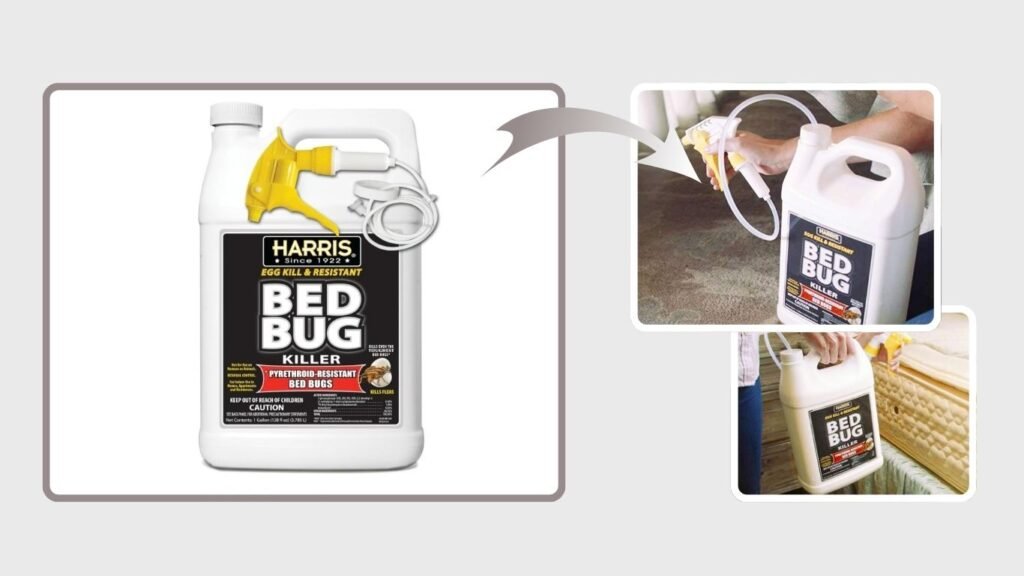
This bed bug killer spray is designed for targeted indoor treatment where bed bugs tend to hide, including mattress seams, bed frames, baseboards, furniture joints, and small cracks. Its ready-to-use liquid format makes it convenient for treating specific problem areas, while the odorless and non-staining design can be particularly useful in bedrooms and other frequently occupied spaces.
Key Features
- Ready-to-use bed bug spray
- Designed for cracks, seams, and crevices
- Odorless formula
- Non-staining application
- Suitable for targeted indoor treatment
- Helps provide residual protection
- Convenient spray application
Why It’s Best for Targeted Treatment
This option works particularly well for homeowners who need more direct treatment than monitoring traps can provide. The spray can reach narrow hiding locations where bed bugs frequently remain during daylight hours.
Its low-odor approach is also an advantage when treating bedrooms, guest rooms, or upholstered furniture where strong chemical smells may be undesirable.
Performance & Durability
The spray format allows users to cover both visible activity areas and potential travel routes. Residual performance can also help maintain treatment after the surface dries, although results depend on proper preparation and application.
Repeated inspection remains important because bed bugs and eggs may be hidden beyond treated surfaces.
Pros, Cons & Overall Verdict
Pros
- Easy targeted application
- Low-odor formula
- Suitable for many indoor hiding areas
- Non-staining design
- Useful alongside traps
Cons
- May require repeat applications
- Heavy infestations usually need broader treatment
- Careful label compliance is necessary
Overall Verdict: This spray is a practical choice for focused bed bug treatment, especially when you want to reach cracks and furniture seams without leaving a strong odor behind.
3. Ortho Home Defense Max Bed Bug Trap
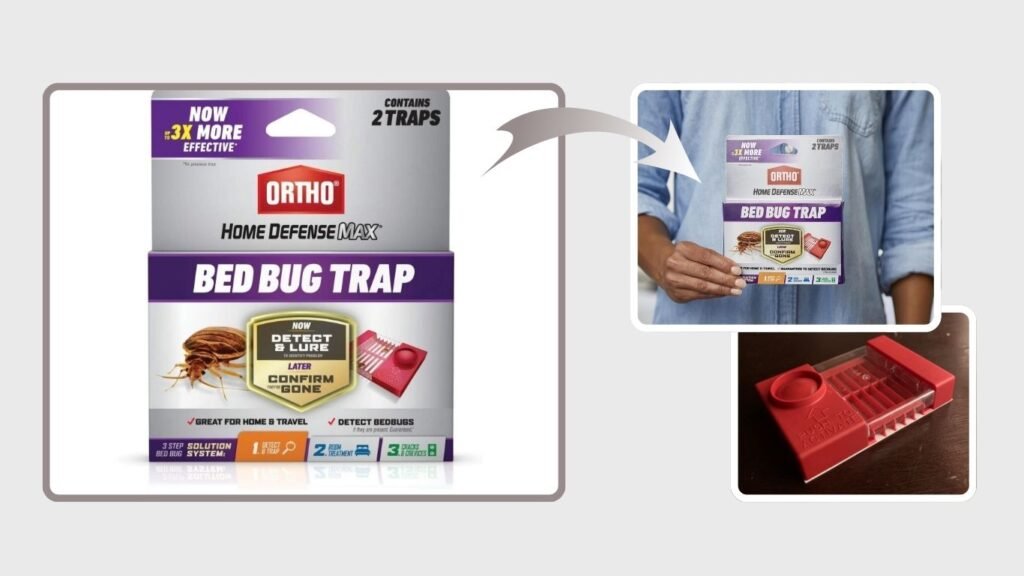
The Ortho Home Defense Max Bed Bug Trap is primarily a monitoring solution designed to help determine whether bed bugs are present around sleeping areas. Its enclosed trap design makes it easy to position near beds, sofas, or other furniture while keeping the trapping surface relatively contained. It can be especially useful during early detection or after treatment.
Key Features
- Designed specifically for bed bug monitoring
- Compact enclosed trap
- Convenient placement around beds
- No spraying required
- Simple disposable format
- Useful before and after treatment
- Suitable for discreet monitoring
Why It’s Best for Monitoring Bedrooms
Bed bugs are difficult to spot because they often hide during the day. This trap helps create a monitoring point near common travel routes, making it easier to identify activity before a larger infestation becomes obvious.
It can also be placed after treatment to check whether bed bug activity continues.
Performance & Durability
The passive design means there are no batteries, cords, or electronic components to maintain. Once positioned, the trap continuously monitors the area until replacement is needed.
For stronger performance, placement is important. Traps positioned close to bed legs, walls, and frequently used furniture are generally more useful than those placed in open floor areas.
Pros, Cons & Overall Verdict
Pros
- Simple monitoring solution
- Compact and discreet
- Requires no electricity
- Easy to replace
- Useful for confirming activity
Cons
- Does not replace active extermination
- Limited coverage per trap
- Placement strongly affects performance
Overall Verdict: The Ortho Home Defense Max Trap is best suited to homeowners who want an uncomplicated way to detect and monitor bed bug activity around sleeping areas.
4. EcoRaider Bed Bug Killer Spray
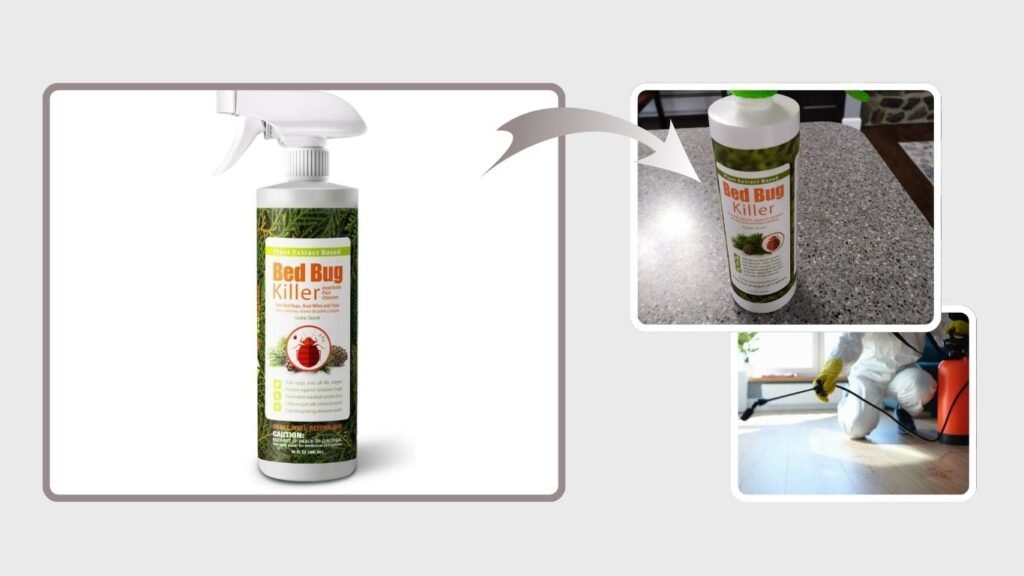
EcoRaider Bed Bug Killer Spray is a plant-based treatment option designed for consumers who prefer an alternative to many conventional insecticide formulas. It can be applied to common bed bug hiding areas such as bed frames, mattress seams, furniture, baseboards, and crevices while also offering residual activity after treatment.
Key Features
- Plant-based active ingredients
- Ready-to-use spray
- Designed for bed bugs and nymphs
- Suitable for cracks and crevices
- Residual protection after application
- Indoor-use focused formula
- Useful for mattresses and furniture when label directions permit
Why It’s Best for Plant-Based Bed Bug Control
EcoRaider stands out for users who specifically want a botanical-style bed bug treatment. Its formula provides direct-contact treatment while also leaving protection on properly treated surfaces.
That makes it useful for bedrooms, apartments, rental properties, or other areas where users may prefer a plant-derived formulation.
Performance & Durability
The spray is designed to work both when applied directly to bed bugs and as a residual treatment on surfaces. Thorough application is important because bed bugs frequently hide deeply inside furniture joints and narrow gaps.
Combining spraying with laundering, vacuuming, mattress encasements, and monitoring traps can improve overall control.
Pros, Cons & Overall Verdict
Pros
- Plant-based formula
- Ready to use
- Provides residual treatment
- Suitable for multiple hiding locations
- Helpful for integrated control
Cons
- Botanical scent may still be noticeable
- Full-room infestations require extensive treatment
- Multiple applications may be necessary
Overall Verdict: EcoRaider is a strong option for people looking for a plant-based bed bug spray that combines direct treatment with continued residual protection.
5. Harris Bed Bug Early Detection Traps – 4 Pack
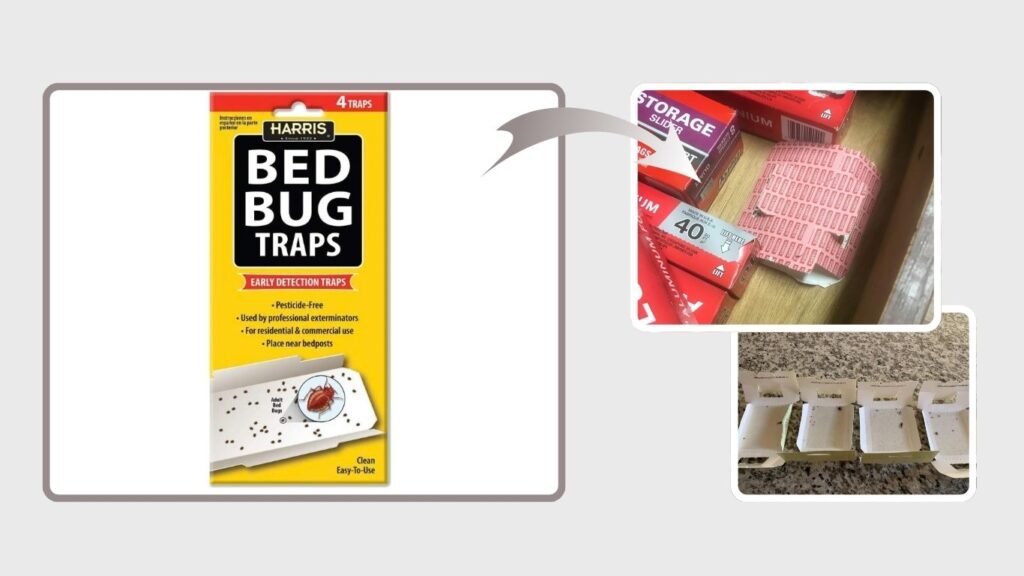
Harris Bed Bug Early Detection Traps are simple monitoring devices created to help reveal bed bug activity before populations become easier to notice. The four-pack provides multiple placement points around beds, furniture, or sleeping areas, making the traps useful for homes, apartments, guest rooms, and travel-related monitoring.
Key Features
- Includes four detection traps
- Designed for early bed bug monitoring
- No liquid spray required
- Compact disposable design
- Easy placement around furniture
- Useful for ongoing inspections
- Suitable for bedrooms and guest rooms
Why It’s Best for Simple Early Detection
These traps are particularly useful when you suspect bed bugs but have not yet confirmed an infestation. Multiple traps can be placed around key areas, helping you determine where activity may be concentrated.
They can also provide peace of mind after professional or DIY treatments by showing whether bed bugs remain active.
Performance & Durability
Harris detection traps work continuously without power or maintenance. Their effectiveness depends largely on positioning and routine inspection.
Because they are disposable, replacement is straightforward once a trap becomes dusty, damaged, or captures insects.
Pros, Cons & Overall Verdict
Pros
- Very simple setup
- Four monitoring locations
- No chemicals to spray
- Compact and discreet
- Good for post-treatment checks
Cons
- Designed mainly for detection
- Does not kill hidden populations
- Requires regular inspection
Overall Verdict: Harris Early Detection Traps offer an affordable and uncomplicated way to monitor suspected bed bug activity, particularly when used alongside a broader treatment strategy.
6. Harris Bed Bug Killer Spray – Odorless & Non-Staining
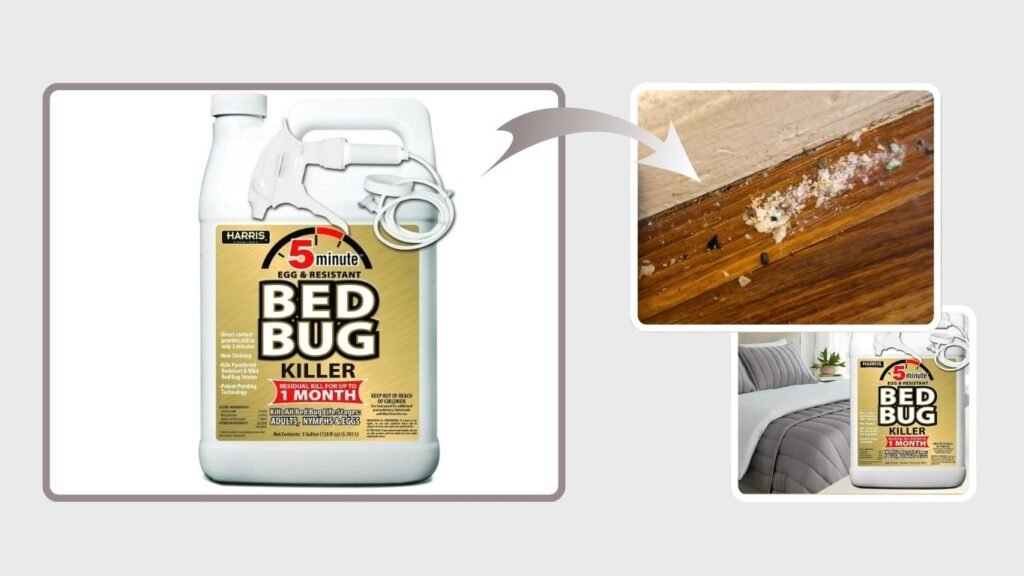
Harris Bed Bug Killer Spray provides a convenient liquid treatment for users who need to address bed bugs around mattresses, furniture, bed frames, and other indoor hiding zones. Its odorless and non-staining characteristics make it better suited to living spaces where appearance and lingering smell are important considerations.
Key Features
- Ready-to-use bed bug treatment
- Odorless when dry
- Non-staining formula
- Suitable for cracks and crevices
- Designed for indoor use
- Easy trigger-spray application
- Useful for targeted spot treatments
Why It’s Best for Indoor Furniture and Bed Areas
A major advantage of this Harris formula is its suitability for carefully targeted applications around sleeping areas. The spray can be directed into joints, gaps, frame connections, and other locations where bed bugs often shelter.
The low-odor formulation also makes it more convenient for residential settings.
Performance & Durability
This product performs best when used as part of a complete bed bug control routine rather than as a single treatment. Vacuuming, washing bedding at appropriate temperatures, reducing clutter, and monitoring can all complement spray treatment.
Coverage should be thorough because untreated hiding areas can allow surviving insects to remain active.
Pros, Cons & Overall Verdict
Pros
- Low-odor application
- Non-staining formula
- Convenient spray bottle
- Good for targeted indoor use
- Useful around common hiding zones
Cons
- Repeat treatment may be required
- Hidden eggs can complicate control
- Large infestations may need professional help
Overall Verdict: Harris Bed Bug Killer Spray is a convenient choice for targeted home treatment, offering easy application and a low-odor, non-staining formula that works well as part of a broader bed bug management plan.
7. Indoor Bed Bug Trap & Infestation Treatment
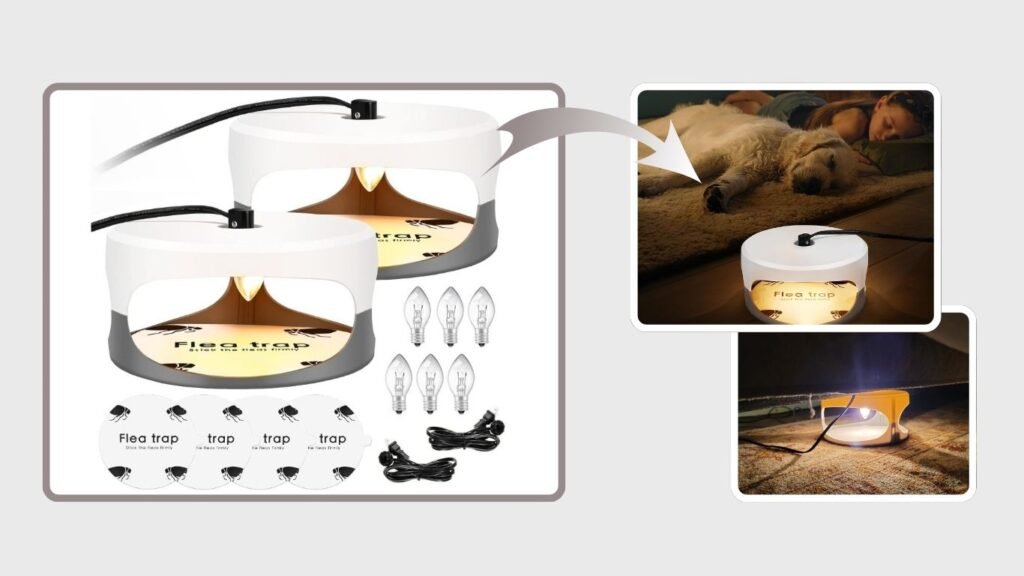
This indoor bed bug trap is designed for homeowners who want an easy monitoring solution that can be placed around beds, furniture, and other suspected infestation areas. Its passive trapping approach can help reveal crawling bed bugs without requiring complicated equipment. It is especially useful for identifying activity early and checking whether an existing treatment program is reducing the infestation.
Key Features
- Designed for indoor bed bug monitoring
- Passive trapping system
- Suitable for placement near beds and furniture
- Compact and discreet construction
- No electrical power required
- Useful for detecting crawling insects
- Simple replacement design
Why It’s Best for Ongoing Monitoring
This trap works particularly well for people who want to monitor a room continuously after discovering possible bed bug activity. Multiple traps can be positioned around sleeping areas, furniture legs, and baseboards to help determine where insects are traveling.
It can also complement sprays, mattress encasements, vacuuming, and other control methods.
Performance & Durability
Because the trap operates passively, it can remain in position without batteries or frequent maintenance. Regular inspection is still important because dust, debris, and captured insects can eventually reduce effectiveness.
Strategic placement around bed frames and furniture generally provides better results than positioning traps in open areas.
Pros, Cons & Overall Verdict
Pros
- Easy to position
- No electricity required
- Useful for continuous monitoring
- Compact design
- Works alongside other treatments
Cons
- Mainly intended for detection
- Does not eliminate hidden infestations
- Requires periodic replacement
Overall Verdict: This indoor bed bug trap is a useful monitoring tool for homeowners who want to identify activity and evaluate whether additional treatments are working.
8. EcoRaider Bed Bug Killer Spray – Extended Protection
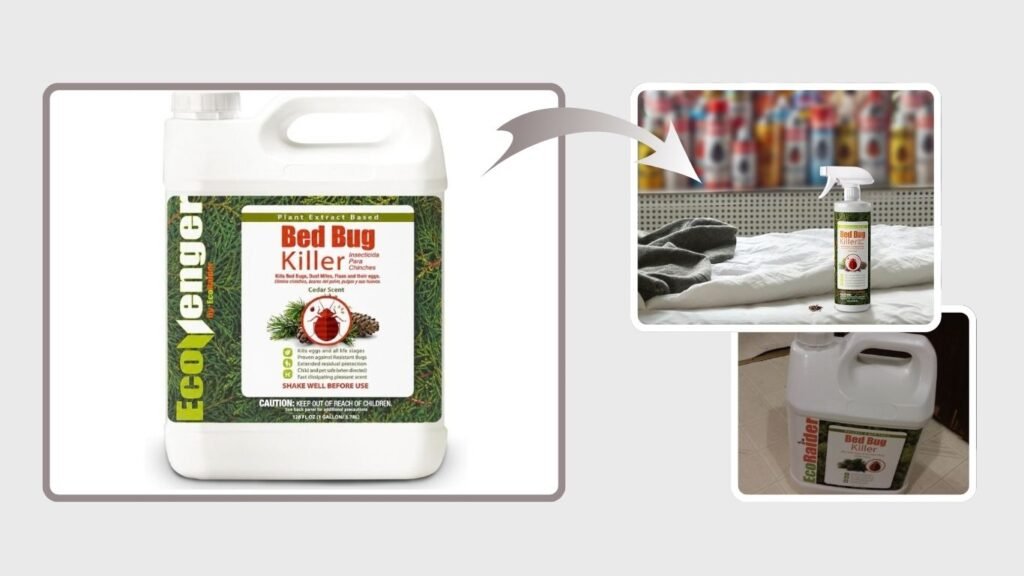
EcoRaider Bed Bug Killer is designed for people who prefer a plant-based treatment option for controlling bed bugs inside the home. The ready-to-use formula can be applied around common hiding locations such as mattress seams, bed frames, furniture joints, baseboards, and cracks. Its residual protection also helps maintain treatment effectiveness on properly treated surfaces.
Key Features
- Plant-based bed bug treatment
- Ready-to-use spray formula
- Designed for direct-contact treatment
- Residual protection after application
- Suitable for common bed bug hiding areas
- Convenient spray bottle
- Useful as part of integrated pest control
Why It’s Best for Extended Plant-Based Treatment
This EcoRaider formula is a practical choice for users who want both immediate treatment and continued surface protection. The residual effect can be particularly useful in cracks and furniture joints where bed bugs frequently travel.
Its botanical formulation also appeals to people looking for alternatives to many conventional insecticides.
Performance & Durability
The spray performs best when applied thoroughly to known or suspected hiding zones. Bed bugs can hide deep inside furniture, wall gaps, and bed frames, so coverage is important.
For better overall control, the treatment can be combined with laundering bedding, vacuuming, reducing clutter, and using monitoring traps.
Pros, Cons & Overall Verdict
Pros
- Plant-based formula
- Direct and residual treatment
- Ready to use
- Suitable for multiple surfaces
- Works well within a broader treatment plan
Cons
- May require repeated applications
- Scent may be noticeable after spraying
- Severe infestations can require professional treatment
Overall Verdict: EcoRaider is a versatile option for homeowners seeking a plant-based spray that provides both direct treatment and extended protection.
9. Trapper Insect & Bed Bug Glue Traps
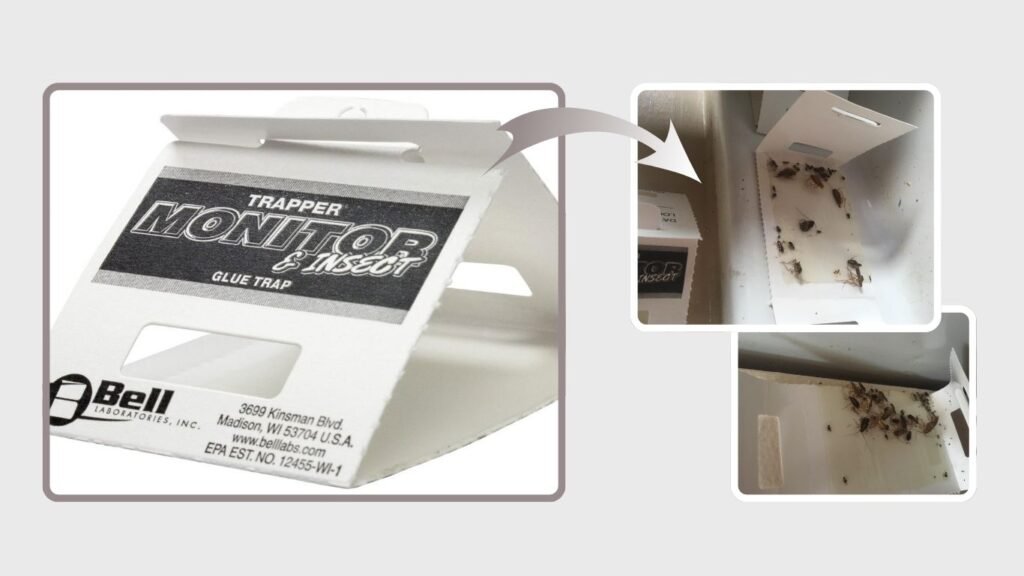
Trapper Glue Traps provide a simple mechanical way to capture bed bugs and other crawling insects without relying on sprays. These adhesive boards can be placed along walls, under furniture, near bed frames, or beside suspected insect travel routes. Their wide sticky surface makes them useful for general pest monitoring in bedrooms, basements, storage areas, and other indoor locations.
Key Features
- Strong adhesive trapping surface
- No liquid insecticide required
- Suitable for bed bugs and crawling insects
- Can be placed flat or folded
- Useful along walls and furniture
- Disposable design
- Works without electricity
Why It’s Best for Multi-Pest Monitoring
One of the biggest advantages of these traps is their versatility. In addition to bed bugs, they can help capture spiders, cockroaches, and other crawling insects.
This makes them particularly useful for homeowners who are dealing with more than one type of indoor pest or who want a broader monitoring solution.
Performance & Durability
The adhesive surface remains effective as long as it stays clean and dry. Placing traps away from dusty or damp areas can help maintain their trapping ability.
Because they are passive traps, they can monitor pest movement continuously without batteries or chemical applications.
Pros, Cons & Overall Verdict
Pros
- Large adhesive area
- Works for several crawling pests
- No electricity required
- Simple setup
- Useful for monitoring insect activity
Cons
- Adhesive can collect dust
- Does not reach hidden bed bugs
- Not a complete extermination solution
Overall Verdict: Trapper Glue Traps are a practical choice for general indoor pest monitoring and can be especially helpful for detecting bed bugs along common travel routes.
10. Hygea Natural Extra Strength Bed Bug Spray
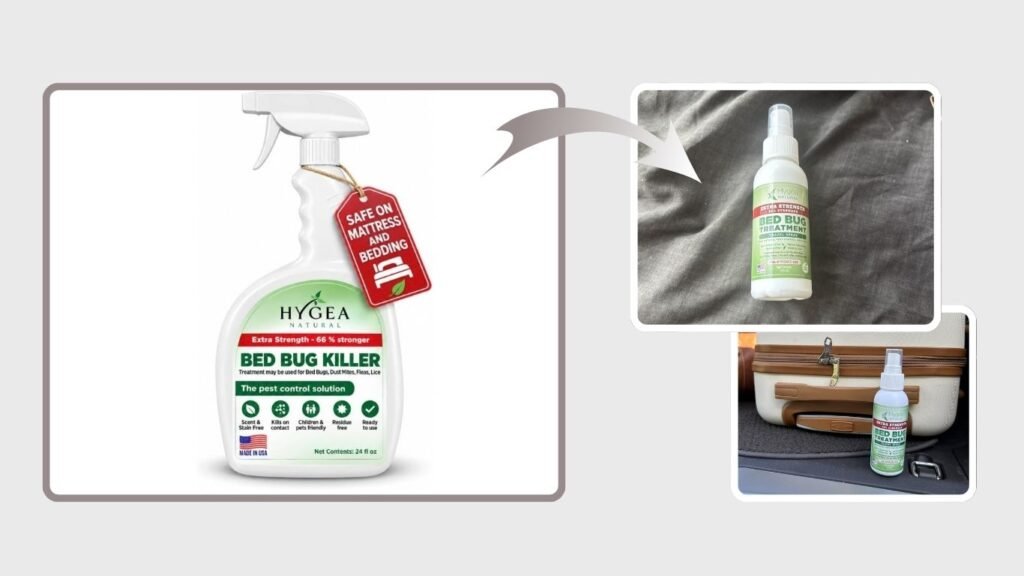
Hygea Natural Extra Strength Bed Bug Spray is designed for targeted indoor bed bug treatment around mattresses, furniture, luggage, bed frames, and other areas where insects may hide. Its ready-to-use format allows users to treat specific locations without mixing concentrates, making it convenient for both routine home treatment and travel-related bed bug concerns.
Key Features
- Extra-strength bed bug spray
- Ready-to-use formula
- Suitable for targeted indoor application
- Can be used around common hiding locations
- Convenient spray bottle
- Useful for furniture and bedding areas when directed by the label
- Suitable for home and travel-related treatment
Why It’s Best for Convenient Spot Treatment
This spray is particularly useful for people who need a portable and easy-to-apply option. It can be directed toward mattress seams, luggage, furniture joints, and cracks where bed bugs are commonly found.
The ready-to-use design eliminates measuring or mixing, making application relatively straightforward.
Performance & Durability
Performance depends heavily on covering the areas where bed bugs actually hide. Treating visible surfaces alone may not reach insects deep inside furniture or structural gaps.
Regular inspection and follow-up applications may therefore be necessary. Combining the spray with monitoring traps and physical cleaning methods can create a more complete control strategy.
Pros, Cons & Overall Verdict
Pros
- Convenient ready-to-use bottle
- Good for targeted applications
- Suitable for multiple indoor areas
- Portable for travel-related use
- Easy to incorporate into routine treatment
Cons
- May need repeat applications
- Difficult infestations require multiple control methods
- Label directions must be followed carefully
Overall Verdict: Hygea Natural Extra Strength Bed Bug Spray is a convenient option for homeowners or travelers who want an easy-to-apply treatment for common bed bug hiding areas.
FAQs
1. Are bed bug traps enough to eliminate an infestation?
Bed bug traps are mainly useful for detection, monitoring, and capturing insects that cross the trapping surface. They usually work best as part of a larger control plan that can include vacuuming, laundering bedding, mattress encasements, targeted sprays, and professional treatment when necessary.
2. Which is better for bed bugs: traps or sprays?
Traps and sprays serve different purposes. Traps help detect and monitor bed bug activity, while sprays are intended to treat insects and hiding areas directly. Using both can provide better monitoring and treatment coverage than relying on only one method.
3. Where should I place bed bug traps?
Place traps close to common bed bug travel routes, including near bed legs, headboards, baseboards, sofas, nightstands, and upholstered furniture. Avoid placing them in dusty or wet locations because debris and moisture can reduce adhesive effectiveness.
4. How often should bed bug spray be applied?
Application frequency depends on the individual product and its label directions. Some formulas offer residual protection, while others may require follow-up treatments. Always follow the manufacturer’s instructions and avoid applying more frequently than recommended.
5. When should I call a professional bed bug exterminator?
Professional treatment may be appropriate when bed bugs are found in several rooms, activity continues despite repeated treatment, or the infestation is difficult to locate and control. A licensed pest professional can assess the extent of the infestation and recommend a more comprehensive treatment strategy.