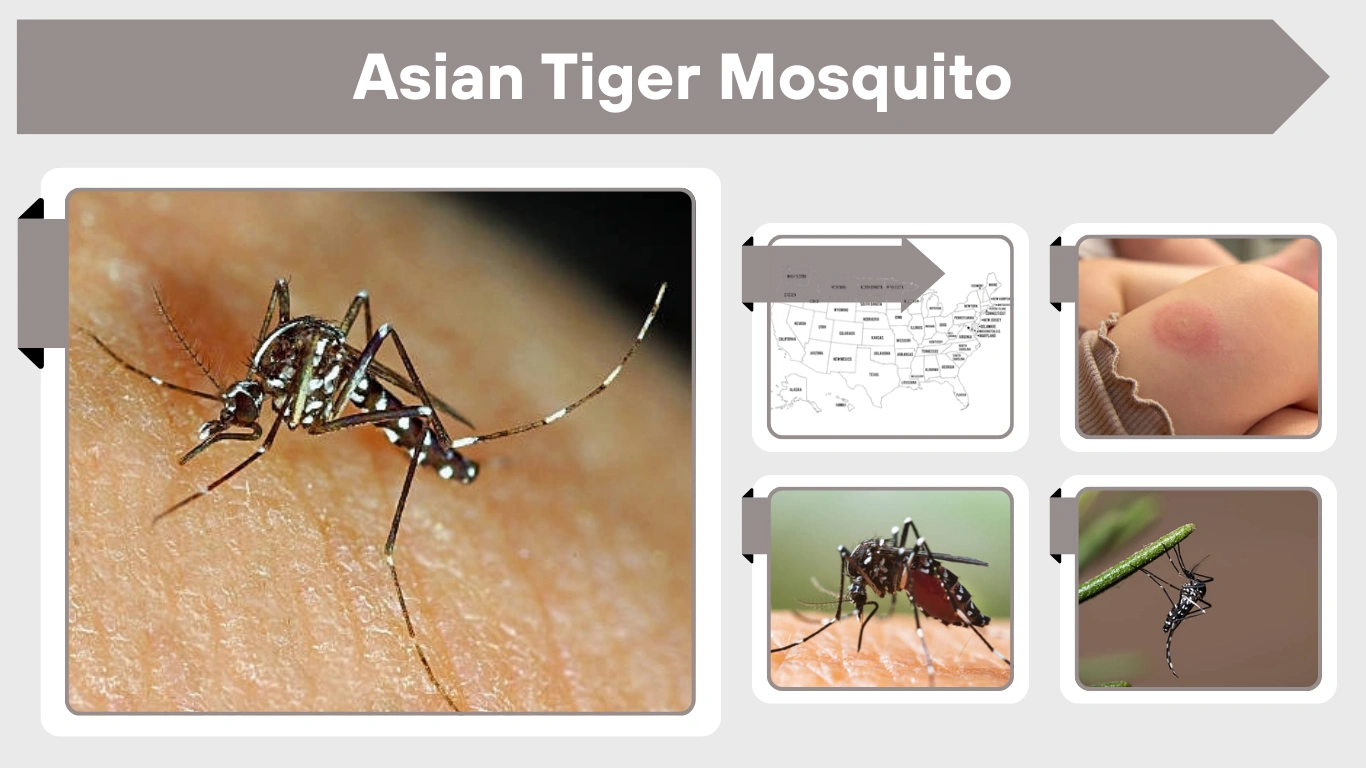
The Asian tiger mosquito is one of the most aggressive and invasive mosquito species in the world. Known for its painful bites and daytime activity, this mosquito has spread rapidly across the United States and other regions. Many people search for information about Asian tiger mosquito bites, diseases, danger levels, and how to get rid of them. Understanding where this mosquito comes from, how it lives, and why it spreads so quickly is essential for effective prevention and control.
What Is the Asian Tiger Mosquito
The Asian tiger mosquito is an invasive mosquito species originally native to Southeast Asia. Its scientific name is Aedes albopictus. It is often called the “tiger mosquito” because of its black body and bold white stripes that resemble tiger markings. Unlike many mosquitoes that bite mostly at night, the Asian tiger mosquito is active during the day, making it especially troublesome for humans.
Asian Tiger Mosquito Identification

- Scientific name: Aedes albopictus
- Black body with striking white stripes
- One white stripe running down the head and back
- Small to medium-sized mosquito
- Aggressive daytime biter
These visual characteristics make the Asian tiger mosquito easier to identify than many common house mosquitoes.
Asian Tiger Mosquito Characteristics
Asian tiger mosquitoes are known for their aggressive behavior and adaptability. They readily bite humans and animals and will often attack multiple times if disturbed. This species is highly resilient and can survive in both urban and suburban environments.
Another key characteristic is its ability to breed in very small amounts of water. Even bottle caps, flower pots, or discarded containers can serve as breeding sites. This makes population control more difficult compared to mosquitoes that rely on larger water sources.
Asian Tiger Mosquito Size
Asian tiger mosquitoes are relatively small, typically measuring 2 to 10 millimeters in length. While they may appear smaller than some common mosquitoes, their compact size does not reduce their impact. Their aggressive nature and frequent biting often make them feel more noticeable than larger mosquito species.
Asian Tiger Mosquito vs Regular Mosquito

Compared to regular mosquitoes, Asian tiger mosquitoes behave very differently. They are active during daylight hours, especially in the early morning and late afternoon. Regular mosquitoes tend to bite at night.
Asian tiger mosquitoes are also more visually distinctive due to their black-and-white striped appearance. Their bites often feel more painful, and they are more persistent when attempting to feed.
Asian Tiger Mosquito Habitat
Asian tiger mosquitoes thrive in areas close to human activity. They are commonly found in residential neighborhoods, city parks, gardens, and wooded edges near homes.
Their preferred habitats include:
- Backyards and patios
- Containers holding rainwater
- Used tires and buckets
- Birdbaths and clogged gutters
Because they rely on artificial containers, their populations grow rapidly in urban and suburban settings.
Where Are Asian Tiger Mosquitoes Found
Native Range
Asian tiger mosquitoes originally come from tropical and subtropical regions of Southeast Asia, including parts of China, Japan, and Indonesia.
Current Global and U.S. Distribution
Today, Asian tiger mosquitoes are found in:
- The United States
- Europe
- South America
- Parts of Africa
In the U.S., they are especially common in the eastern and southern states but continue to expand their range northward.
How Did the Asian Tiger Mosquito Get to America

The Asian tiger mosquito was introduced to the United States through global trade, particularly the importation of used tires. These tires often contained standing water where mosquito eggs could survive long journeys.
The species was first detected in the U.S. in the mid-1980s. Since then, it has spread rapidly due to its adaptability, resistance to colder temperatures, and ability to lay eggs that survive dry conditions.
Asian Tiger Mosquito Life Cycle
The Asian tiger mosquito goes through four life stages: egg, larva, pupa, and adult. This life cycle allows the species to reproduce quickly and adapt to changing environments.
Egg Stage
Female Asian tiger mosquitoes lay eggs just above the waterline in containers. These eggs can survive dry conditions for months, allowing populations to rebound quickly after rain.
Larvae Stage
Once submerged in water, eggs hatch into larvae. The larvae live in water and feed on organic material, developing rapidly in warm conditions.
Pupal Stage
After the larval stage, Asian tiger mosquito larvae enter the pupal stage. This stage usually lasts 1 to 3 days. Pupae do not feed; instead, they focus on transforming into adult mosquitoes. Although pupae are mobile in water, they remain vulnerable to environmental changes and predators.
Adult Stage
Once adults emerge from the pupal stage, they quickly seek shelter and food. Male Asian tiger mosquitoes feed only on plant nectar and sugars, while females require blood meals to produce eggs. Adult females are responsible for biting humans and animals and spreading disease.
Asian Tiger Mosquito Lifespan

Asian tiger mosquito lifespan varies depending on environmental conditions.
On average, adult Asian tiger mosquitoes live 2 to 4 weeks. In ideal conditions—warm temperatures, high humidity, and easy access to food—some females may survive slightly longer. Indoors or in protected outdoor areas, their lifespan often increases due to reduced exposure to predators and weather extremes.
Males live much shorter lives, usually 5 to 10 days, as their sole purpose is to mate.
What Do Asian Tiger Mosquitoes Eat
Asian tiger mosquitoes rely on different food sources depending on their sex.
- Plant nectar and sugars provide energy for both males and females
- Blood meals are required by females only
- Humans, pets, and wildlife serve as common blood sources
Blood does not provide energy but supplies proteins needed for egg development, which is why female mosquitoes seek hosts aggressively.
Asian Tiger Mosquito Bites

Asian tiger mosquito bites are often more noticeable and irritating than those of other mosquito species.
What Do Asian Tiger Mosquito Bites Look Like
Bites usually appear as small, red, raised bumps on the skin. They may develop significant swelling and redness around the bite area, especially in sensitive individuals.
Asian Tiger Mosquito Bite Symptoms
Common symptoms include:
Asian Tiger Mosquito Lifespan
Some people experience stronger reactions due to allergies or repeated exposure.
Are Asian Tiger Mosquitoes Dangerous
Asian tiger mosquitoes are not poisonous, but they are considered dangerous because they can transmit diseases. Their aggressive daytime biting increases human contact, raising the risk of disease spread in areas where viruses are present.
What Diseases Do Asian Tiger Mosquitoes Carry

Asian tiger mosquitoes are known carriers of several serious diseases, including:
- Dengue fever
- Zika virus
- Chikungunya
- Yellow fever (potential carrier)
While not every bite transmits disease, their presence increases public health risks.
Can the Asian Tiger Mosquito Kill You
Asian tiger mosquitoes do not kill directly. However, diseases they transmit can be severe or even fatal in rare cases, especially without proper medical treatment. The risk depends on geographic location, virus presence, and individual health.
Asian Tiger Mosquito as an Invasive Species
The Asian tiger mosquito is classified as an invasive species due to its rapid spread and ability to outcompete native mosquito species. It adapts quickly to new environments and thrives in human-made habitats, making control difficult once established.
Asian Tiger Mosquito Impact on the Ecosystem
Asian tiger mosquitoes affect ecosystems by:
- Competing with native mosquito species
- Disrupting local food webs
- Increasing disease transmission risks
Their presence can reduce biodiversity and alter predator-prey relationships.
Asian Tiger Mosquito Predators
Natural predators help control Asian tiger mosquito populations, including:
- Birds
- Dragonflies
- Frogs
- Fish that feed on larvae
However, predators alone are usually not enough to stop population growth.
Asian Tiger Mosquito Control and Prevention
Effective control requires consistent prevention efforts.
How to Get Rid of Asian Tiger Mosquitoes
- Eliminate standing water
- Empty containers weekly
- Clean gutters and drains
- Use larvicides when necessary
Asian Tiger Mosquito Repellent and Traps
- Use EPA-approved repellents like DEET or picaridin
- Wear long sleeves outdoors
- Use mosquito traps to reduce adult populations
FAQs
Are Asian tiger mosquitoes dangerous?
Asian tiger mosquitoes are not poisonous, but they are considered dangerous because they can transmit diseases such as dengue, Zika, and chikungunya. Their aggressive daytime biting increases human contact, which raises the risk of disease spread in areas where these viruses are present.
What do Asian tiger mosquito bites look like?
Asian tiger mosquito bites usually appear as red, raised bumps that can become swollen and itchy. Some people experience more intense reactions, including larger welts or prolonged itching, especially if they are sensitive or bitten multiple times.
Where do Asian tiger mosquitoes live?
Asian tiger mosquitoes live mainly in urban and suburban areas close to humans. They breed in small containers holding water, such as buckets, flower pots, tires, and clogged gutters, making residential neighborhoods ideal habitats for them.
How long do Asian tiger mosquitoes live?
Adult Asian tiger mosquitoes typically live between two and four weeks. Males survive for a shorter time, usually less than ten days, while females may live longer if environmental conditions such as warmth, humidity, and food availability are favorable.
How can I get rid of Asian tiger mosquitoes?
To get rid of Asian tiger mosquitoes, remove standing water around your home, empty containers weekly, and keep gutters clean. Using EPA-approved repellents, window screens, and mosquito traps can also help reduce their numbers effectively.