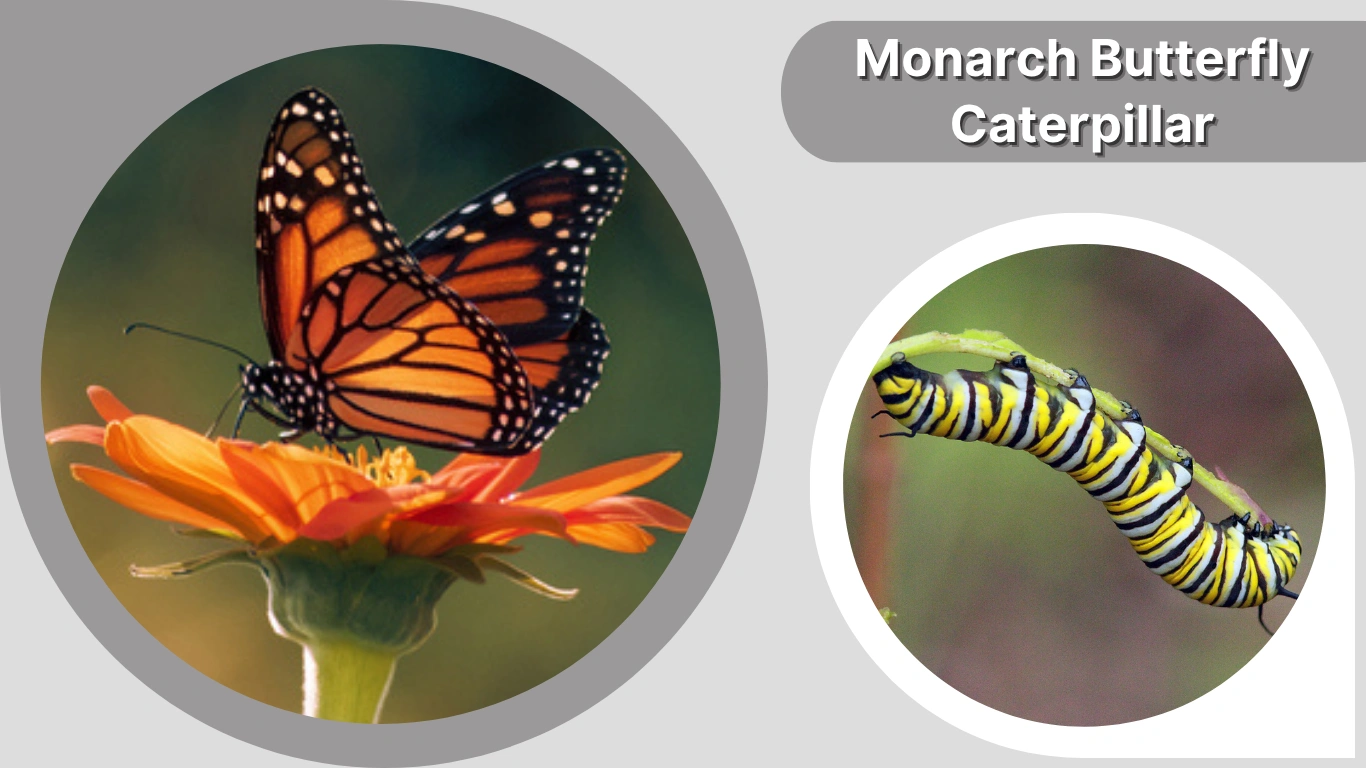
The monarch butterfly caterpillar is one of the most fascinating and easily recognized larvae in the insect world. With its vibrant stripes and unique behavior, it plays a crucial role in the life cycle of the monarch butterfly. From its first bite of milkweed to the moment it transforms into a chrysalis, every stage of its development reveals nature’s precision and beauty. This guide explores what monarch caterpillars look like, their life cycle, feeding habits, and early stages of growth.
What Does a Monarch Butterfly Caterpillar Look Like?

The monarch caterpillar is known for its distinct black, white, and yellow bands that run across its body in perfect symmetry. These bright colors serve as a warning to predators that it’s toxic due to the milkweed it consumes. The body is smooth and cylindrical, with subtle segmentation that helps it move gracefully across leaves.
Key Features:
- Coloration: Bold black, yellow, and white stripes.
- Filaments: Two pairs of black, antenna-like tentacles—one near the head and one near the tail.
- Size: Newly hatched caterpillars are only about 2–6 millimeters long, but by the final stage, they can reach 2 inches in length.
- Texture: Soft and flexible, allowing it to curl, climb, and grip milkweed leaves easily.
The monarch caterpillar’s striking pattern not only makes it easy to identify but also symbolizes the beginning of one of nature’s most dramatic transformations.
Monarch Butterfly Caterpillar Life Cycle

The monarch’s life cycle follows four major stages: egg, larva (caterpillar), pupa (chrysalis), and adult butterfly. The caterpillar stage—lasting about 10 to 14 days—is dedicated entirely to eating and growing. During this time, the caterpillar consumes large amounts of milkweed leaves, storing toxins that protect it from predators later as an adult butterfly.
Once fully grown, the caterpillar finds a safe spot, hangs upside down in a J-shape, and begins its transformation. Within a day, it sheds its skin one final time, revealing a beautiful green chrysalis with golden dots. Inside this casing, an extraordinary metamorphosis begins, where the caterpillar’s body reorganizes into a butterfly.
Monarch Caterpillar Stages (Instars)

Monarch caterpillars pass through five distinct growth phases called instars. Each stage is marked by a molting event, where the caterpillar sheds its old skin to make room for growth.
- First Instar: Tiny and almost translucent, the newly hatched caterpillar immediately eats its eggshell for nutrients before turning to milkweed.
- Second Instar: The body darkens, and faint yellow stripes appear. Movement becomes more coordinated as it begins consuming more leaves.
- Third Instar: The stripes become sharper and the tentacles elongate, helping it sense its environment.
- Fourth Instar: The caterpillar becomes noticeably larger, its colors bright and bold.
- Fifth Instar: Now around 2 inches long, the caterpillar is ready for pupation. It often crawls away from its food source to find a secure spot for transformation.
Each stage prepares the caterpillar for its ultimate change, ensuring it has the strength and energy to become a butterfly.
Monarch Butterfly Caterpillar Eggs

The journey begins when a female monarch butterfly lays her eggs exclusively on milkweed plants. These eggs are tiny, oval, and cream-colored, barely larger than a pinhead. Usually laid singly on the underside of leaves, each egg hatches in 3 to 5 days.
When the caterpillar emerges, it eats its eggshell before moving on to fresh milkweed. A single monarch butterfly can lay between 300 and 400 eggs, though only a small fraction survive due to predators and environmental factors. The choice of milkweed ensures the newborn caterpillar has immediate access to food and toxins for defense.
Food and Diet of Monarch Caterpillars
The monarch butterfly caterpillar’s diet is simple yet essential—it feeds exclusively on milkweed. The plant provides not just nutrition but also natural defense chemicals known as cardenolides, which make the caterpillar and later the butterfly distasteful to predators.
Common milkweed species monarchs prefer include:
- Common Milkweed (Asclepias syriaca) – Found widely across North America.
- Tropical Milkweed (Asclepias curassavica) – Bright red and yellow flowers, often used in gardens.
- Swamp Milkweed (Asclepias incarnata) – Grows near wet areas and attracts breeding females.
Without milkweed, monarch caterpillars cannot survive. Gardeners often plant native milkweed to support monarch populations, providing a safe habitat for eggs and larvae. The caterpillars spend almost every waking moment feeding, sometimes consuming an entire leaf in minutes.
Monarch Caterpillar Habitat and Host Plants

Monarch butterfly caterpillars live wherever milkweed grows naturally. Their habitats range from open fields and meadows to suburban gardens and prairies. The milkweed plant serves two crucial roles—it acts as a host plant for eggs and as a food source for caterpillars.
To thrive, monarch larvae need warm temperatures, abundant sunlight, and access to clean, pesticide-free plants. Home gardeners who wish to support monarchs can create a butterfly garden by planting native milkweed species, ensuring a safe space for these remarkable insects to feed and grow.
How Long Is a Monarch Butterfly a Caterpillar?
The monarch butterfly remains in its caterpillar stage for 10 to 14 days on average. The exact duration depends on temperature, food availability, and environmental conditions. In warmer climates, development is faster, sometimes completing in just nine days, while cooler temperatures can slow the process to over two weeks.
During this time, the caterpillar focuses solely on eating and growing. It sheds its skin five times, increasing in size with each molt. Once it reaches full maturity, it searches for a sturdy surface to attach itself and begins the pupation process, transforming into a chrysalis—a critical step before becoming a butterfly.
Caring for Monarch Butterfly Caterpillars
Raising monarch caterpillars is a rewarding experience, offering an up-close look at one of nature’s most beautiful transformations. However, proper care is essential for their health and successful metamorphosis.
Raising Caterpillars Indoors
If you plan to raise monarchs indoors, keep them in a well-ventilated container or a specialized caterpillar kit. Provide fresh milkweed leaves daily and remove wilted ones to maintain cleanliness. Avoid using plants treated with pesticides or chemicals, as these can harm or kill the larvae.
Cleaning and Maintenance
Caterpillars produce a significant amount of waste called frass. Cleaning the enclosure regularly prevents mold and bacterial buildup. Replace old paper towels or soil liners and ensure proper airflow to keep the habitat dry.
Pupation and Chrysalis Stage
When the caterpillar is ready to pupate, it climbs to the top of the container, hangs in a J-shape, and sheds its skin one last time to reveal a jade-green chrysalis. Within about 10 days, the adult monarch butterfly emerges. Watching this transformation is a truly magical moment for butterfly enthusiasts.
Predators and Look-Alikes
Although the monarch caterpillar’s bright colors warn predators of its toxicity, it still faces threats in the wild. Ants, spiders, wasps, and parasitic flies are its main enemies, often preying on eggs or larvae before they mature.
Common Look-Alikes:
- Queen Butterfly Caterpillar: Nearly identical but has extra white bands and spots between the yellow and black stripes.
- Soldier Butterfly Caterpillar: Smaller, with paler yellow stripes and fewer white accents.
Recognizing these species is important for conservation efforts, as they share similar habitats and diets.
Despite these risks, monarch caterpillars rely on milkweed’s toxins for protection. When predators ingest them, they experience nausea or unpleasant effects, helping monarch populations survive across generations.
FAQs
What does a monarch butterfly caterpillar look like?
A monarch caterpillar has bright black, yellow, and white stripes with two pairs of black tentacles—one near the head and one near the tail. It grows up to 2 inches long before forming its chrysalis and transforming into an adult butterfly.
What do monarch caterpillars eat?
Monarch caterpillars feed exclusively on milkweed plants. The leaves provide essential nutrients and toxins that protect them from predators. Without milkweed, monarch caterpillars cannot survive or complete their life cycle.
How long does it take for a monarch caterpillar to become a butterfly?
From egg to adult butterfly, the full transformation takes about 25 to 30 days. The caterpillar stage lasts 10–14 days, followed by 10–12 days in the chrysalis before emerging as a fully formed monarch.
How can I care for a monarch butterfly caterpillar at home?
Keep caterpillars in a clean, ventilated container with fresh milkweed leaves daily. Avoid pesticides, clean out droppings regularly, and ensure they have space to hang safely when forming their chrysalis.
Are monarch caterpillars poisonous?
Yes. Monarch caterpillars are toxic to many predators because they store toxins from the milkweed they eat. This toxicity remains even after metamorphosis, protecting the adult butterfly as well.