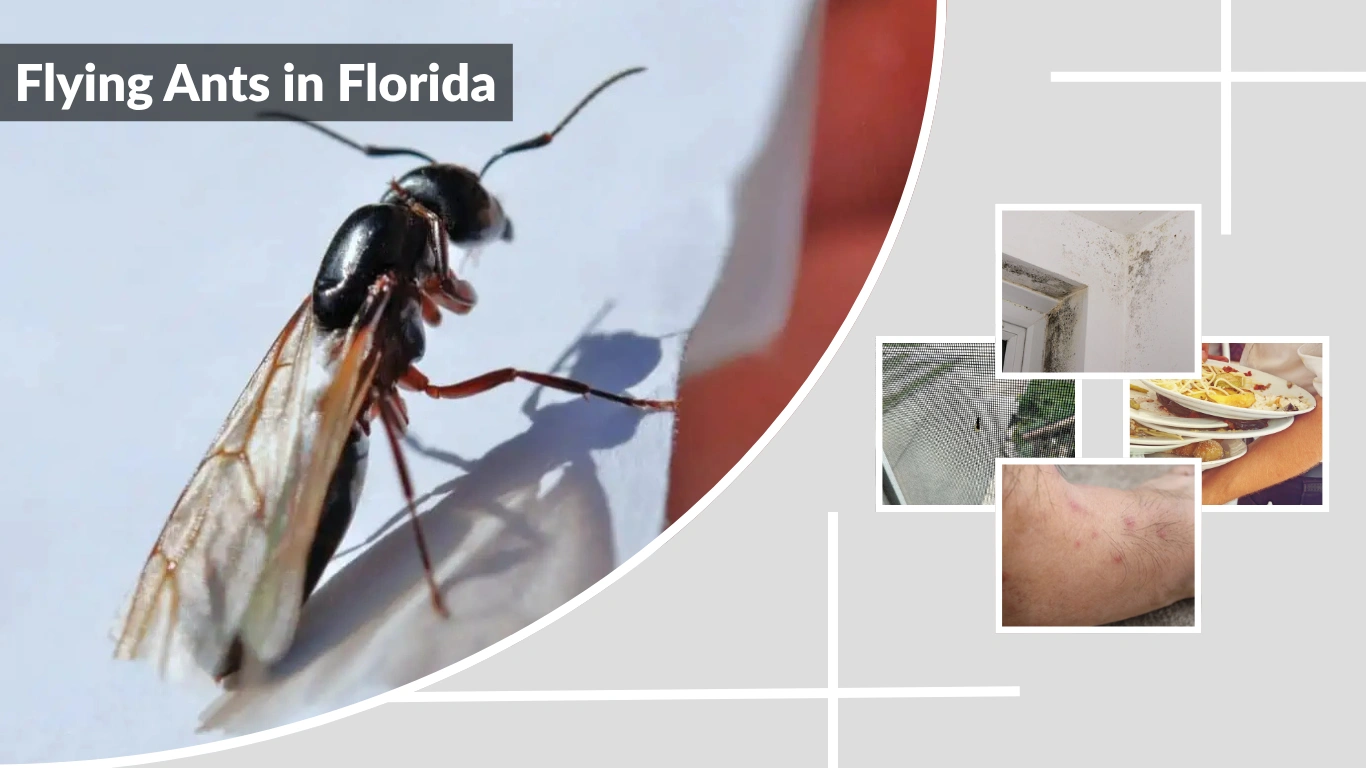
Flying ants are a familiar sight throughout Florida, especially after warm summer rains. These winged insects, also known as alates, are not a separate species but the reproductive members of established colonies. They emerge seasonally to mate and start new colonies. Because they swarm in large numbers, they’re often mistaken for termites—a mix-up that can lead to unnecessary alarm among homeowners.
What Are Flying Ants in Florida?
Flying ants appear when colonies reach maturity and conditions are right for reproduction. These ants include both males and females that take part in the nuptial flight, where they leave their colonies to mate midair. After mating, the males die, while fertilized females shed their wings and begin new colonies.
In Florida’s warm, humid climate, this activity is common from May through September. Rainfall and heat provide ideal conditions for these ants to thrive. While they may look intimidating, they’re a normal part of the state’s natural ecosystem.
Flying Ant Season in Florida

The “flying ant season” usually peaks between July and August, although sightings can occur earlier in South Florida and later in the Panhandle. Swarms are most common after heavy rain when humidity levels rise and the ground becomes soft for nesting.
During this time, you may notice large numbers of flying ants near your home, especially around lights, windows, and pools. The phenomenon can seem like an infestation, but it typically lasts only a few days until mating is complete.
Identification Features of Flying Ants in Florida

Flying ants can easily be identified using a few distinct features:
- Color: Usually dark brown, reddish-black, or glossy black.
- Wings: Two pairs, with the front wings longer than the back ones.
- Antennae: Bent or “elbowed” shape.
- Body: Clearly segmented with a narrow waist.
- Size: Ranges from 3 mm to 12 mm, depending on species.
Their shape, especially the narrow waist and bent antennae, helps distinguish them from termites. Termites have a thicker body, straight antennae, and wings of equal length.
Flying Ants vs. Termites in Florida

Many Floridians confuse flying ants with termites, particularly when both appear during summer. However, there are clear differences that help tell them apart:
Body Shape
Flying ants have a defined waist, while termites have straight, tube-like bodies.
Antennae
Ants’ antennae are bent, while termites’ are straight and bead-like.
Wings
Flying ants have two pairs of wings of different lengths, while termite wings are identical in size and shape.
Recognizing these distinctions is important because termites cause significant structural damage, whereas flying ants are temporary and usually harmless.
Common Species of Flying Ants in Florida

Florida’s warm and humid environment supports many species of ants, several of which develop wings during their reproductive stage. The most common flying ants include:
- Carpenter Ants (Camponotus spp.): Large black or red ants that may nest in wood, especially damp structures.
- Fire Ants (Solenopsis spp.): Reddish-brown ants known for painful stings during swarming periods.
- Black Garden Ants (Lasius niger): Smaller ants commonly found near gardens and sidewalks.
- Field Ants (Formica spp.): Typically found in lawns or sandy soil, forming visible mounds.
Each of these species plays a role in Florida’s ecosystem, but some—particularly carpenter and fire ants—can become pests when they invade homes or yards.
Why Flying Ants Swarm in Florida
Swarming occurs as part of the ants’ reproductive process. Warm weather, rain, and high humidity signal colonies that it’s time for the nuptial flight. During this event, thousands of flying ants emerge simultaneously to mate.
After mating, males die, and fertilized females search for nesting sites in soil, wood, or crevices around homes. You’ll often notice them around swimming pools, patios, and garden lights, where they gather due to moisture and illumination.
While large swarms may seem alarming, they are temporary—typically lasting only a few hours to a couple of days.
Flying Ants in Florida Homes

Seeing flying ants indoors often indicates that a nearby colony has matured. They may enter homes through open windows, roof vents, or foundation cracks. Common indoor locations include:
- Bathrooms: High humidity attracts them.
- Kitchens: Food crumbs and sweet residues provide sustenance.
- Attics: Dark, quiet spaces are ideal for nesting.
If you notice multiple swarms in the same area, it could mean a colony has formed inside the house, particularly if they’re carpenter ants nesting in damp wood.
Flying Ant Infestation in South Florida
South Florida’s tropical weather makes it especially prone to flying ant swarms. Carpenter ants are the most common culprits, nesting in tree stumps, decks, or damp wall cavities.
In areas like Miami, Fort Lauderdale, and the Florida Keys, residents often report flying ants invading homes, patios, and pools after heavy rains. These infestations are rarely harmful but can be bothersome. Consistent sightings, however, may suggest structural moisture or hidden wooden nests that require inspection.
Flying Ant Bites and Stings in Florida

Most flying ants do not bite or sting humans, but exceptions exist. Fire ants can sting painfully, causing red bumps or blisters, while carpenter ants may bite defensively with their strong jaws.
Reactions are generally mild, but sensitive individuals might experience swelling or itching. For relief:
- Apply ice to the affected area.
- Use an antihistamine or hydrocortisone cream.
- Avoid scratching to prevent infection.
If severe swelling or allergic reactions occur, medical attention may be necessary, though such cases are rare.
How to Get Rid of Flying Ants in Florida
Eliminating flying ants requires a combination of sanitation, exclusion, and targeted treatments. Since they enter homes for mating or nesting, the goal is to make your property less attractive and block access points.
Here’s how to get rid of them effectively:
- Seal Entry Points: Close cracks around windows, doors, and walls using silicone caulk.
- Remove Food Sources: Keep food sealed, clean spills quickly, and take out trash regularly.
- Control Moisture: Repair leaks and dry out damp areas in kitchens, bathrooms, and basements.
- Use Ant Baits: Place sweet gel or protein baits near trails or entry zones to eliminate colonies.
- Apply Insecticide: Treat around window frames, foundations, and door thresholds.
- Hire Pest Control: Persistent infestations, especially from carpenter ants, may require professional extermination.
Combining these steps ensures both immediate relief and long-term prevention.
Preventing Flying Ants in Florida

Preventing flying ants is easier than eliminating established colonies. Because Florida’s warm, wet weather favors insect activity, year-round vigilance is important.
Effective prevention tips include:
- Repair Leaky Fixtures: Moisture is the main attractant for carpenter and garden ants.
- Clean Outdoor Areas: Remove yard debris, tree branches, or mulch piles that harbor nests.
- Keep Wood Dry: Store firewood and lumber away from your home’s foundation.
- Use Screens: Install window and vent screens to block flying ants during swarming season.
- Regular Inspections: Check attics, basements, and crawl spaces for damp wood or sawdust—common signs of carpenter ants.
Consistent cleaning and humidity control reduce the likelihood of future infestations.
Flying Ants Around Florida Pools
Flying ants often appear around pools and patios because the water and bright reflections attract them. Swarms can form quickly after summer rains when humidity peaks.
To manage them near pools:
- Skim the surface regularly to remove floating insects.
- Turn off pool lights at night to minimize attraction.
- Apply perimeter sprays or natural repellents around pool decks.
- Keep surrounding vegetation trimmed to reduce nesting opportunities.
Although they don’t breed in water, flying ants use pools as gathering points during their mating flights.
Regional Patterns Across Florida
South Florida
Hot and humid climates encourage longer swarming seasons, typically from April to October. Flying ants are often seen in urban areas near moisture sources like gardens, patios, and lakes.
Central Florida
Moderate rainfall and warm temperatures extend swarming activity into late summer. Carpenter ants are particularly active in wooded residential zones.
Florida Panhandle
Cooler winters mean shorter flying ant seasons, with swarms peaking in May and June. However, heavy summer rains can trigger sudden, large flights.
These regional variations help homeowners anticipate and prepare for annual swarming events.
Flying Ants at Night in Florida
Flying ants are highly attracted to light, especially white or blue lighting. This is why they often swarm around porch lights, windows, and indoor lamps after dark.
To minimize attraction:
- Use yellow or warm-toned “bug lights.”
- Keep curtains closed at night.
- Turn off outdoor lighting during swarming hours.
Simple lighting adjustments can drastically reduce nighttime ant activity.
Flying Ant Infestation in Florida Homes
When flying ants persist indoors beyond the usual mating period, it may indicate a structural issue or hidden nest. Signs of infestation include:
- Repeated ant sightings near windows or vents
- Discarded wings along windowsills
- Small piles of sawdust from wood nesting
- Rustling sounds inside wooden beams
Carpenter ants are often the culprit behind long-term infestations. Prompt inspection and treatment prevent potential wood damage and further spreading.
FAQs
When is flying ant season in Florida?
Flying ant season typically occurs between May and September, peaking in July and August after rainfall. In South Florida, swarms can occur year-round due to consistent humidity.
Are flying ants dangerous in Florida?
No, most species are harmless. However, carpenter ants can damage wooden structures, and fire ants can sting. For major infestations, professional pest control is recommended.
How can I prevent flying ants from coming inside?
Seal entry points, fix leaks, and store food properly. Keep lighting minimal at night, and ensure your home remains clean and dry to deter swarming insects.
Do flying ants bite or sting in Florida?
Most don’t, but fire ants can sting, and carpenter ants can bite. Their bites usually cause mild irritation that subsides within a few hours.
How can I tell the difference between flying ants and termites?
Flying ants have elbowed antennae, narrow waists, and wings of unequal length. Termites have straight antennae, thick bodies, and wings that are the same size.