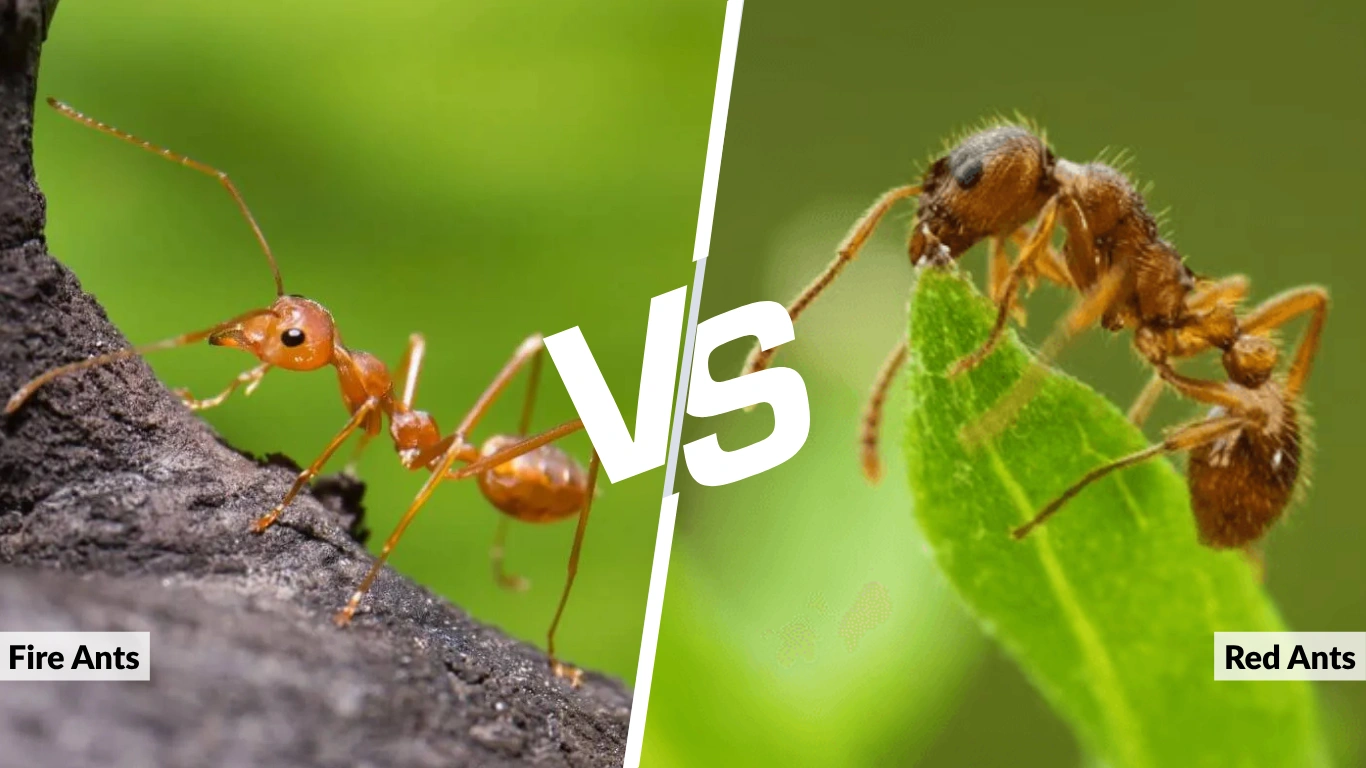
Fire ants and red ants are often mistaken for each other because of their similar reddish appearance. However, they differ greatly in behavior, bite intensity, habitat, and colony structure. Understanding their distinctions helps in pest control, bite treatment, and avoiding infestations, especially in warmer regions where both species thrive.
What Are Fire Ants and Red Ants?
Fire ants are aggressive insects known for their painful stings and large colony sizes. They usually build dome-shaped mounds in open, sunny areas and can deliver venomous stings that cause intense burning sensations. Red ants, on the other hand, is a broader term that includes several red-colored ant species, such as red carpenter ants and red harvester ants. While not all red ants sting, some can bite or cause mild irritation.
Fire Ants vs Red Ants: Main Differences

The biggest difference between fire ants and red ants lies in aggression and sting potency. Fire ants are highly territorial and attack in groups, injecting venom repeatedly. Red ants, especially carpenter or harvester types, are less aggressive and rely more on bites than stings. Fire ants have shiny, reddish-brown bodies and form large mounds, whereas red ants may appear duller and nest in wood, soil, or under stones.
| Feature | Fire Ants | Red Ants |
| Color | Reddish-brown | Bright to dull red |
| Behavior | Highly aggressive | Less aggressive |
| Bite/Sting | Venomous sting | Mild bite |
| Habitat | Open fields, lawns | Wood, soil, vegetation |
| Colony Size | Massive, multiple queens | Smaller colonies |
Appearance and Size Comparison
Fire ants are small, ranging from 1/8 to 1/4 inch, with a distinct two-segmented waist and dark abdomen. Red carpenter ants are larger, reaching up to 1/2 inch, and have heart-shaped heads with powerful mandibles. Red harvester ants are medium-sized but easily recognizable by their hairy heads and slower movement. Observing their size and structure helps in quick identification, especially during infestations.
Fire Ants vs Red Ants Bites

The bite and sting difference is one of the most noticeable factors. Fire ants bite first to anchor themselves, then inject venom with their stinger, leaving behind painful, pus-filled blisters that last several days. Red ants usually bite without injecting venom, causing short-lived pain or mild redness. Fire ant venom contains alkaloids responsible for the burning sensation, while red ants’ bites are mostly mechanical irritations.
First Aid Tips:
- Wash the area with soap and cold water.
- Apply an antiseptic cream or hydrocortisone.
- Use ice packs to reduce swelling.
- Seek medical attention if you experience allergic reactions or swelling beyond the bite site.
Who Would Win: Fire Ants vs Red Ants?
In a direct confrontation, fire ants almost always win. Their sheer numbers, organized attack patterns, and potent venom make them deadly to most ant species. They can quickly overtake other colonies, including red harvester or carpenter ants, by swarming and killing opposing workers. Red ants are stronger individually but lack the coordination and venom power of fire ants, giving the latter a significant advantage in colony warfare.
Red Harvester Ant vs Fire Ant

Red harvester ants are native to dry regions and known for collecting seeds rather than hunting insects. Compared to fire ants, they are less aggressive and sting only when threatened. However, their stings can be extremely painful, even more so than fire ants, though they rarely attack in groups. Fire ants dominate in population control and adaptability, while harvester ants maintain ecological balance by dispersing seeds.
Red Carpenter Ant vs Fire Ant
Red carpenter ants differ entirely in lifestyle. They don’t sting but bite with strong jaws capable of breaking skin. They usually nest in wood—damaging walls, decks, and furniture. Fire ants prefer open soil and form visible mounds. While carpenter ants pose structural risks, fire ants are more dangerous to humans due to their venomous stings and aggressive nature.
Red Imported Fire Ant vs Argentine Ant

The red imported fire ant (RIFA) is one of the most invasive ant species in the world. Native to South America, it has spread widely across the southern United States. These ants are known for their painful stings and massive colonies. In contrast, Argentine ants are smaller and less aggressive but outcompete others through sheer population size. When these two species meet, RIFAs usually win due to their stronger venom and organized attacks, although Argentine ants may dominate in cooler, urban environments.
Red Imported Fire Ant vs Southern Fire Ant
Though both belong to the fire ant group, the red imported fire ant is larger and more aggressive than the southern fire ant. Southern fire ants prefer shaded, dry areas, while imported ones thrive in open, sunny fields. Red imported fire ants build taller mounds, and their stings cause more severe allergic reactions. In overlapping territories, RIFAs often drive southern fire ants away, establishing dominance through aggressive foraging and colony expansion.
Fire Ant Colonies vs Red Ant Colonies

Fire ant colonies are complex and massive, often containing hundreds of thousands of workers and multiple queens. They organize coordinated attacks and build dome-shaped mounds above the soil surface. Red ant colonies, on the other hand, are smaller with one or two queens and focus on survival rather than expansion. Fire ants relocate their colonies quickly during floods or threats, while red ants remain localized. This adaptability gives fire ants a survival advantage across various regions.
Red vs Black Imported Fire Ants
There are two main types of imported fire ants in the U.S.—red and black. Both are venomous, but the red imported species is more aggressive and widespread. Black imported fire ants tend to stay in cooler climates and have darker bodies. Their stings are slightly less painful, but they exhibit similar behavior in nesting and colony defense. Hybrid colonies between the two also exist, making identification challenging in overlapping areas.
Ant Hill Comparison: Fire Ants vs Red Ants
Fire ant hills are typically mound-shaped, dome-like structures that can reach up to 18 inches in height. They have no central hole on top, and ants enter through hidden side tunnels. Red ant nests vary depending on species—carpenter ants prefer wood, while harvester ants build flat soil mounds with visible entrances. Observing the hill shape and activity level helps determine which species has invaded your yard.
Fire Ants vs Red Ants Pictures (Visual Guide)
Images of fire ants show their reddish-brown bodies, darker abdomens, and shiny texture. Red ants, depending on species, may appear brighter red or orange with larger heads. Comparing photos of mounds, body structure, and antenna shapes can help you recognize infestations early. Always use high-resolution identification charts when inspecting colonies outdoors or near homes.
Bite Treatment: Fire Ant vs Red Ant
Fire ant bites often lead to white pustules that can become infected if scratched. Clean the area, apply topical antiseptics, and avoid bursting blisters. Red ant bites rarely cause blisters but can leave red marks or minor swelling. Natural remedies like aloe vera or apple cider vinegar can soothe irritation, while antihistamines help reduce itching. For multiple fire ant stings, consult a doctor immediately.
Regional Variations: California & Texas Ants
In California, red ants and fire ants coexist, but red carpenter ants are more common indoors, while fire ants dominate outdoor spaces. In Texas, red imported fire ants are a serious problem due to the warm, humid climate. They attack livestock, damage electrical equipment, and spread rapidly. Effective control includes using bait treatments and removing visible mounds before the rainy season.
FAQs
What is the main difference between fire ants and red ants?
Fire ants are a specific type of red ant species known for their venomous sting, while “red ants” can refer to any red-colored ant. Fire ants are highly aggressive, forming large colonies, while most red ants are less hostile and cause only mild irritation when disturbed.
Are fire ant bites more dangerous than red ant bites?
Yes, fire ant bites inject venom that causes burning pain and pustules. Red ant bites are usually less painful and don’t produce blisters. People allergic to fire ant venom can experience severe reactions such as swelling, dizziness, or breathing difficulty, requiring urgent medical attention.
Do fire ants and red ants live in the same areas?
They often share regions, especially in warm, humid climates like the southern U.S. However, they prefer different nesting sites—fire ants build mounds in open spaces, while red ants choose shaded, wooden, or sandy areas for their colonies.
Which ant is more aggressive—fire ant or red harvester ant?
Fire ants are more aggressive overall and attack in groups, injecting venom repeatedly. Red harvester ants sting rarely but can deliver a more painful sting individually. However, they’re solitary and less likely to swarm like fire ants do.
How can I prevent fire or red ant infestations?
Keep lawns trimmed, remove debris, and seal entry points around your home. Avoid leaving food outside, and use ant baits or professional pest control for large colonies. Regular inspection during summer months helps prevent infestations from spreading indoors.