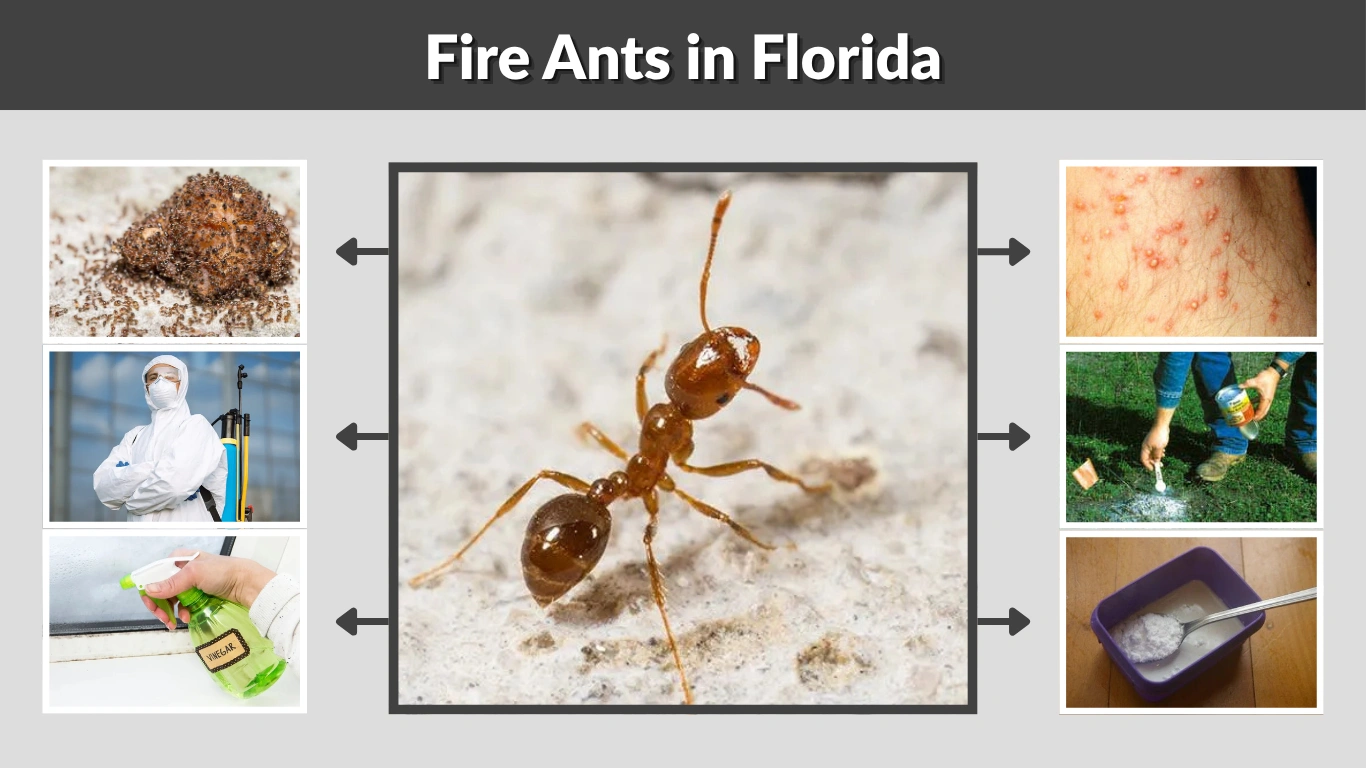
Fire ants are a common nuisance in Florida, known for their painful stings, aggressive swarming, and rapid colony growth. These tiny insects thrive in the state’s warm and humid climate, making them a problem for homeowners, farmers, and even outdoor enthusiasts. From backyards to golf courses, fire ants can appear almost anywhere. This article explores everything you need to know about fire ants in Florida, including their types, dangers, and effective control methods.
What Are Fire Ants?
Fire ants belong to the genus Solenopsis, a group of highly aggressive ants that sting rather than bite. The most notorious among them is the red imported fire ant (Solenopsis invicta), which was accidentally introduced to the U.S. from South America in the 1930s. These ants have since spread throughout the southern states, especially Florida, where warm weather and moist soil allow them to thrive year-round.
Fire ants are known for their painful stings and distinctive mound nests. They build colonies with thousands of workers and several queens, capable of reproducing rapidly. Their aggressive nature makes them one of Florida’s most challenging pests.
Are Fire Ants Native to Florida?

No — fire ants are not native to Florida. The red imported fire ant and the black imported fire ant were introduced accidentally through cargo ships docking at Gulf Coast ports. Native Florida ants, such as the tropical fire ant (Solenopsis geminata), existed long before the invasive species arrived, but they were largely displaced by their more aggressive relatives.
Today, imported fire ants dominate most of the state, from North Florida to South Florida, and are considered a major invasive species. Their presence has affected native wildlife, soil ecosystems, and even human activities such as agriculture and recreation.
Types of Fire Ants Found in Florida

Florida is home to several types of fire ants, each with distinct features and habitats:
- Red Imported Fire Ant (Solenopsis invicta): The most widespread and aggressive species, responsible for most bites and infestations.
- Black Imported Fire Ant (Solenopsis richteri): Found primarily in northern Florida; slightly larger and darker than the red species.
- Hybrid Fire Ants: Crossbreed between red and black fire ants, found mainly in Central Florida.
- Native Tropical Fire Ant (Solenopsis geminata): Less aggressive and now rare due to competition with imported species.
These species have adapted to Florida’s conditions, building nests in lawns, gardens, and even roadside areas. In rural regions, they’re a common issue for farmers and pet owners alike.
What Do Fire Ants Look Like in Florida?

Fire ants in Florida have a distinctive reddish-brown to dark brown color with a darker abdomen. Worker ants range in size from 1/8 to 1/4 inch long, and each colony can include several different-sized ants. Their most recognizable feature is the mound — a loose, dome-shaped structure made of soil, usually between 6 to 12 inches high and up to 2 feet wide.
Unlike other ants, fire ant mounds don’t have a visible entrance hole at the top. Instead, the ants enter through tunnels beneath the soil. These mounds are commonly found in lawns, fields, golf courses, campgrounds, and gardens. After rainfall, new mounds often appear overnight, signaling high colony activity.
Fire Ant Bites in Florida

Fire ant “bites” are actually stings. When threatened, fire ants swarm and sting repeatedly, injecting venom that causes a burning, itchy sensation — hence the name “fire” ant. The venom, known as solenopsin, leads to red bumps and pustules that can last several days.
Symptoms of fire ant stings include:
- Sharp burning pain within seconds of the sting
- Swelling and redness around the site
- Formation of white, pus-filled blisters
- Itching or irritation lasting several days
For most people, these stings heal on their own, but allergic individuals may experience severe reactions such as hives, dizziness, or difficulty breathing. Immediate medical attention is necessary in such cases.
Fire Ant Bites on Pets
Dogs and cats in Florida are also vulnerable to fire ant attacks, especially if they disturb a mound. Pets may show signs of pain, licking their paws or scratching at the sting area. Veterinarians recommend rinsing the area with cool water and applying pet-safe antiseptic ointments.
The best first-aid remedy for fire ant bites in both humans and animals is cleaning the affected area, applying ice to reduce swelling, and using natural soothers like aloe vera or baking soda paste to ease irritation.
Where Are Fire Ants Found in Florida?
Fire ants are widespread across the entire state of Florida. They thrive in sunny, open areas with moist soil, avoiding dense forests and heavily shaded zones. Their colonies are especially common in:
- Central Florida: Around Orlando, Ocala, and Lakeland
- North Florida: In cities like Jacksonville, Gainesville, and Tallahassee
- South Florida: Miami, Naples, and Fort Lauderdale
- Panhandle and Gulf Coast areas: Including Pensacola and Panama City
They are often found in yards, parks, campgrounds, and golf courses, as well as electrical boxes, driveways, and fence posts. After heavy rains, colonies can form floating fire ant rafts to survive flooding — a well-documented phenomenon seen during Florida’s 2017 floods.
Are Fire Ants Dangerous or Poisonous in Florida?

Fire ants are not technically poisonous, but their venom is toxic enough to cause pain and inflammation. A sting from one or two ants can be minor, but dozens of stings can lead to serious allergic reactions or infections if untreated.
While fatalities are extremely rare, there have been reported fire ant–related deaths in Florida linked to allergic reactions. Children, the elderly, and those with insect allergies are most at risk. Fire ants can also pose a threat to pets and livestock by attacking soft areas like the eyes, nose, or ears.
Their aggressive nature makes them more dangerous than most native Florida ants. Even a small mound can house tens of thousands of ants ready to defend their territory.
Fire Ant Behavior and Mound Formation
Fire ants build large, dome-shaped mounds that appear suddenly, especially after rain. These mounds serve as a protective home for their queen and brood. Colonies can contain up to 250,000 worker ants and multiple queens, allowing rapid reproduction.
One unique behavior seen in Florida is fire ant rafting during floods. When water levels rise, the ants link together, creating floating rafts that can drift for days until they find dry land. This survival strategy helps them spread across new areas, making control more challenging.
Mounds can also damage lawns, farming equipment, and electrical systems. In rural Florida, fire ants are known to infest cattle pastures and even chew through insulation around wires and irrigation systems.
Fire Ant Season in Florida
Fire ants are active year-round in Florida due to the state’s warm climate, but their activity peaks during spring and early summer. Colonies become most visible after heavy rains when ants move soil to rebuild their mounds. In North Florida, activity may slow slightly in winter, but in South Florida, fire ants remain active even in cooler months.
During breeding season, winged male and female ants (called alates) swarm into the air to mate. After mating, queens establish new colonies, often just a few hundred feet from the parent mound. This reproductive cycle explains why fire ant populations spread so quickly throughout the state.
How to Get Rid of Fire Ants in Florida

Eliminating fire ants requires persistence and proper timing. The most effective methods combine baiting, mound treatment, and professional pest control when necessary.
1. Broadcast Baiting
Apply ant bait evenly over the lawn or yard, rather than directly on the mounds. Worker ants carry the bait back to the colony, feeding it to the queen. In Florida, spring and fall are the best times for bait applications because ants are most active and foraging for food. Products like Extinguish Fire Ant Bait and Amdro are highly effective.
2. Mound Treatments
For visible mounds, apply insecticidal dusts or mound drenches directly over the nest. Avoid disturbing the mound before treatment, as ants may scatter and form satellite colonies.
3. Natural Remedies
For a more eco-friendly approach, try:
- Boiling Water: Pour over mounds to kill ants instantly (effective but limited to small colonies).
- Diatomaceous Earth: A natural powder that dehydrates ants and is safe for pets and plants.
- White Vinegar & Dish Soap Spray: Mix equal parts water and vinegar with a few drops of soap and spray ant trails or entry points.
These natural remedies for fire ant control in Florida are ideal for homes with pets or children.
4. Professional Control
If your property has multiple large colonies, hiring a fire ant exterminator in Florida is the best option. Professionals can safely apply stronger treatments and maintain long-term control programs.
Best Fire Ant Killers in Florida
Florida homeowners often rely on specific products proven to work in the state’s climate:
- Extinguish Fire Ant Bait: Commonly used in Ocala and Tampa; controls colonies within weeks.
- Advion Fire Ant Bait: Ideal for large lawns or golf courses.
- Ortho Fire Ant Killer Mound Treatment: Works fast on visible mounds.
- Natural Options: Diatomaceous earth, boric acid, and orange oil are safer for gardens and pets.
These options provide flexibility depending on whether you prefer chemical or natural fire ant treatment in Florida.
Natural and Home Remedies for Fire Ants

Florida homeowners often seek chemical-free ways to manage fire ants safely. Here are the best home remedies to kill fire ants naturally:
- Boiling Water and Dish Soap: Pour over mounds to suffocate and destroy nests.
- Vinegar Solution: Mix equal parts vinegar and water; spray directly on ants or trails.
- Boric Acid and Sugar Bait: Combine sugar with boric acid to attract and poison ants gradually.
- Citrus Peel Water: Boil orange or lemon peels, let it cool, and pour it over nests — the natural oils repel and kill ants.
For prevention, sprinkle coffee grounds or cinnamon near entry points or around mounds. These home remedies for fire ants in Florida are effective for small infestations and environmentally friendly.
What Eats Fire Ants in Florida?
Although fire ants have few natural predators, some animals help keep their populations in check.
- Armadillos: Dig into mounds to eat larvae.
- Lizards and Frogs: Consume worker ants.
- Certain Bird Species: Peck at exposed ants and mounds.
- Phorid Flies: Tiny parasites introduced for biological control; they lay eggs in fire ants, killing them over time.
While these natural predators play a role, they cannot eliminate infestations on their own. Regular treatment is still necessary to control fire ant populations.
Interesting Fire Ant Facts in Florida
- Fire ants were first discovered in Florida in the 1940s and spread rapidly through the southeastern U.S.
- Each mound can contain up to 250,000 ants and several queens.
- Fire ants can survive floods by forming floating rafts of live ants that move together on water.
- Fire ants cause millions of dollars in damage annually to Florida’s crops, electrical systems, and livestock.
- Florida Cane Fire Ant Vodka, a local craft spirit, playfully references the insect’s fiery sting and resilience.
These facts highlight how deeply fire ants have become embedded in Florida’s environment — both as pests and as part of local culture.
FAQs
1. Are fire ants native or invasive to Florida?
Fire ants are invasive, not native. The red imported fire ant came from South America and quickly spread across Florida, displacing native ant species.
2. What do fire ant bites look like in Florida?
They cause red, itchy bumps that develop into white pustules within hours. These stings burn intensely and can last several days, sometimes leading to allergic reactions.
3. When is fire ant season in Florida?
Fire ants are active all year but peak in spring and summer, especially after heavy rains when new colonies emerge and mounds become visible.
4. What’s the best way to kill fire ants in Florida yards?
Use a two-step method: broadcast bait across the area, then treat active mounds directly. For eco-friendly results, try vinegar sprays or diatomaceous earth.
5. How dangerous are fire ants to dogs and people in Florida?
Their stings are painful and can cause allergic reactions or skin infections. For pets, multiple stings can lead to swelling or difficulty walking. Prompt care and prevention are crucial.