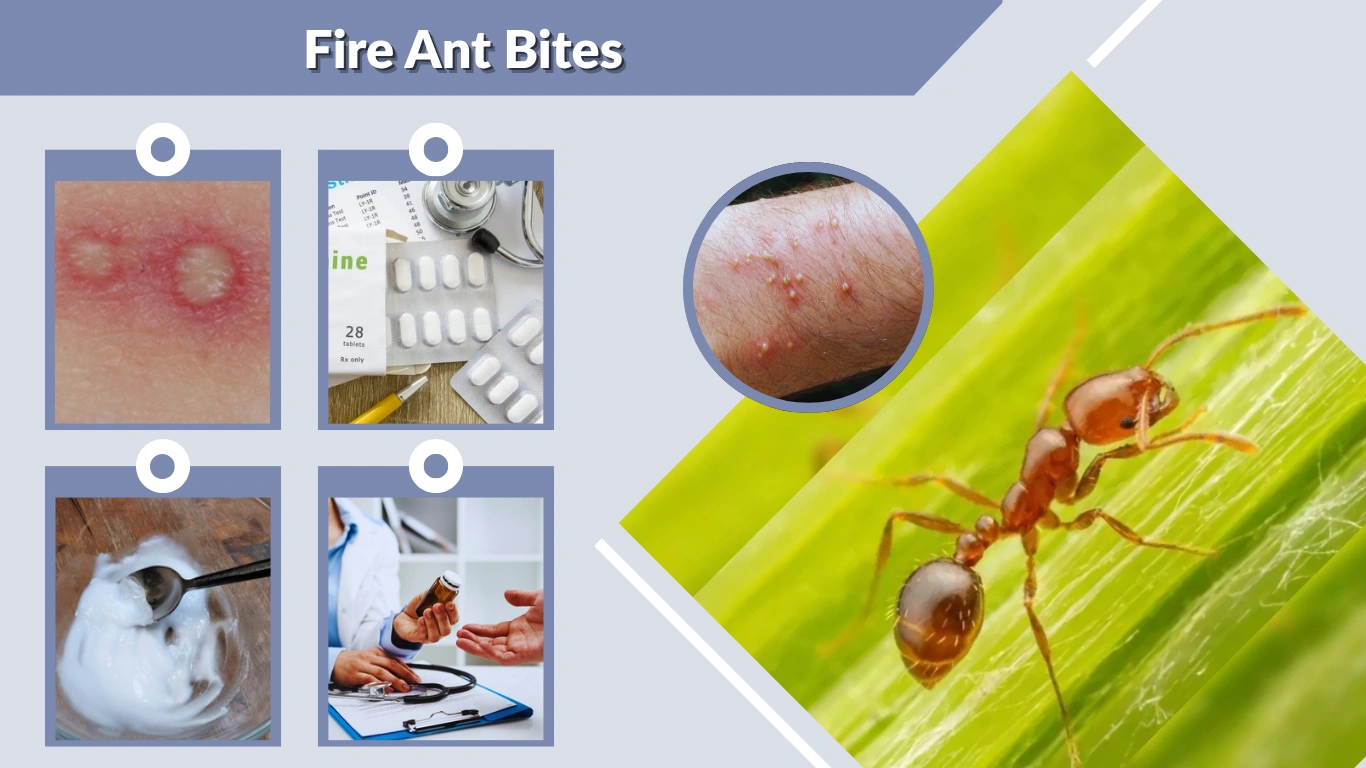
Fire ant bites are painful stings that cause redness, swelling, and intense itching. These aggressive insects inject venom that produces burning sensations and pus-filled blisters. In some cases, their stings can lead to severe allergic reactions requiring medical attention. Recognizing fire ant bites and knowing how to treat them quickly can prevent infection and minimize discomfort. This detailed guide explains symptoms, remedies, and preventive care for both humans and pets.
What Are Fire Ant Bites?
Fire ants bite to anchor themselves and then sting repeatedly to inject venom. This venom contains alkaloids that trigger pain, itching, and blister formation. Their bites are different from most ants because of the strong burning sensation — hence the name “fire ant.” These ants typically attack in groups, so it’s common to find multiple stings in close proximity.
Fire ant bites often appear within minutes, showing redness and swelling. People with sensitive skin may feel stinging pain followed by itching that can last for days.
Do Fire Ants Bite or Sting?

Many people wonder if fire ants bite or sting. The truth is they do both. The initial bite allows them to latch onto the skin, while the sting injects venom. Unlike other ants that only bite, fire ants deliver multiple stings in circular patterns as they pivot around the site.
This dual action is why their bites cause such intense burning and discomfort. Understanding this helps identify fire ant bites quickly and differentiate them from mosquito or flea bites.
What Does a Fire Ant Bite Look Like?

Fire ant bites start as red bumps and soon develop into white, pus-filled blisters. These blisters are a hallmark of their sting and shouldn’t be popped, as doing so can lead to infection. The reaction typically unfolds in stages:
- Within minutes: Red, raised bumps with a stinging or burning feeling.
- After a few hours: Small white pustules form at the center.
- After 2–3 days: Blisters dry up and scab over as healing begins.
Their distinct appearance makes it easier to identify compared to other insect bites.
Symptoms of Fire Ant Bites

The most common fire ant bite symptoms include pain, redness, and itching. Mild cases may only cause minor swelling, but others can experience large red patches or multiple blisters. Additional symptoms may include:
- Burning or stinging sensation immediately after contact.
- Raised pustules filled with white fluid.
- Itchiness that can persist for several days.
In severe cases, especially with multiple stings, the swelling may spread beyond the bite site. People allergic to fire ant venom can experience more dangerous symptoms, which require urgent care.
Allergic Reactions to Fire Ant Bites
An allergic reaction to fire ant bites can be serious. Symptoms may appear within minutes and include hives, difficulty breathing, swelling of the face or throat, and dizziness. Pictures of fire ant allergic reactions often show extreme redness and inflamed skin.
If someone experiences these symptoms, immediate medical help is essential. Doctors may administer antihistamines, corticosteroids, or epinephrine in severe cases. Even mild allergic signs should not be ignored, as reactions can worsen with future stings.
Infection from Fire Ant Bites

Scratching or popping blisters can lead to infection. Infected fire ant bites may become swollen, warm, and filled with pus. The surrounding skin can appear red or streaked, which indicates bacteria have entered the wound.
To avoid infection, clean the affected area gently with soap and water. Apply an antiseptic ointment and keep the wound covered. If pain, swelling, or fever develops, it’s important to consult a doctor for possible antibiotic treatment.
Fire Ant Bites on Dogs and Pets
Dogs that encounter fire ants can suffer painful stings, often on their paws, belly, or muzzle. Symptoms in pets include constant licking, redness, and swelling around the bite area. To treat fire ant bites on dogs, rinse the affected area with cool water and mild soap, then apply a cold compress to reduce swelling.
If your dog experiences heavy swelling, vomiting, or difficulty breathing, contact a veterinarian immediately. Fire ant bites can cause serious allergic reactions in animals just like in humans.
Fire Ant Bite Remedies

Treating fire ant bites quickly reduces swelling and pain. Start by cleaning the area with soap and water to remove any dirt or venom residue. Apply an ice pack wrapped in a cloth for about 10 minutes to control redness and burning.
Other effective remedies include:
- Aloe vera gel: Soothes itching and promotes healing.
- Hydrocortisone cream: Reduces inflammation and irritation.
- Antihistamine tablets: Relieve itching and allergic symptoms.
Avoid scratching the bite to prevent infection and scarring. Keeping the skin dry and clean helps the blisters heal faster.
Home Remedies for Fire Ant Bites

Natural treatments can relieve itching and swelling effectively. Some safe home remedies include:
- Baking soda paste: Mix baking soda with water and apply to bites for 15 minutes.
- Honey: Acts as an antibacterial and helps prevent infection.
- Apple cider vinegar: Neutralizes venom and reduces pain.
- Oatmeal bath: Eases irritation and soothes inflamed skin.
Applying these remedies two to three times daily helps reduce redness and accelerates recovery. They are excellent options for those preferring chemical-free treatment.
Medical Treatment for Fire Ant Bites

When home care isn’t enough, medical treatment may be required. Doctors often recommend topical corticosteroids or antihistamine creams for inflammation. Severe allergic reactions might need epinephrine injections to stabilize breathing and blood pressure.
For infected bites, antibiotics can be prescribed to stop bacterial spread. Pain relievers such as ibuprofen or acetaminophen may also be used to manage discomfort. Always avoid popping blisters since this increases infection risk and delays healing.
Duration and Healing Time
Fire ant bites usually last 7 to 10 days, depending on the severity of the reaction. The redness subsides after a few days, while blisters take longer to dry and heal. Itching may persist even after the pustules disappear.
Avoid scratching during this period. Using mild moisturizers and cold compresses helps soothe skin irritation. For people with sensitive skin, marks may last up to two weeks before fading completely.
Fire Ant Bite Blisters and Swelling
Blisters are a natural immune response to fire ant venom. These small pustules contain clear or white fluid and are not a sign of infection unless they turn yellow or red. Do not pop them, as the skin protects against bacteria.
Swelling can be managed by elevating the affected area and applying ice packs. Over-the-counter anti-inflammatory creams or oral antihistamines can help if itching or redness worsens. Keep the area clean until the blister dries up naturally.
Preventing Fire Ant Bites
Prevention is the best defense against painful stings. Here are effective ways to avoid contact:
- Avoid stepping on mounds: Fire ants swarm aggressively when disturbed.
- Wear closed shoes and long pants when working outdoors.
- Use insect repellents containing DEET or natural oils like citronella.
- Check lawns and gardens regularly and treat colonies professionally.
For pet safety, keep dogs away from visible mounds and use pet-friendly repellents. Teaching children to identify fire ant nests also helps reduce risk.
When to Seek Medical Help
While most bites heal naturally, medical help is necessary if you experience:
- Severe swelling extending beyond the bite area.
- Signs of infection such as pus or fever.
- Allergic reactions like hives, dizziness, or breathing difficulty.
Seek emergency care immediately if symptoms worsen quickly after being stung. Early treatment prevents complications and ensures faster recovery for both humans and pets.
Final Thoughts
Fire ant bites can be painful but are manageable with quick action and proper care. Clean the area, apply cold compresses, and use either medical or natural remedies to ease discomfort. Always monitor for allergic or infection signs and consult a doctor if necessary. By understanding prevention and first aid, you can stay safe and minimize the risks of fire ant stings in the future.
FAQs
What should you put on fire ant bites?
Apply cold compresses to reduce pain and swelling, then use hydrocortisone cream or aloe vera gel to soothe the skin. An antihistamine like Benadryl can ease itching. Avoid scratching or popping blisters, as this can lead to infection and prolong the healing process.
How long do fire ant bites last?
Fire ant bites generally last 7 to 10 days. Redness fades within a few days, while blisters may take a week or more to dry. In some cases, mild itching can persist for up to two weeks, especially if the area is scratched or irritated repeatedly.
Should you pop fire ant bite blisters?
No, you should never pop fire ant bite blisters. The fluid inside protects the skin from bacteria and helps the wound heal naturally. Popping them increases the risk of infection, leading to pus formation and scarring. Allow the blisters to dry out on their own.
What helps allergic reactions to fire ant bites?
For mild allergic reactions, take oral antihistamines and apply topical creams. If you experience severe symptoms like throat swelling, chest tightness, or dizziness, seek emergency medical help immediately. An epinephrine injection may be required to counteract the effects of the fire ant venom.
How do you prevent fire ant bites?
To prevent bites, avoid stepping on mounds, wear protective clothing outdoors, and use insect repellents. Keep pets and children away from infested areas. Treating your yard with ant control products and hiring professional exterminators are effective ways to reduce fire ant colonies.