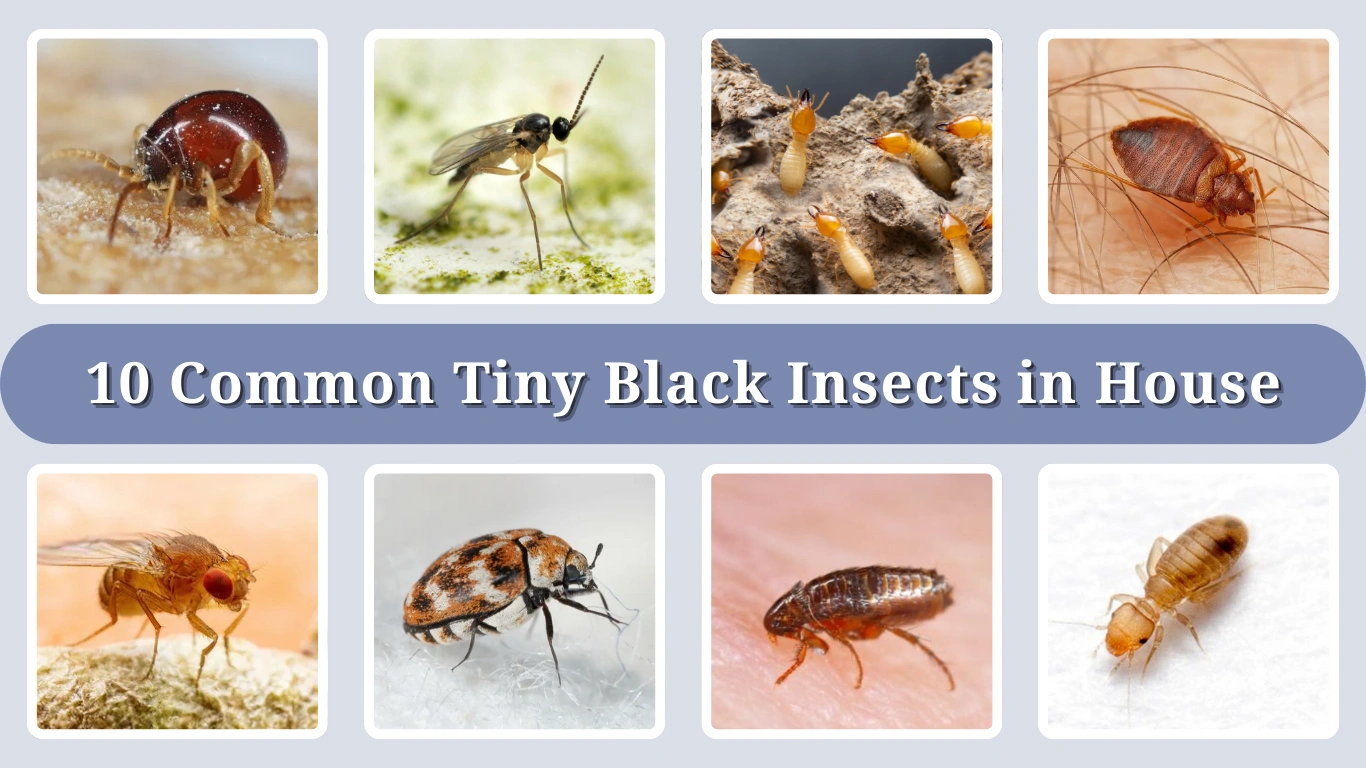
Insects are among the most common household intruders, often appearing unexpectedly and multiplying quickly. Tiny black insects can cause anything from mild annoyance to significant property damage, depending on the species. Some feed on food scraps or fabrics, while others thrive in damp conditions or infest wooden structures. Understanding their identification, potential risks, habitats, and effective control methods is crucial for keeping your home pest-free and protecting both your health and belongings.
1. Ants

Ants are among the most common household insects, often entering homes in search of food, water, or shelter. They usually move in groups and form trails, making them easy to spot. Although most ants are harmless, some can cause structural damage or contaminate food sources.
Identification
- Small, usually black or brown in color
- Segmented bodies with a narrow waist
- Six legs and bent antennae
- Often seen in long trails toward food or water sources
Risk
Ants can contaminate food, invade kitchens, and create nests in walls or foundations. Carpenter ants, in particular, may damage wooden structures, weakening them over time. While most ants don’t carry diseases, they are still considered pests due to their persistent invasions.
Habitat
They prefer warm, moist environments and are often found near kitchens, bathrooms, and basements. Outdoors, ants nest in soil, under rocks, or inside wood. Indoors, they may build colonies within walls, floors, or hidden crevices.
How to Get Rid
To control ants, eliminate food sources by storing items in sealed containers and keeping surfaces clean. Seal entry points around windows, doors, and cracks. Natural deterrents like vinegar or lemon juice can help, while bait traps or professional pest control may be necessary for larger infestations.
2. Booklice

Booklice are tiny insects often mistaken for bed bugs or lice, but they are harmless to humans. They thrive in damp environments and feed on mold, fungi, and starchy materials. While not dangerous, their presence is usually a sign of excess moisture indoors.
Identification
- Extremely small, usually less than 1–2 mm long
- Pale gray, white, or light brown in color
- Soft-bodied with long antennae
- Commonly seen on books, papers, or near windows
Risk
Booklice do not bite or transmit diseases, but they can damage paper materials, stored food, or wallpaper by feeding on mold. Their presence can also indicate humidity problems, which may lead to mold growth and further pest issues.
Habitat
They thrive in humid areas such as bathrooms, basements, and kitchens. Booklice are also found in books, stored grains, cardboard boxes, and damp walls. They prefer warm, moist, and poorly ventilated conditions.
How to Get Rid
Reduce indoor humidity by using dehumidifiers, fixing leaks, and improving ventilation. Store books, papers, and grains in dry areas. Cleaning mold from walls, food containers, and furniture also helps. In severe infestations, insecticides may be used, but moisture control is the most effective solution.
3. Fleas

Fleas are tiny, wingless insects known for their jumping ability and parasitic behavior. They usually enter homes through pets but can also be carried in on clothing or furniture. Though small, flea infestations spread quickly and are difficult to eliminate.
Identification
- Very small, about 1–3 mm in size
- Dark brown or black, with a hard, flat body
- Wingless but capable of powerful jumps
- Often seen on pets, carpets, or upholstered furniture
Risk
Fleas bite both humans and animals, causing itching, allergic reactions, and skin irritation. They can also transmit diseases such as murine typhus and parasites like tapeworms. Heavy infestations can cause anemia in pets, especially in young or weak animals.
Habitat
Fleas thrive in warm, humid environments. Indoors, they are commonly found in pet bedding, carpets, upholstered furniture, and cracks in floors. Outdoors, they live in shaded, moist areas such as grass, soil, and under shrubs where pets rest.
How to Get Rid
Treating pets with veterinarian-approved flea medications is essential. Wash pet bedding and vacuum carpets and furniture regularly. Steam cleaning can help kill flea eggs and larvae. In severe cases, insect growth regulators (IGRs) or professional pest control may be needed to break the flea life cycle.
4. Carpet Beetles

Carpet beetles are small insects that often enter homes through open doors, windows, or infested items. While adult beetles usually feed on pollen and nectar, their larvae can damage household items made from natural fibers. They are considered destructive pests due to their feeding habits.
Identification
- Small, round, or oval-shaped insects, about 2–4 mm long
- Adults are black with mottled patterns of white, yellow, or orange
- Larvae are hairy and worm-like, often brown or tan
- Commonly mistaken for bed bugs due to their size and presence indoors
Risk
Carpet beetle larvae feed on natural fibers like wool, silk, leather, and feathers, damaging clothing, carpets, and upholstery. They may also contaminate stored food products. Though they do not bite, their bristly hairs can cause allergic reactions, skin irritation, or respiratory issues in sensitive individuals.
Habitat
They are often found in carpets, rugs, furniture, closets, and storage areas with natural fibers. Carpet beetles can also infest attics, basements, and air ducts where lint, pet hair, and dead insects accumulate.
How to Get Rid
Vacuum carpets, furniture, and storage areas regularly to remove larvae and eggs. Wash infested clothing and fabrics in hot water. Store natural fiber items in airtight containers. Insecticides or professional pest control may be necessary for large infestations, especially in hidden or hard-to-reach areas.
5. Springtails

Springtails are tiny, wingless insects that are often found in damp areas of the home. They get their name from a tail-like appendage called a furcula, which allows them to jump short distances when disturbed. While they can appear in large numbers, springtails are harmless to humans.
Identification
- Very small, usually 1–2 mm long
- White, gray, black, or sometimes purple in color
- Wingless, with a soft body
- Can jump when startled due to their spring-like tail
Risk
Springtails do not bite or spread disease, but they can become a nuisance when present in large numbers. Their appearance indoors is usually linked to high moisture, which may indicate underlying issues like leaks, poor ventilation, or mold growth.
Habitat
They thrive in moist environments such as bathrooms, kitchens, basements, and near houseplants. Outdoors, they live in soil, leaf litter, mulch, and decaying organic matter. Indoors, they may be found around sinks, drains, windowsills, or potted plants.
How to Get Rid
Reduce humidity by fixing leaks, using dehumidifiers, and improving ventilation. Remove mold and excess moisture sources. Let soil in houseplants dry between waterings. In most cases, controlling moisture eliminates springtail populations without the need for insecticides.
6. Fruit Flies

Fruit flies are tiny insects commonly found indoors, especially in kitchens. They are attracted to ripened or fermenting fruits and vegetables, as well as moist organic matter. While more of a nuisance than a threat, they can reproduce rapidly and become difficult to manage.
Identification
- Very small, about 2–4 mm long
- Tan or brown body with red or dark eyes
- Slow, hovering flight near fruits or garbage
- Commonly seen around overripe produce, drains, or trash bins
Risk
Fruit flies do not bite, but they can contaminate food with bacteria and other pathogens they pick up from decaying matter. Their presence often indicates poor sanitation or fermenting organic waste in the home.
Habitat
They thrive in kitchens, pantries, and dining areas where food is exposed. Common breeding sites include fruit bowls, garbage disposals, trash cans, empty bottles, mops, and drains. Outdoors, they are found near compost bins, gardens, and orchards.
How to Get Rid
Dispose of overripe fruits and vegetables promptly. Clean drains, trash bins, and surfaces to remove breeding sites. Store produce in the refrigerator or sealed containers. Fruit fly traps using apple cider vinegar or commercially available solutions can help reduce their numbers.
7. Bed Bugs

Bed bugs are small, parasitic insects that feed on the blood of humans and animals. They are notorious for infesting beds, furniture, and cracks in walls, and are difficult to eliminate once established. Their bites cause discomfort and can lead to secondary skin issues.
Identification
- Small, flat, oval-shaped bodies, about 5–7 mm long
- Reddish-brown in color, becoming more swollen and darker after feeding
- Wingless, with six legs and short antennae
- Often found in mattress seams, bed frames, and upholstered furniture
Risk
Bed bugs feed on blood, causing itchy red bites that may appear in clusters or lines. Although they are not known to transmit diseases, their bites can lead to allergic reactions, insomnia, stress, and skin infections from excessive scratching. Large infestations can cause significant psychological and financial strain.
Habitat
They hide in mattresses, bed frames, headboards, furniture, and cracks in walls or floors. Bed bugs are nocturnal and typically emerge at night to feed. They can also spread through luggage, clothing, and secondhand furniture.
How to Get Rid
Wash and heat-dry bedding, clothing, and fabrics at high temperatures. Vacuum mattresses, furniture, and carpets regularly, and seal cracks where bed bugs can hide. Encase mattresses and box springs in protective covers. Severe infestations often require professional pest control using heat treatments or insecticides.
8. Termites

Termites are destructive insects that feed on cellulose, primarily found in wood and plant material. They often go unnoticed until significant damage has been done, making them one of the most feared household pests.
Identification
- Small, pale cream to light brown in color
- Straight antennae and soft bodies
- Workers are about 4–6 mm long, while soldiers have larger heads and mandibles
- Winged reproductive termites (swarmers) resemble flying ants but have straight waists and equal-sized wings
Risk
Termites pose a serious risk to homes by consuming wood and other cellulose-based materials. Over time, they can weaken the structural integrity of a house, leading to costly repairs. They do not bite humans or spread diseases, but the financial and structural damage they cause is significant.
Habitat
They build colonies underground, in wood, or in damp, dark areas. Indoors, they infest wooden beams, flooring, furniture, and walls. Outdoors, they live in soil, dead trees, mulch, and firewood piles near the house.
How to Get Rid
Reduce wood-to-soil contact around the foundation of the house. Remove moisture sources such as leaks and poor drainage. Use termite baits or liquid termiticides for active infestations. Severe cases usually require professional pest control services with specialized treatments.
9. Gnats

Gnats are small flying insects that often appear indoors in large numbers, especially in moist or decaying environments. While the term “gnat” refers to several species, the most common ones found in homes are fungus gnats and drain flies. They are mostly a nuisance but can indicate sanitation or moisture problems.
Identification
- Tiny, delicate flies, usually 2–4 mm long
- Black, brown, or gray in color
- Slender bodies with long legs and wings
- Often seen swarming near drains, plants, or light sources
Risk
Most gnats do not bite, but some species (like biting midges) can cause irritation. Fungus gnats can damage houseplants by feeding on roots and organic matter in soil. Drain gnats indicate the presence of organic buildup in pipes, which can harbor bacteria. Their presence can be unsightly and unhygienic.
Habitat
Gnats thrive in damp areas such as kitchens, bathrooms, drains, potted plants, and trash bins. Outdoors, they live in moist soil, compost, and decaying vegetation. Indoors, overwatered houseplants and clogged drains are their primary breeding sites.
How to Get Rid
Allow plant soil to dry between waterings to deter fungus gnats. Clean and disinfect drains to eliminate organic buildup. Use sticky traps to catch adult gnats and reduce their population. Maintaining proper sanitation and reducing excess moisture are key to long-term control.
10. Spider Beetles

Spider beetles are tiny insects that resemble spiders due to their rounded bodies and long legs. They are scavengers, often feeding on a variety of organic materials, and are usually active at night. Although harmless to humans, their presence can be a sign of poor food storage or sanitation issues.
Identification
- Very small, about 1–4 mm long
- Reddish-brown to black, with a shiny, rounded body
- Long legs and antennae, giving them a spider-like appearance
- Commonly found in dark, undisturbed areas of the home
Risk
Spider beetles do not bite or spread diseases, but they can infest stored food products such as grains, flour, dried fruits, spices, and animal products. Their droppings and shed skins can contaminate food, making it unfit for consumption.
Habitat
They prefer dark, damp, and undisturbed places. Common hiding spots include pantries, attics, basements, cupboards, and cracks in walls or floors. They often infest old stored products and may also feed on dead insects, wool, and other organic matter.
How to Get Rid
Inspect and discard any infested food items. Store dry goods in airtight containers to prevent reinfestation. Clean storage areas thoroughly, paying attention to cracks and corners. For larger infestations, insecticides or professional pest control may be needed.