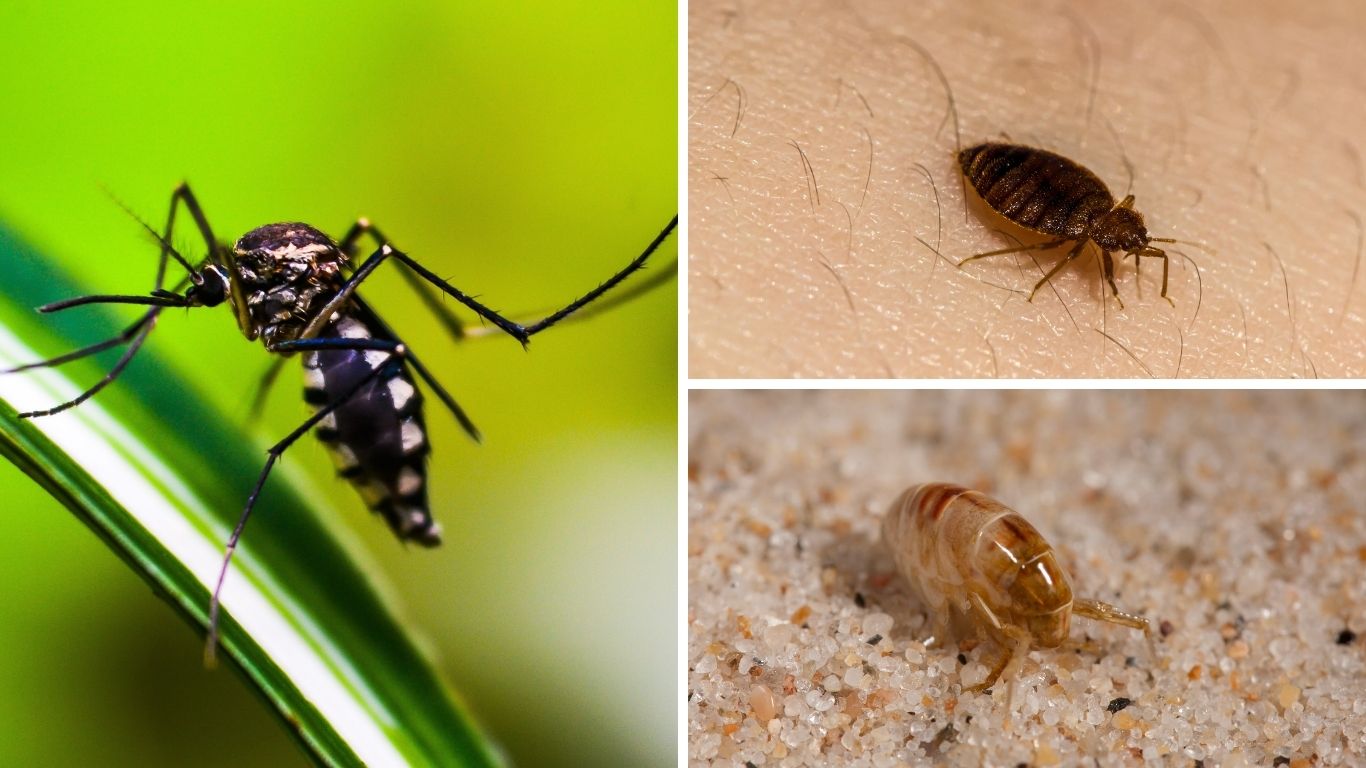
Insects are everywhere—but some bite and leave more than just a mark. From mosquitoes and bed bugs to fire ants and sand flies, these tiny attackers can cause pain, itching, swelling, or even serious illness. In this guide, you’ll discover 25 different insects that bite humans, how to identify their bites, what symptoms to watch for, and the best treatments and prevention tips to stay safe.
1. Mosquito

Mosquitoes are small, flying insects known for their irritating bites and potential to spread serious diseases such as malaria, dengue fever, West Nile virus, chikungunya, and Zika virus. These pests are found in nearly every part of the world, especially in warm, humid climates. Only female mosquitoes bite humans, as they require the protein from blood to develop their eggs.
Bite Identification
- Small, raised red bump on the skin
- Intense itching shortly after the bite
- May develop a fluid-filled blister in sensitive individuals
- Often appear in clusters or scattered over exposed areas like arms and legs
Symptoms
The most common symptoms of mosquito bites are itching, redness, and mild swelling. For most people, the discomfort lasts for a day or two. However, for those with allergies or sensitive skin, the bite may swell significantly or last longer. When mosquitoes carry viruses or parasites, additional symptoms may appear depending on the disease. These can include high fever, headaches, muscle or joint pain, rash, nausea, and fatigue.
Treatment
Treating a mosquito bite starts with cleaning the area using mild soap and water to prevent infection. Applying a cold compress or ice wrapped in a cloth can help reduce swelling and numb the itching. Over-the-counter anti-itch creams, such as those containing hydrocortisone or calamine, offer quick relief. For more intense itching, oral antihistamines like cetirizine or diphenhydramine may be effective.
It’s important not to scratch the bite—even if it itches severely—as this can break the skin, increase inflammation, and lead to bacterial infections. If signs of infection (pus, warmth, red streaks) appear, medical attention may be necessary.
How to Avoid Mosquito Bites
Preventing mosquito bites involves a mix of personal protection and environmental control. Applying an EPA-approved insect repellent that contains DEET, picaridin, or oil of lemon eucalyptus can keep mosquitoes away for several hours. When outdoors, especially during dawn and dusk (when mosquitoes are most active), wearing long sleeves, pants, and socks can provide a physical barrier.
2. Bed Bug

Bed bugs are small, reddish-brown insects that feed on human blood, usually at night while people sleep. They hide in cracks, mattress seams, furniture, and even behind wallpapers. Although they do not transmit diseases, their bites can cause intense itching and skin irritation.
Bite Identification
- Small, red, itchy bumps
- Often appear in a line or zigzag pattern
- Usually found on exposed areas like face, arms, or neck
- May develop into welts or blisters
Symptoms
Bed bug bites typically result in localized itching, redness, and swelling. Some individuals may experience allergic reactions, leading to more severe inflammation or a rash. Unlike mosquito bites, bed bug bites may not be noticed immediately and symptoms can appear hours or days later. Repeated bites over time can cause insomnia and anxiety due to the discomfort.
Treatment
To treat bed bug bites, start by gently washing the affected area with soap and warm water to prevent infection. Applying anti-itch creams like calamine lotion or hydrocortisone can soothe irritation. Oral antihistamines may also help reduce swelling and itching. It’s important to avoid scratching, as this can break the skin and lead to secondary bacterial infections. If severe allergic symptoms or skin infections occur, medical advice should be sought.
How to Avoid Bed Bug Bites
Preventing bed bug bites starts with inspecting sleeping areas, especially in hotels or new living spaces. Check mattresses, headboards, and furniture seams for tiny black spots or live bugs. Use protective mattress covers that are bed-bug-proof. Avoid placing luggage on beds or floors—use luggage racks instead. Regular cleaning and vacuuming of bedding and upholstery help detect and reduce infestations early.
3. Flea

Fleas are tiny, wingless insects that thrive on the blood of mammals and birds. They are commonly associated with pets like cats and dogs but can also bite humans, especially around the ankles and lower legs. Flea bites can cause extreme itching and may lead to allergic reactions or secondary infections.
Bite Identification
- Small red bumps with a central puncture mark
- Often appear in clusters of three or more
- Common on feet, ankles, or legs
- Extremely itchy and may develop into sores
Symptoms
Flea bites are very itchy and can cause discomfort that lasts for several days. In some people, the bites may cause swelling or a rash. Repeated exposure can lead to flea allergy dermatitis, especially in sensitive individuals. If fleas are carrying bacteria such as Bartonella henselae, secondary complications may occur.
Treatment
Wash the affected area with soap and water to reduce the risk of infection. Anti-itch creams or antihistamines can help relieve irritation. Calamine lotion and aloe vera are useful for soothing inflamed skin. Avoid scratching to prevent open wounds or scarring. If symptoms worsen or signs of infection appear, consult a healthcare provider.
How to Avoid Flea Bites
Maintain flea control on pets using veterinarian-approved flea treatments. Vacuum carpets, pet bedding, and upholstery regularly, and wash pet items in hot water. Avoid contact with stray animals, and treat infested areas with insect growth regulators or professional pest control if necessary.
4. Deer Fly

Deer flies are aggressive, blood-feeding insects typically found near wetlands, forests, and rural areas. They have large, patterned wings and target both humans and animals. Their bite is painful because they cut the skin to feed, rather than piercing like mosquitoes.
Bite Identification
- Painful, swollen red bump
- Often bleeds or scabs over
- Usually single bites rather than clusters
- Can lead to itching or infection
Symptoms
The bite from a deer fly is instantly painful and may remain swollen and red for several hours or days. Some people experience allergic reactions with hives or rashes. In rare cases, deer flies can transmit diseases like tularemia, causing fever and fatigue.
Treatment
Clean the bite site thoroughly with soap and water. Apply an antiseptic to reduce infection risk. Cold compresses can help relieve pain and swelling. For persistent itching, use topical corticosteroids or take oral antihistamines. Medical treatment may be necessary if signs of infection or fever develop.
How to Avoid Deer Fly Bites
Wear light-colored, long-sleeved clothing and hats when in wooded or marshy areas. Apply insect repellent with DEET or permethrin to exposed skin and clothing. Avoid outdoor activities during peak fly season (usually mid-morning to late afternoon). Using head nets or repellent-treated gear can also offer protection.
5. Horsefly

Horseflies are large, fast-flying insects known for their painful and persistent bites. Unlike mosquitoes, horseflies cut into the skin using blade-like mouthparts to feed on blood, causing intense pain and irritation. They are commonly found near bodies of water, farms, and wooded areas during warm months.
Bite Identification
- Large, swollen red bump or welt
- Very painful at the moment of the bite
- May bleed and leave a scab
- Usually found on arms, neck, or legs
Symptoms
A horsefly bite often results in immediate pain, followed by redness, swelling, and warmth in the area. The discomfort may last for several days. In sensitive individuals, the bite may cause dizziness, fatigue, or allergic reactions such as hives. Rarely, horseflies may transmit diseases to livestock, but disease transmission to humans is uncommon.
Treatment
Clean the bite thoroughly with soap and water to remove bacteria and reduce infection risk. Applying an ice pack helps minimize swelling and pain. Over-the-counter creams like hydrocortisone and oral antihistamines can relieve itching and inflammation. Avoid scratching the bite, and monitor for signs of infection such as pus or spreading redness. Medical attention may be needed if symptoms worsen or allergic reactions occur.
How to Avoid Horsefly Bites
Avoid areas near standing water or farms during peak summer months, especially in the daytime when horseflies are active. Wear light-colored clothing and cover as much skin as possible. Use strong insect repellents with DEET or permethrin. Physical barriers like mesh hats or tents can also reduce contact in high-risk environments.
6. Black Fly

Black flies are small, dark-colored insects with a humpbacked appearance. They are common near rivers, streams, and other bodies of running water, especially in spring and early summer. Though tiny, their bites can be painful and lead to severe reactions in some people.
Bite Identification
- Small red or purple bump
- Swollen and painful area around the bite
- May ooze fluid or form a crust
- Typically on exposed skin such as neck, face, or arms
Symptoms
Black fly bites are painful and often accompanied by swelling, redness, and itching. Some individuals may experience allergic reactions like headaches, fever, nausea, or swollen lymph nodes—a condition known as “black fly fever.” Unlike mosquito bites, these bites may take longer to heal and are more prone to irritation.
Treatment
Start by gently washing the bite with mild soap and warm water. Apply cold compresses to reduce swelling and discomfort. Over-the-counter corticosteroid creams and oral antihistamines can help control itching and inflammation. If symptoms like fever, nausea, or severe swelling occur, seek medical help as these could indicate an allergic response or secondary infection.
How to Avoid Black Fly Bites
Stay away from rivers and streams during black fly season, particularly in early morning and late afternoon. Wear protective clothing that covers your arms, neck, and legs. Apply insect repellents that contain DEET or picaridin. Head nets and mesh jackets are highly effective when hiking or camping in heavily infested areas.
7. Sand Fly

Sand flies are tiny, hairy insects typically found in tropical and subtropical regions, especially around beaches, forests, and deserts. Despite their small size, their bites can be very irritating and, in some regions, they are known vectors of leishmaniasis—a serious parasitic disease.
Bite Identification
- Small red bump with a raised center
- Very itchy and may become inflamed
- Often occurs in clusters or patches
- Common on legs, feet, and exposed skin
Symptoms
Sand fly bites cause intense itching and localized swelling. The skin may develop a burning sensation or a rash. In areas where sand flies carry parasites, symptoms may include skin ulcers, fever, and swollen glands weeks after the bite. In most cases, symptoms are limited to mild allergic responses unless a disease is transmitted.
Treatment
Clean the affected skin with soap and water. Apply anti-itch creams, calamine lotion, or topical antihistamines to ease discomfort. Cold compresses help reduce itching and swelling. Avoid scratching to prevent skin infections. If you develop persistent sores or flu-like symptoms after traveling to a high-risk area, consult a healthcare professional immediately.
How to Avoid Sand Fly Bites
Use insect repellents with DEET or permethrin when in endemic areas. Wear long-sleeved shirts, long pants, and socks, especially at night when sand flies are most active. Sleep under fine mesh mosquito nets, as sand flies are smaller than mosquitoes and can slip through larger holes. Also, avoid areas with dense vegetation or sand during peak activity hours.
8. Tsetse Fly

Tsetse flies are large biting flies found primarily in sub-Saharan Africa. These insects are notorious for transmitting Trypanosoma brucei, the parasite responsible for African sleeping sickness (trypanosomiasis). Unlike mosquitoes, both male and female tsetse flies feed on blood.
Bite Identification
- Painful red bump or sore at the site
- May become swollen or develop a blister
- Single bites, usually on exposed skin
- Can become infected if scratched
Symptoms
Initial symptoms from a tsetse fly bite include localized pain, redness, and swelling. If infected with the sleeping sickness parasite, symptoms can escalate to fever, headaches, joint pain, and swollen lymph nodes. In advanced cases, neurological issues like confusion, trouble sleeping, and behavioral changes may occur.
Treatment
Clean the bite thoroughly with antiseptic soap and water. Pain and swelling can be managed with ice packs and anti-inflammatory creams. Over-the-counter antihistamines may ease itching. If symptoms like persistent fever, fatigue, or neurological signs emerge, immediate medical treatment is necessary. African trypanosomiasis requires specific antiparasitic medications, which must be prescribed by a doctor.
How to Avoid Tsetse Fly Bites
Wear neutral-colored clothing, as tsetse flies are attracted to bright and dark colors. Avoid bushes during the day, as tsetse flies rest in shaded areas. Use insect repellent containing DEET and wear long-sleeved shirts and pants. In endemic areas, traveling with protective screens and checking vehicles or tents for flies can help prevent exposure.
9. Fire Ant

Fire ants are aggressive, reddish-brown ants found in warm climates, especially in the southern United States, South America, and parts of Asia. They swarm when disturbed and deliver painful bites followed by venomous stings, which can cause intense burning—hence the name “fire” ant.
Bite Identification
- Multiple small red bumps, often with a white pus-filled blister
- Intense burning or stinging sensation
- Common on feet, legs, or hands
- Often grouped in circular patterns or clusters
Symptoms
Fire ant bites and stings cause immediate pain and swelling, followed by itching that can last for several days. In many people, the bite site develops into a fluid-filled blister. Allergic reactions range from mild rashes to severe anaphylaxis, which includes difficulty breathing, dizziness, and rapid heartbeat.
Treatment
Gently wash the area with soap and water. Apply cold compresses to reduce swelling and discomfort. Hydrocortisone cream and oral antihistamines help relieve itching and inflammation. Avoid scratching to prevent secondary infection. For severe allergic reactions such as swelling of the face or throat, seek emergency medical help immediately.
How to Avoid Fire Ant Bites
Avoid walking barefoot in grassy or sandy areas where fire ants build mounds. Wear protective footwear and clothing when working outdoors. If you see a fire ant nest, do not disturb it. Use insecticides or professional pest control to treat infested areas around your home or yard.
10. Red Imported Fire Ant

The red imported fire ant (RIFA) is a particularly invasive species found in the United States, Australia, and parts of Asia. These ants are more aggressive than native fire ants and attack in large numbers when their mound is disturbed. They deliver both bites and painful stings, injecting venom into their victim.
Bite Identification
- Painful red welts that develop into pus-filled blisters
- Stings leave a central pustule surrounded by red, itchy skin
- Often appears in clusters or trails on feet, legs, and arms
- Burning and stinging sensations at the time of the bite
Symptoms
Symptoms include immediate burning pain, followed by swelling and itching. The pustules may last for several days and risk infection if popped or scratched. In rare cases, individuals may experience systemic allergic reactions, including difficulty breathing, dizziness, or shock, which requires urgent medical care.
Treatment
Clean the area thoroughly with soap and water. Apply an ice pack to ease swelling and discomfort. Use hydrocortisone cream or antihistamines to manage itching. Do not pop the pustules, as this can lead to scarring or bacterial infection. Severe allergic symptoms require immediate use of an epinephrine injector and medical intervention.
How to Avoid Red Imported Fire Ant Bites
Be cautious around soil or turf where RIFAs may build mounds. Avoid sitting, standing, or placing hands near suspected nests. Wear boots and gloves when gardening or hiking in infested areas. Treat infested lawns or fields with appropriate fire ant bait or contact pest control professionals for serious infestations.
11. Bullet Ant

The bullet ant (Paraponera clavata) is one of the largest and most venomous ant species in the world, found mainly in the rainforests of Central and South America. Its name comes from the intense pain caused by its sting—often compared to being shot by a bullet.
Bite Identification
- Single, large red or dark bump
- Severe pain at the bite or sting site
- Swelling and redness around the area
- Typically found on limbs or hands during forest exposure
Symptoms
The sting causes excruciating, throbbing pain that can last for 12 to 24 hours. Additional symptoms include sweating, nausea, shaking, temporary paralysis of the area, and swollen lymph nodes. Despite the intense pain, the sting is rarely fatal, though the reaction can be overwhelming for many.
Treatment
Clean the affected area with soap and water. Apply a cold compress to numb pain and reduce swelling. Painkillers like ibuprofen may help relieve severe discomfort. Antihistamines can reduce allergic reactions, though medical attention may be needed in extreme cases. People allergic to insect venom should carry an epinephrine auto-injector if in areas where bullet ants are present.
How to Avoid Bullet Ant Bites
Avoid walking barefoot or placing hands in vegetation when in tropical forests. Wear protective clothing, including long sleeves, gloves, and boots. Be cautious around trees or logs, where bullet ants often nest. If exploring rainforests or remote areas, use insect repellent and stay with a knowledgeable guide.
12. Army Ant

Army ants are known for their aggressive swarming behavior and nomadic lifestyle. They travel in large colonies and attack prey collectively, using strong mandibles to deliver sharp, painful bites. Found mainly in tropical areas like Central and South America, their bites can affect both animals and humans who cross their path.
Bite Identification
- Multiple small red welts or puncture marks
- Painful and may bleed slightly
- Common on feet, ankles, or legs when walking through infested areas
- Bites may swell and form small scabs
Symptoms
Army ant bites cause sharp pain followed by itching and redness. Bites may become inflamed or infected if scratched. While not venomous, the bites can be numerous and overwhelming due to the sheer number of ants involved in an attack. Mild allergic reactions, such as rashes or localized swelling, are possible.
Treatment
Wash the bites with soap and water to prevent infection. Apply antiseptic cream and cold compresses to ease swelling and irritation. Anti-itch creams or oral antihistamines can help relieve discomfort. If bites are numerous or signs of infection appear, consult a medical professional for further care.
How to Avoid Army Ant Bites
Stay on marked trails when hiking in tropical forests. Avoid disturbing ant trails or colonies. Wear high boots and long pants for protection. If you encounter a swarm, calmly and quickly leave the area without stomping or agitating the ants. Avoid camping near visible marching lines or forest floors with active ant movement.
13. Yellow Crazy Ant

Yellow crazy ants (Anoplolepis gracilipes) are named for their erratic movements and fast behavior. These invasive ants are found in tropical and subtropical regions and can form massive colonies. Though they don’t sting, they can bite and spray formic acid into the wounds, causing irritation and discomfort.
Bite Identification
- Small red bumps or raised welts
- Mild burning or stinging sensation
- Often accompanied by skin irritation from the acid
- Found on hands, feet, or legs after contact with colonies
Symptoms
The bites usually result in mild to moderate pain, itching, and a burning sensation. In some cases, the sprayed formic acid can cause a chemical-like burn or rash, especially if it comes into contact with sensitive skin or eyes. Prolonged exposure to large ant numbers may cause allergic reactions in sensitive individuals.
Treatment
Rinse the affected area with water and mild soap to remove the acid. Apply a cold compress to reduce inflammation. Anti-itch creams or hydrocortisone ointments help soothe irritation. In case of acid contact with eyes or severe skin reactions, seek medical help immediately. Avoid scratching to reduce the risk of secondary infection.
How to Avoid Yellow Crazy Ant Bites
Avoid sitting or working near ant trails or known colonies. Wear protective clothing and gloves when gardening or working outdoors in infested areas. Do not disturb ant nests, and consider professional pest control methods to manage large infestations. Keep food and trash sealed to avoid attracting ants.
14. Chigger (Larval Mite)

Chiggers are the larval form of certain mites in the Trombiculidae family. These microscopic parasites are found in grassy or wooded areas and attach to the skin, feeding on skin cells rather than blood. Their bites are extremely itchy and often go unnoticed until after they have dropped off.
Bite Identification
- Bright red, itchy bumps (often mistaken for pimples)
- Appear in clusters or lines
- Common around waistbands, ankles, or warm, tight areas like underarms
- May form blisters in severe cases
Symptoms
Chigger bites cause intense itching that starts a few hours after exposure and can last for several days. The skin may become inflamed, and scratching can lead to scabbing or secondary infections. While chiggers do not transmit diseases in most regions, the discomfort can be severe.
Treatment
Take a hot shower as soon as possible to wash off any remaining mites. Wash clothing in hot water. Apply calamine lotion, hydrocortisone cream, or antihistamines to relieve itching. Cold compresses may help with swelling. Avoid scratching to prevent infection. If severe skin irritation occurs, consult a doctor.
How to Avoid Chigger Bites
Wear long pants, long sleeves, and high socks when hiking or working in tall grass or forests. Use insect repellent containing DEET or permethrin. Tuck pants into socks and avoid sitting directly on the ground. Shower and wash clothes immediately after returning indoors from grassy or brushy areas.
15. Kissing Bug (Assassin Bug)

Kissing bugs, part of the Triatominae subfamily, are nocturnal insects that feed on human blood. They earned their nickname from their habit of biting around the mouth and face while people sleep. These bugs are most common in Central and South America but are also found in parts of the southern United States. Some species can transmit Trypanosoma cruzi, the parasite that causes Chagas disease.
Bite Identification
- Painless bite at first, often noticed after swelling occurs
- Red, swollen area—usually on the face or near lips and eyes
- May develop into itchy, inflamed bumps
- Can become infected or allergic in sensitive individuals
Symptoms
Initial symptoms include redness, swelling, and itching around the bite site. Some people may develop allergic reactions such as hives, difficulty breathing, or anaphylaxis. In areas where kissing bugs carry T. cruzi, the bite can lead to Chagas disease, with symptoms like fever, fatigue, swollen lymph nodes, and heart or digestive complications if untreated.
Treatment
Wash the bite area with soap and warm water. Apply antiseptic to prevent infection. Use cold compresses and anti-itch creams to relieve swelling and itching. For allergic reactions or signs of Chagas disease, seek medical evaluation promptly. Chagas disease requires antiparasitic treatment under medical supervision.
How to Avoid Kissing Bug Bites
Seal cracks and gaps in walls, windows, and doors to keep bugs out. Use insect screens, especially in rural or endemic areas. Avoid sleeping near mud or thatch walls where bugs might hide. Use bed nets and keep lights off at night, as light attracts kissing bugs. If in endemic zones, inspect bedding regularly.
16. Stable Fly

Stable flies (Stomoxys calcitrans) resemble houseflies but are blood-feeding insects that bite humans and animals. They are common around livestock, compost, and damp environments. Unlike houseflies, stable flies have a needle-like mouthpart used to pierce the skin and suck blood.
Bite Identification
- Sharp, painful puncture wound
- Red, raised bump surrounded by a swollen area
- Often appears on lower legs or ankles
- May cause prolonged itching and tenderness
Symptoms
The bite causes instant pain, followed by swelling, redness, and itching. The affected area may remain sore for several days. Some people develop allergic reactions with hives or skin inflammation. Repeated bites may lead to skin infections due to scratching or persistent irritation.
Treatment
Clean the area thoroughly with soap and water. Apply cold compresses to reduce swelling and discomfort. Use antihistamine creams or oral antihistamines for itching. Pain relievers like ibuprofen can ease soreness. Avoid scratching, and monitor for signs of infection such as pus or worsening redness.
How to Avoid Stable Fly Bites
Avoid areas with livestock, manure, or decaying vegetation, especially during the day when stable flies are most active. Wear light-colored, protective clothing and closed shoes. Use insect repellents with DEET or picaridin. Keep outdoor trash covered and remove breeding sites like damp hay or compost piles.
17. No-See-Um (Biting Midge)

No-see-ums, also known as biting midges, are tiny flying insects almost invisible to the naked eye. Despite their size, they deliver painful, itchy bites and are most active during dawn and dusk. These pests are common in coastal, marshy, and tropical regions.
Bite Identification
- Tiny red bumps, often in clusters
- Intense itching, sometimes worse than mosquito bites
- May form welts or blisters in sensitive individuals
- Typically found on exposed skin like arms, legs, and neck
Symptoms
No-see-um bites can cause severe itching, swelling, and redness. In some people, bites may result in blisters or lesions that last several days. Repeated exposure can lead to hypersensitivity and skin irritation. Scratching often leads to scabbing or secondary infections.
Treatment
Wash the bites with soap and water to prevent infection. Apply anti-itch creams like hydrocortisone or calamine lotion. Oral antihistamines may help reduce swelling and relieve itching. Ice packs can soothe pain and reduce inflammation. If the skin becomes infected or doesn’t heal, consult a doctor for proper care.
How to Avoid No-See-Um Bites
Avoid outdoor activities during dawn and dusk in midge-prone areas. Use insect repellents with DEET or picaridin. Wear long sleeves, pants, and tightly woven fabrics. Fine mesh screens or head nets are essential for camping or working in infested zones, as standard mosquito nets may not block these tiny insects.
18. Biting Gnat

Biting gnats are small flying insects, often mistaken for fruit flies or mosquitoes. They are most active during the early morning and late afternoon in warm, moist environments such as swamps, gardens, and riverbanks. While small, their bites can be surprisingly painful and irritating.
Bite Identification
- Small red or pink bumps
- Often appear in groups on exposed skin
- Bites may be surrounded by a red halo
- Cause sharp pain followed by intense itching
Symptoms
The bite causes a stinging or burning sensation followed by persistent itching and redness. Swelling may occur around the bite area. In sensitive individuals, the bites can develop into larger welts or cause mild allergic reactions. In rare cases, bites may become infected if scratched excessively.
Treatment
Clean the skin with mild soap and warm water. Apply cold compresses to reduce swelling and discomfort. Use over-the-counter antihistamines or corticosteroid creams to manage itching. Aloe vera gel or calamine lotion can soothe irritated skin. If signs of infection appear, such as pus or increasing redness, consult a doctor.
How to Avoid Biting Gnat Bites
Stay indoors during peak gnat activity times—especially dawn and dusk. Wear long-sleeved shirts, pants, and hats when in gnat-prone areas. Apply insect repellents with DEET or oil of lemon eucalyptus. Use fans outdoors, as gnats are weak fliers and avoid windy areas. Eliminate standing water and moist organic material near your home.
19. Asian Tiger Mosquito

The Asian tiger mosquito (Aedes albopictus) is an invasive species known for its aggressive daytime biting and black-and-white striped body. It is capable of transmitting diseases like dengue, Zika, and chikungunya. Native to Southeast Asia, it has spread to many parts of the world, including the U.S. and Europe.
Bite Identification
- Small, round red bumps with a visible puncture point
- Intense itching starts shortly after the bite
- Bites often appear on arms, legs, and ankles
- May swell more than bites from other mosquito species
Symptoms
Asian tiger mosquito bites are very itchy and irritating. Most symptoms are limited to local swelling, redness, and discomfort. However, in areas where these mosquitoes carry viruses, symptoms such as fever, rash, muscle pain, and fatigue may follow if infection occurs. Allergic individuals may experience more severe reactions.
Treatment
Gently wash the bite with soap and water. Use cold compresses to reduce itching and swelling. Apply anti-itch ointments or hydrocortisone cream. Oral antihistamines can be taken for widespread itching. If symptoms like fever, rash, or joint pain appear within a few days, seek medical advice to rule out viral infections.
How to Avoid Asian Tiger Mosquito Bites
Wear long, light-colored clothing during the day, especially in shaded outdoor areas. Use EPA-approved repellents like DEET or picaridin. Eliminate standing water from pots, tires, and gutters to prevent breeding. Install window screens and use fans indoors to deter mosquito activity.
20. Anopheles Mosquito

Anopheles mosquitoes are best known as the primary carriers of malaria, a serious and sometimes fatal disease. These mosquitoes are most active during the evening and night and are found in tropical and subtropical regions worldwide.
Bite Identification
- Small red bump, often itchy
- May occur singly or in small clusters
- Typically appears on exposed skin like arms, legs, or face
- Bite marks may not be immediately noticeable
Symptoms
Most bites from Anopheles mosquitoes result in mild itching, redness, and swelling. If the mosquito is infected with the Plasmodium parasite, symptoms of malaria may begin 7 to 30 days later. These can include high fever, chills, sweating, fatigue, nausea, and muscle aches. Malaria requires prompt diagnosis and treatment.
Treatment
For a normal bite, clean the area with soap and water and apply anti-itch cream or antihistamines to reduce discomfort. Cold compresses can also help reduce swelling. If symptoms like fever and chills occur days later—especially after traveling to a malaria-endemic area—seek immediate medical attention. Antimalarial drugs will be needed to treat the infection.
How to Avoid Anopheles Mosquito Bites
Use bed nets treated with insecticide, especially in regions where malaria is common. Wear long clothing in the evening and at night. Apply insect repellents with DEET or picaridin. Stay indoors during peak mosquito activity and use window screens or air conditioning. When traveling, consider taking preventive antimalarial medication as advised by a doctor.
21. Aedes Aegypti

Aedes aegypti is a small, striped mosquito notorious for spreading several dangerous viruses, including dengue, Zika, chikungunya, and yellow fever. These mosquitoes bite during the day, particularly in the early morning and late afternoon.
Bite Identification
- Small red bump with noticeable swelling
- Very itchy and sometimes painful
- Often appears on arms, legs, or ankles
- May occur in groups due to multiple bites
Symptoms
The bite causes immediate itching, redness, and localized swelling. In cases of infection with dengue or Zika, symptoms can develop within days and include fever, rash, muscle pain, joint pain, eye pain, and fatigue. In rare cases, dengue can lead to internal bleeding or shock, which is a medical emergency.
Treatment
Clean the bite area with soap and water to prevent infection. Apply a cold compress and anti-itch cream to reduce symptoms. Oral antihistamines can be used for intense itching. If you experience high fever, severe joint pain, or rash days after being bitten in a risk area, seek medical care immediately for virus testing and management.
How to Avoid Aedes Aegypti Bites
Wear long sleeves and pants during daylight hours in affected areas. Use repellents containing DEET, picaridin, or oil of lemon eucalyptus. Empty and clean containers that collect water, as this mosquito breeds in stagnant water. Install screens on doors and windows, and use indoor insecticides if needed.
22. Biting Louse (Head Louse)

Head lice (Pediculus humanus capitis) are tiny, wingless parasitic insects that live on the human scalp and feed on blood. They are highly contagious and spread through close contact or sharing personal items like combs, hats, or pillows. Though more common in children, anyone can get lice.
Bite Identification
- Small red bumps or sores on the scalp, neck, or behind the ears
- Intense itching, especially near the hairline
- Tiny black or brown lice and white nits (eggs) may be visible in the hair
- Irritated skin or scratch marks from frequent itching
Symptoms
The most common symptom is persistent itching of the scalp. This is caused by an allergic reaction to the louse saliva. Scratching can lead to open sores and potential secondary bacterial infections. Some people may also feel a crawling sensation on their scalp or have trouble sleeping due to discomfort.
Treatment
Use over-the-counter or prescription lice treatment shampoos containing permethrin or pyrethrin. Follow the instructions carefully and repeat the treatment after 7–10 days if needed. Use a fine-tooth lice comb to remove dead lice and nits. Wash all clothing, bedding, and hair accessories in hot water and dry them on high heat. Items that cannot be washed should be sealed in plastic bags for at least two weeks.
How to Avoid Biting Louse Bites
Avoid sharing personal items such as hats, combs, and pillows. Regularly inspect children’s hair, especially after school or camp. Tie long hair back when in close-contact settings. If lice are detected, treat immediately and notify close contacts to help prevent reinfestation.
23. Giant Water Bug

Giant water bugs (Belostomatidae) are large aquatic insects found in freshwater ponds, lakes, and streams. Sometimes called “toe-biters,” they can deliver a surprisingly painful bite if handled or stepped on. Though not aggressive, they will defend themselves when threatened.
Bite Identification
- Single, swollen red mark, usually on a toe, finger, or foot
- Intense pain at the moment of the bite
- Swelling and numbness around the area
- May cause a bruised appearance in severe cases
Symptoms
The bite causes sharp, burning pain followed by swelling and tenderness. In some people, mild numbness or tingling may occur. Though the bite is not venomous, it can cause lasting soreness for several hours or even a day. No diseases are transmitted by giant water bugs, but the wound may become infected if not cleaned properly.
Treatment
Wash the bite area thoroughly with soap and warm water. Apply ice to reduce swelling and numb the pain. Over-the-counter pain relievers like ibuprofen can help ease discomfort. Monitor for signs of infection such as pus, increased redness, or fever. Medical attention is rarely needed unless the bite becomes infected.
How to Avoid Giant Water Bug Bites
Be cautious when swimming or wading in freshwater ponds and lakes. Wear water shoes to protect your feet. Avoid handling these bugs if you see them on shore or in the water. When collecting aquatic insects for study or fishing bait, use tools instead of bare hands.
24. Greenhead Fly

Greenhead flies (Tabanus nigrovittatus) are large, aggressive biting flies found in coastal marshes, particularly along the eastern U.S. seaboard. They’re known for their striking green eyes and painful bites. Unlike many biting insects, greenhead flies bite during the day and target humans and animals alike.
Bite Identification
- Large, red, swollen bump with a central puncture
- Immediate sharp pain at the time of the bite
- Often leaves behind bruising or a scab
- Commonly found on arms, legs, and neck
Symptoms
The bite causes intense pain, followed by swelling, itching, and redness. In some cases, the area may bruise due to the fly’s tearing mouthparts. People with sensitive skin may experience an allergic reaction, including hives or extended swelling. Though they can carry pathogens in animals, greenhead flies are not known to transmit diseases to humans.
Treatment
Clean the bite area with soap and water to prevent infection. Apply an ice pack to reduce swelling and pain. Use anti-itch creams or oral antihistamines to manage discomfort. Avoid scratching the bite to prevent skin damage or infection. If signs of an allergic reaction or infection develop, seek medical advice.
How to Avoid Greenhead Fly Bites
Avoid marshy coastal areas during peak greenhead season (usually mid to late summer). Wear light-colored, long-sleeved clothing, and use insect repellent with DEET. Protective netting, especially head nets, can help while hiking or fishing. Stay in shaded or windy areas, as greenhead flies are less active there.
25. Black Widow Spider (Note: Technically an arachnid, not an insect)

While not an insect, the black widow spider (Latrodectus spp.) is often included in bite-related lists due to the medical significance of its venom. These spiders are typically found in dark, sheltered areas like woodpiles, sheds, basements, and under outdoor furniture.
Bite Identification
- Two small puncture marks (often not easily visible)
- Redness and swelling around the bite
- Pain may spread to the chest, back, or abdomen
- Bite site may become rigid or cramp-like
Symptoms
The bite may begin with mild pain but can intensify over the next hour. Muscle cramps, sweating, nausea, and difficulty breathing are common systemic symptoms. Severe cases may include high blood pressure or neurological symptoms, especially in children or elderly individuals.
Treatment
Clean the wound with soap and water. Apply ice to limit swelling and slow venom spread. Take pain relievers and antihistamines to manage symptoms. For severe reactions or if muscle cramps spread, seek emergency medical attention. Antivenom is available but typically reserved for high-risk or severe cases.
How to Avoid Black Widow Bites
Wear gloves when handling firewood, cleaning garages, or working in dark corners. Shake out shoes, towels, or clothing before use if stored in spider-prone areas. Keep storage areas tidy and remove clutter where spiders may hide. Use insecticide or professional pest control in high-risk locations.