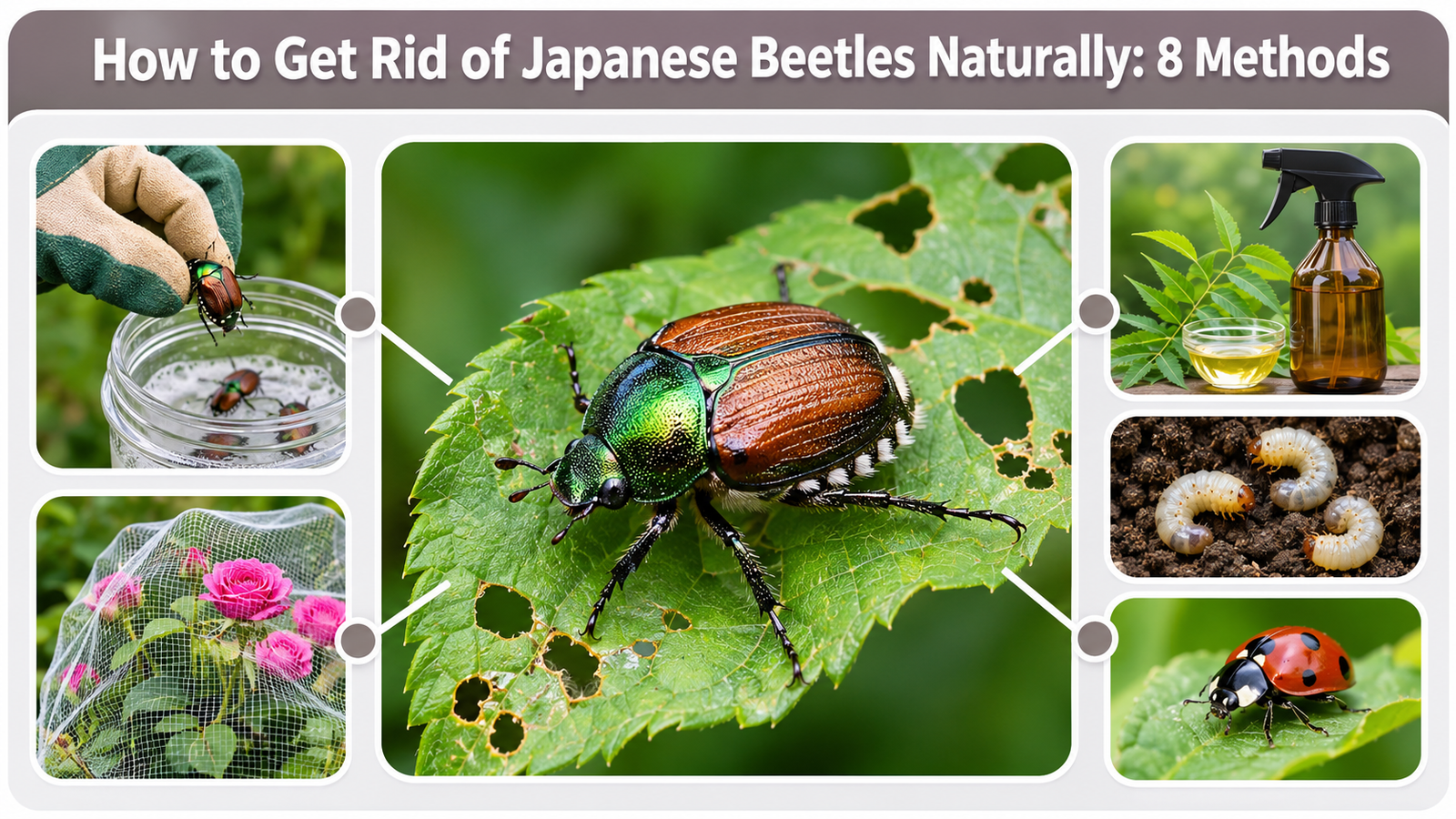
Japanese beetles can quickly damage roses, vegetables, fruit trees, and ornamental plants by feeding on their leaves and flowers. Fortunately, you can control these destructive insects without relying on harsh chemical pesticides. Natural Japanese beetle control methods include handpicking, protective netting, neem oil, beneficial insects, and biological treatments. Some methods work immediately, while others help reduce future infestations. Understanding which natural remedies actually work can help you protect your garden, maintain healthy plants, and prevent Japanese beetles from causing serious damage throughout the growing season.
How to Get Rid of Japanese Beetles Naturally
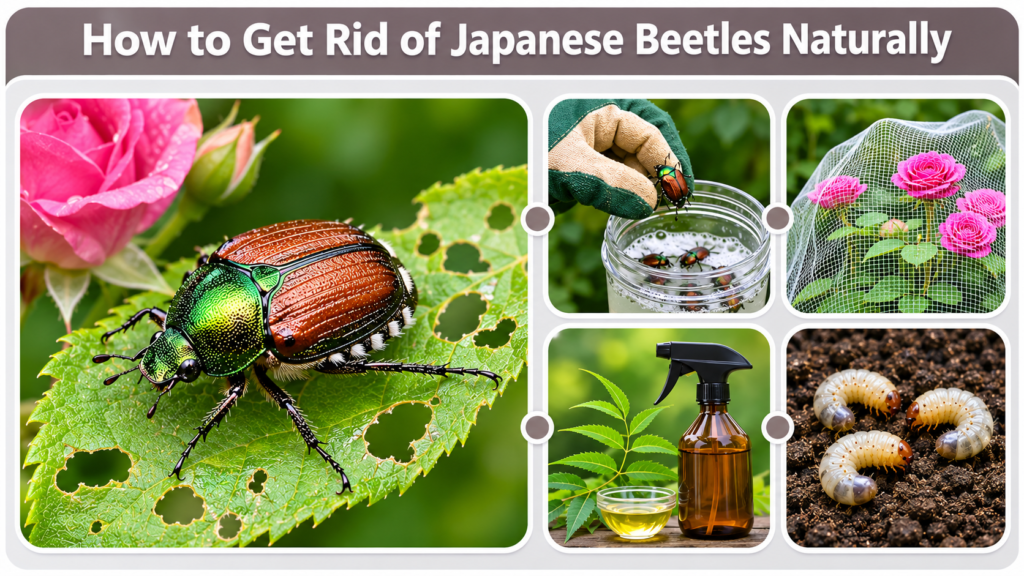
Getting rid of Japanese beetles naturally requires a combination of physical removal, plant protection, and regular monitoring. Adult beetles usually appear during early summer and feed on hundreds of plant species. Removing them before large groups develop helps reduce damage. The following natural methods are practical for home gardens and generally have less impact on beneficial insects than broad-spectrum pesticides.
1. Handpick Japanese Beetles
Handpicking is one of the simplest and most effective natural Japanese beetle control methods, especially for smaller gardens.
- Inspect plants early in the morning when beetles are less active.
- Hold a bucket of soapy water beneath infested leaves.
- Gently shake the branches or knock beetles into the bucket.
- Check roses, grapevines, and other vulnerable plants daily.
- Repeat throughout the beetle season.
The soap helps beetles sink and drown. Removing adults early also reduces the feeding damage that attracts additional beetles.
2. Protect Plants With Garden Netting
Fine garden netting creates a physical barrier that prevents Japanese beetles from reaching vulnerable plants.
Cover valuable roses, shrubs, or vegetables during periods of heavy beetle activity. Secure the edges carefully so insects cannot enter underneath.
Avoid covering flowering plants that require insect pollination. For fruiting crops, install netting after pollination when appropriate.
This chemical-free method works particularly well for protecting individual plants.
3. Grow Less Attractive Plants
Choosing plants that Japanese beetles rarely feed on can reduce future garden damage.
Some less-preferred plants include:
- Boxwood
- Forsythia
- Common lilac
- Magnolia
- Daylilies
- Rhododendrons
- Many conifers
These plants are not guaranteed to repel beetles from neighboring plants. However, replacing highly susceptible ornamentals with less attractive species can make your landscape easier to protect.
Best Natural Sprays for Japanese Beetles
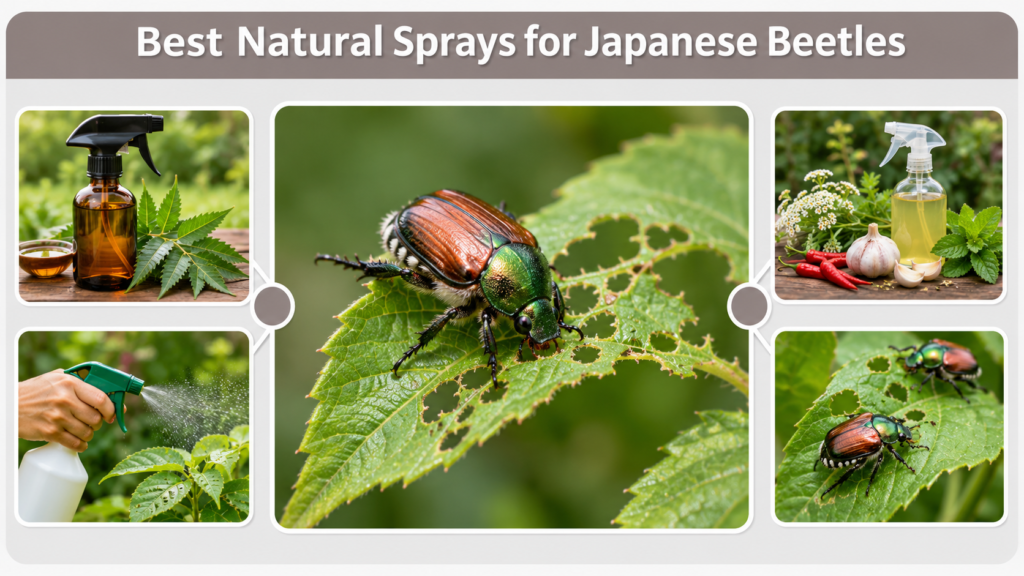
Natural Japanese beetle sprays can supplement handpicking when insects attack several plants simultaneously. However, natural products vary in effectiveness and may require repeated applications. Some discourage feeding, while others kill beetles directly. Always choose products specifically labeled for Japanese beetles and the plants you intend to treat. Natural ingredients can still harm pollinators or sensitive foliage if used incorrectly.
4. Use Neem Oil Spray
Neem oil is a commonly recommended natural Japanese beetle repellent. It can discourage feeding and help reduce damage to treated foliage.
For best results:
- Choose a neem product labeled for Japanese beetles.
- Follow the manufacturer’s mixing instructions.
- Apply according to the label’s timing and coverage directions.
- Avoid spraying flowers visited by pollinators.
- Repeat applications when directed.
Neem oil generally provides only short-term protection. It works better when beetle populations are relatively low.
5. Apply Bacillus thuringiensis galleriae
Bacillus thuringiensis galleriae (Btg) is a naturally occurring bacterial control agent used in certain beetle-management products.
Its insecticidal proteins can affect Japanese beetle adults and larvae when applied through appropriately labeled products.
Btg offers a biological alternative to conventional broad-spectrum pesticides and can be useful in an integrated garden management program.
Check product availability and registration in your area, and follow the application label carefully.
6. Consider Botanical Pyrethrin Products
Pyrethrins are insecticidal compounds derived from chrysanthemum flowers. Products containing these compounds can kill Japanese beetles through direct contact.
However, pyrethrins provide limited lasting protection, so repeated treatments may be necessary.
They can also kill bees and other beneficial insects. Avoid applying them to blooming plants or areas where pollinators are active.
Use pyrethrin products only when less disruptive methods are insufficient.
Natural Predators of Japanese Beetles
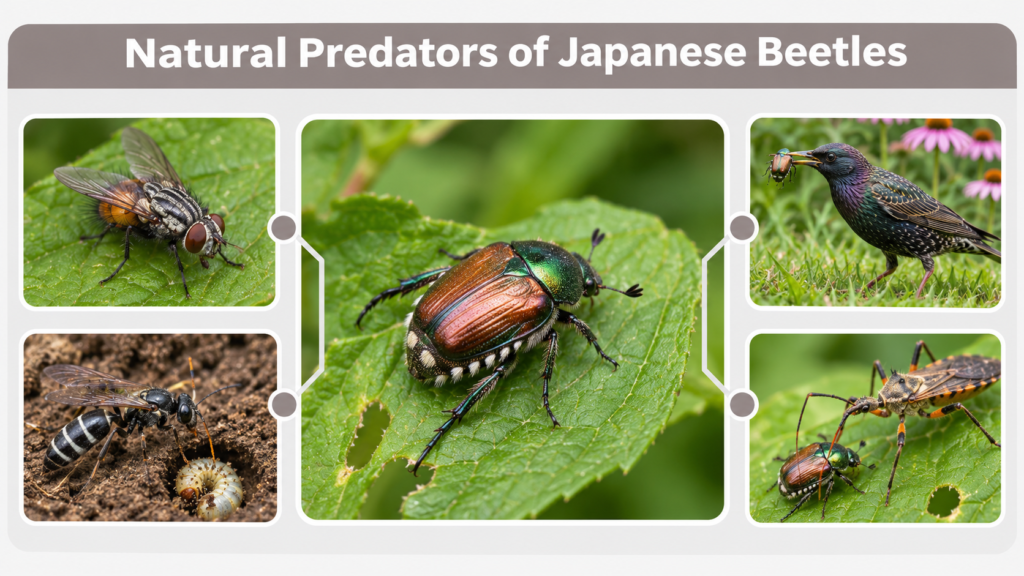
Japanese beetles have several natural enemies that feed on adults or attack developing larvae. Encouraging beneficial organisms can support long-term pest management, although predators rarely eliminate an established infestation on their own. Their effectiveness varies depending on local conditions and species. Maintaining diverse garden habitats and avoiding unnecessary insecticide treatments can help protect existing predator populations.
7. Encourage Beneficial Insects and Birds
Several natural predators and parasitoids help regulate Japanese beetle populations.
Common natural enemies include:
- Winsome flies: Parasitic flies that deposit eggs on adult Japanese beetles.
- Tiphia wasps: Parasitic wasps that attack Japanese beetle grubs underground.
- Birds: Some birds, including grackles and starlings, consume adult beetles.
- Predatory insects: Assassin bugs and certain predatory stink bugs can attack beetles.
Planting diverse flowering species may support beneficial insects that feed on nectar.
If you notice distinctive white parasitoid eggs attached to a beetle’s body, leave that beetle undisturbed to help preserve its natural enemies.
How to Prevent Japanese Beetles Naturally
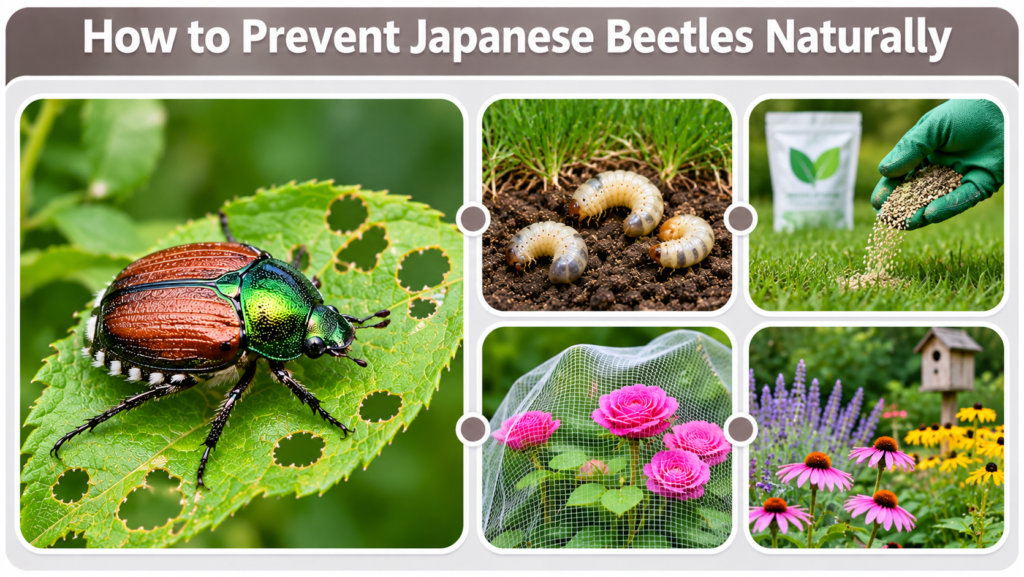
Preventing beetle damage involves protecting plants during adult feeding season and managing grubs when necessary. Japanese beetle larvae develop underground, where they may damage grass roots. However, reducing lawn grubs does not guarantee fewer adult beetles because adults can fly into gardens from surrounding properties. A successful prevention strategy combines regular monitoring, biological controls, and sensible plant selection.
8. Use Beneficial Nematodes Against Grubs
Beneficial nematodes are microscopic organisms that infect certain soil-dwelling insects.
Heterorhabditis bacteriophora is one species used against Japanese beetle grubs.
For effective application:
- Apply when young grubs are present in the soil.
- Choose cool, cloudy conditions or evening hours.
- Water the soil before and after treatment.
- Keep the soil moist according to product instructions.
Results vary with soil temperature, moisture, and application timing. These treatments target larvae rather than adult beetles feeding on plants.
Avoid Japanese Beetle Traps Near Plants
Commercial Japanese beetle traps attract insects using floral scents and sex pheromones.
Although they capture beetles, they can also attract additional beetles into the surrounding garden. Some of those insects land on nearby plants instead of entering the trap.
For most home gardens, handpicking and physical barriers provide better protection than placing baited traps near valuable plants.
Be Careful With Homemade Remedies
Homemade dish-soap sprays, garlic mixtures, hot pepper sprays, and orange-peel repellents are frequently recommended online.
However, these treatments have limited or unreliable evidence for controlling adult Japanese beetles.
Insecticidal soap is generally ineffective against these hard-bodied adult insects. Concentrated homemade mixtures may also injure plant leaves.
Similarly, commercial milky spore products have shown inconsistent benefits in modern research. Avoid depending on unproven remedies as your primary control strategy.
FAQs
What Is the Best Natural Way to Kill Japanese Beetles?
Handpicking Japanese beetles into a bucket of soapy water is one of the most reliable natural methods for small gardens. It removes insects immediately without treating your plants with pesticides. Regular removal during the early morning helps prevent beetles from gathering and causing additional damage.
Does Vinegar Kill Japanese Beetles Naturally?
Vinegar may harm insects through direct exposure, but it is not a recommended Japanese beetle treatment. Strong vinegar solutions can damage plant leaves and flowers. Instead of spraying vinegar on garden plants, use handpicking, protective netting, or properly labeled botanical and biological treatments.
What Smell Do Japanese Beetles Hate?
There is no reliably proven household scent that consistently keeps Japanese beetles away. Garlic, peppermint, and citrus-based remedies are often promoted as repellents, but results are unreliable. Neem oil products can temporarily discourage feeding, although they require proper application and may not control heavy infestations.
Do Japanese Beetles Have Natural Predators?
Yes. Japanese beetles have natural enemies, including parasitoid flies, Tiphia wasps, predatory insects, and certain birds. Some attack adult beetles, while others target underground grubs. These organisms help regulate beetle populations, but they usually cannot provide complete control without additional garden management methods.
How Do You Keep Japanese Beetles Off Roses Naturally?
Inspect roses every morning and remove visible beetles by hand. Knock them into soapy water and repeat as needed. Fine netting can protect roses when pollination is not required. Neem oil products may provide temporary feeding deterrence, but avoid spraying open flowers visited by bees.